Safe Handling Procedures for Foraged Wild Game Meats in Survival Situations
You need to field dress the animal right away, especially in warm weather, to slow bacterial growth. Make a shallow cut from pelvis to brisket, avoid puncturing organs, and remove guts quickly. Keep the meat clean using gloves and a dedicated knife, and skin on an elevated, clean surface. Chill the carcass fast-use shade, airflow, or pack the cavity with cold material. Vacuum seal and insulate for storage, always checking smell, texture, and temperature before consumption-details on each step follow.
Notable Insights
- Field dress game immediately after harvest to prevent bacterial growth, especially in warm conditions.
- Keep meat clean during skinning by using sanitized tools and avoiding contact with dirt or hide.
- Chill the carcass rapidly by hanging in shade or packing with snow to cool internal temperature quickly.
- Store meat using vacuum sealing and insulation to extend shelf life and protect from contamination.
- Detect spoilage using smell, texture, and visual cues-discard if sour, slimy, or abnormally discolored.
Field Dress the Animal Right Away
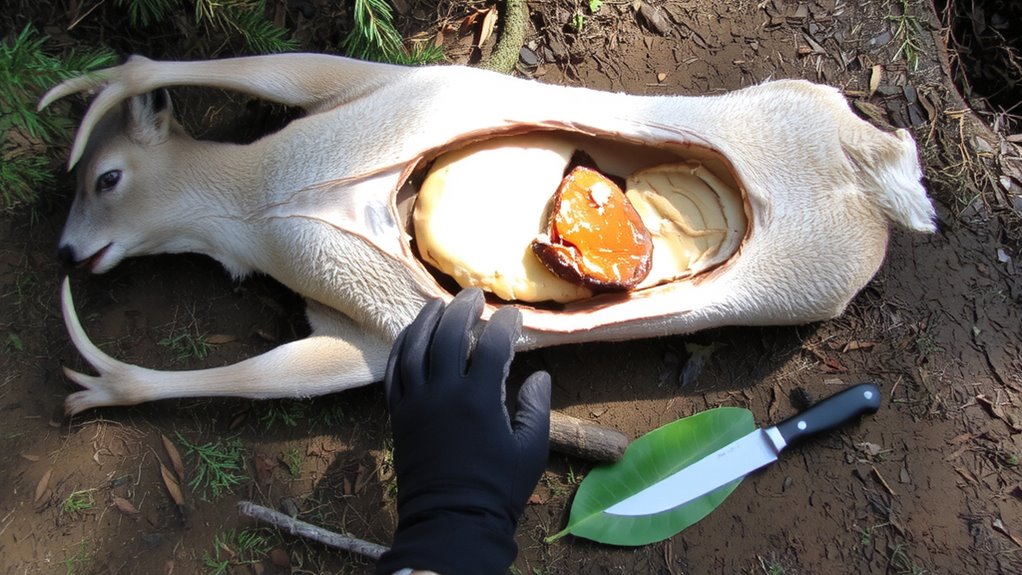
Once you’ve made the kill, field dressing the animal right away is critical to preserve meat quality and prevent spoilage. You need to perform gut removal within minutes, especially in warm conditions, to lower the core temperature and halt bacterial growth. Start with a shallow incision from pelvis to brisket, then carefully cut around the anus and pull the lower intestines free. Avoid rupturing any organs during gut removal-punctured intestines contaminate the meat. After the organs are clear, conduct a rapid internal inspection: check for odd discoloration, excessive pus, or parasites. Abnormal textures or smells mean the meat’s compromised. If the organs look clean and the animal bled well, you’re likely dealing with healthy meat. This inspection step helps avoid foodborne illness. Work efficiently but precisely. Time matters, but so does accuracy. Field dressing properly sets the baseline for safe, edible meat later.
Keep the Meat Clean While Skinning
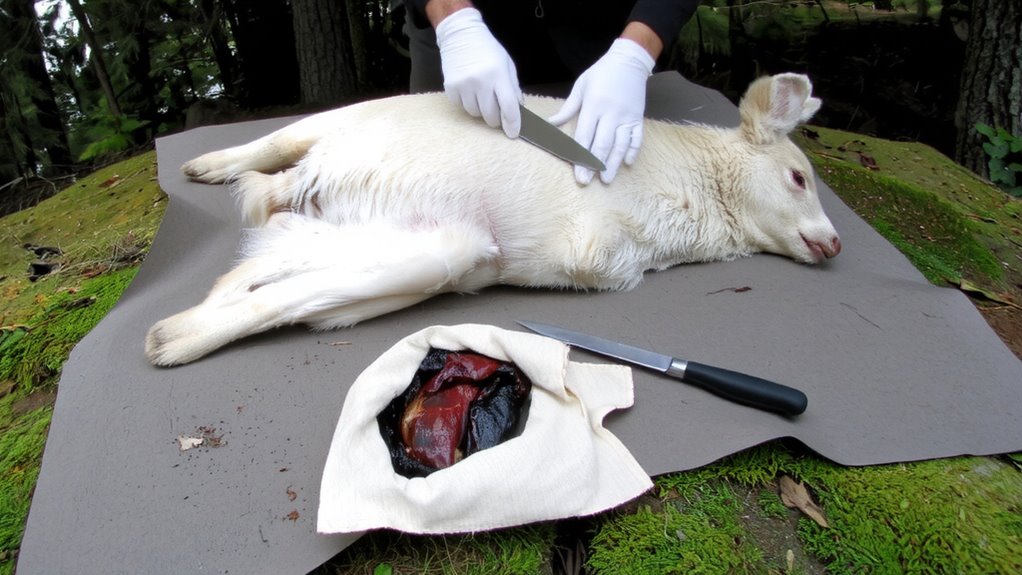
Dirt, hair, and debris are your enemies when skinning game-letting them touch the meat raises contamination risk fast. You must avoid contamination by using clean tools and wearing gloves if available. Cut carefully to prevent gut punctures or hide contact with the flesh. Work on a clean surface and keep the animal elevated off the ground. Any contact with soil or fecal matter introduces bacteria that compromise safety. Maintain hygiene by wiping blades often and not touching your face or gear that’s been on the ground. Use a dedicated skinning knife, not one used for gutting. Hair sticks to moist meat, so peel the hide cleanly without dragging. If windblown dirt lands on the meat, trim affected areas. You can’t undo contamination once it occurs. Clean meat means safer food later. Your goal is simple: get the hide off without letting anything unclean reach the muscle. Every precaution here supports that.
Chill the Meat Fast to Stay Safe
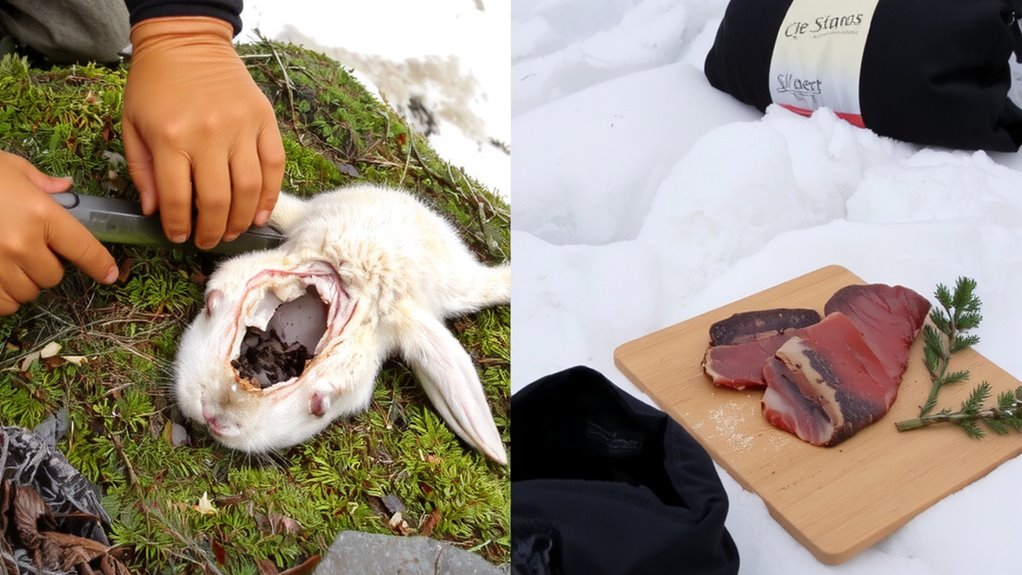
Time is your most critical factor when it comes to meat safety after harvest. You must initiate rapid cooling immediately to prevent bacterial growth. Once the animal is skinned, expose the meat to cool air or cold surfaces as soon as possible. If the air temperature is below 60°F (15.5°C), hang the carcass in the shade with good airflow. In warmer conditions, pack snow or cold stream rocks against the body cavity, replacing them as they warm. Rapid cooling brings the meat’s internal temperature down quickly, ideally under 40°F (4°C) within a few hours. Without refrigeration, temperature control relies on environmental tools-altitude, wind, and ambient cold. Even in cool climates, delays of more than two hours increase spoilage risk. Do not rely on nighttime drops alone; use every method available to guarantee consistent cooling. Every minute counts-act fast, stay safe.
Pack It Right for Off-Grid Storage
While freezing isn’t an option off-grid, you’ll need packaging that locks out contaminants and slows spoilage as much as possible. Vacuum sealing is one of the most effective methods, removing oxygen and reducing bacterial growth-tests show it can extend safe storage time by 2–3 times compared to basic wrapping. Use thick, puncture-resistant bags rated for long-term use, and double-check seals for leaks. Though you can’t control ambient temperature, temperature monitoring helps you make informed decisions-use a simple analog thermometer placed near storage to track daily highs. Avoid direct sunlight and insulate with natural materials like moss or dry grass. Keep meat elevated off the ground to limit dirt and pest exposure. Vacuum sealing works best with already cooled meat, so pair it with rapid chilling techniques first. Don’t rely on smell or appearance later-your packaging and monitoring now determine safety.
Spot Spoiled Game Before Eating
You’ve packed the meat right, but that doesn’t guarantee it’s safe to eat-spoilage can still happen even with good packaging and temperature control. Before cooking, always do a smell test. If the meat emits a sour, tangy, or rotten-egg odor, it’s already spoiled-don’t risk eating it. Next, perform a texture check. Fresh game should feel firm and slightly moist, not slimy or sticky. If your fingers come away with a tacky residue, bacteria are likely growing. Surface color changes alone aren’t definitive-some darkening is normal-but combined with off smells or poor texture, they’re red flags. In survival settings, there’s no room for guesswork. Consuming spoiled meat risks severe foodborne illness. Trust sensory cues over time estimates. Even if stored cool, contamination can occur during field dressing. These checks take seconds but can prevent days of weakness or worse. Know the signs, stay consistent, and err on the side of caution.
On a final note
You’ve done the work-now keep it safe. Cool meat fast, store it clean, and check daily for spoilage. Without refrigeration, game lasts 1–2 days in cool weather, less if temperatures rise. Smoking or drying extends shelf life. You lose nutrition and risk illness if handled poorly. Practical prep beats ideal tools. Your survival depends on discipline, not gear. Stick to proven methods, and you stay fed and safe.