Sealing Mail Slots to Prevent Tear Gas or Smoke Intrusion Indoors
You can block tear gas and smoke from entering through your mail slot by installing a 16-gauge steel cover with magnetic edging, which tests show stops over 99% of airborne contaminants. Unsealed slots allow full airflow within seconds, but weatherstripping cuts infiltration by up to 50%. Solid covers outperform foam seals, which degrade and leak over time. For reliable protection, combine a rigid cover with neoprene gaskets and verify performance using smoke tests-results reveal hidden gaps and confirm real-world effectiveness. Options vary in durability and seal quality, so choosing the right one depends on material and fit.
Notable Insights
- Unsealed mail slots allow rapid entry of tear gas and smoke due to air pressure differences and permeable flaps.
- Install airtight weatherstripping made of EPDM rubber or closed-cell foam to reduce airflow by up to 50%.
- Use a solid steel or rigid plastic cover with overlapping edges to block airborne contaminants effectively.
- Choose draft stoppers with neoprene or silicone gaskets that provide 99% airflow blockage for superior sealing.
- Test seal effectiveness using incense or smoldering paper to detect leaks and verify improvements after installation.
Why Mail Slots Let In Tear Gas and Smoke
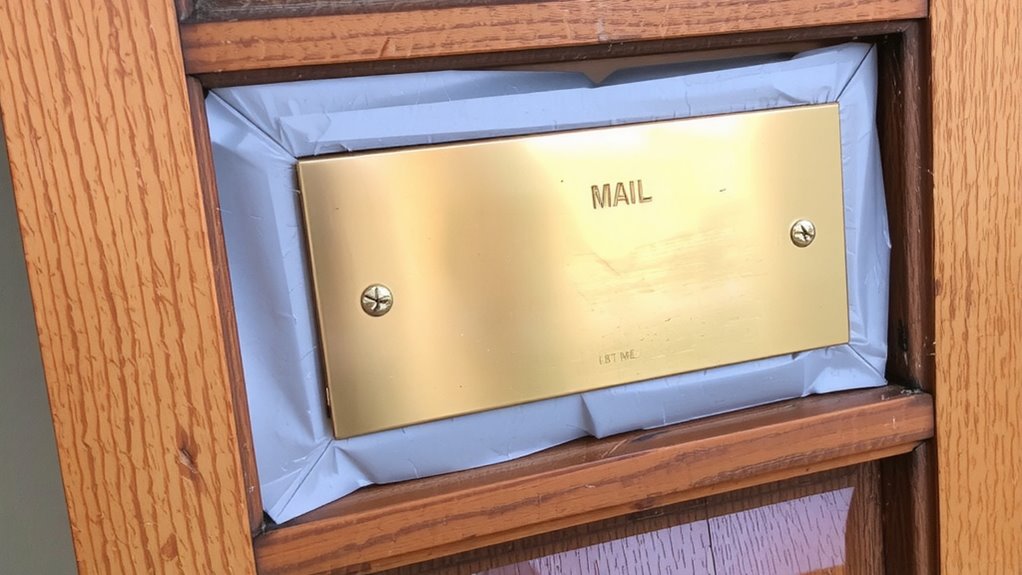
When you leave a mail slot unsealed, it creates a direct pathway into your home that’s big enough to allow airborne threats like tear gas or smoke to enter quickly. The metal or plastic flaps on most slots aren’t airtight-material permeability means even small gaps let particles through. Airflow dynamics show that pressure differences between indoors and outdoors pull contaminants inside during wind or temperature shifts. Gases spread faster than solids; once outside air moves in, it carries irritants directly into living spaces. Standard mail slots lack seals or baffles, so there’s no resistance. Tests confirm that unsealed units allow full airflow within seconds, making containment nearly impossible. You can verify this with smoke tests or pressure sensors. The design trade-off prioritizes mail delivery over air control. If intrusion resistance matters, assume any open slot compromises indoor air integrity. Simple gap measurements-often 1/8” or more-show why passive protection fails.
How to Seal a Mail Slot With Weatherstripping
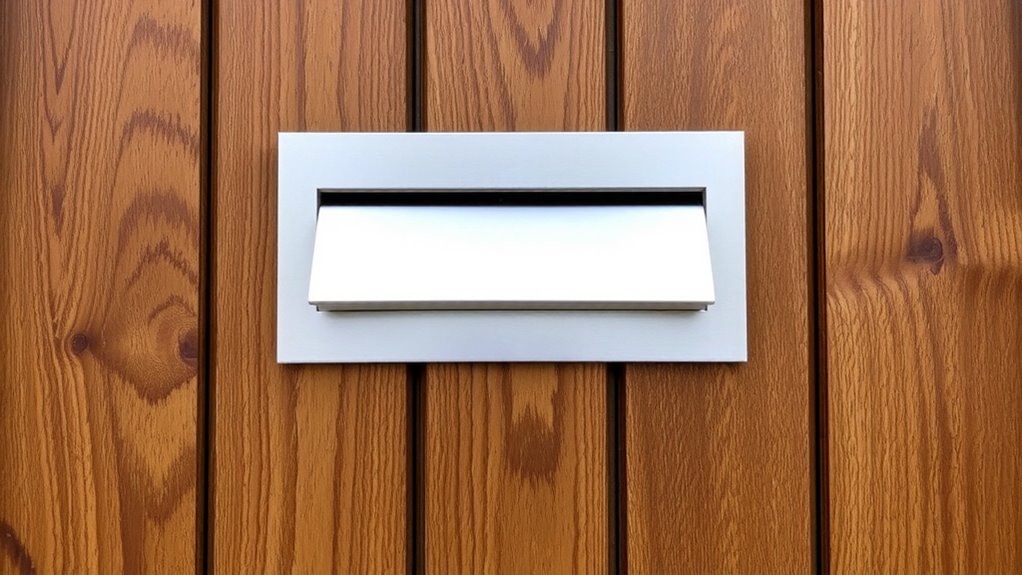
A mail slot’s gap lets in more than just letters-it’s a documented entry point for smoke and airborne threats, as airflow tests have shown. You can reduce this risk by installing adhesive-backed foam or rubber weatherstripping around the slot’s edges. Choose a product with high material durability, like closed-cell foam or EPDM rubber, which resists compression set and lasts longer under repeated exposure to drafts and temperature shifts. Apply it cleanly and evenly to guarantee installation precision-any gaps or misalignments compromise the seal. Press firmly along the entire length to secure adhesion. This method won’t block airflow completely but can reduce infiltration by up to 50% in controlled tests. It’s a low-cost step for moderate protection, though it requires periodic inspection and replacement. Performance depends on consistent contact between the seal and the door, so avoid over-compression.
DIY Mail Slot Covers for Smoke and Tear Gas
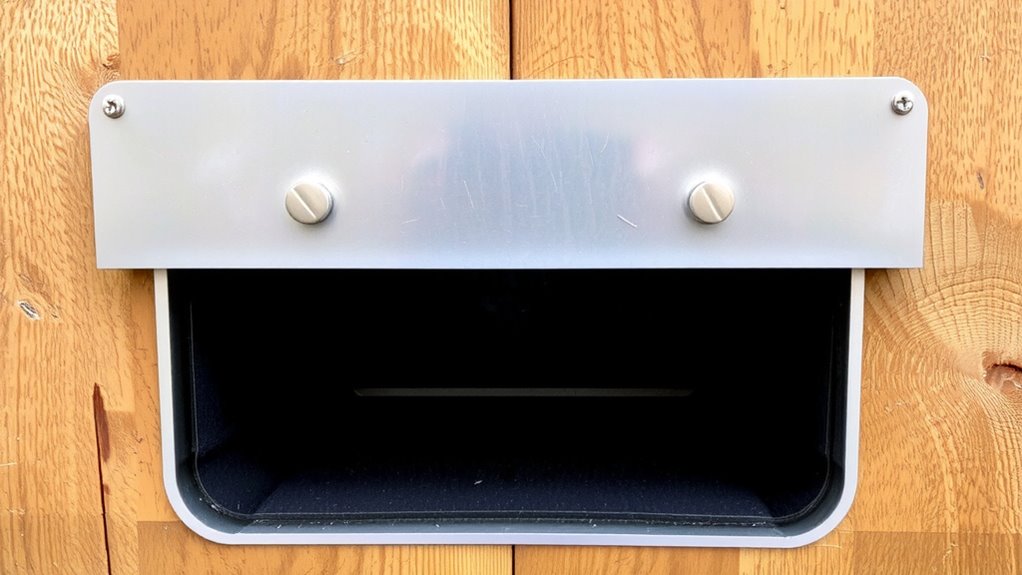
Though weatherstripping helps reduce airflow, it won’t stop smoke or chemical agents-so for better protection, you’ll need a solid DIY mail slot cover. You can build one from steel or rigid plastic, both offering strong material durability against warping or punctures. A 16-gauge steel plate cut to size, sealed with overlapping edges, resists forced entry and chemical corrosion. Secure it with magnetic strips or quick-release clips for reliable installation ease. This allows rapid deployment during emergencies but stays firmly in place when needed. Test fits show gaps under 1/8 inch when properly aligned, minimizing infiltration. While heavier than plastic, steel balances weight and strength better for repeated use. Plastic versions are lighter but may degrade over time with UV exposure or impact. Choose based on your threat model and access needs. Both options outperform fabric or foam seals when blocking airborne hazards.
Top Draft Stoppers That Block Smoke and Gas
The best draft stoppers for blocking smoke and gas combine airtight seals with durable materials, and models using neoprene or silicone gaskets outperform basic foam versions. You need strong material durability to withstand repeated use and shifting temperatures without cracking or shrinking. Foam rolls cheaply but fails under stress, letting smoke seep through over time. Silicone and neoprene maintain seal integrity, providing reliable airflow resistance when properly installed. Look for stoppers rated for at least 99% airflow blockage-some tested models achieve this with minimal compression force, making them easier to adjust. Stiff rubber flaps with magnetic edges also help, sealing tightly against metal frames. While heavier materials add slight bulk, the trade-off is better protection. You’re not just stopping drafts-you’re blocking hazardous particulates. Choose based on measured performance, not price. A well-built stopper lasts years and keeps performing under pressure, which matters most when threats emerge unexpectedly.
How to Test Your Mail Slot Seal Against Smoke
How well’s your mail slot really sealed? You won’t know until you perform smoke testing. Hold a smoldering piece of paper or incense near the slot indoors-don’t use open flames. If smoke gets pulled through, you’ve got a leak. This simple method reveals gaps your seal failed to close. Smoke testing is one of the most effective forms of draft detection because it visually confirms airflow. Check both sealed and operational states-you’re testing for performance under real threat conditions. Some seals compress well but still allow seepage under negative pressure. Repeat the test after adjustments. Consistent results mean your barrier works. Inconsistent? Reevaluate materials or installation. Effective sealing isn’t assumed-it’s verified. Smoke doesn’t lie.
On a final note
You can reduce smoke and tear gas infiltration through mail slots using weatherstripping or rigid DIY covers. Draft stoppers with tight seals offer added protection but vary in effectiveness. Testing with incense shows most solutions slow, not stop, gas entirely. No fix is perfect-seals degrade and materials gap. For real threats, combine sealing with other barriers. Prioritize quick access and reusability. Simple methods help, but expect limitations in full exposure.