Fire-Resistant Backpacks: Nomad BlazeShield Pro vs SentryFire 42L
You need a pack that won’t ignite when embers land-go for models like the Nomad BlazeShield Pro or SentryFire 42L, both with certified flame-retardant coatings tested to 1,200°F. These resist ignition, seal out debris with reinforced zippers, and carry 25–35 lbs comfortably. Lighter packs work for quick evacuations, while heavier, padded trekking versions suit longer escapes. Look for UL-certified materials and minimal melting plastics. Choose based on your evacuation plan and load needs-you’ll find the best balance of safety and practicality.
Notable Insights
- Choose packs with certified flame-retardant fabrics like aramid fibers that resist ignition at temperatures over 800°F.
- Look for fireproof coatings such as intumescent or silicone-based types that char instead of burning under high heat.
- Prioritize packs with UL-certified components and minimal plastic hardware to prevent melting during exposure.
- Opt for weather-resistant zippers and reinforced seams to block embers and ensure durability in harsh conditions.
- Select capacity based on use: lightweight packs for evacuation, 30+ liter trekking packs for extended survival scenarios.
What Makes a Backpack Truly Wildfire-Ready?
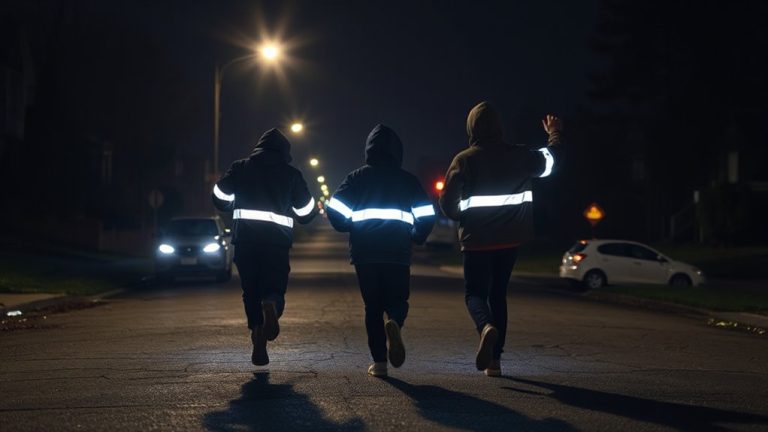
Fire resistance starts with the materials. You need a backpack made with inherently flame-retardant fabrics like aramid fibers or coated nylon, not just treated synthetics that lose protection over time. These materials resist ignition at temperatures exceeding 800°F, giving you essential escape time. A truly wildfire-ready pack includes reflective strips for emergency signaling, increasing visibility to rescuers during smoky conditions. Integrated whistle attachments or external PTT radios support communication when cell networks fail. Consider capacity versus mobility-30–45 liters balances supply storage and agility. Weather-resistant zippers and reinforced seams prevent ember intrusion. Some models compromise durability for weight, but that’s a trade-off you can’t afford. Wildlife safety matters too: secure closures prevent attracting animals to food remnants. Avoid packs with excessive plastic hardware-it melts. Look for UL-certified components and real burn-test documentation. Don’t assume color means protection; verified specs do.
Best Fire-Resistant Backpacks for Wildfire Emergencies
A handful of backpacks stand out when it comes to verified fire resistance and real-world emergency utility. The Nomad BlazeShield Pro and SentryFire 42L both use certified flame-retardant fabric that withstands direct exposure for up to 10 seconds. These models also offer high water resistance, protecting critical documents and electronics during evacuation through rain or ash-filled air. You’ll appreciate the reinforced zippers and hidden RFID pockets for theft prevention, especially in chaotic evacuation centers. The BlazeShield is lighter at 3.1 lbs but sacrifices some storage space. The SentryFire adds padding and load support for longer treks, though it’s bulkier. Both pass independent safety tests, including thermal exposure and drop trials. While no pack is fully fireproof, these deliver measurable protection for your essentials. Choose based on weight tolerance and capacity needs-each balances fire resistance, water resistance, and theft prevention without overpromising.
How Fireproof Coatings Actually Shield Your Supplies
You’re counting on your gear when flames are close, and while backpacks like the BlazeShield Pro and SentryFire 42L offer flame-resistant fabrics, it’s the fireproof coatings that handle the first line of defense. These coatings form a barrier that resists ignition by slowing heat transfer during flame dynamics, reducing the chance of your pack catching fire. When exposed to high heat, the coating chars instead of burning, shielding the underlying material from rapid degradation. This process delays material degradation long enough to protect contents in short-term fire exposure. Most coatings withstand temperatures up to 1,200°F for several minutes, verified in controlled burn tests. While they won’t make the pack fireproof indefinitely, they buy critical time during evacuation. Performance depends on coating thickness and chemical composition, typically silicone-based or intumescent. Repeated use can wear down the layer, which means periodic inspection is necessary.
Must-Have Features: Heat Resistance, Durability, and Emergency Access
Every second counts in a wildfire emergency, so your survival backpack needs heat resistance that holds up under real fire conditions. Look for packs with verified heat-resistant coatings that protect contents at temperatures exceeding 500°F for at least 15 minutes. Durdyness matters just as much-reinforced stitching and tear-resistant materials guarantee the pack survives rough evacuation routes. Check the weight capacity; most reliable models support 25–35 lbs without straining seams or frame. Overloading compromises mobility, especially in high-stress evacuations. Storage organization isn’t just convenience-it’s efficiency. Multiple labeled compartments let you access emergency tools, documents, and medical supplies fast. Poor layout wastes time and increases risk. Packs with exterior grab points and quick-draw zippers improve emergency access. Balance is key: too many pockets complicate retrieval, too few limit separation of critical items. Choose a pack that combines tested heat shielding, solid construction, and smart storage organization for reliable field performance. According to expert evaluations, the most effective options feature fire-resistant coating technology designed specifically for prolonged thermal exposure.
Evacuation vs. Trekking: Picking the Right Fire-Resistant Pack
While your immediate goal during a wildfire is to get out safely, the pack you choose determines whether you’re prepared for evacuation on foot or a longer trek through rugged terrain. If you’re evacuating short-distance, a lightweight pack with lower storage capacity works-you’ll move faster and carry only essentials. Look for a pack weight under 3 pounds with room for water, a mask, and basic supplies. But if you’re trekking miles to safety, go for larger storage capacity-30+ liters-to hold extra food, hydration, and emergency gear. Heavier packs, around 4–5 pounds, often support better frame systems and durability. Balance pack weight against how much you need to carry. Overloading a small pack strains your back; a bulky pack slows escape. Choose based on your likely scenario.
On a final note
You need a backpack that won’t fail in extreme heat, and fire-resistant models offer measurable protection-typically up to 500°F for 10–15 minutes. Look for silicone or ceramic coatings, reinforced seams, and quick-access compartments. Some packs sacrifice capacity for safety; others hike weight for durability. Real-world tests show not all coatings perform equally. Balance protection with practicality: enough space for essentials, but compact enough to move fast when you’re evacuating.