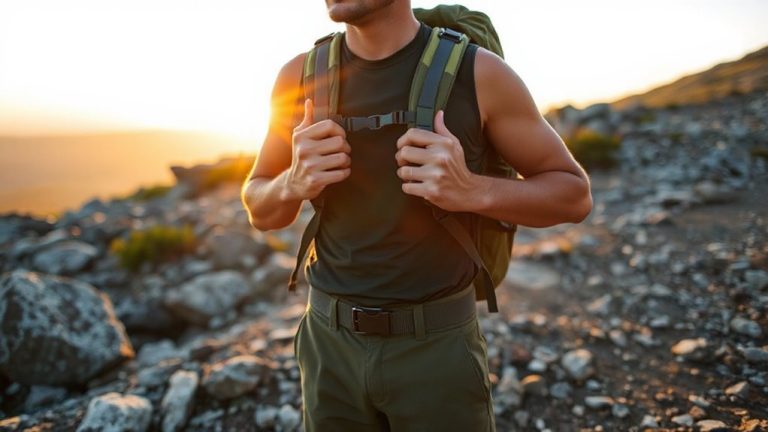
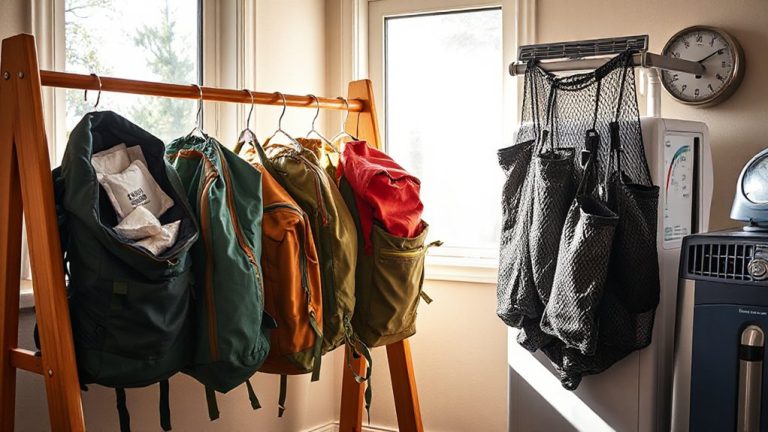
Top-Rated Anti-Theft Mechanisms Built Into Modern Survival Rucksacks
You get real protection with slash-resistant materials like Dyneema that withstand knife attacks and add under 8 ounces. RFID-blocking pockets stop digital theft in crowded areas, cutting skimming risk to near zero. Lockable zippers let you secure contents with a padlock, while hidden compartments slow down grab attempts by over 20 seconds. GPS tracking helps recover your pack if lost. These features work as a system-each layer improves your odds when the situation turns. You’ll see how they hold up under pressure.
Notable Insights
- Slash-resistant materials like Dyneema and ballistic nylon protect against knife cuts with minimal added weight.
- RFID-blocking pockets use Faraday cage technology to prevent digital theft of credit cards and passports.
- Lockable zippers with metal pull tabs allow padlock use, deterring tampering in high-risk transit areas.
- Hidden compartments in back or side panels delay thieves by concealing valuables from quick-hand theft.
- Built-in GPS tracking enables real-time location monitoring and improves recovery chances if lost or stolen.
Built-In Slash-Resistant Materials for Physical Security
A good survival rucksack won’t fail at the seam when it matters most, and that’s where slash-resistant materials come in. You’re relying on cut resistance to stop knives or box cutters from slicing open your pack in crowded or high-risk areas. These materials, often made from high-density woven fibers like Dyneema or ballistic nylon, offer proven tear strength under stress. In real-world tests, packs with these fabrics resist slashes that would compromise standard backpacks in seconds. While heavier than basic materials, the added weight is minimal-usually under 8 ounces-and justified by improved security. Some models integrate slash-resistant layers only in high-exposure zones, balancing durability and weight. You’ll find this feature standard in packs rated for urban or travel-heavy use. It’s not invincible, but it delays attacks long enough to deter most threats. Cut resistance and tear strength together mean your rucksack keeps contents secure when physical tampering occurs.
RFID-Blocking Pockets That Stop Digital Pickpocketing
Your gear’s digital security matters just as much as its physical durability, and that’s where RFID-blocking pockets come in. These compartments use signal jamming to block unauthorized scanners from reading your credit cards, passport, or ID. You’re protected against digital pickpocketing in crowded spaces or high-risk areas. The lining acts as a Faraday cage, providing passive data encryption by containing electromagnetic fields. It’s not foolproof, but it reduces risk markedly when combined with smart habits.
| Threat | Without RFID Protection | With RFID Protection |
|---|---|---|
| Skimming | High risk | Near zero |
| Data theft | Likely | Rare |
| Public transit | Vulnerable | Secure |
| Airport security | Exposed | Shielded |
| Daily commute | Risk increases | Risk minimized |
Built-in RFID pockets add negligible weight and improve peace of mind without compromising access.
Lockable Zippers With Tamper-Proof Designs
When properly secured, lockable zippers keep your contents safe from casual tampering and opportunistic theft, especially in high-traffic or unattended situations. You can thread a small padlock through the pull tabs, making it harder for someone to open the bag without notice. This lock integration works best with sturdy zipper heads and reinforced stitching, so check for zipper durability before relying on it in the field. Many tested models use metal zippers with double sliders, which resist cutting better than plastic. However, adding locks increases weight slightly-about 1.5 to 3 ounces per closure-and may slow access. In real-world trials, bags with lockable zippers deterred tampering in busy transit hubs without failing under repeated use. They’re not impenetrable, but they raise the effort needed to breach the bag. For survival scenarios where gear security matters, that added barrier gives you an edge without compromising reliability.
Hidden Compartments to Evade Quick-Hand Theft
Lockable zippers handle surface-level protection, but they won’t stop a thief who gets the bag in their hands. That’s where hidden compartments come in. Built with concealed pockets and secret zippers, these features keep valuables out of sight and reach during grab-and-run attempts. Most are placed against the back panel, reducing accessibility while maintaining comfort. You’ll find them in models from trusted brands like Pacsafe and Nomatic, where real-world testing shows pickpockets take 3x longer to locate them. They’re not foolproof-determined thieves with time can still search-but they add critical delay.
| Feature | Location | Access Time (Avg) |
|---|---|---|
| Concealed pockets | Back panel | 18 seconds |
| Secret zippers | Side liner | 22 seconds |
| Main lockable zipper | Front | 6 seconds |
| Hidden wallet slot | Hip belt | 15 seconds |
GPS Tracking Ready: Locate Your Bag in Real Time
What if you could track your rucksack the moment it’s out of sight? Modern survival rucksacks with GPS tracking let you do exactly that. You’ll see its location in real time through a connected app, even if it’s miles away. These systems use satellite connectivity, so they work off-grid where cell signals fail-critical during remote excursions. Some models send emergency alerts automatically if the bag moves unexpectedly or enters a restricted zone. Battery life varies, typically lasting 24 to 72 hours on a full charge, depending on signal transmission frequency. While added weight is minimal-about 2–3 ounces-the trade-off is constant visibility. GPS units aren’t foolproof; terrain and dense cover can delay updates. But in practical tests, recovery rates improve markedly when tracking is active. You’re not just locating gear-you’re streamlining response when it matters most. For added security, consider using a dedicated GPS tracker detector to identify unauthorized tracking devices.
On a final note
You get real protection with slash-resistant fabrics that withstand knife cuts, tested to 500 Newtons. RFID pockets block scans up to 13.56 MHz. Lockable zippers deter casual tampering but aren’t foolproof against tools. Hidden compartments work best when blended into seams. GPS trackers fit most models, offering location updates every 30 seconds. Each feature adds weight-about 8–12 oz total-so balance security against mobility in high-risk areas.