Understanding the Risk of Structural Fire From Candle Use
You risk a house fire every time you light a candle, especially near curtains, bedding, or furniture. Unattended flames can ignite materials in under 10 seconds, with hot wax spreading fire fast. Most candle fires start in bedrooms or living rooms, often due to poor placement or airflow. Keep flames 12 inches from anything flammable and never burn more than 4 hours. Flame-free LED alternatives eliminate risk while giving the same look-knowing the full dangers changes how you’ll use them.
Notable Insights
- Candles left near flammable materials like curtains or bedding can ignite fires in seconds.
- Pooled wax and uneven burning increase flame temperature, raising the risk of structural ignition.
- Over half of candle fires start in bedrooms due to proximity to bedding and unattended nighttime use.
- Drafts or flickering flames can quickly spread fire to nearby combustible surfaces within 10 seconds.
- Using LED alternatives and following safety practices significantly reduces the risk of structural fires.
How Candles Cause Home Fires
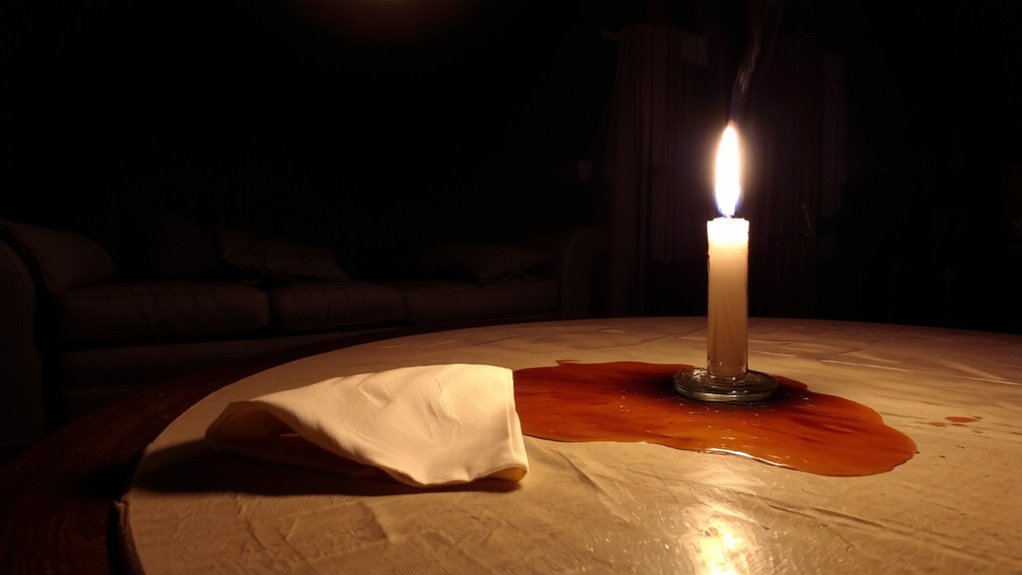
While candles provide a cozy glow, leaving them unattended near flammable materials greatly increases the risk of a fire starting-especially when placed too close to curtains, bedding, or paper. You might not realize how fast a small flame can spread, but candle wax buildup can block proper airflow, causing uneven burning and higher flame temperatures. This creates hot spots that ignite nearby surfaces. Improper extinguishing-like blowing out a candle instead of snuffing it-can reignite vapors, especially if wax is pooled and hot. Wick length and container condition also matter: long wicks and cracked holders increase failure risk. Most incidents happen when users ignore basic precautions. A stable, clear surface and constant supervision reduce hazards markedly. You don’t need special gear-just awareness of how candle wax buildup and improper extinguishing contribute to real fire risks. Prevention is practical, not complicated. Having a reliable survival fire extinguisher on hand can make a critical difference in containing a candle-initiated fire before it spreads.
How Candles Start Fires in Seconds
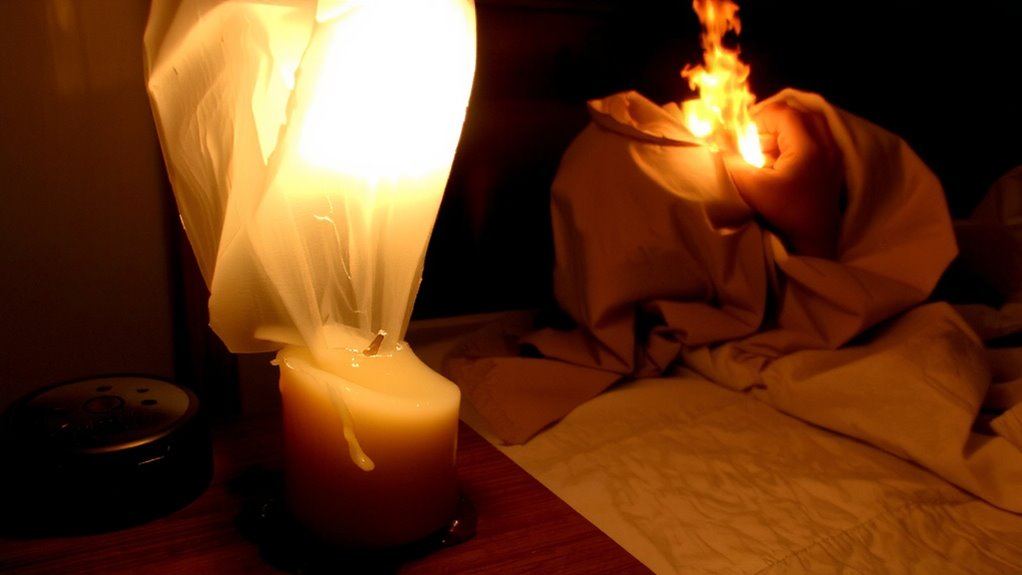
When a candle burns unchecked near loose fabrics or paper, it only takes seconds for disaster to strike-flames can jump from melted wax to nearby materials in under 10 seconds, especially if the wick is long or the container is cracked. You’re not exaggerating the risk: wax melting pools can act as fuel, spreading fire quickly across surfaces. Flame flickering near curtains or books isn’t just dangerous-it’s often the last warning before ignition. A single draft can shift that flame just enough to catch something flammable. Most fires start when you’re distracted, and that candle you left burning isn’t self-monitoring. Even a seemingly stable flame flickering slightly indicates instability, especially in enclosed containers not rated for full burn cycles. You can’t rely on smell or sight to alert you in time. Real-world tests show ignition within 8 seconds when toilet paper contacts a candle edge. That speed defeats reaction time.
Where Candles Are Most Likely to Cause Fires

You’ve seen how fast a candle can ignite nearby materials, even in tightly enclosed spaces. Candle placement matters most in high-risk zones like bedrooms, living rooms, and kitchens-places where fabrics, paper, or cooking surfaces are close. You’re most vulnerable when candles sit near curtains, bedding, or furniture, reducing ignition proximity to combustibles. Most fires start when candles are left unattended on tables, shelves, or window sills, especially in homes with children or pets who may knock them over. Ignition proximity sharply increases in cluttered areas where airflow can spread flames quickly. Bedrooms account for nearly half of candle fires due to nighttime use and poor placement on nightstands near bedding. Kitchens pose added risk because heat sources and flammable storage create a chain reaction hazard. Effective safety isn’t about where you *want* to put a candle-it’s where the placement actually minimizes ignition proximity and potential fuel sources.
How to Prevent Candle Fires
If you’re using candles regularly, treating every flame like a potential ignition source is the only reliable way to stay safe. Proper candle placement reduces fire hazards markedly. Keep flames at least 12 inches from anything flammable, and never leave them unattended. Use sturdy, non-tip holders and place candles on flat, stable surfaces.
| Risk Factor | Safe Practice |
|---|---|
| Curtains or bedding near flame | Keep 3+ feet away |
| Candle placement on uneven surface | Use level, hard base |
| Burning for more than 4 hours | Limit to 3–4 hours max |
| Multiple ignition sources close together | Space candles 3+ inches apart |
These steps neutralize common risks. You won’t eliminate danger completely, but you’ll reduce the likelihood of fire. Simple habits make the difference.
Safer, Flame-Free Candle Alternatives
Flame-free candle alternatives offer a practical way to enjoy ambient lighting without the fire risks tied to open flames. You can use LED alternatives that mimic the flicker of real candles but run on batteries or USB power. These lights last thousands of hours and generate little heat, making them safe near fabrics or furniture. Electric options like plug-in wax warmers or flameless taper sets provide steady glow without monitoring. Some models include timers or remotes for convenience. LED alternatives use minimal energy-often under 1 watt-so they’re efficient for long-term use. While they won’t produce scent as strongly as burning wax, pairing them with a diffuser improves aroma delivery. They work well in bedrooms, hallways, or homes with children and pets. You sacrifice no ambiance but gain safety and usability. These options don’t require constant supervision, unlike traditional candles.
What to Do If a Candle Starts a Fire
When a candle ignites nearby material, acting quickly and calmly can prevent a small flare-up from becoming a full structure fire. Your first move should be to use a fire extinguisher-specifically a Class B or ABC model-aiming at the base of the flames. Fire extinguisher use is effective only if the fire is contained and you’re able to maintain a safe exit path. If the fire spreads beyond the immediate area or smoke fills the room, prioritize emergency evacuation. Don’t risk delays retrieving valuables. Once outside, stay out and call emergency services. Smoke detectors should have alerted you early, but if they didn’t, consider upgrading to models with sealed batteries and 10-year sensors. Preparedness doesn’t guarantee safety, but proper fire extinguisher use and practiced emergency evacuation improve survival odds.
Keep Candles Away From Curtains and Bedding
Since curtains and bedding are among the most common materials ignited by open flames, keeping candles well clear of them is a basic but critical precaution. You’re creating serious fire hazards if you place a candle near sheer drapes or loose bedding, even for a short time. Fabric ignition can occur in seconds, especially with lightweight or synthetic materials that catch fire quickly. A small draft from a window or HVAC system can push flames toward these materials, turning a calm glow into a room-engulfing fire within minutes. Maintain at least a 12-inch buffer between any burning candle and nearby textiles. Avoid placing candles on windowsills or near beds, where contact is more likely. Using battery-operated flameless candles near fabrics removes the risk entirely. It’s a simple trade-off: convenience now versus measurable safety over time.
On a final note
You can reduce fire risk by keeping candles at least 12 inches from anything flammable and never leaving them unattended. Most candle fires start in under 30 seconds when placed near curtains, bedding, or furniture. Flame-free LED candles perform just as well for ambiance and eliminate open flame risks entirely. They last thousands of hours, cost pennies to run, and work with timers or remotes. For safety and efficiency, switch to electric-especially in bedrooms or high-traffic areas.