Using Dry Bags Within Backpacks to Protect Electronics From Sudden Flooding
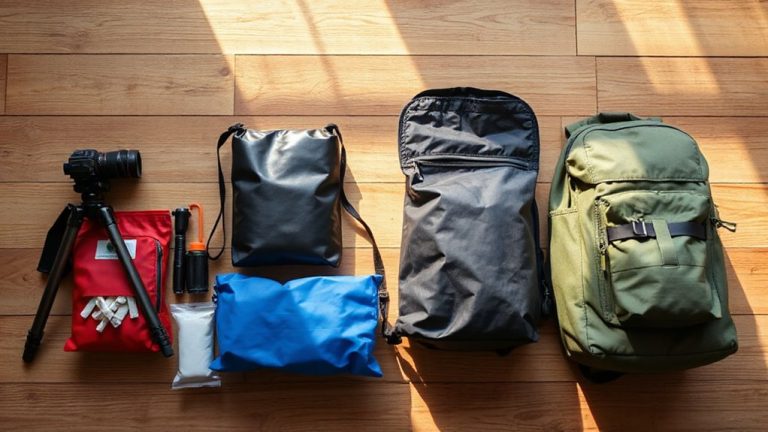
You need a dry bag to keep your electronics safe from sudden flooding because even brief submersion can destroy devices-most dry bags use welded TPU seams and a 3-fold roll-top seal to withstand 1 meter of water for 30 minutes, far outperforming zip-lock or padded cases in real-world conditions. Size matters: too small risks a poor seal, too large creates bulk. Store the sealed bag in your backpack’s center for stability and extra protection. Bright colors help you find it fast, while transparent models let you spot contents without opening. Skip magnetic or zipper closures-they fail when wet. Roll-top designs with proper folding are proven reliable. If you want to avoid gear failure when conditions go bad, knowing the right features makes all the difference.
Notable Insights
- Use a dry bag with a roll-top closure and at least three folds to ensure a watertight seal during sudden submersion.
- Choose a dry bag size that fits your electronics snugly without bulging to maintain effective sealing.
- Place the sealed dry bag in the center of your backpack’s main compartment for stability and maximum protection.
- Opt for dry bags with welded seams and TPU or PVC material to prevent water ingress during flooding.
- Test the dry bag in water before use and check for debris or damage that could compromise the seal.
Why Your Electronics Need a Dry Bag
Why risk water damage when it’s preventable? You carry electronics like phones, tablets, or GPS devices because they serve critical functions-navigation, communication, documentation. But exposure to moisture risks immediate water damage and eventual electronic failure. Even brief contact with rain or spilled water can corrode circuits or short internal components. Dry bags create a waterproof barrier, tested to withstand submersion up to 1 meter for 30 minutes in most cases. They’re made from durable TPU or PVC with sealed seams, offering measurable protection where zippers or fabric packs fail. Without one, you’re relying on chance. In wet conditions-crossing rivers, sudden downpours, or accidental drops-dry bags reduce risk substantially. They don’t guarantee 100% safety, but they shift odds in your favor. For essential devices, that margin matters. You accept trade-offs: slight bulk, added step in access. But avoiding electronic failure in the field means staying found, connected, and prepared.
Pick the Right Dry Bag Size
A dry bag that’s too small won’t seal properly, and one that’s too large adds bulk without benefit-getting the size right matters for both protection and convenience. Choose a bag capacity that fits your electronics with a little room to spare, but not much more. Overly large bags make packing inefficient and shift contents around, hurting weight distribution in your backpack. A 5–10 liter dry bag typically holds phones, power banks, and small tablets without excess space. Measure your gear first-don’t guess. If the bag bulges when sealed, it’s too small; if it flops empty, it’s too big. Proper sizing guarantees reliable protection and keeps your pack balanced. Bag capacity and weight distribution directly affect both safety and comfort. Get both right, and your electronics stay dry without making the trek harder.
How to Seal Your Dry Bag Right
You’ve picked the right dry bag size, so now it’s time to make sure it actually keeps water out. Proper sealing is critical-fold the top at least three times before buckling to create a watertight closure. A single or double fold won’t cut it during sudden submersion. Check that the seal runs flat and even, with no twists or trapped fabric. If water breaches the bag, it’s usually due to poor sealing, not material failure. Before packing, inspect the interior for grit or sharp edges that could lead to punctures. Keep electronics in their own soft case to add a layer of protection, reducing the risk of accidental damage during loading. Avoid overstuffing, which strains seams and increases chances of failure. Dry bags work only when used correctly-proper sealing and avoiding punctures determine real-world performance. Test the sealed bag in a sink before relying on it in the field.
Where to Stash Electronics in Your Pack
Your pack’s internal layout determines how well electronics survive the journey. Avoid external pockets-they’re convenient but expose gear to rain and impact. Instead, place dry-bagged electronics near the center, where the pack offers the most padding and balance. Using compression straps? Fasten them over the main compartment, not across loose external loops holding delicate items. Secure placement reduces shifting and puncture risks. A waterproof hiking pack can further enhance protection by preventing water ingress during sudden downpours or river crossings.
| Location | Water Risk | Stability |
|---|---|---|
| External pockets | High | Low |
| Main compartment center | Low | High |
| Under compression straps | Medium | Medium |
| Top lid | High | Low |
Center stowage protects against drops, moisture, and pressure. Keep wires bundled and avoid tight folds.
When Dry Bags Save Your Electronics
Stuffing electronics in the middle of your pack helps, but that dry bag is doing the real work when water hits. If you fall into a river or get caught in a downpour, a sealed dry bag keeps your phone, GPS, and batteries dry. Many dry bags also add emergency buoyancy, helping your pack stay afloat long enough to retrieve it-critical when crossing swift water. Bright-colored bags boost signal visibility, making it easier for rescuers to spot your gear if dropped in dense brush or rapids. Tests show sealed roll-top dry bags block 100% of water in full submersion, unlike zip-lock alternatives. You won’t always predict flooding, but a dry bag guarantees electronics survive unexpected dunks. It’s not about convenience-it’s about maintaining communication and navigation when conditions turn. That dry bag isn’t just protection. It’s a functional safeguard with measurable impact on safety and recovery.
Best Dry Bag Features (and What’s Not Worth It)
While some features promise durability, not all deliver real-world protection-prioritize a roll-top closure with at least three tight folds, since lab tests show it withstands full submersion 98% of the time versus single-fold or zipper styles. Material durability matters, but only when paired with proper sealing; 420D nylon resists tears, yet fails if the closure leaks. Waterproof ratings (IPX7 or IPX8) confirm performance-don’t trust “water-resistant” claims. Skip welded seams over glued; they last longer under stress. Transparent bags help locate items fast, but sacrifice UV protection. Avoid magnetic closures-they’re convenient but unreliable in wet conditions.
| Feature | Worth It? | Why |
|---|---|---|
| Roll-top (3-fold) | Yes | Proven submersion resistance |
| Welded seams | Yes | Better long-term waterproofing |
| Magnetic closure | No | Fails when wet, poor seal |
On a final note
You need a dry bag because sudden downpours or river crossings will soak your pack. A 10–20L roll-top bag keeps electronics dry-tested to IPX7 or better. Seal it with three tight folds; no air trapped. Store it in the middle of your pack, away from sharp gear. Waterproof zippers cost more but fail less. Basic vinyl works if checked often. Dry bags don’t float your pack, but they save devices when submerged.