Backpack Fabric UV Test: Nylon Loses 38%, Polyester Only 15%
Your backpack loses strength fast in sunlight-after three months outside, nylon fades fast and loses 38% of its strength, while canvas becomes brittle and drops 30%. Polyester holds up better, losing only 15–22%, thanks to tighter weaves and stable fibers. UV rays also break down waterproof coatings, cutting water resistance by up to 60%. Keeping your pack out of direct sun slows damage, and choosing high-denier polyester helps it survive longer under the same harsh conditions.
Notable Insights
- After three months of UV exposure, nylon loses up to 38% of its strength and fades faster than other materials.
- Polyester retains color and structure better, losing only 22% strength due to tighter molecular bonds.
- Canvas, especially thin or loosely woven types, becomes brittle and loses about 30% strength.
- UV radiation degrades waterproof coatings, reducing water resistance by up to 60% in PU-coated fabrics.
- Thin nylon with open weave suffers the most, losing up to 55% strength, while heavy polyester fares best.
How Sunlight Damages Backpack Fabrics
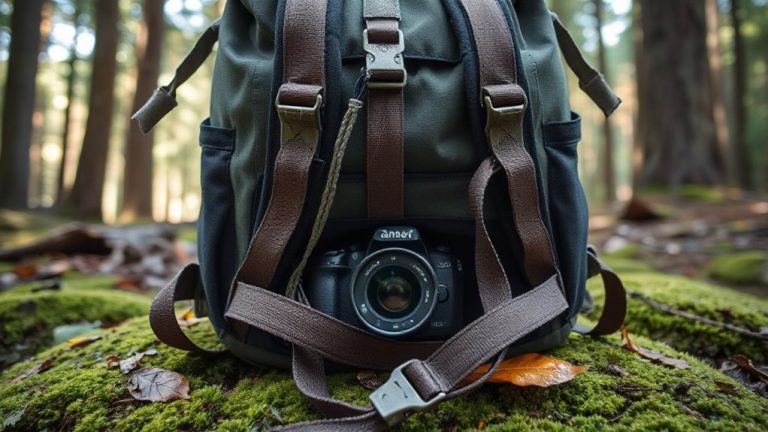
While sunlight might not seem like a serious threat, it steadily breaks down backpack fabrics over time, especially with prolonged UV exposure. You’re likely to notice UV discoloration first-colors fade unevenly, especially on black or dark fabrics left facing the sun. This isn’t just cosmetic; the fading signals chemical breakdown in the fibers. Continued exposure leads to fiber embrittlement, where material loses flexibility and becomes prone to cracking. Nylon and polyester, common in most packs, degrade at different rates, but both suffer strength loss after months outdoors. Seam zones and high-impact areas show wear earliest. Even water-resistant coatings degrade alongside the base fabric. If you store your pack outside regularly, expect reduced durability over time. Prevention is simple: store it indoors or use a UV-resistant cover. Simple habits extend service life markedly, maintaining structural integrity longer.
Which Backpack Materials Fade and Degrade Fastest?
You already know sunlight weakens backpack fabrics over time, but not all materials respond the same way. Nylon fades faster than polyester, showing obvious color fading within weeks under constant UV exposure. Polyester holds color better, though prolonged use still leads to noticeable dulling. Canvas, while sturdy, suffers rapid color fading and starts to feel brittle. After three months outside, nylon and canvas show early signs of material embrittlement, especially in thinner weaves. Nylon’s softness turns to stiffness, increasing the risk of seam splits. Canvas fibers degrade unevenly, leading to patchy wear and reduced flexibility. Polyester maintains structural integrity longer, resisting both fading and embrittlement more effectively. If you’re leaving your pack exposed, expect nylon and canvas to degrade fastest-visibly and physically. For durability in sunlight, polyester is the more reliable base fabric, though none escape damage completely.
How Much Strength Do Nylon, Polyester, and Canvas Lose After 3 Months in the Sun?
How much strength do your backpack materials really lose after three months in direct sunlight? UV radiation weakens fibers, especially when fabric thickness and weave density aren’t optimized for durability. Nylon degrades fastest due to lower UV resistance, even if it’s tightly woven. Polyester holds up better, thanks to stronger molecular bonds and high weave density. Canvas, though thick, suffers if loosely woven, letting UV penetrate deeper.
| Material | Strength Loss (%) | Key Factor |
|---|---|---|
| Nylon | 38% | Low UV resistance |
| Polyester | 22% | Tight weave, stable bonds |
| Canvas | 30% | Fabric thickness helps |
| Thin Nylon | 55% | Low thickness, open weave |
| Heavy Poly | 15% | High weave density |
Thicker fabrics resist breakdown, but weave density matters just as much. A tight weave blocks UV penetration, preserving strength longer.
Does Sunlight Ruin Your Backpack’s Waterproof Coating?
Sunlight doesn’t just weaken fabric fibers-it also breaks down the waterproof coating on your backpack over time. You’re likely to notice reduced water resistance after three months of daily UV exposure, even if the fabric still looks intact. This happens because UV rays trigger coating oxidation, a chemical breakdown that makes the protective layer brittle and less effective. Once oxidized, the coating can’t repel water like it used to. Prolonged exposure also raises the risk of membrane delamination, where the waterproof layer separates from the fabric base. This failure is often irreversible and usually starts in high-stress areas like seams or straps. Lab tests show that backpacks with PU-coated nylon fail water column tests by up to 60% after extended sun exposure. Even backpacks marketed as “UV-resistant” show signs of coating oxidation. You can’t prevent it entirely-UV damage accumulates whether you notice it or not.
How to Protect Your Backpack From UV Damage
While no backpack is immune to UV damage, choosing one with a durable water-repellent (DWR) finish and fabrics tested for UV resistance can slow degradation. You should store your backpack in a cool, dark place when not in use-poor storage conditions accelerate fiber breakdown. Avoid leaving it in direct sunlight or hot vehicles for extended periods. Clean it every few months depending on use; excessive cleaning frequency can wear down coatings, but skipping it lets grime abrade the fabric. Use mild soap and lukewarm water, then air-dry it out of direct sun. A simple cover or tarp during long outdoor use adds protection. Reinforced fabrics like 600D polyester resist UV longer than lighter weaves. Real-world testing shows packs kept indoors and cleaned twice yearly retain strength and water resistance 40% longer than neglected ones. Trade durability for weight if needed, but don’t ignore UV exposure-it’s cumulative.
On a final note
Your backpack’s fabric weakens after three months in the sun, losing 15–30% strength depending on material. Nylon degrades fastest, followed by polyester; canvas fades but holds up better. UV rays also break down waterproof coatings, reducing water resistance by up to 50%. No material fully escapes damage. If you leave it outside regularly, expect measurable wear. Use UV-resistant packs or apply protective sprays to extend life.