When to Avoid Foraging Near Contaminated Water Sources After Flooding Events
Avoid foraging near contaminated water sources until at least 30 days after floodwaters recede. Floods spread harmful pathogens, heavy metals, and chemicals that soak into soil and plants. Washing and cooking won’t remove these hazards, especially in leafy greens and root crops. Stay off low ground where toxins accumulate, and don’t trust plant appearance. If you know where to look next, you’ll find safer options faster.
Notable Insights
- Wait at least 30 days after floodwaters recede before foraging to allow time for contaminant dissipation.
- Avoid foraging in low-lying areas where flood debris and chemical pollutants accumulate most heavily.
- Do not consume root crops or leafy greens, which readily absorb and retain toxins from contaminated soil.
- Steer clear of waterways that overflowed, as they spread hazardous materials like heavy metals and pathogens.
- Test soil twice, one week apart, for stable pH and contaminant levels before considering foraging safe.
How Floodwaters Contaminate Foraged Foods
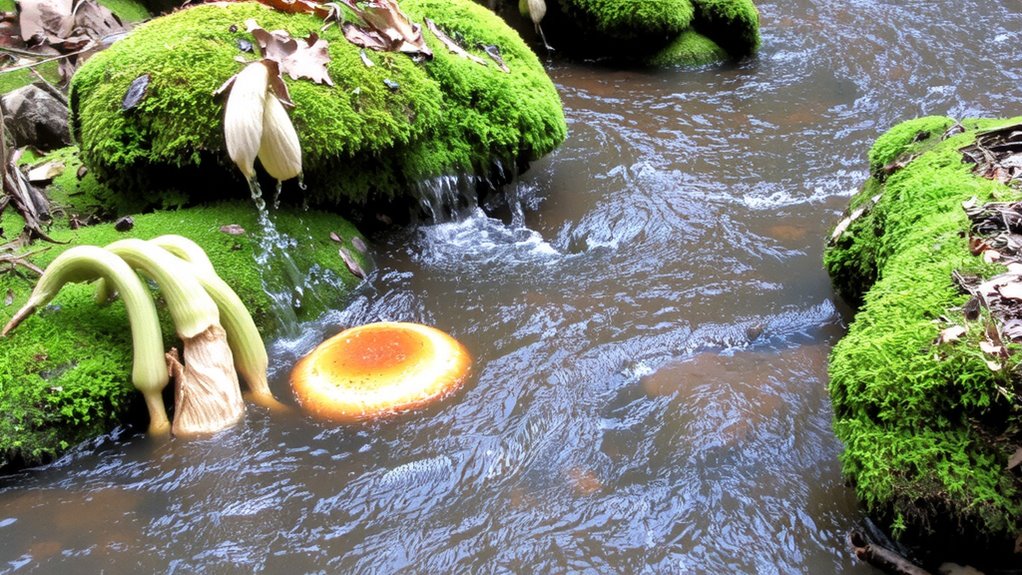
If you’re foraging near floodwaters, you’re likely exposing yourself to serious health risks because floodwaters carry contaminants that soak into plants and soil. These contaminants lead to mold growth on edible plants, especially in damp, decaying vegetation left behind after the water recedes. You can’t always see the spores, but they thrive in wet conditions and can make you sick if ingested. Chemical absorption is another concern-plants take up pollutants like heavy metals and toxins through their roots, integrating them into leaves, stems, and fruits. Washing won’t remove absorbed chemicals or internal mold. Root vegetables are especially prone to contamination. Even heat from cooking doesn’t destroy all toxins or eliminate mold byproducts. The safest choice is avoiding foraging in flooded zones entirely until soil and plant life are tested and cleared. Your health isn’t worth the risk.
Top Contaminants in Flood-Affected Foraging Zones
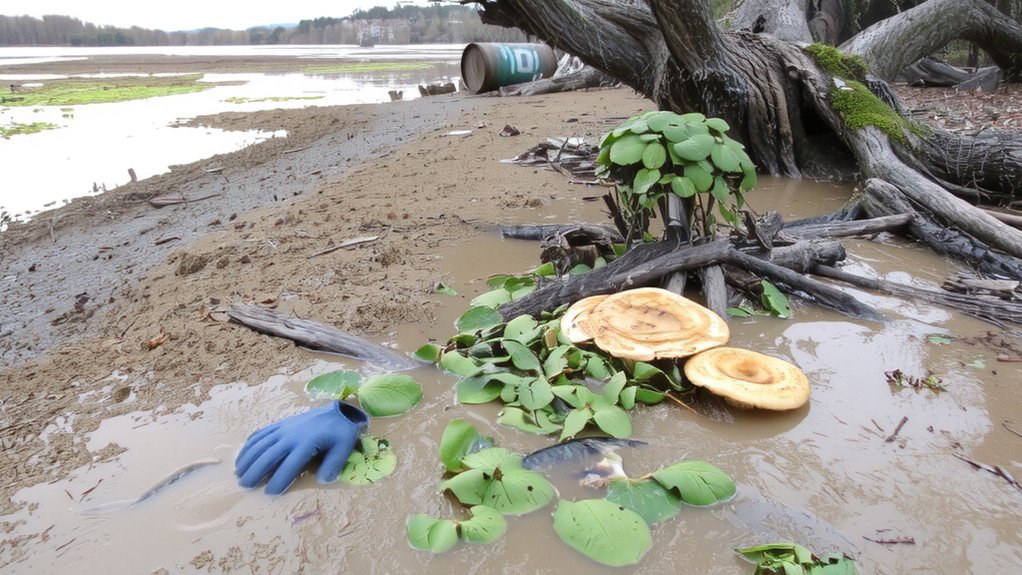
Floodwaters don’t just leave behind mud-they carry a dangerous mix of pollutants that settle into the soil and cling to plants, making foraged foods unsafe even if they look clean. You’re likely to encounter chemical runoff from farms and roads, which includes pesticides, heavy metals, and petroleum byproducts. These toxins absorb into plant tissues and won’t wash off. Industrial pollutants like PCBs and asbestos may also spread from damaged facilities, contaminating roots, mushrooms, and leafy greens. Unlike surface dirt, these substances persist long after waters recede. Testing shows that edible plants in affected zones often exceed safety limits for lead and arsenic. Even brief exposure can result in accumulation. You can’t taste or see most contaminants, so visual inspection isn’t enough. Relying on location history and soil reports is more effective. When in doubt, skip foraging in flood-impacted areas. Your health isn’t worth the risk.
High-Risk Foraging Zones After Flooding
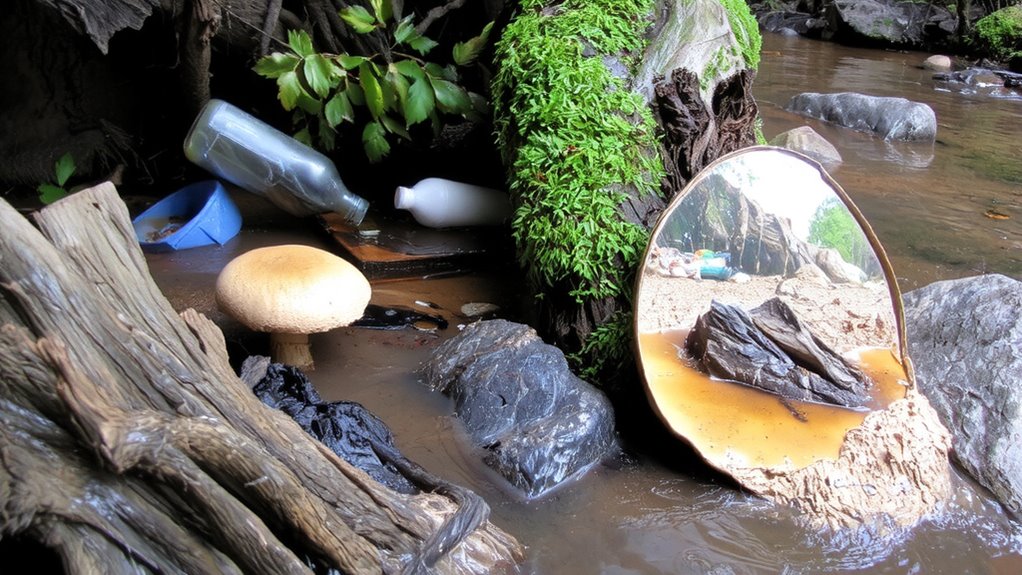
Where should you avoid foraging after floods? Stay away from low-lying areas where flood debris accumulation concentrates contaminants. These zones trap pollutants from upstream, embedding them in soil and plants. You’ll also want to skip foraging near waterways that overflowed, as they redistribute hazardous materials and foster bacterial growth. Floodwaters push wildlife displacement into new zones, increasing droppings and potential pathogen spread around foraging sites. Don’t assume a spot looks clean-it might still host invisible toxins. Areas near industrial or agricultural land are especially risky due to chemical runoff. Even edible plants in these zones absorb harmful substances. Stick to higher ground that drained quickly and shows minimal debris. If you see branches, trash, or silt stacked in a spot, that’s where contamination gathers. Avoid those places. Your safety hinges on recognizing these high-risk zones.
How Long Toxins Linger in Soil and Plants
Toxins don’t disappear just because the water recedes. Floodwaters leave behind heavy metals, pesticides, and industrial chemicals that bind to soil and get taken up by plants. These contaminants can persist for months or even years, depending on soil pH changes and drainage. You face real plant mutation risks when foraging in impacted areas, especially with leafy greens and root vegetables that absorb toxins readily.
| Contaminant Type | Lingers in Soil (Months) | Plant Uptake Risk |
|---|---|---|
| Heavy Metals | 12–36 | High |
| Pesticides | 3–18 | Moderate |
| PCBs | 24+ | High |
| Petroleum | 6–12 | Low to Moderate |
| Fertilizer runoff | 1–4 | Moderate |
Soil pH changes can increase metal solubility, making toxins more available to plants. You can’t see or taste most of these dangers, so assume risk until testing confirms safety.
When It’s Safe to Forage Again
How long should you wait before foraging safely after floodwaters recede? At least 30 days is a baseline, but testing soil pH gives a clearer signal. Floods alter soil chemistry, often lowering pH and increasing metal solubility, which affects what plants absorb. You can’t rely on plant resilience alone-some species regrow quickly but still accumulate toxins. Wait until two consecutive soil tests, a week apart, show stable pH levels near pre-flood readings. Even then, start by harvesting from high ground or areas with fast-draining soil, where contamination leaches faster. Young shoots post-flood may look vibrant, but that’s resilience, not safety. Root crops and leafy greens are higher risk due to direct soil contact. When in doubt, assume contamination lingers. Trust test results, not appearances. Your health depends on measured caution, not guesswork.
Where to Forage Safely After a Flood
You’ve waited the recommended 30 days and confirmed stable soil pH with back-to-back tests-now it’s time to decide where to focus your foraging efforts. Prioritize elevated areas with good drainage, as floodwaters and contaminants linger in low spots. Urban parks on higher ground can be viable if they’re away from flooded rivers or industrial zones, but avoid any with standing water or visible sediment deposits. Test soil for heavy metals if the park is near roads or older infrastructure. Private gardens are often safer, especially if the owner uses raised beds with imported soil and avoids chemical treatments. Confirm the garden’s flood exposure-basements or yard pooling mean possible contamination. Wild plants like nettles and garlic mustard in these areas often survive and regenerate quickly. Stick to species you can identify with certainty. When in doubt, don’t eat it. Safety outweighs hunger.
On a final note
You should avoid foraging near flooded water sources for at least four weeks, longer if industrial or sewage contamination is suspected. Toxins like heavy metals and pathogens can persist in soil and plants. Leafy greens and mushrooms absorb contaminants quickly. Root vegetables hold risks longer. Test soil if possible. When in doubt, wait or move to higher, unaffected areas. Your safety depends on patience and location.