How to Identify Risks From Damaged Gas Meters After Earthquakes
Check your gas meter right after an earthquake for cracks, dents, or bent pipes-any shift can mean danger. Smell for rotten eggs or hear for hissing, both signs of leaks. Don’t ignore dying grass or bubbles in water near the meter. If you see damage or suspect a leak, get out fast and call from a safe distance. Never try fixes yourself-only pros should handle gas repairs. A quick inspection could save your home or life-knowing more helps you act faster when it counts.
Notable Insights
- Check for visible damage like cracks, dents, or twisted piping on the gas meter and nearby connections.
- Look for a leaning or detached meter, which indicates potential structural failure after seismic activity.
- Smell for rotten egg odor, a sign of natural gas leaks due to damaged meter seals or joints.
- Listen for hissing or whistling sounds near the meter, indicating escaping pressurized gas.
- Observe dying vegetation or bubbling water near the meter, which may signal underground gas leaks.
What to Look for in a Damaged Gas Meter
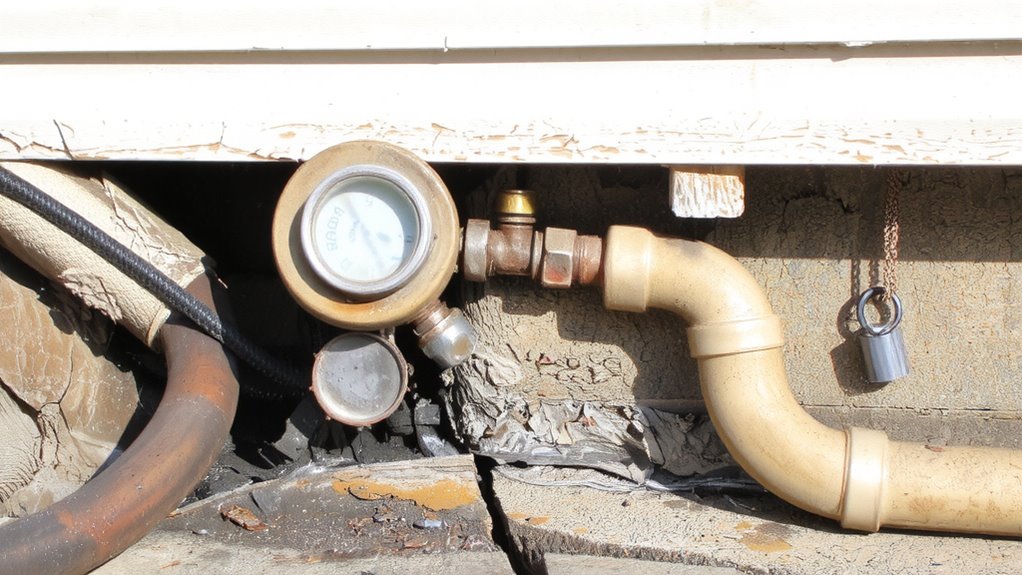
Look for visible cracks, dents, or twisted piping-these are the first signs a gas meter took a hit during an earthquake. You’re checking for structural compromise, not cosmetic flaws. If the meter case is bent or detached from the wall, assume it’s unsafe. Inspect the outlet piping and regulator connections closely-any misalignment could mean internal stress. Corroded fittings reduce joint integrity and increase leak risk, especially if they’re brittle or flaking. Loose connections at the meter or shutoff valve are red flags-they can open pathways for gas even if the line looks intact. These faults won’t always cause immediate failure, but they weaken the system’s reliability under pressure. Don’t rely on smell or sound here; you’re evaluating physical damage only. If you spot cracked housings, warped components, corroded fittings, or loose connections, mark the area off-limits and call a professional. Immediate shutdown may be necessary.
How to Tell If There’s a Gas Leak?
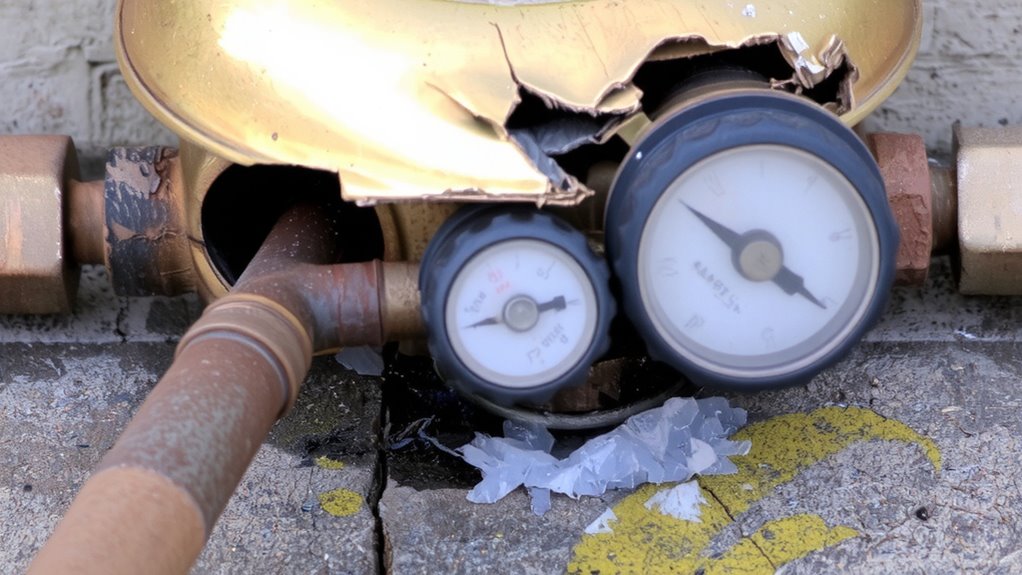
You’ve checked the meter for cracks, dents, and loose connections-now it’s time to find out if gas is actually escaping. Start with smell detection: natural gas is odorless, but providers add a sulfur-like chemical so leaks are noticeable. If you catch that rotten egg scent, gas may be present. Don’t rely on smell alone-some people have reduced sensitivity. Use sound detection next. Stand still near the meter and listen for a hissing, whistling, or roaring noise. Escaping gas often makes an audible pressurized flow. Wind or background noise can mask it, so check in calm conditions. If you see vegetation dying near the meter or bubbles in standing water, those support your findings. Smell and sound detection together improve accuracy. Don’t use electronics or open flames to test. These signs mean the system has failed containment-act fast, but stay clear of ignition sources.
What to Do Immediately If Your Meter Is Damaged
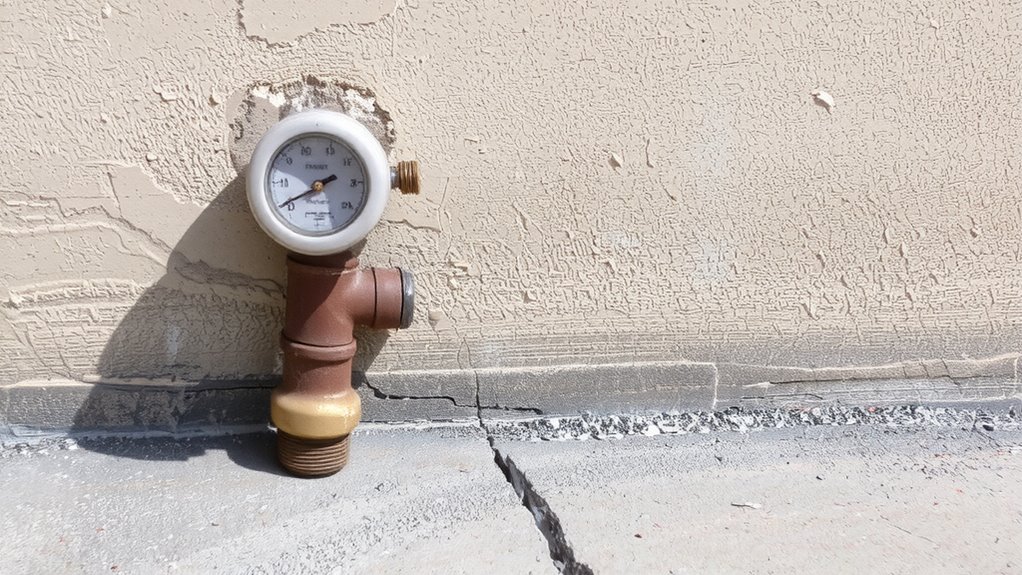
What would you do if you spotted a cracked or leaning gas meter after the ground stopped shaking? Evacuate immediately. Don’t wait. A damaged meter could release gas, creating a risk of fire or explosion. Don’t turn electrical switches on or off-sparks could trigger ignition. Don’t use phones or electronics nearby. Move quickly but calmly. Once you’re at least 300 feet away, call emergency services or your gas company from a safe location. Alert neighbors as you leave-your warning could save lives. Don’t assume they noticed the damage. A cracked or shifted meter is an urgent failure point, not a minor issue. Don’t re-enter the area until officials confirm it’s safe. Immediate evacuation reduces risk more than any other action. Gas exposure can be deadly, and delayed response increases danger. Act fast. Stay clear.
Hidden Signs of Gas Line Damage
While the most obvious signs of damage are cracked meters or tilted housings, you might not see the full extent of harm if you only check for what’s visible. Hidden gas line damage can linger beneath the surface. Look for subtle clues like discolored soil near lines or dying patches of grass-these can signal gas corrosion. You won’t always smell gas, but if you notice a sulfur-like odor now and then, it may point to slow leaks. Unusual appliance behavior, such as flickering pilots or inconsistent flames, often stems from pressure fluctuations. These shifts in pressure can strain systems and hint at compromised lines. Hissing sounds near buried lines or meter connections, even faint ones, demand attention. Corrosion eats away at metal over time, especially after seismic stress. Pressure fluctuations can precede bigger failures. These signs don’t scream for notice, but they’re measurable if you’re alert. Monitoring them helps you catch problems early-before they turn urgent.
When to Call a Pro (And Never DIY Repairs)
How quickly should you act when you suspect gas line damage after an earthquake? Immediately. Gas safety is critical-never attempt DIY repairs on gas lines or meters. Small leaks can lead to fires or explosions. Instead, evacuate and call your utility provider or emergency contacts right away. Professionals have the tools and training to handle gas line issues safely.
| Sign of Damage | Action Required |
|---|---|
| Hissing sound | Evacuate, call emergency |
| Smell of rotten eggs | Leave immediately, no phones |
| Visible meter damage | Shut off gas, contact pro |
| Pilot lights out | Check with technician |
Only licensed technicians should inspect or repair gas systems. Your quick response and use of emergency contacts reduce risk. When in doubt, assume it’s dangerous and get help.
How to Prepare Your Gas Meter for Earthquakes
You already know not to touch a damaged gas meter after a quake-now take steps before disaster strikes. Install seismic retrofitting to secure your gas meter, reducing the chance it shifts or breaks during shaking. Retrofitting typically involves bracing the meter to the wall and adding flexible connectors, both proven to limit damage in moderate to strong quakes. Check local building codes-many require these upgrades, especially in high-risk zones. Also, locate your emergency shut off valve and guarantee it’s accessible. A swift gas cut-off prevents leaks if lines rupture. Use a wrench that fits the valve properly and confirm household members know how to close it. Don’t wait for warning signs. Retrofitting costs a few hundred dollars but delivers measurable protection. It won’t prevent all damage, but it improves odds markedly. Combine it with an emergency shut off routine for practical, effective prep.
On a final note
Check your gas meter after any quake-cracks, rust, or misalignment mean danger. If you smell gas or hear hissing, leave and call the utility right away. Never attempt repairs yourself. Even small leaks risk explosion. Older meters fail faster under stress. Shut-off valves help, but only if accessible. Metal lines resist damage better than plastic. Prepare by knowing your meter’s location and condition. A few minutes now could save lives later.