Best Backpacking Solar Panels for Reliable Off-Grid Power
You need reliable power off-grid, and panels like the BigBlue 28W and FlexSolar 40W deliver with 25.4% efficient N-type cells that perform well in heat and low light. These lightweight, foldable units weigh under 1.8 lbs and feature IP67 or higher ratings for durability in rain and dust. While output drops in shade or clouds, models with MPPT controllers and dual USB-C/USB-A ports maintain efficient charging. Real-world performance varies, so pick based on weather exposure, device needs, and port build quality-your setup depends on it.
We are supported by our audience. When you purchase through links on our site, we may earn an affiliate commission, at no extra cost for you. Learn more. Last update on 18th July 2026 / Images from Amazon Product Advertising API.
Notable Insights
- High-efficiency monocrystalline or N-type solar cells exceed 24% efficiency for superior power generation in minimal sunlight.
- IP67 or higher-rated solar panels ensure durability against rain, dust, and submersion for reliable off-grid use.
- Compact, foldable designs under 1.5 lbs with carabiner attachments enhance portability for backpacking.
- USB-C Power Delivery and QC3.0 ports enable fast, compatible charging for phones, GPS, and other devices.
- Real-world performance stability is ensured by MPPT controllers and dual-string circuits reducing shading losses.
BigBlue 28W Solar Panel Charger

If you need a lightweight, efficient solar charger for fast power delivery in remote areas, the BigBlue 28W Solar Panel Charger is a solid pick. I use it on backpacking trips because it weighs just 1.48 pounds and folds small. Its 28W output with dual USB-C and one USB-A port lets me charge my phone, power bank, and GPS at once-up to 5V/4.8A total. N-type solar cells deliver 25.4% efficiency, the best I’ve seen, and the no-shadow surface helps in low light. It’s IP44-rated, so it shrugs off rain, but I keep the USB box dry. It won’t charge through glass, though. Carabiners make it easy to clip on my pack.
Best For: Outdoor enthusiasts who need a lightweight, high-efficiency solar charger for fast, reliable power in remote locations.
Pros:
- Delivers industry-leading 25.4% solar efficiency with N-type cells and shadow-free design for optimal performance in low light
- Lightweight and compact folding design with carabiners makes it ideal for backpacking, camping, and hiking
- Multiple output ports (dual USB-C, one USB-A) support simultaneous fast charging of up to three devices with 5V/4.8A total output
Cons:
- USB junction box is not waterproof, requiring careful placement in wet conditions despite IP44-rated panel surface
- Does not store power and must be used in direct sunlight, limiting usability in shade or indoors
- Apple charging cable not included, and charging through glass (like windows) is ineffective
FlexSolar 36W Ultra-Portable Solar Charger
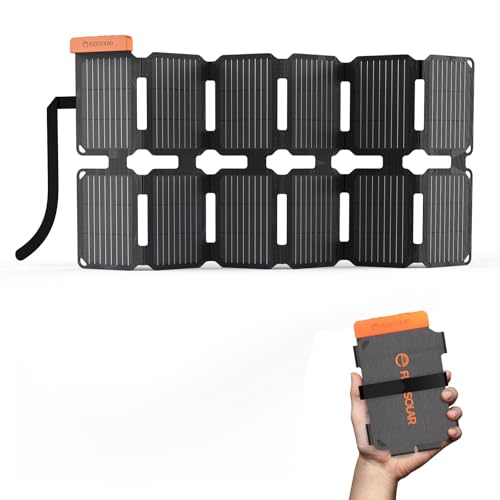
The FlexSolar 36W Ultra-Portable Solar Charger works best for backpackers who need reliable power without adding bulk, since it folds down to a size smaller than most tablets and weighs just 1.54 pounds. I’ve used it in rain and dust, and the IP67 rating holds-it survives spills, heavy showers, and even short immersions. Its 24% efficiency with monocrystalline cells means solid output, even in partial shade, thanks to MPPT tech. It delivers 36W max through USB-A, USB-C, and DC ports, charging devices quickly while avoiding overheat or overcharge. After 2,000+ folds, it still works, and the reinforced strap and carabiners keep it secure on my pack all day.
Best For: Backpackers and outdoor enthusiasts who need a durable, lightweight solar charger that reliably powers devices in harsh conditions without adding bulk.
Pros:
- Ultra-portable design folds to less than 8 inches and weighs only 1.54 lbs, making it easy to attach to packs or tents
- IP67-rated for complete dustproof and water resistance, with proven durability in rain, dust, and after 2,000+ fold cycles
- High 24% efficiency with MPPT technology optimizes charging in partial shade and supports fast charging via multiple output ports
Cons:
- Maximum 36W output may be insufficient for charging larger devices like laptops quickly or multiple devices simultaneously at full power
- No built-in battery, so power must be used or stored externally as it’s generated
- Higher price point compared to basic solar chargers due to advanced features and military-grade construction
FlexSolar 40W Foldable Solar Charger

You’ll want the FlexSolar 40W Foldable Solar Charger if you need reliable, fast charging in the backcountry without carrying extra batteries. I use it to power my GPS, phone, and mini flashlight directly under sunlight. Its 40W output and 24% efficiency mean faster charging than most panels I’ve tested. The USB-C PD and USB-A QC3.0 ports deliver 18W each, good for quick top-ups. It’s lightweight at 1.76 lbs and folds to 8 x 11 inches, easy to clip to my pack with included carabiners. No battery, so it only works in direct sun-shade cuts output sharply. I angle it at 45° for best results.
Best For: Outdoor enthusiasts who need fast, reliable solar charging in remote locations without the added weight of battery packs.
Pros:
- High 24% solar conversion efficiency and 40W max output enable faster charging than most portable panels
- Dual fast-charging ports (USB-C PD and USB-A QC3.0) support simultaneous device charging with smart IC optimization
- Compact, foldable design with IP67 rating and rugged ETFE coating makes it durable and portable for backpacking and emergency use
Cons:
- No built-in battery, so power is only available in direct sunlight
- Performance drops significantly in partial shade or indirect light
- Junction box is not fully waterproof-requires protection from prolonged rain or submersion
Solar Panels 30W Portable Foldable Charger

I rely on the SOLUPUP 30W Portable Foldable Solar Charger when I need consistent power on extended backpacking trips, especially in variable weather, because its monocrystalline silicon cells deliver over 23% energy conversion efficiency-higher than most panels in this class. It outputs up to 30W under ideal conditions, with dual USB ports providing 5V/3A total. The built-in smart chip adjusts charging speed and resumes automatically when sunlight returns. At 2.51 pounds and foldable to 11.61 inches, it’s packable and lightweight. IPX5-rated for rain and dust resistance, it handles real trail conditions. I attach it to my backpack with the included carabiners. It charges phones, power banks, and GPS devices reliably, though output depends on sun angle and weather.
Best For: Outdoor enthusiasts and backpackers who need a reliable, portable solar charging solution for USB-powered devices in variable weather conditions.
Pros:
- High-efficiency monocrystalline silicon cells with over 23% energy conversion efficiency for faster charging
- Foldable, lightweight design with carabiners for easy attachment and portability
- IPX5 waterproof and dustproof rating ensures durability in harsh outdoor environments
Cons:
- Maximum 15W actual output via USB ports despite 30W solar capacity, limiting charge speed
- Performance highly dependent on sunlight angle, weather, and seasonal conditions
- No AC or DC output options, limiting compatibility with non-USB devices
FlexSolar 15W Portable Foldable Solar Charger

Sunlight runs my gear when outlets don’t exist, and the FlexSolar 15W delivers where it counts-efficient power in a packable design built for hikers and campers who need reliability without extra weight. I rely on its 24% conversion rate to recharge my phone and GPS under direct sun, though clouds slow it down. It outputs up to 5V/3A, but real-world results vary. The USB port works with most devices, and the smart chip prevents overcharging. At 12.7 oz and folding to tablet size, it’s easy to carry. I clip it to my pack with the included carabiners. It’s IP67-rated, but I keep the port dry.
Best For: Outdoor enthusiasts like hikers, campers, and backpackers who need a lightweight, reliable solar charging solution for on-the-go device power.
Pros:
- High 24% energy conversion efficiency maximizes charging in direct sunlight
- Foldable, lightweight design with carabiners for easy attachment to gear
- IP67-rated for dust and water resistance, offering durability in tough outdoor conditions
Cons:
- Charging slows significantly under cloud cover or indirect sunlight
- Output port is not water-resistant, requiring careful handling in wet conditions
- Real-world output often falls short of the maximum 5V/3A lab-tested performance
BigBlue 25W Portable Solar Panel Charger

The BigBlue 25W Portable Solar Panel Charger is a solid choice for hikers and campers who need reliable power without the bulk. It folds to just 4.65 x 6.42 inches and weighs only 0.84 lbs, so it won’t weigh you down. I can charge two devices at once via USB-A and USB-C, pulling in up to 25W in direct sun. N-type solar cells without front metal lines deliver 25.4% efficiency, capturing more light and reducing heat. The IP68 rating means it withstands dust, splashing, and even short submersion. ETFE coating and a solid baseplate add durability. It includes carabiners and a strap to clip to my pack, plus a USB-C cable.
Best For: Outdoor enthusiasts like hikers, campers, and emergency preppers who need a lightweight, durable, and efficient portable solar charger for on-the-go power.
Pros:
- Ultra-portable and lightweight design folds small and includes carabiners and strap for easy attachment to gear
- High 25.4% conversion efficiency with N-type solar cells ensures fast charging in direct sunlight
- IP68-rated durable build with ETFE coating and solid baseplate withstands harsh outdoor conditions
Cons:
- Charging efficiency still depends heavily on direct sunlight, with no battery included for energy storage
- Limited to 25W output, which may not support faster-charging modern devices at full speed
- USB-C to USB-C cable is included, but no USB-A to USB-C or other cable options are provided
BigBlue 35W Portable Solar Charger (IP68)

This 35W panel’s combination of PD 25W via USB-C and IP68-rated durability makes it a solid pick for backpackers who need reliable, fast charging in wet or dusty conditions. I use it to power my GPS, phone, and camera without worry in rain or sand. Its 25.4% efficient monocrystalline cells deliver strong output in direct sun, and the dual-string circuit keeps charging going even if part of the panel is shaded. It doesn’t store power, so I rely on it only during daylight. The USB-C1 port delivers 25W PD with PPS but doesn’t work with my iPhone. At 1.54 pounds, it’s light enough to carry, and the foldable design packs easily. Just keep the USB box dry-it’s not waterproof.
Best For: Backpackers and outdoor enthusiasts who need fast, reliable solar charging in rugged, wet, or dusty environments.
Pros:
- Delivers fast 25W PD charging via USB-C1 with PPS for efficient, heat-reducing power delivery
- IP68-rated durable and waterproof design withstands rain, dust, and harsh outdoor conditions
- Dual-string parallel circuit maintains charging output even under partial shading
Cons:
- USB-C1 port does not support Apple devices, limiting compatibility with iPhones
- Does not store power-only charges directly under sunlight, requiring reliance on daylight
- USB junction box is not waterproof, necessitating extra care to keep it dry during use
FlexSolar 30W Portable Solar Charger

You’ll want the FlexSolar 30W Portable Solar Charger if you’re hauling gear over long trails and need a reliable power source that won’t weigh you down. It weighs just 1.1 pounds and folds to 8.0 x 12.4 inches, fitting easily in your pack. The monocrystalline cells with ETFE film hit 24% efficiency and resist wear better than PET or fabric panels. It charges phones, tablets, and power banks through USB-A and USB-C ports with 18W output and smart regulation. The IP67 rating means it survives rain and dust, operates up to 149°F, and the LED shows real-time charging status. I keep my devices shaded to avoid heat-related shutdowns.
Best For: Outdoor enthusiasts who need a lightweight, durable, and high-efficiency solar charger for backpacking, camping, or emergency use.
Pros:
- Lightweight and compact foldable design makes it highly portable and easy to carry
- High 24% solar conversion efficiency with durable ETFE-coated monocrystalline panels
- IP67-rated for excellent dust and water resistance, with smart charging and real-time LED status
Cons:
- Requires shading of connected devices to prevent overheating and charging interruptions
- Limited to 18W output, which may slow charging for higher-demand devices
- No built-in battery, so it only charges when exposed to sunlight
FlexSolar 20W Foldable Solar Charger

Need reliable off-grid power that won’t bog you down? I’ve used the FlexSolar 20W Foldable Solar Charger on multiple hikes, and it strikes a practical balance between output and weight at 13.9 ounces. Its monocrystalline cells deliver 24% efficiency, and the ETFE coating resists wear while shedding dirt. It’s IP67-rated, so I’ve left it out in rain without issues. Dual USB ports let me charge a phone and power bank simultaneously. The smart chip adjusts output, though direct sun can overheat devices-just shade your phone. Folded, it’s about the size of a MacBook Air and clips easily to my pack with included carabiners.
Best For: Outdoor enthusiasts and travelers seeking a lightweight, durable solar charger for reliable off-grid power during hiking, camping, or emergency use.
Pros:
- High 24% solar efficiency with durable monocrystalline cells and scratch-resistant, self-cleaning ETFE coating
- IP67-rated for excellent waterproof and dustproof performance, suitable for harsh weather conditions
- Compact, foldable design with dual USB ports and smart charging chip for safe, simultaneous device charging
Cons:
- Limited 20W output may not fully support larger devices or fast charging in low-light conditions
- Direct sunlight can overheat connected devices, requiring user intervention to provide shade
- No built-in battery, so power must be used or stored externally as it’s generated
21W Foldable Solar Panel Charger

If you’re hiking long stretches without reliable power, the W Foldable Solar Panel Charger delivers real utility with its 21W output and 23% solar conversion efficiency, thanks to monocrystalline silicon cells. I’ve used it to charge iPhones, iPads, and power banks under direct sun with consistent results-dual USB ports output 5V/3A total, and the built-in Battery Management System speeds charging by up to 30%. It’s lightweight at 1.3 pounds and folds to 8.9 inches, making it packable. The ETFE coating and IP67 rating mean it handles rain and dust without issue. No batteries needed-just unfold, clip it to your pack with the included carabiners, and go.
Best For: Outdoor enthusiasts and travelers who need a reliable, portable solar charging solution for devices during camping, hiking, or emergency situations.
Pros:
- High 21W output and 23% conversion efficiency ensure fast charging via dual USB ports
- Durable IP67-rated, waterproof, and dustproof design with rugged ETFE coating for all-weather use
- Lightweight, foldable, and includes carabiners for easy attachment and portability
Cons:
- No built-in battery, so charging depends entirely on direct sunlight availability
- USB-C cable included but no USB-A to USB-C adapter for broader device compatibility
- Performance may decrease significantly under cloudy or low-light conditions
Factors to Consider When Choosing Backpacking Solar Panels
You’ll want to match the panel’s power output to your devices’ needs, or you’ll waste time waiting for a charge. High-efficiency solar cells give you more power in less space, but they cost more and can be less durable. Prioritize lightweight design, weather resistance, and reliable ports so your gear keeps up when conditions turn.
Power Output Needs
A backpacking solar panel’s wattage determines what devices you can charge and how fast. You’ll need 5–18W for smartphones and up to 25–40W for tablets or laptops. If you’re charging multiple devices or using power-hungry gear, a panel rated at 30W or more delivers faster, more reliable performance. Higher wattage compensates for real-world losses from shade, clouds, or poor angles-conditions that can cut output by up to 70%. A 40W panel might only deliver 12W in partial shade, so starting with more power improves reliability. Panels with dual or triple USB ports let you charge several devices at once, but total output is shared, so charging slows if you max out the panel’s capacity. Choose wattage based on your actual power needs and expected conditions, not just ideal sunlight.
Solar Cell Efficiency
Efficiency matters when every watt counts. You need solar cells that convert as much sunlight as possible into usable power, especially in tight spaces. High-performing panels reach over 24% efficiency under ideal conditions, meaning more energy from less surface area. Monocrystalline silicon cells, with efficiencies above 23%, are your best bet due to their uniform structure and superior light absorption. Advanced designs like N-type or back-contact cells help too-they cut electrical resistance and reduce shading losses. But don’t forget real-world conditions. Heat, indirect light, and especially partial shading can slash output by up to 70%. A highly efficient panel still underperforms if blocked by a tree branch or angled poorly. You’re not just buying peak lab performance-you’re buying how well it works where you use it. Pick efficiency, but test it in the field.
Portability And Weight
High efficiency means little if the panel weighs you down or won’t fit in your pack. You need gear that’s light and compact, and most top panels now weigh under 1.5 pounds, cutting fatigue on long trails. Foldable models fold down to less than 8 x 6 inches, slipping easily into tight pack spaces or clipping onto external gear. When unfolded, their ultra-thin profiles-often under 0.2 inches-save space without crumpling performance. Look for integrated carabiners or multiple hang loops; they let you clip the panel directly to your backpack or tent with ease. Durable materials like ETFE and reinforced lamination keep the unit tough without adding bulk. These design choices mean you get reliable portability without sacrificing durability. Every ounce and inch counts when you’re off-grid, so pick a panel that balances light weight, small packed size, and easy attachment for real-world convenience.
Weather Resistance Rating
Even if your solar panel has a top-tier efficiency rating, it won’t last long in the backcountry without solid weather resistance. Look for an IP67 rating or higher-it means the panel is fully dustproof and can survive immersion in up to 1 meter of water for 30 minutes. If you’re tackling extreme conditions, go for IP68, which adds extended submersion protection. An IPX5 rating handles heavy rain and water jets but doesn’t guard against dust, so it’s less reliable in dusty or muddy terrain. Many durable panels use ETFE laminate coatings to resist UV damage, improve wet-surface performance, and stand up to abrasion. Keep in mind that even with high ratings, the junction boxes and ports can still be weak points. You should shield these areas from direct downpours or submersion, regardless of the panel’s overall rating.
Charging Port Options
How do you keep your devices powered when you’re miles from an outlet? You need solar panels with practical charging port options. Look for models with multiple USB-A and USB-C ports so you can charge your phone, GPS, and headlamp at once-some deliver up to 5V/3A per port for faster charging. USB-C ports with Power Delivery (PD) and PPS adjust voltage and current intelligently, improving efficiency and reducing heat. If your gear supports QC3.0, USB-A ports with this protocol offer faster charging by adapting voltage on the fly. Dual-port panels may supply up to 4.8A at 5V combined, but speeds drop when multiple devices charge simultaneously. Built-in intelligent IC chips detect your device type and regulate current to maximize speed while preventing overcurrent or overheating, ensuring reliable, safe power in the field.
Durability And Build Quality
A solar panel that can’t survive trail abuse won’t power your gear when you need it. You’ll want one rated IP67 or higher-it handles dust, rain, and even 30-minute submersion up to 1 meter. Look for ETFE laminate coatings; they resist UV, scratches, and moisture better than standard PET. Triple-layer lamination with UV-stabilized encapsulation adds long-term protection against harsh sun and rough handling. Hidden busbar cell designs cut the risk of micro-cracks when you fold or step on the panel, maintaining efficiency over time. Reinforced baseplates absorb impact, while sealed circuitry guards against drops and wet conditions. These panels endure thousands of folds without failing. If you’re hiking through mud, snow, or rocky terrain, skimping on build quality means risking power loss. Rugged materials and smart engineering aren’t overkill-they’re what keep your devices charged when the trail gets ugly.
Compatibility With Devices
When your phone’s battery is dying and you’re miles from help, the last thing you need is a solar panel that can’t charge it. Choose a panel with USB-A, USB-C, or DC outputs that match your devices’ inputs-most phones and power banks need 5V. If your gear supports fast charging, pick a panel with QC3.0 or PD for up to 25W output, cutting charge time dramatically. Check the max output per port; 5V/3A (15W) guarantees efficient charging. Panels with smart IC chips adjust power automatically, protecting your devices and improving efficiency. Multi-port models let you charge several gadgets at once, but watch total output-some deliver only 5V/4.8A combined, so power gets split. Without enough current, charging slows or stalls. Match specs to your needs, or risk being left in the dark.
Ease Of Setup And Use
A reliable backpacking solar panel should deploy quickly and function consistently with minimal effort. You want integrated hanging holes or attachment points so you can secure the panel with carabiners or straps-no extra hardware needed. Built-in kickstands or adjustable folding designs let you angle the panel for better sun exposure without propping it up with rocks or gear. Look for compact models under 9 inches wide and weighing less than 1.5 pounds; they’re easier to carry and set up on uneven ground. Waterproof junction boxes and sealed USB ports resist moisture, so you won’t have to cover them every time it rains. LED indicators give real-time charging feedback, confirming alignment and function at a glance. These features reduce guesswork and save time when every minute counts. Simplicity and smart design mean less hassle and more reliable power where it matters.
Frequently Asked Questions
Can Solar Panels Charge Devices in Cloudy Weather?
Yes, solar panels can charge devices in cloudy weather, but they work slower and produce less power. You’ll get around 10–25% of their rated output, depending on cloud thickness and panel quality. Efficient models handle diffused light better. Make sure your panel has a charge controller to manage low input. Pair it with a power bank to store trickle charges. Don’t rely on direct device charging in overcast conditions-buffered storage gives better results.
How Long Do Backpacking Solar Panels Typically Last?
You can expect most backpacking solar panels to last 5–10 years with proper care. Their lifespan depends on build quality, UV exposure, and how often you fold and unfold them. Cheaper models degrade faster, especially if you use them daily. Waterproofing and reinforced corners help extend durability. Real-world testing shows panels with ETFE coating and sturdy connectors outlast others. You’ll get more cycles and reliable output over time if you avoid extreme bending and store them properly.
Are Foldable Solar Panels Durable for Daily Use?
Yes, foldable solar panels are durable for daily use if you pick one with reinforced stitching, weather-resistant materials, and a robust connector design. You’ll see lasting performance with models rated for over 1,000 charge cycles and built-in overcharge protection. Cheaper versions wear out fast, especially at hinge points. You’re better off with a mid-to-high-end panel that weighs slightly more but withstands drops, UV exposure, and frequent folding without degrading.
Do Solar Chargers Work With Power Banks?
Yes, solar chargers work with power banks-you connect them directly to charge the bank’s battery. Most solar panels have USB outputs that power common power banks, though charging speed depends on panel wattage and sunlight. A 10W panel charges faster than a 5W one. Keep in mind, cloudy days cut output by half or more. Pair high-efficiency panels with high-capacity banks for reliable performance. Always check voltage compatibility to avoid damage.
Can I Chain Multiple Solar Panels Together?
Yes, you can chain multiple solar panels together, but only if they’re designed for it. Check the voltage and current ratings-exceeding your charger’s limits risks damage. Some models support串联 (series), others don’t. Mismatched panels reduce efficiency. Use identical units for best results. Connect in parallel for stable voltage, especially in partial shade. Always consult the manufacturer’s specs. Not all backpacking panels support chaining, so verify compatibility before relying on it in the field.