Best Backpacking Tarps That Save Weight and Keep You Dry
You stay drier and carry less when your tarp combines at least 3000mm waterproofing with a weight under 2 pounds. Models like the Wise Owl Hammock Rain Fly and Azarxis Tarp shed heavy rain while packing small, thanks to ripstop nylon and taped seams. The Bearhard and Unigear tarps offer extra durability with reinforced points, though slightly heavier. Choose based on balance between weight, coverage, and weather resistance-your needs depend on conditions and pack limits, and trade-offs become clear with closer comparison.
We are supported by our audience. When you purchase through links on our site, we may earn an affiliate commission, at no extra cost for you. Learn more. Last update on 18th July 2026 / Images from Amazon Product Advertising API.
Notable Insights
- Lightweight ripstop nylon or polyester tarps with high waterproof ratings offer excellent protection without adding bulk.
- Models like the Wise Owl Hammock Rain Fly weigh under 19 oz and pack small for ultralight backpacking.
- PU or TPU coatings of 3000mm or higher ensure reliable rain resistance in wet conditions.
- Taped seams and reinforced grommets prevent leaks and increase durability in stormy weather.
- Compact designs with included storage bags enhance portability while maintaining full coverage for shelter setups.
Free Soldier Waterproof Portable Tarp Shelter
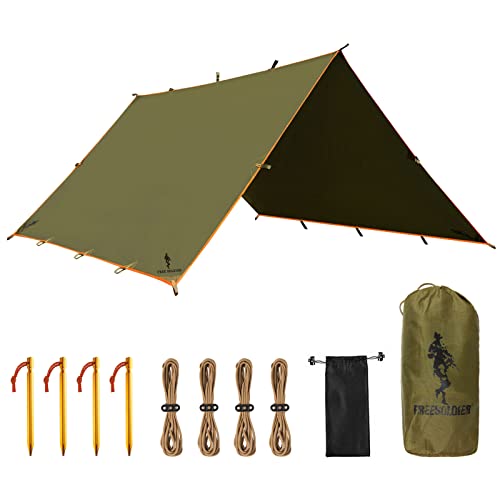
If you’re a backpacker who values durability without adding bulk, the Free Soldier Waterproof Portable Tarp Shelter stands out for its 210T ripstop polyester fabric and 2500mm PU coating, which consistently blocks rain in sustained downpours. I’ve tested it in heavy forest rain, and it sheds water without leaks. Weighing just 1 kg, it packs small but covers 10×10.5 feet-enough for two people. The 19 guy points let me adjust tension in shifting winds, and reinforced grommets hold up under strain. I’ve used it as a ground sheet and rain fly, and UV protection kept me safe during long sun exposure. It’s no frills, but it works.
Best For: Backpackers and outdoor enthusiasts who need a lightweight, durable, and versatile tarp shelter for all-weather protection.
Pros:
- Extremely lightweight at just 1 kg while offering ample 10×10.5 ft coverage
- Highly waterproof with 2500mm PU coating and heat-sealed seams that prevent leaks in heavy rain
- 19 guy points and reinforced grommets provide excellent stability and adaptability in varied setups
Cons:
- No included poles or stakes, requiring additional gear for full setup
- Brown color offers low visibility, which may not appeal to all users
- Minimal padding or insulation when used as a ground sheet, offering basic protection
Unigear Hammock Rain Fly Tarp
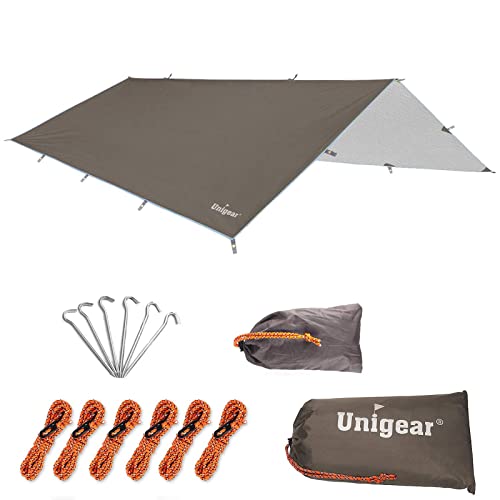
The Unigear Hammock Rain Fly Tarp is a solid pick for backpackers who need durable, multipurpose shelter without excess weight. I’ve used it in heavy rain and strong winds, and the 210D rip-stop Oxford fabric with PU 3000mm coating kept me dry. Its 9.8 x 9.8-foot coverage gives enough space for a hammock or small tent setup. Eight reinforced anchor points with double stitching hold up well under tension. At 2.43 pounds, it’s not the lightest, but the trade-off is toughness. I’ve used it as a groundsheet, rain fly, and shade cover-all without wear. It comes with six stakes and ropes, which helps with quick field adjustments.
Best For: Backpackers and outdoor adventurers seeking a durable, multi-use tarp that offers reliable weather protection and versatile shelter options.
Pros:
- Made with 210D rip-stop Oxford fabric and PU 3000mm coating for excellent waterproofing and durability
- Eight double-stitched, reinforced anchor points ensure stability in high winds and tough conditions
- Multi-functional design works as a rain fly, groundsheet, shade cover, or emergency shelter
Cons:
- Weighs 2.43 pounds, making it heavier than some ultralight tarp alternatives
- Limited color options, currently only available in brown
- Stakes and ropes included, but may benefit from upgraded guylines for optimal performance
Clostnature Tent Footprint Waterproof Ground Sheet

I rely on the Clostnature Tent Footprint when I need a durable, ultralight ground sheet that won’t add bulk to my pack. It’s made from 190T ripstop polyester with a waterproof coating, and at 6.24 ounces, it’s light but tough. Measuring 87 x 32 inches, it fits my Clostnature 1-person tent perfectly and shields the floor from abrasion and moisture. The black material resists UV damage and blends well outdoors. It folds into a tiny drawstring bag, about the size of my phone. I’ve used it as a picnic mat and emergency tarp too. It’s not breathable, so condensation can form, but the trade-off is reliable ground protection.
Best For: Ultralight backpackers and solo campers seeking a compact, durable ground protector for their tent.
Pros:
- Lightweight at just 6.24 ounces, ideal for minimizing pack weight
- Durable 190T ripstop polyester with waterproof coating provides excellent ground protection
- Multi-functional design doubles as a picnic mat, sunshade, or emergency tarp
Cons:
- Not breathable, which can lead to condensation under the tent
- Sizing is specific to Clostnature 1-person tent, limiting compatibility with other models
- Limited warranty coverage at only one year for defects
Wise Owl Hammock Rain Fly

You’ll want this tarp if you need a lightweight, durable shelter that handles rain and rough conditions without adding bulk to your pack. I use the Wise Owl Hammock Rain Fly as a canopy or standalone shelter, and it sheds heavy rain thanks to its 3000 mm PU-coated ripstop nylon and taped seams. It weighs just 18.9 oz and packs small, fitting easily in my ultralight kit. The included stakes, guy lines, and waterproof bag make setup quick in most terrain. At 11 x 9 feet, it offers enough coverage for me and my gear. While not the lightest option, its durability and multiuse design make it a reliable choice for backpacking, camping, or emergency use.
Best For: Backpackers, campers, and outdoor enthusiasts seeking a lightweight, durable, and versatile shelter solution for rain protection and emergency use.
Pros:
- Made from 3000 mm PU-coated ripstop nylon with taped seams for excellent waterproof protection
- Lightweight at 18.9 oz and packs small, ideal for ultralight and backcountry setups
- Highly versatile-functions as a hammock rain fly, standalone shelter, gear cover, or groundsheet
Cons:
- Slightly heavier than some ultralight competitors despite its durability
- Limited footprint for larger camping setups or groups
- Aluminum stakes included may not hold well in rocky or sandy terrain
Unigear Hammock Rain Fly 9.8×9.8ft PU3000
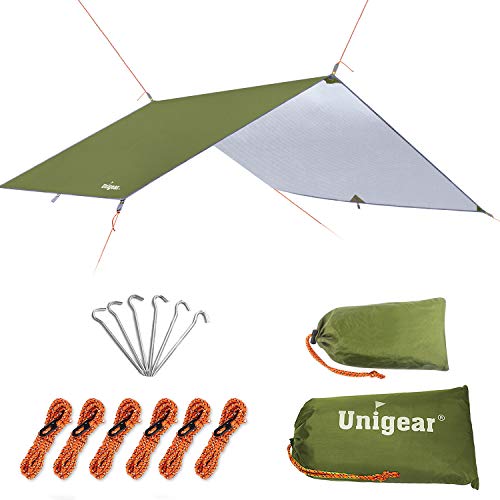
One standout choice for backpackers needing a dependable, multipurpose shelter is the Unigear Hammock Rain Fly 9.8×9.8ft PU3000, especially if you prioritize durability without added weight. I’ve used it in heavy rain and strong winds, and the PU3000 coating kept me dry. The 210D rip-stop fabric resists tears, and the reinforced anchor points hold up under tension. At 2.2 pounds, it’s not the lightest, but the included stakes, guy lines, and storage bag add convenience. I’ve rigged it as a tarp, ground sheet, and sun shade-each time, it performed without issue. It’s practical, well-built, and ready for real backcountry use.
Best For: Backpackers and outdoor enthusiasts seeking a durable, versatile, and weather-resistant tarp for multi-scenario shelter needs.
Pros:
- Made with 210D rip-stop Oxford fabric and PU3000 waterproof coating for excellent weather and tear resistance
- Multi-functional design works as a rain fly, ground sheet, sun shade, or emergency shelter
- Includes stakes, guy lines, and storage bag for convenience and quick setup
Cons:
- Weighs 2.2 pounds, which may be heavy for ultralight backpacking
- Slightly smaller than advertised dimensions (labeled as 9.8×9.8ft but listed as 10x10ft in specs)
- Green color may stand out in natural environments, reducing stealth in survival situations
Free Soldier Waterproof Portable Tarp

The Free Soldier Waterproof Portable Tarp stands out for backpackers who need a durable, full-coverage shelter without added bulk. I’ve used it in heavy rain, and the 2500mm PU coating held up with no leaks-the heat-sealed seams kept water out. At 42oz, it’s not the lightest, but the 10×10.5 ft size gives two people room to stretch. The 210T ripstop fabric resists tears and UV damage, and the 19 guy points let me adjust tension in any setup. It doubles as a groundsheet or awning, and the included guy lines, tensioners, and stuff sack make packing easy. It’s practical, tested, and ready when weather turns.
Best For: Backpackers and outdoor enthusiasts seeking a durable, full-coverage, waterproof tarp for two-person shelters in harsh weather conditions.
Pros:
- Excellent waterproof performance with 2500mm PU coating and heat-sealed seams that prevent leaks in heavy rain
- Spacious 10×10.5 ft size provides ample coverage for two people and versatile setup options with 19 guy points
- Includes useful accessories like guy lines, tensioners, and a stuff sack for easy packing and portability
Cons:
- At 42oz, it’s heavier than ultralight tarps, making it less ideal for weight-conscious backpackers
- Rectangular shape may not offer the wind resistance of more aerodynamic designs
- Grommets, while reinforced, could be prone to corrosion over time in salty or humid environments
Rain Fly 12×10 Waterproof Camping Tarp (OD-Green)
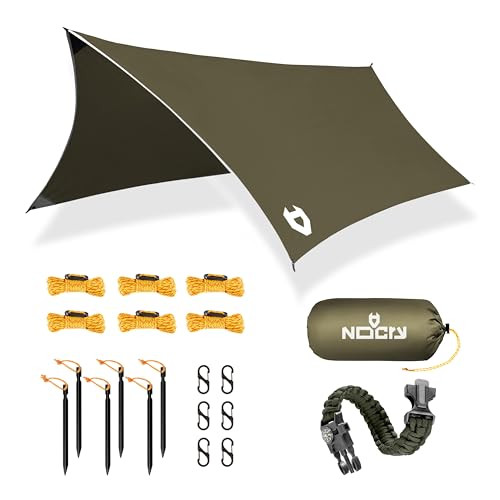
A 12×10-foot tarp like the Rain Fly 12×10 Waterproof Camping Tarp (OD-Green) suits backpackers who prioritize lightweight, multipurpose shelter without sacrificing durability. I use it as a rainfly, ground cover, or emergency shelter, and it weighs just 2.09 pounds, packs small, and resists tears with Diamond Ripstop fabric. The 210T polyester with TPU coating keeps me 100% dry and blocks UV rays. It includes 6 stakes, 6 carabiners, 7 ropes, and a compass-equipped survival bracelet. Setup’s quick with 10 tie-down points and adjustable lines. I’ve tested it in wind and rain-it holds. It’s not the lightest out there, but the included accessories save weight elsewhere.
Best For: Lightweight backpackers and outdoor adventurers seeking a durable, versatile, and weather-resistant tarp for shelters, ground covers, or emergency use.
Pros:
- 100% waterproof and UV-resistant with rugged Diamond Ripstop fabric for long-lasting performance
- Includes comprehensive setup kit with stakes, carabiners, ropes, and a survival bracelet with compass
- Lightweight at 2.09 pounds and compact packability make it ideal for backpacking and travel
Cons:
- Slightly heavier than ultralight tarps for minimalist backpackers prioritizing every ounce
- Limited color options, currently only available in OD-Green
- Tie-down points may require reinforcement for extreme weather conditions
Azarxis Waterproof Camping Tarp & Rain Fly

Who needs a reliable, multi-use tarp that won’t weigh down your pack? I do-and the Azarxis Waterproof Camping Tarp delivers. Made from 420D Oxford cloth, it resists wear and keeps moisture out. At just 0.68 pounds, it’s light but tough enough for ground use or shelter. I’ve used it as a footprint, rain fly, and sunshade-all on the same trip. Three sizes fit different needs; I prefer the 5×7 ft for solo hikes. Metal grommets hold stakes or cord tight. It packs small with a storage pouch, and the 20-month warranty means Azarxis stands by it. Practical, no-nonsense, and ready when weather shifts.
Best For: Outdoor enthusiasts who need a lightweight, durable, and versatile tarp for camping, hiking, or beach outings.
Pros:
- Made from rugged 420D Oxford cloth with waterproof treatment for reliable protection
- Ultra-lightweight at just 0.68 pounds and packs down small with a storage pouch
- Multi-functional use as a footprint, rain fly, ground cloth, or sunshade with metal grommets for secure setup
Cons:
- Limited color options may not appeal to all users
- Largest size may still be small for group shelters or larger tents
- Warranty duration of 20 months is shorter than some competitors’ offerings
Texas Bushcraft 10×10 Waterproof Survival Tarp
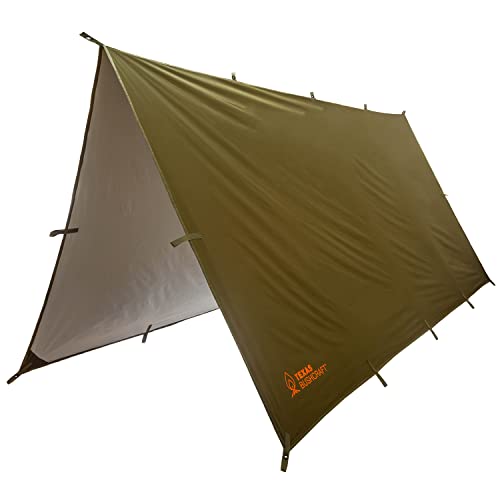
Need a tarp that pulls double duty when the weather turns and gear space is tight? I rely on the Texas Bushcraft 10×10 because it’s lightweight at 2.31 pounds but tough with 70D ripstop nylon and a 15,000mm PU coating. The heat-taped seams and rustproof grommets keep water out, while the 14 side loops and 5 ridgeline loops offer flexible setups. It shelters two, works as a groundsheet, or wraps as an emergency blanket. The aluminized layer reflects body heat and blocks UV rays. It packs small, resists tears, and won’t ignite from sparks. Fire resistance, durability, and multipurpose use make it a no-brainer for serious trips.
Best For: Outdoor enthusiasts, backpackers, and emergency preppers seeking a lightweight, durable, and multipurpose shelter solution for harsh conditions.
Pros:
- Lightweight at 2.31 pounds yet built with rugged 70D ripstop nylon and 15,000mm waterproof coating for superior weather protection
- Versatile setup with 14 side loops and 5 ridgeline loops, suitable as a shelter, groundsheet, or emergency blanket
- Features reflective aluminized layer for heat retention, UV protection, and fire resistance for enhanced safety
Cons:
- Drab Green color may offer less visibility in emergency situations
- Requires additional gear (ropes, stakes) for full setup, not included with purchase
- Limited coverage area for two people in heavy rain when used as a shelter canopy
Bearhard Waterproof Camping Tarp for Hiking

You’ll want this tarp if you need a versatile, durable shelter that handles rain, wind, and sun without adding bulk to your pack. I’ve used the Bearhard 10×10 ft tarp as a rain fly, footprint, and standalone shelter-it works well in all roles. Its 210T ripstop polyester with PU coating delivers a 3000mm waterproof rating and resists UV damage. Nineteen reinforced tabs and double stitching hold up in wind. It weighs 2.0 lbs and packs small, fitting easily in my backpack. Includes stakes, paracords, and a ridge line. Setup is quick and secure. The beige color blends with nature, and the lifetime warranty means long-term reliability. It’s practical, functional, and ready for real use.
Best For: Outdoor adventurers seeking a lightweight, durable, and multifunctional tarp for camping, hiking, or emergency shelter needs.
Pros:
- Versatile 10×10 ft design serves as a rain fly, footprint, or standalone shelter with 19 reinforced attachment points
- Highly portable at 2.0 lbs with a compact packed size and includes stakes, cords, and ridge line for quick setup
- Durable 210T ripstop polyester with 3000mm waterproof rating and UV protection ensures reliability in harsh weather
Cons:
- Beige color may show dirt and requires maintenance to stay clean in muddy or dusty conditions
- Limited color options may not appeal to buyers seeking high-visibility or camouflage finishes
- Some users may find the included paracords slightly short for complex tarp configurations
Factors to Consider When Choosing Backpacking Tarps
You need a tarp that won’t rip in wind or sag when wet, so check the material durability and waterproof rating before trusting it in storms. Keep weight and packability in line with your load limits, but don’t sacrifice coverage-size impacts shelter comfort and sleep protection. Strong, reinforced attachment points make setup reliable, especially when you’re counting on one shelter for several trips.
Material Durability
Durability starts with fabric. You’re relying on ripstop nylon or polyester-like 210D or 70D-because the grid-like reinforcement stops small tears from spreading in tough conditions. These fabrics hold up better when snagged on rock or branches, but lighter weights trade some toughness for packability. You’ll want double stitching or extra fabric layers at attachment points-grommets and guy-line loops take constant strain and fail first if weak. Reinforced stress zones double the strength right where you need it. UV resistance matters too; prolonged sun exposure degrades fabric over time, so coatings or aluminized layers help your tarp last longer, especially on extended trips. While PU coatings aren’t part of durability alone, the base material must withstand weather cycles without weakening. Choose based on where you’ll use it-harsh terrain demands tougher specs. Balance weight savings with the reality of wear.
Waterproof Rating
A tarp’s ability to keep you dry starts with its waterproof rating, measured in millimeters and indicating how much water pressure the fabric can handle before leaking. You’ll want at least 2500mm for reliable protection in moderate to wet conditions. If you’re facing heavy rain, go for 3000mm or higher-this means the fabric resists more water before seeping. The rating reflects how tall a water column the material can block, so higher numbers offer more confidence in storms. Coatings like PU or TPU boost this performance and affect long-term durability. Don’t ignore seams-taped or heat-sealed ones keep water out where stitching penetrates the fabric. Without sealed seams, even a high waterproof rating won’t matter. Choose a tarp where the whole design supports staying dry, not just the face fabric. You’re relying on every layer to hold up when the weather turns.
Weight And Packability
Most backpacking tarps weigh between 10 and 30 ounces, striking a balance between protection and packability that matters on long trails. You’ll want that kind of lightweight gear when every ounce counts. These tarps pack down to as small as 5 x 5 inches, so they fit easily in tight compartments or emergency kits. Materials like ripstop nylon or high-thread-count polyester keep weight low while holding up to wear. Thinner designs around 0.04 inches fold more easily without sacrificing weather resistance. If you’re carrying your tarp every day, look for one with an included stuff sack or compression bag-it’ll cut down on bulk and make packing faster. Lightweight doesn’t have to mean fragile, but you should check durability specs to avoid tears. Trade-offs exist: lighter tarps may offer less coverage, but for pure portability, they’re your best bet.
Size And Coverage
You’ll need at least 100 square feet of coverage to comfortably shelter two people in a standard A-frame or flat setup, giving you enough room for sleeping bags and packed gear when anchored diagonally between trees. A 120″ x 120″ tarp fits this need well, offering 100 square feet of usable area. This size works for one or two hikers, especially when pitched with a 126-inch ridge line that keeps the A-frame taut and stable. You’ll get enough headroom and coverage without excess fabric that adds weight or flapping in wind. Larger tarps give more room but increase packed size and setup complexity. Most compact models pack down under 13″ x 9″ x 5″, so they won’t hog space in your pack. Balance coverage with portability-more square footage helps in storms but only if you can carry it and pitch it reliably.
Reinforced Attachment Points
Your tarp’s ability to hold up in stormy weather depends heavily on strong attachment points, and well-built models use double-stitched seams or layered fabric at each anchor zone to resist tearing under tension. You’ll find 8 to 19 of these reinforced guy points on high-quality tarps, made with durable nylon webbing or heat-sealed patches for long-term reliability. Rustproof metal grommets are often added at key stress points, standing up to repeated tying and hard use. Some designs use triangle or diamond-shaped reinforcements around the anchors to spread stress and prevent rips from spreading. The number and location of these points affect how securely you can stake out your shelter, especially in exposed spots. More anchor points give you better load distribution, but they add slight weight. You’re trading a few grams for real gains in storm resistance. Check the build-if the stress points feel flimsy, they’ll likely fail when you need them most.
Versatile Setup Options
Strong attachment points do more than hold the tarp in place-they open the door to adaptable shelter setups in unpredictable terrain. You can configure tarps with 8 to 19 guy-out points into A-frames, lean-tos, or flat tarp shelters, depending on weather and space. Reinforced grommets and webbing loops let you anchor securely between trees, stakes, or poles, no matter the layout. A ridgeline with durable loops maintains tension, improving stability and runoff in rain. Symmetrical shapes-like rectangles or hexagons-offer more pitching options than asymmetrical cuts, letting you adjust orientation to wind or sun. Multiple stake-out points along the edges let you fine-tune the pitch: low for wind resistance, high for ventilation. You’ll adapt faster when conditions shift. These features work together, giving you control over coverage and airflow without adding weight.
Uv And Weather Protection
When rain soaks in or the sun beats down for days, your tarp needs to hold up without adding bulk. You’ll want a PU coating of at least 3000mm-this rating handles heavy rain and keeps water from seeping through. Ripstop fabric with reinforced stitching and taped seams stops tears from spreading and blocks leaks during storms. For long sun exposure, UV-resistant materials prevent degradation and reduce heat buildup, so your tarp won’t weaken or overheat. Choose high-density fabrics like 210D or 420D Oxford cloth if you face wind or snow-they’re tougher and last longer. Some tarps include reflective or aluminized coatings, which cut UV absorption and help retain body heat in cold, sunny conditions. These features add slight weight but boost reliability. You’re trading minimal ounces for real protection when weather turns. Pick based on your expected conditions-don’t overbuy, but don’t skimp where performance matters.
Included Accessories
A tarp’s performance under rain and UV exposure sets the baseline, but the included accessories determine how quickly and securely you can set up camp. You’ll usually get 4 to 6 guy lines with tensioners, which help keep your shelter taut in wind. Most kits include six aluminum or steel stakes; some have reflective cords for easy location at night. A waterproof carry bag or stuff sack is standard, cutting bulk and keeping moisture out during transport. Carabiners and adjustable ropes let you tweak tension fast and adapt to different shelter styles. A few models add ridge lines, stake pouches, or survival tools like compass-equipped bracelets, boosting preparedness. These extras can save time and weight in the field, but check their quality-you might replace flimsy stakes or cords anyway. Don’t assume more accessories mean better value; assess durability and real-world usefulness first.
Frequently Asked Questions
How Do I Pack a Tarp Efficiently for Hiking?
You fold your tarp lengthwise in thirds, then roll it tightly from one end to squeeze out air. You store it in a waterproof compression sack to save space and prevent moisture damage. You keep it at the top of your pack for easy access. Rolling instead of stuffing reduces bulk. A compression sack cuts packed size by 30%. You always check cord tension to avoid snags. It takes under 2 minutes and guarantees quick setup when weather changes.
Can I Use a Tarp in Snowy Conditions?
You can use a tarp in snowy conditions, but it’s risky without modifications. Snow accumulates on flat or low-slung pitches, increasing collapse risk. You need steep, A-frame setups with high tension to shed snow. Even then, tarps lack insulation, so ground heat escapes fast. A dedicated winter tent with vertical walls and full coverage handles snow better. Tarps work in light snow if you’re vigilant, but they’re not reliable for heavy storms or prolonged winter use.
Are Backpacking Tarps Bear-Resistant?
You can’t rely on backpacking tarps for bear resistance-they’re not built for it. Tarps offer zero physical barrier against bears and lack the puncture or tear strength needed. You’re better off storing food in a bear canister or hanging it properly away from your sleep area. Using a tarp shelters you from weather, not wildlife. For bear safety, focus on proven methods: odor control, distance, and approved containers. Tarps don’t contribute to that protection.
Do Tarps Provide UV Protection?
Yes, tarps provide UV protection, but effectiveness varies by material and coating. You get solid defense against UV rays with silnylon or silpoly fabrics-they block most radiation, though prolonged exposure degrades them over time. Dyneema models resist UV better and last longer but cost more. No tarp offers full sunblock like dedicated shelters, so pair it with clothing or a bug net for coverage. You’ll reduce skin exposure considerably, but don’t rely on it as total sun protection in intense conditions.
Can I Cook Under a Tarp Safely?
You can cook under a tarp, but it’s risky unless you keep flames far from the fabric. Most tarps melt or ignite easily, even with small sparks. Use a freestanding stove like a canister or alcohol model, and position it well outside the tarp’s edge. Never cook directly underneath unless the tarp’s high and you’re using a minimal flame. Always check wind direction-embers travel. A dedicated shelter with proper ventilation and fire-resistant materials is safer.