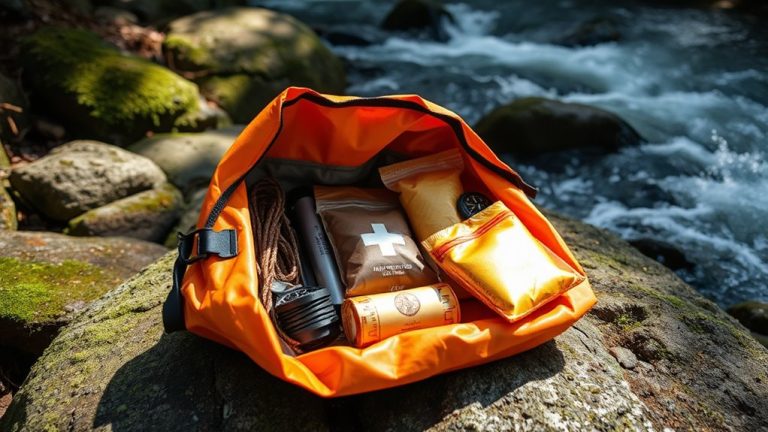
Best Camping Water Storage That Keeps You Hydrated Anywhere
You need a durable, leak-proof water container that’s easy to carry and safe for long-term use. Models like the 2.1-gallon collapsible jug (3.84 oz) or 7-gallon Reliance Aqua-Tainer offer BPA-free materials, reinforced seams, and performance in extreme temperatures. Collapsible designs save space; rigid jugs stack and resist punctures. Spigots control flow, and flat-folding options cut bulk. Weight, capacity, and material matter most when you’re off-grid. Each choice balances portability with reliability under real conditions. You’ll see how each model meets specific needs based on proven function, not claims.
We are supported by our audience. When you purchase through links on our site, we may earn an affiliate commission, at no extra cost for you. Learn more. Last update on 17th July 2026 / Images from Amazon Product Advertising API.
Notable Insights
- Collapsible 2.1–5.3-gallon containers made from BPA-free materials offer lightweight, portable hydration for camping and backpacking.
- Rigid 5–7-gallon jugs with leak-proof spigots and durable HDPE or ABS construction ensure reliable water access in remote areas.
- One-piece, seamless designs prevent leaks, bacterial growth, and chemical leaching during long-term or extreme-condition use.
- Compact, stackable shapes optimize space in vehicles or emergency kits while supporting 2–3 people for multiple days.
- Integrated spigots with no-tilt dispensing and on/off valves enable easy, drip-free water access without lifting or tipping.
Camping Water Container 2 Gallon Collapsible Jug

If you need one lightweight water storage option that balances capacity and packability for backpacking or car camping, this 2.1-gallon collapsible jug fits the role. I’ve used it on trips where space and weight matter, and it holds enough water-8 liters-without adding bulk. It weighs just 3.84 ounces, folds flat when empty, and takes up little room in my pack. The BPA-free, food-grade plastic doesn’t retain odors, and the separated inlet and outlet make refilling and pouring easier. Reinforced seams prevent leaks, though I always hand wash it to maintain seal integrity. It’s not indestructible, but for its price and function, it performs reliably in real-world use.
Best For: Outdoor enthusiasts seeking a lightweight, space-saving water storage solution for backpacking, car camping, RV trips, or emergency preparedness.
Pros:
- Lightweight at only 3.84 ounces and collapses flat for easy storage when empty
- 2.1-gallon (8-liter) capacity provides ample water without adding bulk
- BPA-free, food-grade plastic with reinforced seams ensures safe, leakproof performance
Cons:
- Not indestructible-may not withstand extreme abuse or rough handling
- Hand wash only, limiting cleaning convenience
- Single pack-no additional units or storage bag included
WaterStorageCube Collapsible BPA-Free Water Container
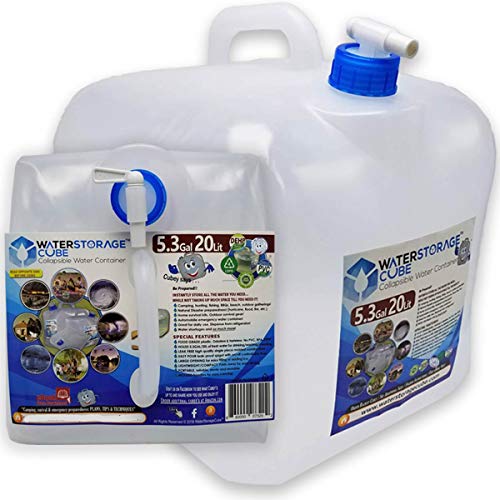
I rely on the WaterStorageCube when I need a dependable, space-saving water container that won’t compromise water quality or fail in cold weather. Made from food-grade LDPE, it’s BPA-free and non-toxic, with no odor or taste transfer. The 2.6-gallon model weighs just 0.18 kg and folds flat after use. Its seamless, one-piece build prevents leaks, while the soft molded handles and leak-proof spigot make transport and dispensing easy. I’ve used it in freezing temps without cracking. It’s ideal for camping, emergencies, or RV trips. The included 30-page survival guide adds practical value.
Best For: Outdoor enthusiasts, emergency preppers, and RV travelers seeking a lightweight, durable, and non-toxic water container that performs reliably in extreme temperatures.
Pros:
- Lightweight, collapsible design saves space and makes transport easy
- Made from BPA-free, non-toxic materials with no taste or odor transfer
- Leak-proof spigot and seamless one-piece construction ensure durability and reliability
Cons:
- Limited capacity options may not suit large groups or long-term storage needs
- Plastic material may show wear over time with rough handling
- Spigot, while leak-proof, lacks flow control precision for small pours
5 Gallon BPA-Free Water Jug

This 5-gallon BPA-free water jug suits campers and outdoor travelers who need reliable, safe water storage without added bulk. I’ve used it on weekends in the backcountry, and it holds enough water for two people up to three days. Made from durable, BPA-free ABS material, it resists cracks and chemical leaching, even in rough terrain. It’s lightweight at just 2.87 pounds and has dual handles for easy carrying. The wide opening simplifies filling and cleaning, and it comes with a brush, dispensing tube, and two water bags. A leak-proof cap prevents spills during transport.
Best For: Outdoor enthusiasts and campers needing a lightweight, durable, and safe water storage solution for short trips or emergency preparedness.
Pros:
- Lightweight and easy to carry with dual handles, ideal for camping, hiking, and RV use
- Made from BPA-free ABS material for safe, chemical-free water storage
- Includes useful accessories like a cleaning brush, dispensing tube, and two water bags
Cons:
- 5-gallon capacity may be bulky for solo travelers or minimalist packers
- Not designed for long-term water storage beyond a few days
- ABS material, while durable, may not be as impact-resistant as thicker polymers in extreme conditions
WaterStorageCube BPA-Free Collapsible Water Container
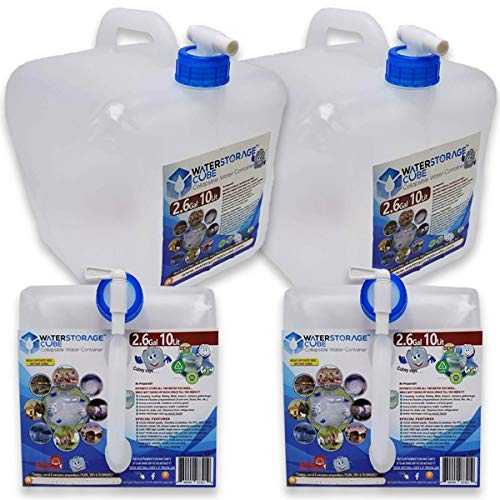
The WaterStorageCube BPA-Free Collapsible Water Container is best for backpackers and minimalist campers who need a lightweight, reliable way to carry and dispense water without wasting space. I’ve used it on hikes and in emergencies, and it holds up-made from food-grade, BPA-free LDPE with no seams or gaskets to leak. Its 2.6-gallon (10L) version weighs just 0.18 kg and collapses flat when empty. The spigot delivers controllable flow and has stayed leak-proof under pressure. I keep mine packed for RV trips, beach days, and storms-it’s versatile. It comes with a survival guide eBook, which adds practical value.
Best For: Backpackers and minimalist campers seeking a lightweight, portable, and reliable water storage solution that saves space when empty.
Pros:
- Lightweight and collapsible design makes it highly portable and easy to store
- Made from BPA-free, food-grade LDPE with no seams or gaskets, ensuring safety and durability
- Leak-proof spigot with controllable flow, ideal for precise water dispensing in various settings
Cons:
- Limited capacity options may not suit high-volume water needs
- Plastic material, while durable, may be prone to punctures if not handled carefully
- Spigot, though leak-proof, could be slower for filling large containers compared to direct pouring
Reliance Aqua-Tainer 7 Gallon Water Container

One 7-gallon rigid container that stands out for campers needing durable, space-efficient water storage is the Reliance Aqua-Tainer 9410-03. I’ve used it on trips where reliable access to clean water matters, and its 26-liter capacity handles multiple days for two or three people. The rectangular shape stacks neatly and fits tight spaces, while the molded grip and handle make it easy to carry when full. The spigot dispenses water on demand, and the screw-on vent helps prevent leaks. It’s built to last, backed by a five-year warranty, but I keep it out of direct sun to avoid material breakdown. Weighing just under 4.2 pounds empty, it’s sturdy without being cumbersome.
Best For: Campers and outdoor enthusiasts who need a durable, space-efficient water container for reliable, multi-day hydration in remote settings.
Pros:
- 7-gallon capacity provides ample water storage for 2–3 people over multiple days
- Rectangular design allows for easy stacking and efficient use of tight storage spaces
- Features a leak-resistant spigot and screw-on vent for reliable, on-demand dispensing and transport safety
Cons:
- Material may degrade and become brittle if exposed to prolonged direct sunlight
- Potential mislabeling in packaging details (e.g., cotton and down materials listed) causing confusion
- Spigot mechanism may require maintenance over time to prevent dripping or clogging
3.2/5 Gallon BPA-Free Water Jug
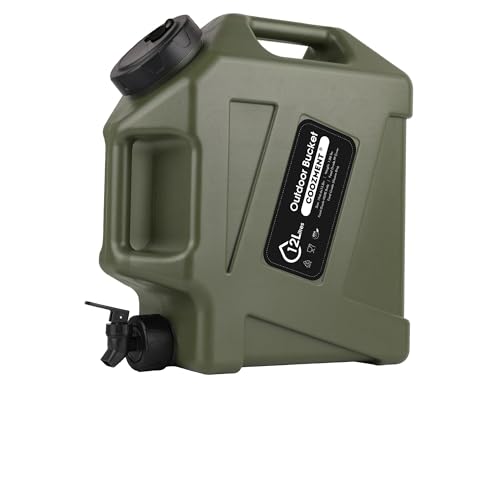
If you need a dependable, no-frills water jug for camping trips or emergency prep, the COOZMENT 5-gallon BPA-free container stands out for its practical design and food-safe materials. I’ve used it on multiple trips, and the food-grade PE body, PP lid, and silicone seal keep water tasting clean. The 4-inch spout makes filling and cleaning easy, and the built-in spigot lets me pour without fumbling with the lid. It’s lightweight at just 1.88 pounds and has two solid handles for carrying. I store it in tight spaces without issue, and the included brush maintains hygiene. Available in military green, it’s a no-nonsense solution for real-world use.
Best For: Outdoor enthusiasts and emergency preppers seeking a durable, portable, and easy-to-clean water storage solution.
Pros:
- Made with BPA-free, food-grade materials ensuring safe, taste-free water storage
- Built-in spigot and wide 4-inch spout allow for easy dispensing and cleaning
- Lightweight with two ergonomic handles, making it highly portable and space-efficient
Cons:
- Only available in one color option (Military Green), limiting aesthetic choice
- Spigot may require occasional maintenance to prevent leaks over long-term use
- Larger 5-gallon size may be cumbersome to carry when full for some users
Scepter 5 Gallon Portable Water Container

You’ll want this Scepter 5-gallon container when hauling water for remote campsites or stocking up for emergencies-its 20-liter capacity cuts refill trips and supports sustained use. I rely on its BPA-free HDPE build because it’s tough enough for rough terrain and safe for long-term water storage. The military-style design resists impacts and won’t leak, even when jostled in a truck bed. At 13.5 x 6.5 x 18.75 inches, it fits tight spaces, and the molded handle makes carrying it easy, even when full. It’s not the lightest, but the 4.8-pound weight is a fair trade for its durability. I’ve used mine for water, pet food, and pellets-no cracks, no leaks.
Best For: Outdoor enthusiasts, preppers, and emergency managers who need a durable, portable, and reliable container for storing water or dry goods in challenging conditions.
Pros:
- BPA-free HDPE construction ensures safe, long-term storage of water and dry goods
- Military-style build offers excellent impact resistance and leak-proof performance
- Compact dimensions and strong molded handle enhance portability and space efficiency
Cons:
- At 4.8 pounds, it adds noticeable weight even when empty
- Black color may absorb heat in prolonged sunlight, warming stored water
- Limited color options and basic design lack aesthetic appeal for home use
UPWOIGH 5-Gallon Water Jug with Spigot

The UPWOIGH 5-Gallon Water Jug suits campers and overlanders who need reliable, portable hydration without the bulk of larger tanks. I use it on weekend trips because it’s lightweight at just 2 pounds and fits neatly in tight spaces. Its HDPE construction is BPA-free and doesn’t retain odors, which I’ve found after repeated use. The screw-on lid and spigot keep it 100% leak-proof-no spills, even off-road. I fill bottles and cook without lifting, thanks to the no-tilt spigot. At 7 by 13.2 inches, it’s compact, but the rectangular shape limits stacking. I hand wash it and keep it out of direct sun.
Best For: Outdoor enthusiasts like campers, hikers, and overlanders who need a compact, portable, and leak-proof water solution for reliable hydration on the go.
Pros:
- Lightweight and compact design makes it easy to transport and store in tight spaces
- Durable, BPA-free HDPE material resists odors and is safe for repeated use
- 100% leak-proof with a secure spigot that allows controlled dispensing without tilting
Cons:
- Rectangular shape limits stacking efficiency compared to round containers
- Spigot may require careful handling to avoid damage over time
- Not suitable for prolonged sun exposure, which could degrade the plastic
WaterStorageCube Collapsible BPA-Free Water Jug
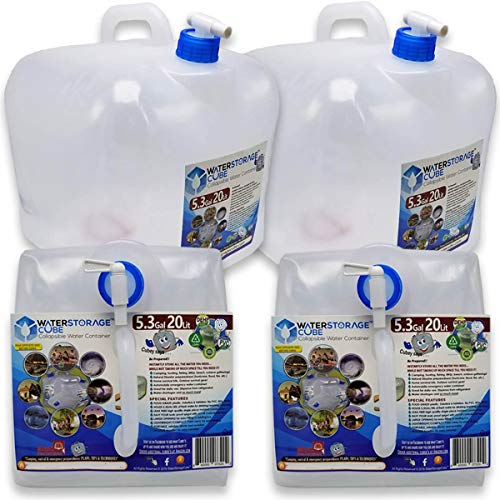
I trust the WaterStorageCube when I need reliable water storage that won’t waste space in my pack, because it collapses down flat after use and weighs just 0.18 kilograms. Made from food-grade LDPE, it’s free of BPA, PVC, and odors, so my water tastes clean. The 2.6-gallon model has a leak-proof spigot and thick lid that handle pressure without gaskets or weak seams. It stays flexible in cold weather and fits tight spaces. I’ve used it camping, in my emergency kit, and on RV trips-it’s simple to fill, drain, and reuse. Includes a survival eBook, which helps with prep planning.
Best For: Outdoor enthusiasts, emergency preppers, and travelers needing lightweight, space-saving, and durable water storage for on-the-go or backup use.
Pros:
- Lightweight and collapsible design saves space in packs and storage areas
- Made from BPA-free, food-grade LDPE material ensuring safe, odorless drinking water
- Leak-proof spigot and gasketless lid provide reliable, low-maintenance performance in various conditions
Cons:
- Limited to manual filling and dispensing without integrated filtration or purification
- Translucent material may require protective cover to prevent algae growth if stored in light
- Spigot durability under long-term heavy use has not been extensively documented
Cedilis 2-Pack 5.3 Gallon Collapsible Water Container
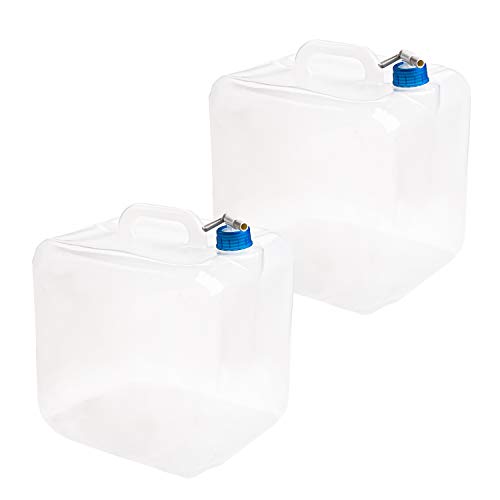
A 5.3-gallon capacity strikes a balance between volume and manageability, making the Cedilis 2-Pack ideal for solo campers or small groups who need reliable water access without excess bulk. I find the BPA-free, food-safe LDPE4 and PP materials keep water tasting clean, with no lingering odors. The built-in spigot has a clear on/off switch and rarely leaks, thanks to seamless, one-piece construction. At just 1.32 pounds, it’s light, and when empty, it folds flat for easy storage. The molded handle makes carrying simple, and the wide cap fits most faucets for quick refills. I’ve used them on RV trips and camping outings, and they’ve held up well over time.
Best For: Solo campers and small outdoor groups seeking a lightweight, space-efficient water solution for camping, RV trips, and emergency preparedness.
Pros:
- Durable, BPA-free materials ensure safe, great-tasting water with no chemical odors
- Leak-proof spigot with a clear on/off switch and seamless one-piece construction
- Collapsible design folds flat when empty, saving storage space and easing transport
Cons:
- 5.3-gallon size may be too large for ultra-light backpacking or extended hiking
- Spigot durability may decrease with heavy long-term use or rough handling
- Limited color options (clear only), which may make tracking cleanliness harder
Factors to Consider When Choosing Camping Water Storage
You’ll want to pick a water storage that matches your trip’s length and group size-too small, and you’ll run out; too big, and it’s dead weight. Go for food-safe materials like BPA-free plastic or stainless steel, since what touches your water matters when you’re drinking it straight. Look for a leak-proof design that’s easy to carry and simple to open, because spilled water or a bulky container ruins convenience fast.
Capacity And Volume
Five gallons often marks the sweet spot for extended trips with two people, delivering roughly 40 pounds of water-enough for drinking, cooking, and basic hygiene over three days. You’ll want 5 to 7 gallons if you’re camping with a partner or small group for more than 48 hours. For solo or weekend trips, a 1.3 to 2.6 gallon container usually covers your needs without extra weight. High-capacity tanks between 5 and 7 gallons (18.9–26 liters) balance volume and practicality but get heavy fast-remember, water weighs 8.3 pounds per gallon. Collapsible models in the 2.6 to 5.3 gallon (10–20 liter) range save space when empty and still offer solid capacity. Shape matters, too: rectangular units pack tighter and stack better than cylindrical ones, especially in cramped vehicles. Choose based on your crew size, trip length, and how you’ll carry it-bigger isn’t always better if you can’t move it.
Material Safety
Material safety starts with selecting containers made from food-grade, BPA-free plastics-these don’t leach harmful chemicals into your water, ensuring what you drink stays clean and safe. You should also avoid PVC and DEHP, as these additives can damage your health and alter water taste. Stick to transparent, odorless materials like LDPE or HDPE; they keep water clear and won’t contaminate flavor. Non-toxic, eco-friendly plastics are safer for repeated use, especially in extreme temperatures. Look for one-piece molded designs without seams or gaskets-these reduce bacterial buildup and lower the chance of chemical leakage over time. You’re not just storing water; you’re protecting your health. These materials hold up under real camping conditions, from desert heat to mountain cold. Choosing the right build means you get consistent safety, batch after batch, trip after trip. It’s a measurable advantage-clean water with zero guesswork.
Portability And Weight
A container’s material affects more than just safety-it directly influences how easy or hard it is to carry your water supply into the backcountry. You’ll want food-grade low-density polyethylene containers, since they weigh under 0.2 kilograms, cutting unnecessary load on long hikes. If space matters, go for collapsible designs-they shrink considerably when empty, tucking neatly into packs or emergency kits. Rigid options often weigh over 2 pounds empty but offer stability and ergonomic grips that help balance heavy loads up to 20 liters. Look for models with dual or molded-in handles; they give you a secure hold and make lifting easier. The tare weight is critical-some empty containers tip the scales at less than 4 ounces, giving you better load efficiency. Choose based on your trip length and carrying method: ultralight if you’re hiking far, durable and structured if you’re packing more water for base camps.
Leak Proof Design
You can’t afford leaks when water is limited, so prioritize designs that actively prevent spills under real trail conditions. Choose containers with sealed seams and secure closures-screw-on caps, gasketed spigots, or one-piece molded bodies eliminate weak points. Rigid jugs with O-rings or silicone gaskets lock in water even when jostled. Look for spigots that seal tightly under pressure; they shouldn’t drip when tipped or full. Collapsible options must have heat-sealed, reinforced seams and locking spout valves to stop seepage. One-piece construction removes joints entirely, cutting leak risks. Avoid glued or stitched seams-they fail under stress. Test the cap’s torque: it should seal firmly without stripping. Materials matter, but design seals the deal. A container might hold gallons, but if it loses ounces per hour, it’s wasting critical supply. Leak-proof isn’t a feature-it’s a baseline. Pick builds that prove reliability, not promises.
Ease Of Use
Often, the difference between convenience and frustration boils down to simple design choices that affect how easily you access and handle water. You want a wide spout-ideally at least 4 inches-so you can fill, pour, and clean the container without hassle or tools. A built-in, leak-proof spigot lets you dispense water smoothly without tipping the container, cutting down on spills and strain. Look for reversible or hideaway spigots: they stay protected during transport and give you instant access when needed, with no extra caps. Gasketless spigots are a plus since they don’t rely on replaceable parts, reducing maintenance over time. Molded or soft-grip handles make carrying a full container manageable, offering a secure hold even when your hands are cold or wet. These features save effort and time when water access matters most.
Frequently Asked Questions
Can I Drink Directly From the Spigot Safely?
Yes, you can drink directly from the spigot safely-if the system is designed for potable water and you keep it clean. Most quality containers use food-grade materials and feature sealed, self-venting spigots to prevent contamination. However, dust, insects, or improper handling can compromise safety. Always rinse the spout first, and regularly sanitize the tank. Spigots with push-button or flip-top covers reduce exposure, but you still need good hygiene to stay safe.
How Do I Sanitize a Collapsible Water Container?
You clean it with warm water and mild dish soap first, then sanitize using a diluted bleach solution-1 teaspoon of unscented chlorine bleach per quart of water. You fill the container, swish it around, let it sit for 15 minutes, and rinse thoroughly. You air-dry completely before storing. You repeat this after each use to prevent mold and bacteria. Some models are dishwasher-safe, but hand sanitizing gives you more control over the process.
Are These Jugs Freezer-Safe When Full?
No, you shouldn’t freeze these jugs when full-they expand as water freezes and can crack or burst. Leave at least 20% air space to allow for expansion if you must freeze them. Most collapsible jugs are made from flexible plastics that handle partial freezing better than rigid containers, but repeated freeze-thaw cycles degrade material over time. For long-term frozen storage, rigid, high-density polyethylene containers are more reliable.
Can I Store Fuel or Oil in These Containers?
you can’t store fuel or oil in these containers-they’re designed for water only. the plastic isn’t chemically resistant to hydrocarbons, which can degrade the material and cause leaks or contamination. fuel vapors may also permeate the walls, creating a safety hazard. using them for fuel voids warranties and increases risk. if you need fuel storage, get containers labeled specifically for gasoline or diesel-they’re built with the right materials and safety features for that purpose.
Do Any of These Resist Algae Growth?
Yes, some do resist algae growth-you’ll get better results with containers made from opaque, BPA-free plastic that block UV light, which fuels algae. Clear containers let in light and promote buildup, especially if stored full for days. I rotate my water monthly and sanitize with diluted bleach, which helps. For long trips, I prefer collapsible bladders with antimicrobial linings-they’re not foolproof, but they reduce risk when cleaning isn’t an option.