Best Power Bank With Flashlight: BLAVOR 10000mAh & 30000mAh Picks
You get reliable backup power and light when the grid fails. Models like the 10000mAh BLAVOR fit in your pocket, charge an iPhone 14 Pro over two times, and include a practical LED flashlight. Higher capacities, such as 30000mAh or more, power multiple devices and last longer but weigh more and may not fly. Look for IPX5-rated builds and fast 20W–30W charging to stay ready. Check which models include cables and meet airline limits. The right pick balances size, output, and durability for real emergencies. Details on each option will clarify what best fits your preparedness plan.
We are supported by our audience. When you purchase through links on our site, we may earn an affiliate commission, at no extra cost for you. Learn more. Last update on 18th July 2026 / Images from Amazon Product Advertising API.
Notable Insights
- High-capacity power banks like 42800mAh offer extended emergency power and multiple device charges.
- Built-in LED flashlights with SOS and strobe modes provide critical visibility during outages or disasters.
- Rugged, IPX5-rated designs ensure durability against water, dust, and drops in harsh conditions.
- Dual flashlights and carabiner mounts enhance usability for hands-free lighting and emergency signaling.
- Solar-rechargeable models support off-grid charging, ideal for camping, blackouts, and outdoor emergencies.
BLAVOR Solar Power Bank 10000mAh 20W Fast Charging
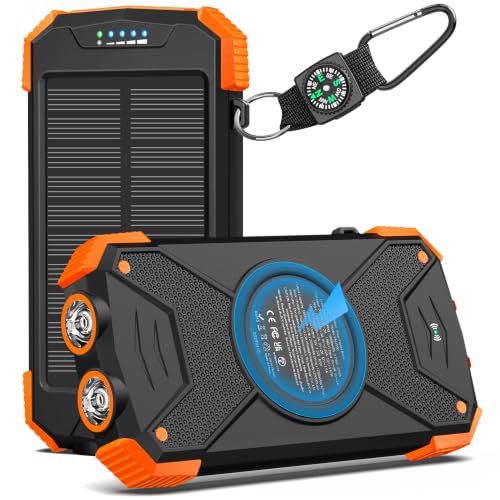
The BLAVOR Solar Power Bank 10000mAh is best for hikers and emergency preppers who need a dependable charge and built-in flashlight in one compact unit. I rely on its real 10,000mAh capacity to charge my iPhone 14 Pro 2.2 times. It delivers 20W fast charging, getting an iPhone 15 to 65% in 30 minutes. I can charge three devices at once, which helps when every second counts. It’s light, rugged, and survives rain and drops thanks to IPX5 and shockproof design. The dual flashlights and carabiner make it practical for camp or blackouts. Solar charging is slow but works in a pinch.
Best For: Outdoor enthusiasts and emergency preppers who need a reliable, compact power source with built-in lighting and rugged durability.
Pros:
- Real 10,000mAh capacity reliably charges smartphones multiple times with 20W fast charging support
- Durable IPX5 waterproof, dustproof, and shockproof design with dual flashlights and carabiner for outdoor use
- Simultaneously charges three devices and features solar charging for emergency backup
Cons:
- Solar charging is slow and not practical for primary charging needs
- Limited to 10,000mAh, which may not suffice for extended off-grid trips
- No display to indicate battery level or charging status
30000mAh Portable Charger Power Bank (Black)

I rely on this 30000mAh portable charger when I need dependable power and a flashlight during emergencies. It delivers fast charging through its USB-C port with PD 3.0 and QC 4.0, reaching 60% in 30 minutes. Three output ports let me charge multiple devices at once, while dual inputs allow flexible recharging. The built-in flashlight is bright enough for campsites or power outages. Four LED indicators show charge levels in 25% increments. It’s built with safety protections and a durable polymer core. I’ve used it for weeks without issues, and the 2-year support gives peace of mind.
Best For: Frequent travelers, outdoor enthusiasts, and professionals needing reliable high-capacity charging and a built-in flashlight for emergencies.
Pros:
- Delivers rapid charging with 22.5W USB-C PD 3.0 and QC 4.0 support, reaching 60% in 30 minutes
- Charges up to three devices simultaneously with multiple output ports and offers dual-input recharging flexibility
- Includes a high-brightness flashlight and 4-LED power indicator for practical use in low-light conditions and accurate charge monitoring
Cons:
- Large capacity may make it bulkier compared to smaller power banks, reducing pocket portability
- No AC outlet included, limiting direct charging of non-USB devices
- LED indicators provide only 25% increment precision, which may lack granularity for some users
50000mAh Portable Charger with Built-in Cables
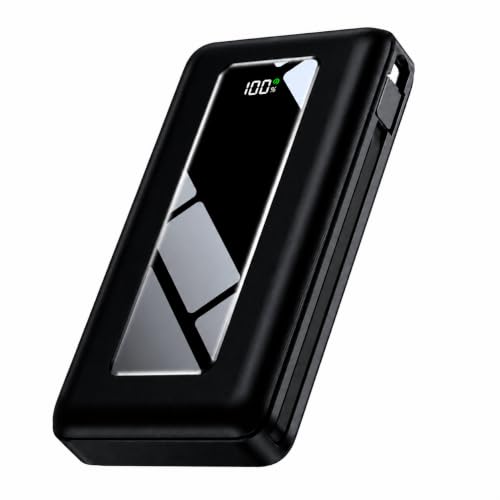
You need serious power if you’re out for days without grid access, and this 50000mAh portable charger delivers-enough to fully recharge an iPhone 15 over seven times or a typical Android smartphone five times. I keep my phone, tablet, and GPS running on multi-day trips without hunting for outlets. It has built-in iOS and USB-C cables plus two extra ports, so I can charge four devices at once. The PD 22.5W and QC4.0 support gets my phone to 55% in 30 minutes. A bright flashlight and rugged build help in emergencies. A digital display shows exact charge left. I trust it because of overcharge and short-circuit protection, and I know support covers 18 months.
Best For: Outdoor enthusiasts, travelers, and professionals needing reliable, high-capacity power for multiple devices over extended periods without access to outlets.
Pros:
- 50000mAh capacity provides multiple full charges for phones, tablets, and other devices, ideal for multi-day trips
- Built-in iOS and USB-C cables plus dual extra ports allow simultaneous charging of up to four devices
- Fast charging with PD 22.5W and QC4.0 delivers 55% charge in 30 minutes, along with a rugged build and built-in flashlight
Cons:
- High capacity may make it bulkier and heavier compared to standard power banks, less convenient for pocket carry
- Built-in cables, while convenient, may limit flexibility in positioning devices during charging
- Fast charging speeds depend on device compatibility, potentially not reaching full speed with older models
Power Bank 60000mAh 22.5W Fast Charging

A 60000mAh capacity delivers enough power for up to 12 full charges of an iPhone 11, making this power bank ideal for outdoor enthusiasts who need reliable energy over extended trips without access to outlets. I rely on its 22.5W USB-C output to charge my iPhone X from 20% to 60% in 30 minutes. It supports PD 4.0 and QC 4.0, though maxes at 20W for iOS. Four ports let me charge multiple devices at once, including tablets and headsets. The LED display shows exact battery levels, and the built-in flashlight is practical in low light. It’s heavy at 2.01 pounds and bulky, but the 36-month warranty and safety protections make it a solid backup for emergencies.
Best For: Outdoor enthusiasts and frequent travelers needing a high-capacity, reliable power source for multiple devices during extended trips without access to electrical outlets.
Pros:
- 60000mAh capacity provides up to 12 full charges for smartphones like the iPhone 11, ideal for long trips
- 22.5W fast charging with PD 4.0 and QC 4.0 support enables quick charging, delivering 20% to 60% in 30 minutes for iPhone X
- Four output ports and real-time LED display allow simultaneous charging of multiple devices with clear battery monitoring
Cons:
- Weighs 2.01 pounds and has bulky dimensions (8.79 x 4.9 x 1.9 inches), making it less portable for everyday carry
- Maximum output limited to 20W for iOS devices, underutilizing the 22.5W capability when charging iPhones
- Includes only a USB to USB-C cable, potentially requiring additional cables for devices with different input types
BLAVOR Solar Power Bank 10000mAh 20W Wireless Charger
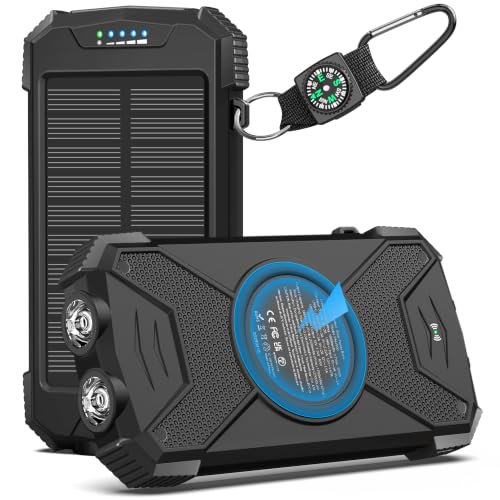
One compact power bank stands out for outdoor enthusiasts who need dependable charging and hands-free light in tough conditions: the BLAVOR Solar Power Bank 10000mAh with 20W wireless charging. I rely on its real 10,000mAh capacity to deliver 2.2 full charges for my iPhone 14 Pro and one full charge for my iPad Air. It charges my iPhone 15 to 65% in 30 minutes and supports three devices at once. Built with IPX5-rated, shockproof materials, it withstands rain and drops. The dual flashlights and carabiner-mounted compass help in low light and rough terrain. It’s lightweight, solar-rechargeable, and ideal for emergencies.
Best For: Outdoor enthusiasts and adventurers needing a durable, solar-rechargeable power bank with fast charging and integrated safety features for use in extreme conditions.
Pros:
- Real 10,000mAh capacity delivers up to 2.2 full charges for iPhone 14 Pro and one full charge for iPad Air
- 20W fast charging via USB-C and wireless charging; supports simultaneous charging of three devices
- Rugged IPX5 waterproof, shockproof design with dual flashlights and compass-equipped carabiner for outdoor safety
Cons:
- Solar charging is slow and best suited for emergency top-ups rather than full recharges
- Limited 10,000mAh capacity may not suffice for extended multi-day trips with heavy device use
- Wireless charging may generate heat, potentially reducing efficiency and battery longevity
Power Bank 50000mAh Fast Charging Black

When reliability matters most during outdoor trips or power outages, the Power Bank 50000mAh Fast Charging Black stands out for those needing a high-capacity backup that won’t quit. I rely on its 50000mAh capacity to fully charge my iPhone 14 up to 15 times. With 22.5W PD fast charging via USB-C, it powers devices three times faster than standard 10W models-my iPhone 15 jumps from 20% to 60% in just 20 minutes. It has three input and four output ports, so I can charge up to four devices at once. The built-in LED flashlight works with a 3-second press and helps during blackouts or camping. Just know it’s too large for airplanes without approval.
Best For: Outdoor enthusiasts and frequent travelers needing a high-capacity, fast-charging power bank to keep multiple devices charged during extended trips or emergencies.
Pros:
- 50000mAh capacity provides up to 15 full charges for smartphones like the iPhone 14
- 22.5W PD fast charging delivers a 20% to 60% charge for iPhone 15 in just 20 minutes
- Four output ports allow simultaneous charging of multiple devices, plus a built-in LED flashlight for emergencies
Cons:
- Not allowed on airplanes without airline approval due to high capacity
- Heavy at 23.81 ounces and relatively bulky for portability
- Not suitable for charging laptops despite multiple ports
YELOMIN 20000mAh Solar Power Bank
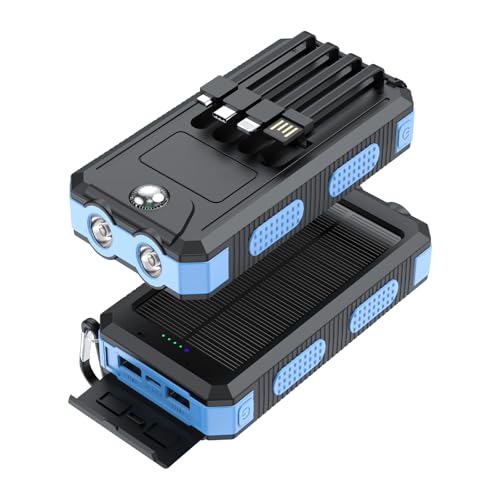
You’ll want this power bank if you’re serious about staying charged during extended outdoor trips or emergencies where grid access isn’t guaranteed. I rely on its 20000mAh capacity to charge my phone multiple times, and the solar option works-slowly-when outlets aren’t an option. It’s not fast, but it’s reliable. The six ports let me power several devices at once using built-in cables or ports. It’s waterproof, has two LED flashlights with SOS mode, and includes a compass-useful for camping or emergencies. At 8.8 ounces, it’s compact enough to carry daily. I keep it in my pack, knowing it’s ready when I need it.
Best For: Outdoor enthusiasts, campers, and emergency preparedness seekers who need reliable, solar-rechargeable power on the go.
Pros:
- High 20000mAh capacity with six charging options (3 built-in cables and 3 ports) for charging multiple devices simultaneously
- Durable, waterproof design with integrated LED flashlights (SOS/Strobe modes) and compass, ideal for outdoor and emergency use
- Solar charging capability and eco-friendly build offer off-grid power options and environmental sustainability
Cons:
- Solar charging provides only a trickle charge and is highly dependent on sunlight intensity and exposure
- Lacks detailed information on battery lifespan and long-term solar efficiency
- No explicit indication of fast solar recharge support, which may limit usefulness in urgent scenarios
Solar Charger Power Bank 42800mAh Wireless

I rely on the Solar Charger Power Bank 42800mAh when I need dependable, long-lasting power in off-grid conditions-this one stands out for anyone who requires frequent multi-device charging over several days without access to an outlet. It holds 42800mAh, powers up to six devices at once via USB-C, USB-A, wireless, and built-in cables, and lasts over 1800 cycles. I use the Qi wireless pad for my iPhone 15 and the built-in cables for convenience. The dual LED flashlight has SOS, strobe, and stable modes, survives drops and rain, and clips to gear with the carabiner. It’s bulky, but the capacity and durability justify the size.
Best For: Outdoor enthusiasts and travelers who need reliable, long-lasting power for multiple devices in off-grid or emergency situations.
Pros:
- High 42800mAh capacity supports extended use and over 1800 charge cycles
- Simultaneously charges up to six devices with diverse output options including Qi wireless and built-in cables
- Rugged, waterproof, shockproof design with dual LED flashlight (SOS, Strobe, Stable) and carabiner for outdoor and emergency use
Cons:
- Bulky and heavy due to large battery size, reducing portability for casual users
- Solar charging is slow and supplemental; not ideal for primary recharging in urgent situations
- Built-in cables, while convenient, limit flexibility if longer or replacement cables are needed
Emergency Keychain Flashlight 3-in-1 Rechargeable
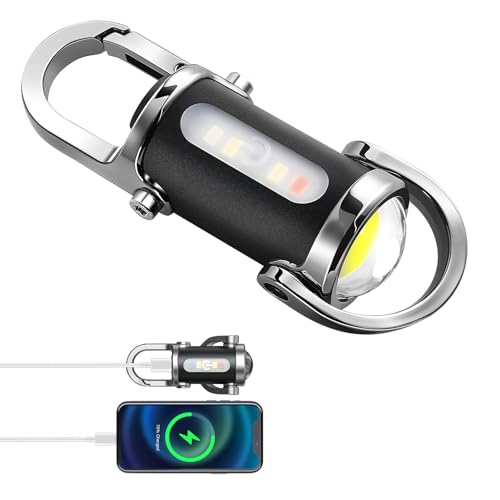
The Emergency Keychain Flashlight 3-in-1 Rechargeable suits anyone who needs a compact, multi-function tool for emergencies without sacrificing durability or convenience. I rely on its 500-lumen white light, upgradable to 1,200 lumens with switchable spotlight and floodlight modes, and its red-blue strobe for signaling. It charges fast via USB-C in 1.5 hours and doubles as a power bank, delivering 5V/1A output-enough for phones or earbuds. At 4.2 ounces and built with IPX7 waterproof, shockproof 6061 aluminum, it survives rough conditions. The button interface is simple, with mode selection and a battery indicator. I keep it on my keychain-it’s reliable, direct, and ready.
Best For: Outdoor enthusiasts, urban commuters, and emergency preparedness individuals seeking a durable, lightweight, and multi-functional flashlight with power bank capabilities.
Pros:
- Delivers high brightness with 500 lumens (upgradable to 1200 lumens) and versatile lighting modes including spotlight, floodlight, and emergency red-blue strobe
- Compact, rugged design with IPX7 waterproofing, shock resistance, and a 6061 aluminum body for reliable performance in extreme conditions
- Features USB-C bidirectional charging, charges in 1.5 hours, and doubles as a power bank for small devices
Cons:
- 1000mAh battery limits extended use at highest brightness and power bank functionality for only low-drain devices
- Red-blue strobe may be restricted in some regions due to local regulations on emergency lighting
- Keyring load capacity limited to 1kg; heavy keychains may compromise durability over time
30000mAh Portable Charger with Flashlight & LED

A 30000mAh capacity makes this portable charger with flashlight & LED ideal for someone who needs sustained power during extended outages or backcountry trips. I can charge my iPhone 16 fully about five times and still have juice left. With 30W PD and QC 4.0, it charges fast-my phone hits 100% in an hour. The USB-C port lets me recharge the unit itself in six hours. Its 3W flashlight delivers 360 lumens and runs up to 50 hours, useful during blackouts or night hikes. A clear LED screen shows exact remaining power. It’s heavy at nearly 15 ounces, but the durable build and full safety protections make it a dependable choice.
Best For: Outdoor enthusiasts, travelers, and emergency preparedness seekers who need reliable, long-lasting power and a bright flashlight in one durable device.
Pros:
- High 30000mAh capacity provides multiple full charges for smartphones and tablets, ideal for extended trips or power outages
- Supports fast charging with 30W PD 3.0 and QC 4.0, and features a long-lasting 3W LED flashlight with 50 hours of runtime
- Equipped with a clear digital power display and comprehensive safety protections for secure charging in various conditions
Cons:
- Weighs nearly 15 ounces, making it less portable for lightweight travel or everyday carry
- Does not include a wall charger, requiring separate purchase for full charging speed
- Large size may be cumbersome for users seeking compact power solutions
Factors to Consider When Choosing a Power Bank With Flashlight
You need a power bank with a flashlight that won’t quit when you need it most, so check the battery capacity and charging speed to guarantee it can recharge your devices quickly and hold a charge over time. Look at portability and size-small units fit in a pocket but often sacrifice battery life, while larger models may offer more power at the cost of convenience. Durability and lighting functionality matter too, since rugged builds and adjustable brightness modes can make a real difference in emergencies.
Battery Capacity
Look at battery capacity first-measured in milliamp-hours (mAh)-since it directly determines how many times you can recharge your devices. A 5,000mAh power bank gives about one full smartphone charge, while models over 60,000mAh can recharge multiple devices several times. Higher capacities, like those above 30,000mAh, offer extended power but are heavier and less portable. For daily use, a 10,000mAh unit weighs under 200 grams and fits in your pocket. Keep in mind that airlines often restrict power banks over 27,000mAh (or 100 watt-hours) unless approved. Also, expect only 60–70% of the rated capacity to be usable due to energy loss from voltage conversion and inefficiencies. Choose based on your device needs, portability requirements, and travel plans-balance power with practicality.
Charging Speed
When your devices are running low and time matters, charging speed becomes critical-so check the power bank’s output wattage. Models with 20W to 30W output charge iOS and Android devices quickly, and higher outputs like 22.5W or 30W charge up to three times faster than standard 10W units. Look for power banks with PD 3.0 or QC 4.0 support, as they can push a smartphone to 60% in just 30 minutes. This makes a difference when every minute counts. Dual-input ports (USB-C and USB-A) let you recharge the power bank faster, reducing downtime. If you need to power multiple devices, choose a model with independent output per port-this keeps charging speeds steady across devices. Don’t assume more ports mean slower performance; smart circuitry maintains efficiency. Speed isn’t just about convenience-it’s about readiness when you’re in a tight spot.
Portability And Size
A fast charge means little if the power bank is too bulky to carry when needed, so size and weight matter just as much as output. Most compact models weigh under 10 ounces and stay under 6 inches, slipping easily into pockets or backpacks. If you’re after maximum portability, keychain-style units weigh less than 5 ounces and clip right onto your belt or bag. Don’t assume small means weak-lightweight designs use high-density polymer batteries to deliver solid capacity without bulk. Many even pack multi-mode flashlights, so you don’t sacrifice function for size. That said, rugged outdoor models tend to be heavier and wider due to shockproof builds and larger cells, which can make them less convenient for daily carry. You’ll need to balance what you’re willing to carry against where and how often you’ll actually use it.
Durability Features
Even if your power bank survives daily bumps, it needs more to handle true emergencies-start with an IPX5 or higher waterproof rating to guarantee it resists water jets and wet conditions without failure. You’ll want shockproof construction using rugged, high-impact materials that survive drops onto concrete or rough terrain. Look for dustproof designs with sealed ports; they keep sand and dirt out, ensuring reliability in windy or dry environments. A fire-retardant casing adds safety, reducing the risk of damage if the unit overheats during heavy use. Rubberized or textured coatings give you a secure grip in wet or gloved hands while absorbing minor impacts. These features add bulk, yes, but they mean the difference between a working device and a dead one when you need it most. Prioritize tested durability over sleek looks-your survival situation won’t care how stylish it is.
Lighting Functionality
Look for a power bank with a flashlight that offers multiple modes-steady, strobe, and SOS-so you can adapt to different emergency scenarios, from moving through dark spaces to signaling for help. Choose one with a bright LED-some reach 360 lumens and shine up to 100 meters. If visibility matters, dual flashlights or red-blue alternating lights boost warning capability. Activation should be simple: a dedicated button or long-press on the power key works best, with quick mode cycling via repeated presses. Don’t ignore runtime-some last over 50 hours on low, while high brightness cuts life to just a few hours. Match the flashlight’s output and endurance to your needs. A bright, long-lasting light helps, but only if controls stay intuitive and reliable when you need them most.
Safety Mechanisms
Many power banks fail under stress, but the ones that last include multi-layer protection systems that actively defend against overcharging, over-discharge, short circuits, overcurrent, overvoltage, and overheating. You’ll want fire-retardant casing too-it reduces combustion risks during charging or heavy use. Internal smart IC chips regulate power flow, prevent battery wear, and support over 1800 charge cycles safely. That means longer life and stable performance when you need it most. Temperature control keeps things cool during fast charging, protecting both the power bank and your devices. If you’re using it outdoors or in bad weather, look for IP-rated waterproof and dustproof designs. They block moisture and debris that could short-circuit internal parts. These safety layers don’t guarantee invincibility, but they reduce failure risks markedly. You’re not just buying battery capacity-you’re buying reliable, safe power when the grid’s down and everything’s on the line.
Frequently Asked Questions
Can I Charge the Power Bank and Use the Flashlight at the Same Time?
Yes, you can charge the power bank and use the flashlight at the same time-many models support pass-through charging. You’ll need a unit with separate input and output circuits that handle both functions without overheating. Check the specs; some budget models disable the flashlight during charging. Higher-wattage power banks usually manage this better. Use a reliable USB cable and wall charger to maintain efficiency. Keep in mind that simultaneous use may slow the charging speed slightly. Always verify this feature works before relying on it.
Are These Power Banks Allowed on Airplanes?
Yes, you can bring most power banks with flashlights on planes, but they must be in your carry-on, not checked luggage. You’re limited to a 100-watt-hour capacity, though airlines sometimes allow up to 160 Wh with approval. Keep the power bank accessible for inspection. Larger ones get denied. Always check your airline’s policy before flying-rules vary. You’re responsible for compliance.
How Long Does the Flashlight Last on a Full Charge?
The flashlight typically lasts 8 to 20 hours on a full charge, depending on brightness mode and battery size. You get longer runtime on low settings, while high beams drain power faster. Models with 5,000–10,000mAh batteries balance light duration and charging capacity. LED efficiency helps extend use, but don’t expect maximum output for more than a few hours. Check lumens and modes-some sacrifice brightness for longer runtime.
Do These Power Banks Work With iPhone Fast Charging?
Yes, you can use these power banks for iPhone fast charging if they support USB-PD or Power Delivery at 18W or higher. Check the output specs-many models offer 5V/3A or 9V/2A, which meet Apple’s fast-charging requirements. You’ll need a compatible cable, like a USB-C to Lightning one. Lower output ports won’t fast charge. Keep in mind: enabling the flashlight draws power, so it slightly reduces charging speed during use.
Is the Solar Charging Feature Effective in Cloudy Conditions?
You’ll get some charge from solar power on cloudy days, but it’s slow and inefficient. Most models produce 10–25% of their rated output under overcast skies. Relying solely on solar in those conditions isn’t practical for urgent needs. You’re better off pre-charging via wall outlet or car. Solar’s a backup, not a primary source. Pair it with hand-cranking or a power bank for reliability. Prioritize capacity and durability over solar claims.