Best Carry Knives for Everyday Adventures (And Emergencies)
You need a reliable knife that’s light, durable, and ready when trouble hits. Models like the Smith & Wesson Extreme Ops SWA24S and Kershaw Cryo weigh under 3.6 oz and open fast with assisted or flipper mechanisms. Stainless steel blades (like 440C or D2) resist corrosion and hold an edge. Liner locks keep the blade secure, while glass breakers add emergency utility. Compact size aids carry, but shorter blades limit heavy tasks. Your choice depends on balance-weight, steel, and function-each with trade-offs worth knowing.
We are supported by our audience. When you purchase through links on our site, we may earn an affiliate commission, at no extra cost for you. Learn more. Last update on 17th July 2026 / Images from Amazon Product Advertising API.
Notable Insights
- Lightweight, compact folding knives with blades between 2.5 and 3.5 inches offer ideal portability for daily carry and quick access.
- Liner locks and frame locks provide reliable one-handed operation and resistance to over 50 pounds of pressure during use.
- Knives with assisted opening or smooth flipper mechanisms, like SpeedSafe or ball-bearing pivots, ensure fast, one-handed deployment in emergencies.
- D2, 440C, or Damascus steel blades with 58–62 HRC hardness deliver superior edge retention and durability for varied outdoor and rescue tasks.
- Features like glass breakers, seat belt cutters, and reversible pocket clips enhance functionality and accessibility in emergency situations.
Smith & Wesson Extreme Ops Folding Knife

I carry the Smith & Wesson Extreme Ops SWA24S when I need a rugged, no-frills knife that won’t slow me down. At 3.52 ounces, it’s light but solid, with a 3.1-inch serrated clip point blade made from 7Cr17Mov steel that holds up well under daily use. The aluminum handle feels secure, and jimping on the spine gives me control when I’m cutting rope or opening boxes. I flip it open fast with the ambidextrous thumb knob or finger flipper, and the liner lock clicks in firmly. It’s 7.1 inches overall, pocket-friendly with a reversible clip, and built for practical tasks-nothing more, nothing less.
Best For: Everyday carry users who need a lightweight, durable folding knife for general utility, outdoor tasks, and tactical preparedness.
Pros:
- Lightweight at 3.52 ounces with a sturdy aluminum handle and reliable liner lock for secure one-handed operation
- Serrated clip point blade made of 7Cr17Mov stainless steel offers strong edge retention and cutting performance
- Ambidextrous thumb knobs and finger flipper enable fast deployment with a reversible pocket clip for convenient carry
Cons:
- Serrated edge may not be ideal for tasks requiring precise, smooth cuts compared to a plain edge
- 7Cr17Mov steel, while durable, is mid-tier and may require more frequent sharpening than higher-end steels
- Jimping on the spine could feel abrasive to some users during extended use
GOOD WORKER Pocket Knife with Glass Breaker

The GOOD WORKER Pocket Knife with Glass Breaker suits outdoor enthusiasts and professionals who need a compact, multi-role tool that won’t quit under stress. I carry it daily because it’s light at 4.12 oz and folds down to 4.2 inches, fitting easily in my pocket. The 2.95-inch serrated 440C stainless steel blade holds an edge well and resists rust. Its aluminum handle feels secure, even wet, and the liner lock keeps the blade stable. I’ve used the glass breaker and seat belt cutter in practice-they work without fail. It’s not fancy, but it’s reliable for camping, driving, or emergencies. I trust it when performance matters.
Best For: Outdoor enthusiasts, emergency responders, and professionals needing a durable, compact, multi-functional tool for daily carry and demanding situations.
Pros:
- Durable 440C stainless steel blade with serrated edge resists corrosion and retains sharpness
- Integrated glass breaker and seat belt cutter enhance emergency preparedness
- Lightweight aluminum handle with liner lock ensures secure, ambidextrous use
Cons:
- Serrated blade limits precision cutting compared to a plain edge
- Heavier than some competing pocket knives in its class
- Glass breaker tip may snag on fabric when carried in a tight pocket
CIVIVI Mini Praxis Folding Pocket Knife
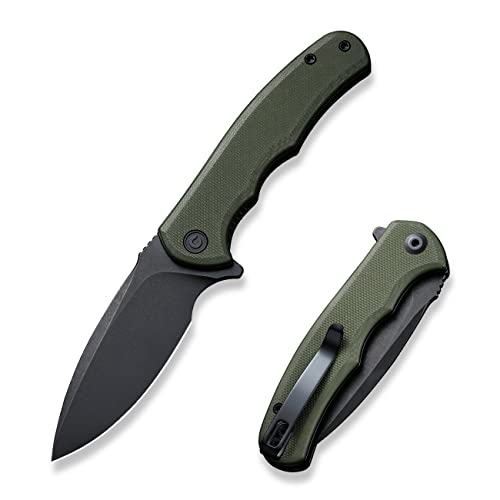
Though compact, the CIVIVI Mini Praxis packs a durable setup that works well for people who carry a knife daily and need reliability without bulk. I’ve used it for opening packages, camping tasks, and trail work, and it holds up thanks to its D2 steel blade and G10 handle. The 2.98-inch plain edge blade deploys smoothly with ceramic bearings and a flipper, and the detent is snappy enough for consistent one-handed use. At 4.1 ounces, it’s light but solid. The green G10 handle resists moisture and temperature shifts, making it dependable in varied conditions. It’s not the cheapest, but the build, function, and USA-supported lifetime service make it a practical EDC choice.
Best For: Everyday carry users seeking a durable, reliable folding knife for urban, outdoor, and work tasks without excessive bulk.
Pros:
- D2 steel blade offers excellent edge retention and ease of sharpening
- G10 handle provides a secure, comfortable grip and resists environmental changes
- Smooth one-handed flipper deployment with ceramic bearings and strong detent
Cons:
- D2 steel, while tough, is only moderately corrosion resistant
- Slightly heavier than some competitors in the mini knife category
- Higher price point compared to entry-level EDC knives
X-TAN-K Neck Knife with Sheath

When you need a dependable fixed blade that’s always within reach, the X-TAN-K Neck Knife with Sheath stands out for outdoor users who prioritize compact strength and carry flexibility. I carry it on my neck or belt using the included cord or sheath, and at 3.53 oz, it’s light without feeling flimsy. The 3.07-inch tanto blade is made from 5Cr14MoV steel-it holds an edge well and resists rust. Full tang construction means it won’t break under stress. The textured ABS handle stays grippy even when wet. I’ve used it on ropes, food prep, and camp tasks; it handles all without issue. It’s not flashy, but it works.
Best For: Outdoor enthusiasts, campers, hikers, and EDC users seeking a compact, durable, and easily accessible fixed blade knife for everyday tasks and light survival duties.
Pros:
- Durable 5Cr14MoV stainless steel blade with full tang construction ensures strength, edge retention, and corrosion resistance
- Lightweight at 3.53 oz with versatile carry options (neck or belt) for reliable accessibility and comfort
- Textured ABS handle provides a secure, slip-resistant grip even in wet or harsh conditions
Cons:
- Limited blade length (3.07 inches) may restrict use on heavier outdoor tasks or cutting chores
- Sheath design may not fit all belt sizes securely, affecting stability during belt carry
- 5Cr14MoV steel, while good, may require more frequent sharpening compared to higher-end blade steels
Pocket Knife with Glass Breaker & Clip

You’ll want this Grand Way USMC Jack Knife if your daily carry demands a reliable tool with emergency readiness built in. I carry it clipped daily-left or right side-thanks to the included pocket clip and ambidextrous thumb studs. The 3.15-inch 440C stainless blade opens fast and locks securely with a liner lock. At 5.6 ounces, it’s light but sturdy. The glass breaker works instantly on car windows, and the lanyard hole adds security. It’s served me on hikes, urban commutes, and bike repairs. Built for real use, not display. I’ve cleaned it after exposure to moisture-just hand wash. No frills, just function.
Best For: Outdoor enthusiasts, urban commuters, and EDC users who need a durable, multi-functional folding knife with emergency glass-breaking capability.
Pros:
- Features a strong 440C stainless steel blade with a secure liner lock and ambidextrous thumb studs for quick, reliable one-handed opening
- Includes a functional glass breaker and lanyard hole, making it ideal for emergency situations and safe carry
- Lightweight at 5.6 ounces with a pocket clip for versatile carry options and excellent portability
Cons:
- Limited to hand washing only, which may be less convenient for frequent outdoor use in rugged conditions
- Glass breaker is not replaceable or protected, posing potential risk of snagging or dulling over time
- Some users may find the clip-on mechanism less secure compared to integrated deep-carry pocket designs
Kershaw Appa Folding Tactical Knife 2.75
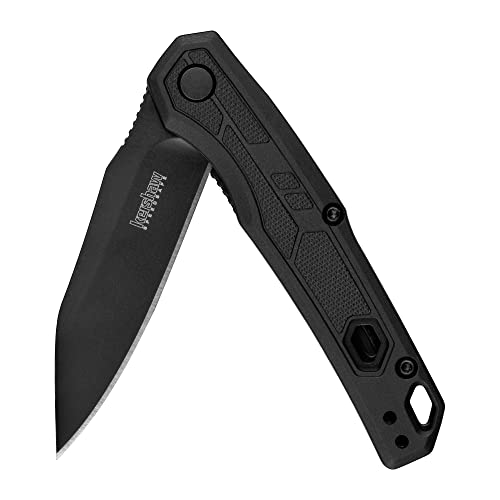
I carry the Kershaw Appa 2.75 when I need a compact, no-fuss knife that won’t slow me down. Its 2.75-inch reverse tanto blade is sharp and durable, made from stainless steel with a V-grind for easy maintenance. I open it one-handed with the flipper and SpeedSafe assist, which deploys the blade quickly and locks it securely with a liner lock. At just 2 ounces and 3.6 inches closed, it’s light and easy to carry daily. The plastic handle balances strength and weight, and the reversible clip lets me carry it left or right. I use it for cutting tape, rope, or boxes-no frills, just reliable performance.
Best For: Outdoor enthusiasts, military and law enforcement personnel, and everyday carry users seeking a lightweight, reliable, and compact folding knife for routine tasks.
Pros:
- Compact 3.6-inch closed length and 2-ounce weight make it highly portable and comfortable for daily carry
- SpeedSafe assisted opening with flipper allows for quick, one-handed deployment and secure liner lock engagement
- Durable stainless steel reverse tanto blade with V-grind edge offers excellent cutting performance and easy sharpening
Cons:
- Plastic handle, while lightweight, may feel less durable or premium compared to metal or G10 handles
- Limited blade length (2.75 inches) may not suit users needing more reach for heavy-duty tasks
- Assisted opening may not be legal in all jurisdictions, limiting usability for some users
Pocket Knife with Wood Handle & Glass Breaker

If you need a dependable, no-frills pocket knife that blends classic looks with practical emergency features, the KEXMO folding knife fits the role. I carry it daily because the 3.46-inch 3Cr13 stainless steel blade holds an edge well and resists corrosion. The vintage rosewood handle feels secure, thanks to finger grooves and a liner lock that keeps it open under pressure. It’s a bit heavy at 5.7 oz, but the flipper opener and thumb stud make one-handed use easy. I appreciate the glass breaker and pocket clip-both work when I need them. It’s not flashy, but it handles camping, travel, and repairs without issue.
Best For: Outdoor enthusiasts and everyday carry users who want a durable, no-nonsense folding knife with emergency glass-breaking capability and classic wood-handled aesthetics.
Pros:
- Reliable 3Cr13 stainless steel blade with good edge retention and corrosion resistance
- Equipped with a glass breaker and reversible pocket clip for emergency and carry convenience
- Ergonomic vintage rosewood handle with finger grooves provides a secure, comfortable grip
Cons:
- Slightly heavy at 5.7 ounces, which may be noticeable during extended carry
- 3Cr13 steel, while durable, is not as high-performing as premium blade steels
- Limited to one pocket knife in the package with no additional tools or accessories
EDC Pocket Knife with Tanto Blade

The FUNBRO EDC Pocket Knife with a tanto blade is built for people who want a dependable, no-frills tool for daily tasks and emergency situations. I carry it because the 3-inch 7CR13Mov stainless steel blade holds an edge and resists corrosion. The tanto point pierces effectively, and the flipper mechanism opens smoothly with one hand. At 3.2 ounces, it’s light, and the pocket clip keeps it secure. The liner lock feels stable, and the textured steel handle offers grip without slipping. It’s compact, ambidextrous, and includes a glass breaker-useful in emergencies. I’ve used it for cutting rope, opening packages, and camping tasks. It’s reusable, simple to clean, and reliable without extra features that add bulk or weight.
Best For: Individuals seeking a lightweight, reliable everyday carry knife for routine tasks, outdoor use, and emergency situations.
Pros:
- Durable 7CR13Mov stainless steel blade offers excellent edge retention and corrosion resistance
- Smooth one-handed flipper opening with ambidextrous design and secure liner lock
- Compact, lightweight build with integrated glass breaker and pocket clip for practical portability
Cons:
- Black-coated stainless steel handle may show wear over time with heavy use
- Limited to basic functionality without additional tools or multi-function features
- 3-inch blade, while effective for most tasks, may be too short for heavy-duty cutting jobs
AUBEY Damascus Pocket Knife with Clip
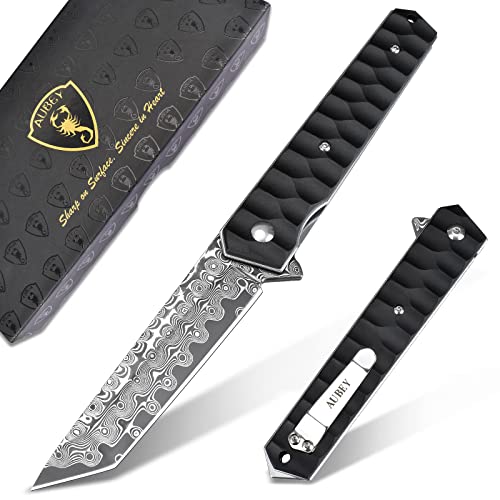
Forging a balance between durability and everyday practicality, the AUBEY Damascus Pocket Knife with Clip suits outdoor enthusiasts who demand reliable performance without excess weight. I carry it daily because the 3.34-inch Damascus blade, with its 58–60 HRC hardness, holds an edge well and resists chipping. The VG10 core guarantees sharpness, while the 76-layer pattern adds visual appeal without sacrificing function. At just 3 mm thick and paired with a lightweight aluminum handle, it’s easy to forget in my pocket. The flipper mechanism opens smoothly with ball bearings, and the liner lock feels secure. I’ve used it for camping, fishing, and cutting cord-every task so far without issue.
Best For: Outdoor enthusiasts and everyday carry (EDC) users seeking a durable, lightweight, and visually striking pocket knife with reliable performance.
Pros:
- Razor-sharp 76-layer Damascus blade with VG10 core offers excellent edge retention and corrosion resistance
- Smooth ball bearing flipper mechanism and secure liner lock enable easy one-handed operation
- Lightweight aluminum handle with ergonomic grip and ambidextrous design enhances comfort and usability
Cons:
- Damascus blade requires regular maintenance to prevent corrosion, including oiling after use
- Limited handle thickness may not suit users with larger hands comfortably
- Pocket clip orientation is fixed, offering no option for reversible carry
SOG Terminus XR G10 Folding Knife

You want a knife that handles hard use without failing, and the SOG Terminus XR G10 fits anyone who needs a durable, ambidextrous folder for tough daily tasks. I carry it because the 2.9-inch D2 steel blade holds an edge well and resists chipping, even after heavy use. The G10 handle is grippy and stable, and the XR Lock snaps securely, staying tight over time. It opens fast with the thumb stud or kick, and the reversible clip lets me pocket it left or right. At 0.29 pounds, it’s light but solid. I’ve used it in wet, gritty conditions, and it keeps working. It’s not flashy, but it’s reliable-exactly what I expect from a tool meant to last.
Best For: Rugged, ambidextrous everyday carry in demanding environments.
Pros:
- D2 steel blade offers excellent edge retention and durability under heavy use
- G10 handle provides secure grip and stability in wet or harsh conditions
- Fully ambidextrous design with reversible clip and multiple opening methods for quick, reliable deployment
Cons:
- D2 steel requires maintenance to prevent rust despite its toughness
- XR Lock, while secure, may require adjustment over time for optimal performance
- Plain edge and tanto tip may not suit users preferring more versatile blade styles for fine tasks
Factors to Consider When Choosing a Carry Knife
You want a blade that holds an edge, so check the steel type and its hardness rating-better materials like S30V or 154CM offer longer edge retention with less maintenance. A secure locking mechanism matters just as much, since a blade that slips can be dangerous; look for strong, proven locks like frame or liner styles that won’t fail under pressure. Size and ease of deployment affect daily carry and use, so pick a knife that’s compact enough to carry daily but opens fast and reliably when you need it.
Blade Material Quality
Blade material sets the foundation for a carry knife’s performance, and high-carbon stainless steel with 13% to 15% chromium delivers a reliable balance of rust resistance, edge retention, and sharpenability. You’ll want a blade between 54 and 60 HRC on the Rockwell scale-harder steel holds an edge longer but becomes more brittle. Steels with molybdenum and vanadium, like 7Cr17Mov or 440C, resist wear and keep their sharpness under stress. D2 offers even better edge retention but is tougher to sharpen in the field. If you’re cutting fibrous materials often, a serrated edge stays effective longer, though it’s harder to resharpen than a plain edge. Each steel type involves trade-offs between durability, ease of maintenance, and performance. Choosing the right blade steel means matching the material to your daily tasks and environment while keeping realistic expectations about maintenance and longevity.
Locking Mechanism Safety
While a sharp blade gets the work done, it’s the locking mechanism that keeps your fingers safe during use. You need a lock that resists accidental closure under pressure, and most reliable designs handle over 50 pounds of force without slipping. Liner locks use a spring-loaded metal strip that clicks into place behind the tang, offering solid one-handed operation and less than 0.5mm of blade play when built well. For heavier tasks, frame locks are stronger-you’re using the full handle as the locking component, which supports larger blades over 3 inches. Assisted opening models pair spring tension with liner or frame locks to guarantee the blade snaps fully open and locks securely. While liners are lighter and simpler, frame locks offer greater durability and rigidity. Whichever you choose, test the lock regularly; even the best mechanisms wear over time. Stability and strength aren’t optional-they’re built in.
Size And Portability
A compact folding knife between 2.5 and 3.5 inches in blade length keeps daily tasks manageable without adding bulk. You’ll want an overall closed length under 4 inches and a weight below 4 ounces so it rides light in your pocket or bag. Knives built with aluminum or G10 scales cut weight while still handling regular use. A slim profile under 15 mm thickness slips easily into tight spaces, whether it’s a front pants pocket or a shirt pocket. Look for a reversible pocket clip-this lets you carry it on either side for faster access, whether you’re left- or right-handed. These design choices don’t just save space; they reduce drag and discomfort during all-day carry. Portability isn’t just about small size-it’s about smart proportions and practical features that keep the tool ready without weighing you down.
Edge Retention Performance
You’ll want a knife that holds its edge through regular use, and that depends largely on the steel’s hardness, measured on the Rockwell Hardness Scale (HRC). Steels between 58 and 62 HRC typically offer strong edge retention, especially high-carbon stainless types with chromium, vanadium, or molybdenum that form wear-resistant carbides. Harder blades stay sharp longer but can chip under heavy abuse, while softer steels below 56 HRC dull faster though they’re easier to resharpen. Edge geometry matters too-higher edge angles and thick grinds add durability but cut with more effort. You’ll get the best results by matching the blade steel and grind to your tasks. Regular honing and proper sharpening extend edge life regardless of the steel. A well-maintained 60 HRC blade often outperforms a neglected one, even if both are made from the same alloy. Choose based on how much sharpening you’re willing to do.
Ease Of Deployment
Blade deployment speed and reliability matter just as much as edge retention when selecting a carry knife for daily tasks. You need a knife that opens fast and consistently, especially in urgent situations. A flipper mechanism lets you deploy the blade quickly with one hand using your thumb or finger, giving you speed without complexity. Assisted opening systems cut effort further by using a spring to finish the opening once you start it. Thumb studs on both sides let left- and right-handed users open the blade precisely. Ball-bearing pivots make the action smoother and faster than standard washers. Once open, liner locks or frame locks secure the blade instantly, stopping wobble and ensuring safety. These features balance speed, control, and stability-critical for real-world use where hesitation isn’t an option.
Frequently Asked Questions
How Do I Legally Carry a Knife in Public?
You can legally carry a knife in public by checking your state and local laws, as they vary widely. You’re responsible for knowing blade length limits, carry style-tip-up or tip-down-prohibited types like switchblades or ballistic knives, and restricted places such as schools or government buildings. Folding knives with non-locking blades are often legal. Carry openly or concealed within legal limits, and avoid using the knife as a tool for anything threatening.
Can I Bring a Pocket Knife on a Plane?
You can’t bring a pocket knife on a plane in your carry-on; TSA bans blades of any kind in the cabin. You might pack it in checked luggage if the blade is under a certain length, but rules vary by airline and country. Locking blades, assisted-openers, or knives over 2.5 inches often aren’t allowed. Always check current TSA guidelines and airline policies before traveling to avoid confiscation or penalties. Knives belong in checked bags, not carry-ons.
Are Automatic Knives Legal in My State?
You can’t assume automatic knives are legal in your state-laws vary widely. Some states ban them outright; others allow them with restrictions. You’ll need to check your state’s specific statutes on switchblades or spring-assisted blades. Local city or county laws might impose additional limits. Carrying one where it’s prohibited risks fines or arrest. Always verify current regulations before you carry. When in doubt, choose a manual folder to stay safe and compliant.
What’s the Best Way to Clean a Knife Blade?
You clean a knife blade best with warm water, mild dish soap, and a soft cloth or sponge. You dry it immediately to prevent rust. You avoid dishwashers-they damage blades and handles. For stuck grime, you use a plastic scraper or toothbrush. You don’t soak the knife-especially folding ones-since water damages pivots and internals. You oil the blade edge and pivot occasionally if stainless steel, more often if carbon. You keep performance by cleaning after every use.
How Often Should I Sharpen My Carry Knife?
You should sharpen your carry knife every 2–3 months with regular use, or sooner if you notice dullness during tasks like cutting cord or slicing food. Heavy use demands sharpening every few weeks. A clean blade edge cuts efficiently and safely. Over-sharpening wears steel faster, especially on thinner blades. Use a honing rod weekly to maintain the edge between sharpenings. Test sharpness by slicing paper-if it drags, it’s time to sharpen. Consistent maintenance extends blade life and guarantees reliability.