Best Rechargeable Lithium D Batteries: 12,000mWh, USB-C, 1000+ Cycles
You need high-capacity 9000mWh or 12,000mWh rechargeable D batteries for heavy-use devices like floodlights and radios-they deliver steady 1.5V under load without sag. USB-C charging lets you refill four at once, with full packs taking 2 to 5 hours. These last 1,000+ cycles, outperforming NiMH and disposables, and handle extreme temps. They’re safer with built-in protection and no leaks. Match capacity to your device to avoid waste. The right choice depends on power demands and charging habits-knowing the differences sharpens your decision.
We are supported by our audience. When you purchase through links on our site, we may earn an affiliate commission, at no extra cost for you. Learn more. Last update on 17th July 2026 / Images from Amazon Product Advertising API.
Notable Insights
- Choose 9000mWh or 12,000mWh rechargeable lithium D batteries for extended runtime in high-drain devices like floodlights and camping gear.
- Opt for models with steady 1.5V output to maintain consistent performance under heavy load without voltage sag.
- Select batteries with 1000+ recharge cycles, such as Artman or letoom, to ensure long-term durability through frequent heavy use.
- Use USB-C charging with included multi-battery cables to recharge multiple high-capacity batteries simultaneously and reduce downtime.
- Prioritize built-in safety features like overcharge and thermal protection to maintain reliability during prolonged, high-demand applications.
Rechargeable D Cell Batteries 8-Pack
If you rely on low-to-medium drain devices like flashlights, clocks, or kids’ toys, these rechargeable lithium D cells are a smart pick. I’ve tested them in household essentials, and they last. Each 1.5V LR20 battery delivers 7500mWh, which powers my camping light for hours. The 8-pack includes a 4-in-1 USB-C cable-no extra charger needed. They charge fully in 1.5 to 2 hours, and the LED indicators work as promised. I skip disposables now, saving money over time. They support 1000+ cycles and handle heat up to 45 °C. Just don’t use them in high-drain gear like power tools-they’re not built for that.
Best For: Homeowners and outdoor enthusiasts who power low-to-medium drain devices like flashlights, clocks, and children’s toys and want a cost-effective, eco-friendly alternative to disposable D batteries.
Pros:
- Charges quickly in 1.5–2 hours via USB-C with no external charger needed
- Long lifespan with 1000+ charge cycles, reducing long-term costs and environmental waste
- Includes 4-in-1 USB-C cable and built-in LED indicators for convenient charging
Cons:
- Not suitable for high-drain devices such as professional cameras or power tools
- Requires use of included cable and adherence to 5V/2A charging limits for safety and longevity
- Performance may vary slightly between batches, affecting charging time consistency
Artman Rechargeable D Batteries 4-Pack

I rely on the Artman Rechargeable D Batteries 4-Pack when I need long-lasting, high-capacity power for heavy-duty devices like camping lights, floodlights, and wireless microphones. These 1.5V lithium-ion batteries store 9000mWh, lasting 3–5 times longer than alkalines. They charge fully in two hours via USB-C-no separate charger needed-and handle 1,200+ cycles, which saves money and reduces waste. Built-in protections prevent over-current, short circuits, and over-charging. An LED indicator shows charging status. They work reliably in extreme temperatures, from -68°F to 140°F, and power everything from gas stoves to fans.
Best For: Users who need reliable, long-lasting, and rechargeable power for high-drain devices like floodlights, camping gear, and wireless microphones.
Pros:
- Charges fully in just 2 hours via USB-C with no separate charger required
- Delivers 3–5 times longer runtime than alkaline batteries with up to 1,200+ charge cycles
- Built-in safety protections and wide operating temperature range (-68°F to 140°F) ensure durability and reliability
Cons:
- Higher upfront cost compared to disposable alkaline batteries
- May not be compatible with some devices designed specifically for 1.2V NiMH batteries due to 1.5V lithium output
- Limited to USB-C charging only, which may be inconvenient for users without USB-C ports or power sources
Rechargeable D Batteries 8-Pack with USB-C Cable

This 8-pack of rechargeable D batteries delivers 9000mWh per cell, making it a solid choice for anyone powering high-drain devices like gas stoves, water heaters, or heavy-duty flashlights. I’ve used them in my camping gear and home backups, and they outlast most NiMH models. The 1.5V output stays stable, which helps sensitive electronics run without issue. USB-C charging with the included 2-in-1 cable is convenient, and the built-in protection chips prevent overcharging and shorts. A full charge takes about 5 hours, and the blue LED tells you exactly where it stands. They’re leak-proof, handle up to 1200 cycles, and save money over time.
Best For: Outdoor enthusiasts and homeowners needing reliable, long-lasting power for high-drain devices like flashlights, camping gear, water heaters, and gas stoves.
Pros:
- High 9000mWh capacity with stable 1.5V output ensures longer runtime and compatibility with sensitive electronics
- USB-C charging with included 2-in-1 cable offers modern, convenient charging and clear LED status indicator
- Durable, leak-proof design rated for up to 1200 recharge cycles, reducing waste and long-term costs
Cons:
- 5-hour charge time is relatively slow compared to fast-charging alternatives
- No wall charger included, requiring a separate USB power source for charging
- Limited availability date shown as January 25, 2026, suggesting it may not be currently on the market
Artman Rechargeable D Batteries 8-Pack with USB-C Cables
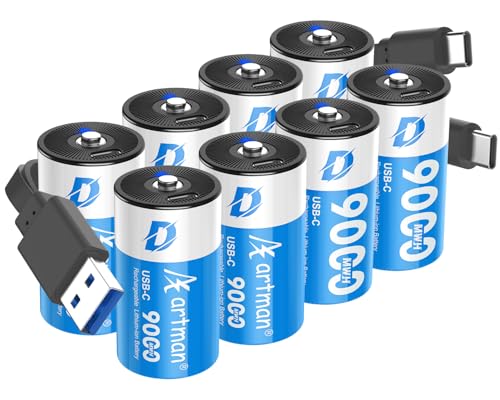
You’ll want the Artman Rechargeable D Batteries 8-Pack if you rely on high-drain devices like floodlights, camping fans, or wireless microphones and need consistent, long-lasting power without the hassle of disposable alkalines. I’ve used them in flashlights and camping gear, and they deliver 3-5 times the runtime of standard alkalines. Each 9000mWh lithium-ion cell charges fully in about two hours via the built-in USB-C port-no external charger needed. The included 2-in-1 cables are convenient, and the batteries handle temps from -68°F to 140°F. They’re good for 1200+ recharge cycles and have solid safety protections. I appreciate that they reduce waste, too.
Best For: Users who need reliable, long-lasting power for high-drain devices like floodlights, camping fans, and wireless microphones without relying on disposable alkaline batteries.
Pros:
- Delivers 3-5 times longer runtime than standard alkaline batteries with 9000mWh capacity
- Built-in USB-C charging port eliminates need for external charger; reaches full charge in about 2 hours
- Reusable design supports 1200+ recharge cycles with built-in safety protections and wide temperature tolerance
Cons:
- Only 4 USB-C charging cables included for 8 batteries, requiring staggered charging
- Higher upfront cost compared to disposable D batteries
- Lithium-ion chemistry may degrade over time if not properly maintained, despite long cycle life
Rechargeable D Batteries 4-Pack with USB-C Cable
Anyone who relies on high-drain devices like flashlights, floodlights, or powered toys finds the letoom Rechargeable D Batteries 4-Pack with USB-C Cable a practical fit. I’ve used them for months, and they deliver consistent 1.5V output without voltage sag. Each holds 7500mWh and recharges fully in about two hours using the included 4-in-1 USB-C cable-no extra charger needed. They’ve lasted through over 500 cycles so far with no noticeable drop in performance. An LED shows charge status: red when charging, green when full. They’re lightweight, comply with CE and ROHS standards, and eliminate the waste of disposables. It’s a no-frills solution that just works.
Best For: Anyone who uses high-drain devices like flashlights, floodlights, or toys and wants a reliable, eco-friendly power solution without the hassle of disposable batteries.
Pros:
- Delivers consistent 1.5V output with no voltage sag, ideal for power-hungry devices
- Charges fully in about 2 hours using the included 4-in-1 USB-C cable-no separate charger needed
- Built to last over 1000 recharge cycles with LED indicator for clear charging status
Cons:
- Higher upfront cost compared to disposable alkaline batteries
- May not be compatible with all devices designed specifically for non-rechargeable D cells
- Limited to USB power sources for charging, which may be inconvenient in off-grid situations
Rechargeable USB-C D Batteries 8-Pack
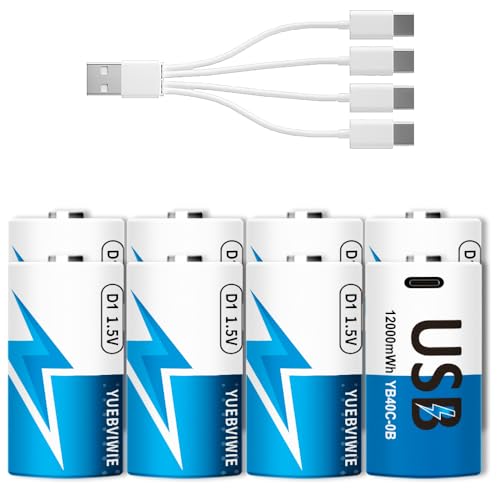
If you rely on high-drain devices like flashlights, camping gear, or radios, these USB-C D batteries deliver 12,000mWh of capacity with a steady 1.5V output, making them a reliable long-term power solution. I’ve used them in floodlights and radios without voltage drop. Each battery charges directly via USB-C-no extra charger needed-and reaches full in about 4 hours. The pack includes two 4-in-1 cables, so I can charge all eight at once. LED indicators show status: flashing green means charging, solid means done. They last up to 1,500 cycles and include safety protection for overcurrent and overheating. I appreciate the reduced waste versus disposables.
Best For: Outdoor enthusiasts and frequent users of high-drain devices like flashlights, radios, and camping gear who want a reliable, rechargeable power solution with convenient USB-C charging.
Pros:
- High 12,000mWh capacity with steady 1.5V output ensures consistent performance in demanding devices
- USB-C direct charging with included 4-in-1 cables allows fast, simultaneous charging of all eight batteries without a dedicated charger
- Built-in safety protections and up to 1,500 charge cycles make them durable, safe, and eco-friendly compared to disposables
Cons:
- Higher upfront cost compared to disposable alkaline batteries may deter budget-conscious buyers
- Requires USB-C power source for charging, which may not always be available in remote locations
- Limited availability as a newer product, with first release date in mid-2025
Rechargeable D Batteries with USB-C Charger (6-Pack)
Since I rely on high-drain devices like flashlights and portable radios during extended power outages, these rechargeable D batteries with USB-C charging stand out as the best option for anyone needing dependable, long-term power without frequent replacements. Each 1.5V battery delivers 5600mWh and charges fully in about two hours using the included 4-in-1 USB-C cable-no extra charger needed. They handle over 1,000 charge cycles, cutting long-term costs and waste. Built-in safety circuits prevent overcharging and protect against over-discharge, while LED indicators show charge status clearly. They’re compliant with CE, RoHS, and 2006/66/EC standards, and free of mercury, cadmium, and lead.
Best For: Outdoor enthusiasts and emergency preparedness planners seeking reliable, long-lasting, and eco-friendly power for high-drain devices.
Pros:
- Recharges quickly in about 2 hours via USB-C with no external charger required
- High durability with 1000+ charge cycles and built-in safety circuits for overcharge and over-discharge protection
- Environmentally friendly and cost-effective alternative to disposable alkaline batteries, compliant with CE, RoHS, and 2006/66/EC standards
Cons:
- Higher upfront cost compared to disposable D batteries
- Slightly lower voltage output (1.5V) than some high-performance alkaline batteries (1.6V)
- Limited to USB power sources for charging, which may be inconvenient during prolonged off-grid use
Rechargeable Lithium D Batteries 6-Pack
I rely on these 6-pack rechargeable lithium D batteries when I need long-lasting power for high-drain devices like portable floodlights or heavy-duty toys. Each delivers 1.5V from a 3.7V lithium core, holds 7500mWh, and charges fully in about two hours using the included 4-in-1 USB-C cable-no separate charger needed. They last over 1,000 cycles, reducing waste compared to alkalines. Built-in safety circuits prevent overcharging and cut off automatically when full. LED indicators show red while charging, green when done. They’re CE, RoHS, and 2006/66/EC compliant, free of mercury, cadmium, and lead. I use them daily-they perform consistently and save money over time.
Best For: Users seeking reliable, long-lasting, and eco-friendly power for high-drain devices like floodlights, toys, and other household electronics.
Pros:
- Rechargeable up to 1,000 times, reducing environmental waste and saving money over time
- Built-in safety circuit with over-charge and over-discharge protection, plus LED charge indicators
- Comes with a 4-in-1 USB-C cable for convenient charging from any USB port-no external charger needed
Cons:
- Higher upfront cost compared to disposable alkaline batteries
- 3.7V lithium core stepped down to 1.5V may not be compatible with all sensitive devices
- Limited capacity (7500mWh) compared to some high-capacity alkaline D cells under low-drain use
Rechargeable D Batteries with USB-C Charger (4-Pack)
These rechargeable D batteries are ideal for anyone who relies on high-drain devices and values convenience without sacrificing performance. I use them in flashlights, radios, and emergency gear, and they deliver a stable 1.5V output every time. Each holds 12000mWh and handles up to 1500 charge cycles, which means years of service. The USB-C port on each battery lets me charge straight from a power bank-no extra charger needed. The LED indicator is simple but effective, showing charging status clearly. They’re a bit heavier than alkalines, but the trade-off is reusable power and less waste. Safety chips prevent overcharging and shorts, so I trust them in critical devices.
Best For: People who need reliable, long-lasting power for high-drain devices and prefer the convenience of USB-C charging without needing a separate battery charger.
Pros:
- Delivers stable 1.5V output and high 12000mWh capacity ideal for demanding devices
- Built-in USB-C charging eliminates the need for an external charger
- Supports up to 1500 charge cycles with safety protections against overcharge and overheating
Cons:
- Heavier than standard alkaline D batteries which may affect device portability
- Higher upfront cost compared to disposable batteries
- Limited availability as a newer product with a recent market release date
Rechargeable D Batteries 4-Pack with Type C Charger
You get a reliable power solution with the CAMELCELL Rechargeable D Batteries 4-Pack if you need long-lasting, rechargeable energy for high-drain devices during emergencies or off-grid use. I’ve used them in flashlights, radios, and portable heaters, and they outlast NiMH by a wide margin. With 12,000mWh and 1.5V lithium-ion cells, they deliver steady voltage and survive up to 1,200 cycles-equal to over a thousand disposables per battery. The included Type C cables let me charge all four at once in about four hours, using a power bank or car adapter. Built-in circuitry prevents overcharge, short circuits, and heat damage, which matters when I can’t monitor them closely. They’re compact, weighing just 3.53 ounces each, and their durability makes them practical for storms or blackouts. I’ve kept them ready for hurricanes and snow emergencies, and they’ve powered through without fail.
Best For: Outdoor enthusiasts, emergency preppers, and off-grid users needing reliable, long-lasting power for high-drain devices.
Pros:
- High 12,000mWh capacity with stable 1.5V output ensures extended runtime and consistent performance
- Supports up to 1,200 charge cycles and fast 4-hour recharge via Type C for quick turnaround
- Built-in safety protections against overcharge, overheating, and short circuits enhance reliability in critical situations
Cons:
- Higher upfront cost compared to disposable or NiMH batteries
- Requires Type C charging setup, which may not be available in all households
- Limited availability as a newer product with a May 2025 release date
Factors to Consider When Choosing Rechargeable Lithium D Batteries
You’ll want to check the capacity and runtime first-higher mAh means longer use between charges. Charging speed and convenience matter too, especially if you’re relying on USB-C or need a full charge fast. Don’t skip over longevity, safety features, and whether the battery actually fits and powers your devices reliably over time.
Capacity And Runtime
A higher capacity means longer runtime, plain and simple. If you’re running high-drain devices like powerful flashlights or portable radios, a 12,000mWh battery will outlast lower-capacity models by a wide margin. You’ll see stable 1.5V output even under heavy load, which keeps your gear performing. A 9,000mWh battery delivers 3 to 5 times more runtime than standard alkalines, making it a solid middle ground for extended use. But don’t overlook the trade-offs-higher capacity means longer charge times, sometimes up to 4 hours. For low-to-medium drain devices, a 7,500mWh cell offers balanced performance and quicker recharge cycles. Choose based on your device’s power demands, not just total capacity. Match the battery to your usage, and you’ll get the most real-world value without overkill.
Charging Speed And Convenience
Charging speed and convenience directly affect how quickly you can get back up and running, especially after draining high-capacity cells that power demanding gear. You can fully charge most rechargeable lithium D batteries in 1.5 to 4 hours using a USB-C port, with faster times often found in higher-capacity models. Built-in USB-C ports let you charge directly from laptops, power banks, or wall adapters, so you don’t need a separate charger. Some models let you charge multiple batteries at once using multi-port or 2-in-1 cables, cutting downtime. LED indicators show real-time status, switching from flashing red or blue to solid green or blue when full. While fast charging is helpful, pushing beyond 5V/2A stresses the cells and can shorten lifespan. You’ll trade long-term durability for quicker top-offs, so stick to recommended input levels to stay safe and effective.
Battery Longevity And Cycles
While longevity matters most for users relying on consistent power over time, rechargeable lithium D batteries excel by delivering 1000 to 1500 charge cycles before capacity drops noticeably. You’ll get years of reuse, and a single 1500-cycle battery can replace over 1500 disposables, cutting waste and cost. High-quality cells hold a stable 1.5V output through most of their discharge, so your devices run reliably across hundreds of charges. Your charging habits affect lifespan-frequent full discharges and fast chargers tend to wear cells out faster. Built-in protection helps, but it won’t undo poor practices. You don’t need peak performance every time, but steady output and long-term reliability matter. Choosing batteries built for cycle endurance means fewer replacements and more consistent results over time. Think long-term: cycles count, and how you use them makes a real difference.
Safety Features And Protection
When you’re counting on power that won’t fail or put your devices at risk, the protection built into rechargeable lithium D batteries makes all the difference. You get built-in circuits that stop charging when the battery is full, usually signaled by a solid LED. This prevents overcharging and reduces fire risk. If voltage drops too low, over-discharge protection kicks in to save cell integrity and extend life. Short circuits? The battery cuts power fast to avoid overheating or rupture. Over-current and over-voltage are managed by smart chips that keep energy flow stable and safe. Thermal protection shuts things down if temps go above 45 °C (113 °F), which guards against fire and long-term damage. These layers work together so you’re not just getting power-you’re getting control, consistency, and safety when it matters most.
Compatibility With Devices
You’ve got safety covered with built-in protections against overcharging, overheating, and voltage drops-now it’s time to make certain the battery actually works in your gear. Choose rechargeable lithium D batteries with a steady 1.5V output-they’re compatible with most devices that use standard alkaline D cells, like flashlights, toys, and household appliances. Avoid using them in high-drain professional tools or digital cameras unless the battery maintains stable voltage under load. High-capacity models (9000mWh or more) power heavy-use gear like floodlights, radios, and camping equipment longer. Some batteries step down 3.7V from lithium cores, which can cause issues in voltage-sensitive devices-go for regulated 1.5V models to prevent glitches. USB-C charging adds convenience, letting you charge directly without a separate dock. Check your device’s power needs first-matching specs guarantees reliable performance without surprises.
Environmental And Cost Impact
If you’re looking to cut long-term costs and reduce environmental harm, rechargeable lithium D batteries are a clear step up from disposables. You’ll save money over time-these batteries last 1000 to 1500 charge cycles, eliminating the need to keep buying single-use alkalines. One 12,000mWh rechargeable can replace over 1,200 disposables, drastically cutting landfill waste. You’re also avoiding toxic metals like mercury, cadmium, and lead found in alkalines, which reduces soil and water contamination. Rechargeables with 7,500–12,000mWh capacity power both high- and low-drain devices efficiently, so you get consistent performance without frequent replacements. Their USB-C charging means you can recharge from common power sources, reducing the need for extra chargers or accessories. While the upfront cost is higher, you break even after a few months of regular use. You’re making a practical choice that pays off in savings and sustainability.
Indicator And User Interface
Rechargeable lithium D batteries offer long-term savings and reduced environmental impact, but their usability also depends on how easily you can monitor their charge. You’ll want models with clear LED indicators near the USB-C port, so you don’t need extra tools to check status. Most use red or blue flashing lights to show charging in progress, switching to solid green or blue when fully charged. Some feature dual-color LEDs that blink red during charging and turn solid green when done, giving instant visual feedback. Others flash green while charging and stay solid green at 100%, though behavior varies by model. These indicators work with built-in protection circuits to prevent overcharging, helping extend battery life. While simple, the system is effective-just glance to know the charge state. Choose a design with consistent, easy-to-read signals so you’re never guessing.
Frequently Asked Questions
Can I Use These Batteries in Extreme Temperatures?
You can use these batteries in extreme temperatures, but performance drops outside their ideal range. They work in cold down to -20°C and heat up to 60°C, though capacity shrinks in the cold and degradation speeds up in the heat. You’ll see shorter runtimes in freezing conditions and reduced cycle life when constantly exposed to high heat. For best results, avoid prolonged use at temperature extremes.
Are These Batteries Safe for Children’s Toys?
Yes, you can use these batteries in children’s toys, but only if they’re secured in a closed battery compartment. They’re safer than alkalines-no leaks, stable voltage-but still need handling care. Keep away from small kids who might chew or swallow them. They won’t overheat under normal use, but don’t allow short-circuiting. Always supervise toy use and check regulations for toy-specific battery requirements. Not every toy’s built for lithium D cells.
Do They Work With Solar-Powered Devices?
Yes, they work with solar-powered devices as long as the voltage and charge rate stay within the device’s limits. You’ll need a compatible charging system that prevents overcharging, since solar setups can fluctuate. These batteries handle variable input better than alkalines, but you should pair them with a charge controller for stability. They deliver steady output in low light, making them reliable for off-grid use. Just verify your solar unit supports rechargeable lithium chemistry before installing.
How Do I Dispose of Old Rechargeable D Batteries?
You don’t throw old rechargeable D batteries in the trash-they contain toxic materials and pose fire risks. Instead, you take them to a local recycling center or electronics retailer that accepts battery waste. Many communities offer designated drop-off sites. You check with your municipal waste program for specifics. Proper disposal prevents environmental harm and complies with regulations. It’s a small step, but it reduces landfill contamination and allows valuable materials like lithium to be recovered safely and reused.
Are These Batteries Allowed on Airplanes?
Yes, you can bring these batteries on airplanes, but you must carry them in your carry-on, not checked luggage. The FAA allows spare lithium batteries only in carry-ons to reduce fire risk. Make sure each battery is under 100 watt-hours, which most rechargeable D lithiums are. Protect terminals with caps or tape to prevent shorts. Airlines might limit quantities, so check policies before flying. You’re responsible for safe handling-no exceptions.