Best Containers to Store Water Without Tasting Plastic
You’ll avoid plastic taste by choosing BPA-free HDPE or glass containers like the Ready Store 5-gallon jugs or Bivvclaz 2L glass pitcher-they’re inert and won’t leach. Rigid HDPE models resist odors and maintain integrity over time, while glass offers zero taste transfer. Collapsible options like the WaterStorageCube use BPA-free LDPE but may retain faint odors if not cleaned properly. For long-term storage, stick with food-grade, UV-protected materials. Each choice balances weight, durability, and flavor preservation based on your needs. More details lie ahead.
We are supported by our audience. When you purchase through links on our site, we may earn an affiliate commission, at no extra cost for you. Learn more. Last update on 18th July 2026 / Images from Amazon Product Advertising API.
Notable Insights
- Choose BPA-free, food-grade HDPE containers like Ready Store jugs to prevent plastic taste and ensure safe long-term water storage.
- Opt for borosilicate glass or stainless steel containers, such as the Bivvclaz pitcher, for completely inert, taste-free water storage.
- Use BPA-free, FDA-compliant LLDPE bladders like waterBOB that are designed not to leach chemicals or impart plastic flavor.
- Select containers made from BPA-free PC or PET plastics with non-toxic construction, such as the 3.17-gallon jug, for no plastic taste.
- Avoid low-grade plastics; instead, use certified food-grade materials like those in FastRack Hedpak containers to eliminate chemical leaching.
Reliance Aqua-Tainer 7 Gallon Water Container

If you need a no-fuss, dependable container for emergency water storage or outdoor use, the Reliance Aqua-Tainer 7 Gallon Water Container is built for practicality. I’ve used it for years, and its rigid, rectangular shape stacks neatly and saves space. The 7-gallon capacity (26 liters) is ideal for short-term needs, and the hideaway spigot dispenses water on demand. Its reversible cap prevents leaks during transport, and the molded grip makes lifting easier. I store mine in a shaded area-direct sunlight can cause brittleness over time. It weighs under 2 kg when empty, so it’s portable. Backed by a five-year warranty, it’s a solid, no-frills choice for real-world readiness.
Best For: Outdoor enthusiasts and emergency preppers needing a durable, space-saving water container for reliable short-term storage and easy dispensing.
Pros:
- Rigid, stackable design maximizes storage efficiency and features a hideaway spigot for convenient water access
- Reversible spigot cap prevents leaks during transport, enhancing portability and safety
- Backed by a five-year warranty, offering long-term confidence in durability and performance
Cons:
- Prolonged exposure to direct sunlight may lead to material degradation and leaks
- Cotton outer material with down fill may absorb moisture or require careful handling in wet conditions
- Limited capacity of 7 gallons may require multiple units for extended emergency needs
Camping Water Container 2 Gallon Collapsible Jug

I rely on the Camping Water Container 2 Gallon Collapsible Jug when I need a lightweight, leakproof option that won’t waste space in my pack. It holds 2.1 gallons (8 liters) and weighs just 3.84 ounces, so it’s easy to carry and pack. The BPA-free, food-grade plastic doesn’t leave a chemical taste, and the reinforced seams prevent leaks. A dedicated spout allows for smooth pouring, while the separated inlet and outlet improve flow and pressure balance. When empty, I fold it flat for compact storage. It’s hand wash only, which is a minor trade-off for durability. I’ve used it for camping, RV trips, and emergencies-it performs consistently. The 1-year warranty covers defects, and the model (WJ, ASIN B0FTZ5M84W) is widely available.
Best For: Outdoor enthusiasts, travelers, and emergency preppers seeking a lightweight, space-saving, and reliable water storage solution.
Pros:
- Holds 2.1 gallons (8 liters) of water while weighing only 3.84 ounces, making it highly portable
- Made from BPA-free, food-grade plastic with reinforced seams for leakproof, safe water storage
- Collapsible design folds flat for compact storage when not in use, ideal for packing and travel
Cons:
- Hand wash only, which may be less convenient for frequent or on-the-go cleaning
- Spout design may be prone to splashing if not poured carefully
- Limited capacity compared to larger rigid water containers for extended group use
3.17 Gallon Portable Water Jug with Spigot

This 7-gallon portable water jug with spigot suits anyone needing reliable, on-the-go hydration storage-especially outdoor enthusiasts and preppers who prioritize capacity and ease of use. Mine holds 405.8 ounces and weighs just 1.65 pounds, making it easy to carry yet spacious enough for group trips or emergencies. The food-grade PC plastic is BPA-free and doesn’t leach odors or tastes. I appreciate the wide 4-inch mouth-it lets me clean it thoroughly without scrubbing blindly. The spigot seals tight, no leaks, and the extension hose directs flow cleanly into cups or pots. It’s not collapsible, so it takes space when empty, but the durability and smooth pour make it worth it.
Best For: Outdoor enthusiasts, campers, and emergency preppers who need a durable, high-capacity, and portable water storage solution with a leak-proof spigot.
Pros:
- Large 3.17-gallon capacity ideal for group use and extended outdoor trips
- BPA-free food-grade PC construction ensures safe, odorless, and taste-free drinking water
- Leak-proof spigot with extension hose allows for controlled, mess-free pouring
Cons:
- Not collapsible, taking up significant space even when empty
- Hand wash only, limiting cleaning convenience
- Slightly bulky dimensions may make storage difficult in compact spaces
waterBOB 100-Gallon Emergency Water Bladder

One 100-gallon waterBOB Emergency Water Bladder fits snugly in my standard bathtub and gives me enough stored water to meet the basic needs of my family of four for several days during power outages or pipe failures. I can set it up in about 20 minutes with no tools, and it’s made from BPA-free, FDA-compliant LLDPE plastic that keeps water fresh for up to 16 weeks. The included fill sock attaches to my faucet for fast, clean filling, and the hand-powered siphon pump lets me dispense water without backflow or spills. It’s lightweight, compact when stored, and I trust it because it’s been tested and used by hundreds of thousands during emergencies.
Best For: Families preparing for emergencies who need a simple, reliable way to store 100 gallons of safe water in their bathtub without special equipment or permanent installation.
Pros:
- Converts a standard bathtub into a 100-gallon emergency water reservoir in about 20 minutes with no tools required
- Made from BPA-free, FDA-compliant LLDPE plastic to keep water fresh and safe for up to 16 weeks
- Includes a fill sock for quick filling and a hand-powered siphon pump for spill-free, backflow-free water access
Cons:
- Limited to use in standard bathtubs, which may restrict placement options in smaller bathrooms
- Requires manual pumping to dispense water, which may be inconvenient for large-volume needs
- Water storage duration capped at 16 weeks, necessitating periodic replacement during prolonged preparedness situations
RTS 50-Gallon ECO Rain Barrel

The RTS 50-Gallon ECO Rain Barrel is a solid choice for homeowners with small yards or limited outdoor space who want a low-profile, functional solution for collecting and using rainwater. I use mine for watering garden beds, and its 50-gallon capacity handles light irrigation needs without refilling. The flat back fits flush against my house, saving space. Made from 100% recycled UV-resistant polyethylene, it’s durable and doesn’t warp. At 18 pounds, it’s light but stable. The spigot delivers water smoothly, and the overflow valve lets me link a second barrel. No assembly’s needed, and it’s made in the USA with a 1-year warranty.
Best For: Homeowners with small yards or limited outdoor space seeking a durable, low-profile rainwater harvesting solution for light irrigation and outdoor use.
Pros:
- Made from 100% recycled UV-resistant polyethylene for long-lasting durability and eco-friendly performance
- Flat-back design allows flush mounting against walls or fences, saving valuable space
- Equipped with an overflow valve for connecting multiple barrels and a spigot for easy water access
Cons:
- 50-gallon capacity may require frequent refilling during dry periods or for larger landscaping needs
- Plastic spigot may be less durable than brass alternatives over time
- Optional stand sold separately, which may limit ease of water access for some users
5-Gallon Stackable Water Storage Containers

Four 5-gallon stackable containers give me exactly 20 gallons of portable water storage, making them ideal for anyone needing a compact, long-term supply for emergencies or outdoor use. I can stack them securely thanks to their flat tops and bottoms, saving space in my garage or vehicle. Each weighs 40 pounds when full, but the handles make lifting manageable. They’re made from food-grade, BPA-free HDPE plastic, so I don’t taste plastic in the water. I’ve used them for camping and boat trips, and they hold up well. Made in the USA by Ready Store, they’re durable, refillable, and support roughly 40 days of drinking water for one person.
Best For: Individuals seeking a reliable, space-efficient, and long-term water storage solution for emergency preparedness, camping, or outdoor adventures.
Pros:
- Durable, food-grade, BPA-free HDPE construction ensures safe, clean-tasting water storage
- Stackable design with flat tops and bottoms maximizes space efficiency in garages, vehicles, or shelters
- Includes four 5-gallon containers (20 gallons total) with ergonomic handles for easy transport and portability
Cons:
- Heavy at 40 pounds per full container, which may make handling difficult for some users
- Large footprint when stored individually, requiring adequate space despite stackable design
- Limited to water and food-safe liquids, restricting use for non-potable storage applications
21-Gallon Foldable Water Storage Containers (8-Pack)

You’ll want these 21-gallon foldable water storage containers if you need reliable, compact hydration solutions for emergencies or outdoor adventures. I use all eight 2.6-gallon (10L) units regularly-they store flat when empty, saving space. Made from BPA-free, food-grade PE and PET, they’re safe for drinking water, dry goods, or freezing. Each weighs just 1.85 pounds, has a wide 1.65-inch opening for easy filling, and stands firm when full. The leak-proof design passed drop and pressure tests. I keep them in my emergency kit and truck-ideal for camping, disasters, or large gatherings. They’re reusable, recyclable, and backed by a 1-year warranty.
Best For: Outdoor enthusiasts, emergency preppers, and families needing compact, durable, and safe water storage solutions for camping, disasters, or large gatherings.
Pros:
- Lightweight, foldable design saves space when not in use
- Made from food-grade, BPA-free, and non-toxic materials safe for drinking water and dry goods
- Leak-proof and durable construction passes drop and pressure tests
Cons:
- Limited capacity per container requires multiple units for large-scale needs
- Wide mouth opening, while useful for filling, may increase spill risk if not handled carefully
- Transparent color exposes contents to light, which could affect long-term water quality if stored in sunlight
Bivvclaz 2L Glass Pitcher with Lid
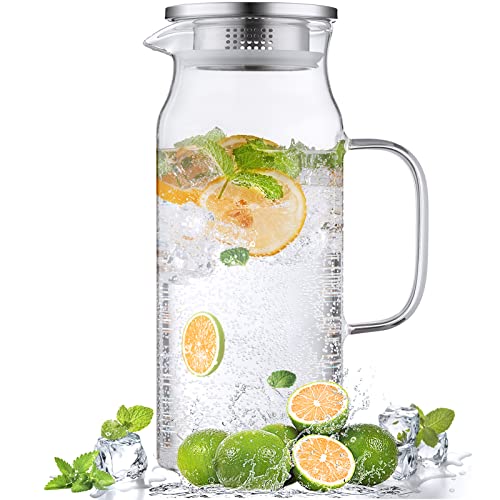
I grab the Bivvclaz 2L Glass Pitcher when I need a reliable, no-frills container that handles both scalding coffee and icy lemonade without warping or leaching flavors. Made from borosilicate glass, it tolerates temps from -4°F to 302°F and resists stains and odors. The 2-liter size fits most fridges, and the 3.62W x 10.8H shape saves space. I use the stainless steel lid’s two pour options-one straining ice, the other fully open-depending on the drink. It’s dishwasher safe, though I watch the metal edges under the silicone seal when cleaning. It’s durable, simple, and works daily.
Best For: Home users seeking a durable, versatile glass pitcher for both hot and cold beverages that resists stains and fits in standard refrigerators.
Pros:
- Made of high borosilicate glass that withstands extreme temperatures from -4°F to 302°F without warping or leaching
- Includes a 304 stainless steel lid with two pour options-one straining ice and fruit, the other fully open for free flow
- Dishwasher safe and easy to clean thanks to wide mouth and stain-resistant, odor-proof construction
Cons:
- Metal edges under the silicone seal on the lid require careful handling during cleaning to avoid irritation
- Glass construction, while durable, is heavier than plastic and prone to breaking if dropped
- Limited color or design options, catering to minimalist preferences only
FastRack 5 Gal Hedpak with Cap (2-Pack)

If you need durable, space-efficient water storage that handles both daily use and emergency prep, the FastRack 5 Gal Hedpak with Cap (2-Pack) fits the role. I’ve used these BPA-free, food-grade plastic containers for months, and they don’t impart a plastic taste. Each holds 5 gallons-18.9 liters-and their square shape stacks tightly, saving space. The threaded caps seal securely, preventing leaks. Graduated markings help with accurate filling. They’re lighter than glass carboys, making them practical for brewing, water storage, or even waste oil. FastRack’s 100% satisfaction pledge backed my purchase when one arrived damaged-and they replaced it fast.
Best For: Homebrewers, preppers, and anyone needing durable, space-saving, food-grade liquid storage solutions.
Pros:
- BPA-free, food-grade plastic ensures safe storage without imparting plastic taste
- Square design allows for efficient stacking and space-saving storage
- Threaded cap provides a secure, leak-proof seal ideal for transport and long-term use
Cons:
- Plastic construction, while durable, may scratch or show wear over time with heavy use
- Graduated markings may be difficult to read in low-light conditions
- Limited color options (available only in white, which can make content level harder to see)
WaterStorageCube BPA-Free Collapsible Water Container
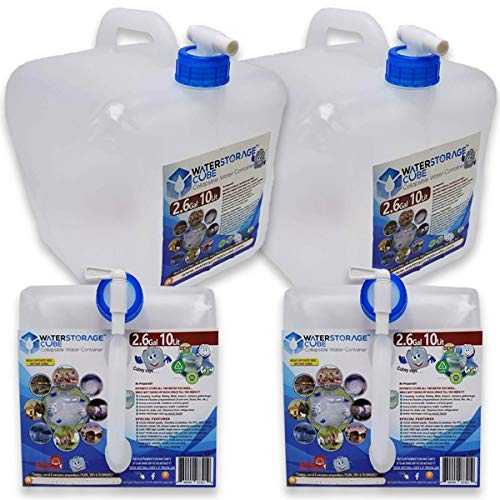
The WaterStorageCube BPA-Free Collapsible Water Container is a solid pick for backpackers, preppers, and outdoor enthusiasts who need reliable, lightweight water storage without compromising safety or space. I’ve used it on hikes and during emergencies, and it holds up. Made from food-grade LDPE, it’s BPA-free, PVC-free, and adds no plastic taste. The 2.6-gallon model weighs just 0.18 kg, folds flat, and fits in tight spots. Its spigot is leak-proof, with no gaskets to replace, and the soft handles make carrying easy. It’s not rigid, so it won’t stand when empty, but that’s the trade-off for portability. Includes a practical survival eBook.
Best For: Backpackers, preppers, and outdoor enthusiasts needing lightweight, safe, and space-saving water storage.
Pros:
- Lightweight and collapsible design saves space and makes it easy to transport
- Leak-proof spigot with no gaskets to replace ensures durability and mess-free use
- Made from BPA-free, food-grade materials with no plastic taste or odor
Cons:
- Not rigid, so it cannot stand upright when empty without support
- Limited capacity compared to larger rigid containers
- Spigot may be slower for filling large containers or rapid water use
Factors to Consider When Choosing a Container to Store Water
You’ll want to check the container’s material first-BPA-free plastics or food-grade stainless steel keep your water safe. Think about how much water you need, how easy it is to move, and whether it’ll fit where you plan to store it. A durable build matters, especially if you’re prepping for emergencies or rough handling.
Material Safety
When choosing a container for water storage, prioritize materials that won’t compromise water quality over time, and stick to those labeled BPA-free and food-grade, like HDPE, LDPE, or PP, since they resist chemical leaching and are proven safe for long-term potable use. Avoid plastics with phthalates, PVC, or DEHP-they can leach toxins, especially in heat or over time. Opt for containers with food-grade polypropylene lids and silicone seals; they’re non-toxic and keep water pure. If you prefer alternatives, 304 stainless steel and high borosilicate glass are inert, won’t absorb odors, and handle temperature swings without degrading. They’re heavier but ideal for taste-free, chemical-free storage. Look for USFDA compliance and non-odor plastics like LLDPE to guarantee safety and stability. These materials won’t break down or taint water, even after months. Choose wisely-your health depends on what your container is made of.
Capacity Needs
Think about how much water you realistically need each day-aim for one gallon per person to cover drinking and basic hygiene during emergencies. If you’re prepping for a household or longer outage, go bigger: 50 to 100-gallon tanks support multiple people for days. For one or two, 1- to 5-gallon jugs are easier to manage and fit in tight spaces. Collapsible containers save room when empty but hold less-good for backup, not primary storage. Stackable or modular designs let you scale up as needed and make efficient use of space. You don’t want to overbuy and waste room, but underestimating means running short fast. Match the capacity to your household size and storage area. Larger units require stable placement and aren’t meant to move once full. Plan for actual use, not just worst-case scenarios.
Portability Factors
If space and movement matter, prioritize containers that balance light weight with durable design. Choose collapsible models weighing under 0.2 kilograms-they won’t weigh you down during hikes or travel. Containers with flat sides and rectangular shapes fit snugly in tight spots and stay stable in vehicles, minimizing shift during transit. Look for one that folds to less than 4 inches thick; it’ll stash easily in a backpack or glove compartment when empty. Ergonomic handles and contoured grips make carrying and pouring comfortable, even when the container is full. A leak-proof spigot with a secure cap means no spills and quick access without extra tools. You’ll get control and convenience on the move, without setup delays. These features save time and space while reducing physical load-key for frequent travelers or emergency kits where efficiency matters.
Durability Considerations
Strength matters in a water container-especially when you’re counting on it to survive drops, temperature swings, and long-term use. You want HDPE containers: they resist impact and keep their shape in both heat and cold. Rigid models with thick walls and reinforced seams handle pressure and drops better, reducing leaks or cracks. Polycarbonate is strong and clear, but without UV treatment, it weakens in sunlight-so check for UV protection if storing outdoors. Foldable options made in one seamless piece avoid weak spots, making them tough against punctures. Choose food-grade plastic free from BPA, PVC, and phthalates; these stay flexible over time and won’t turn brittle, even after years or exposure to cold. You’re not just buying a container-you’re investing in reliability. Pick materials proven to endure real conditions, not just lab tests.
Storage Space
When space is limited, shape and stackability make the difference in how much water you can store. You should choose rectangular or flat-back containers because they fit flush against walls and stack tightly, saving inches that add up. If you need to minimize empty storage, collapsible or foldable containers cut footprint by up to 80%, making them ideal when room is tight. Rigid models with flat tops and bottoms stack safely, especially those with integrated handles and contoured grips that prevent shifting and toppling. For narrow spots-like car trunks or kitchen gaps-slim-profile or cylindrical designs slide in easily. You gain vertical space by using stackable units, letting you store more in closets or emergency kits without spreading out. Think about your available area now, because the right shape helps you store more water without wasting a single inch.
Intended Usage
What kind of water storage do you actually need? If you’re hydrating daily, a durable, rigid container with a cleanable spigot works well. For emergencies, store at least one gallon per person per day in food-grade, BPA-free tanks designed for long-term use. Rigid containers hold shape and resist leaks over time, while collapsible options save space when empty-ideal for camping or transport. If you move water often, pick designs with secure caps and leak-proof valves to prevent spills. For outdoor use, prioritize lightweight builds and portability. Always confirm the material won’t leach chemicals or alter taste, especially if storing for weeks or months. Think about how you’ll access the water-frequent use demands easy dispensing. Balance capacity with practicality: bigger isn’t better if it’s too heavy to move or store. Match the container to your real-world needs.
Frequently Asked Questions
How Often Should I Replace Stored Water?
You should replace stored water every six months to guarantee freshness and safety. Even clean, sealed containers can develop bacteria or absorb odors over time. If the water’s been exposed to heat or sunlight, replace it every three months. Use food-grade containers with tight seals and label them with dates. Rotate by using old water in cooking or watering plants, then refill. Regular replacement prevents taste issues and maintains quality without relying on questionable long-term storage.
Can I Freeze Water in These Containers?
Yes, you can freeze water in these containers, but leave at least 2 inches of headspace to allow for expansion. Most won’t crack if designed for long-term storage and made from food-grade, BPA-free HDPE or polypropylene. Avoid overfilling, as pressure from ice can deform or rupture rigid plastics. Freezing may slightly shorten the container’s lifespan, but it won’t affect water taste. Test one container first under your freezer conditions to confirm durability.
Are These Containers Dishwasher Safe?
Yes, these containers are dishwasher safe, but you shouldn’t assume all parts tolerate high heat. Place lids on the top rack and bottles upright to avoid warping. Stainless steel and glass models handle washing cycles well, but check manufacturer specs-some sealants or silicone gaskets degrade over time. Frequent dishwasher use may shorten seal life, so inspect them regularly. For longest durability, hand-washing seals extends performance without risking contamination or leaks during critical use.
Do I Need to Sanitize Containers Before First Use?
Yes, you should sanitize containers before first use. Factories aren’t sterile, and residual mold or bacteria can linger. Wash with warm, soapy water, then rinse thoroughly. For extra safety, soak in a diluted vinegar solution or use a food-safe sanitizer. It takes two minutes and eliminates potential contaminants. Skipping this step risks flavor transfer and health issues. Even BPA-free or certified materials can carry microbes. Sanitizing guarantees your water stays clean and tastes neutral from day one.
Can I Store Water in Direct Sunlight?
No, you shouldn’t store water in direct sunlight. It promotes algae growth and degrades plastic over time, even in BPA-free containers. UV exposure can also alter water taste and compromise structural integrity. For long-term storage, use opaque or UV-protected containers and keep them in a cool, dark place. If sunlight exposure is unavoidable, rotate supplies more frequently and inspect for signs of container breakdown or microbial growth. Temperature stability matters just as much as material quality.