Best Solar Panels for Hiking: BigBlue 28W vs FlexSolar 40W
You need a solar panel that’s light, efficient, and tough. The BigBlue 28W delivers 25.4% efficiency in a 1.48-lb foldable design, outperforming heavier 30W models. FlexSolar’s 25W and 30W options weigh under 1.2 lbs, offer IP67 ratings, and withstand harsh conditions. While higher-wattage panels like the 100W suit basecamps, ultralight hikers favor power-to-weight ratios above 15W per pound. Most lack batteries, so direct sun is essential. Consider durability, real-world output, and portability to match your route’s demands.
We are supported by our audience. When you purchase through links on our site, we may earn an affiliate commission, at no extra cost for you. Learn more. Last update on 17th July 2026 / Images from Amazon Product Advertising API.
Notable Insights
- High-efficiency monocrystalline solar panels maximize power output even in low-light or shaded hiking conditions.
- Lightweight, foldable designs under 2 pounds ensure portability and easy backpack integration for long trails.
- IP67-rated solar panels offer superior durability, with resistance to water, dust, and rugged outdoor use.
- Dual USB ports with Power Delivery and Quick Charge support fast, simultaneous charging of multiple devices.
- Compact panels with high power-to-weight ratios (15+ W/lb) deliver optimal performance without adding trail fatigue.
BigBlue 28W Solar Charger Dual USB

If you’re out hiking and need reliable power without the bulk, the BigBlue 28W Solar Charger is a solid pick. It weighs just 1.48 pounds and folds to fit in a backpack. With 25.4% efficiency-among the highest available-it converts sunlight quickly, even in low light. The N-type cells and no-metal-line surface absorb more sun than standard panels. Dual USB-C and one USB-A ports deliver up to 5V/4.8A total, charging phones and GPS devices simultaneously. It doesn’t store power, so you’ll need direct sunlight. The IP44 rating handles splashes, but the USB box isn’t waterproof. Blue LED shows active charging.
Best For: Outdoor enthusiasts and travelers who need a lightweight, efficient solar charger for powering devices on the go.
Pros:
- High 25.4% efficiency with N-type solar cells for superior sunlight absorption
- Foldable, portable design weighing only 1.48 pounds with dual USB-C and USB-A ports
- Durable, splash-resistant IP44-rated build with Smart IC technology for safe charging
Cons:
- Does not store power, requiring direct sunlight for operation
- USB junction box is not waterproof, limiting use in heavy rain
- Not effective for indoor charging through windows or windshields
FlexSolar 40W Foldable Solar Panel Charger

I rely on the FlexSolar 40W Foldable Solar Panel Charger when I need dependable power off the grid, and it’s best suited for hikers and backpackers who prioritize lightweight gear and efficient solar charging without carrying excess bulk. It weighs just 1.76 lbs and folds to 8 x 11 inches, fitting easily in my pack. The 40W monocrystalline panel hits 24% efficiency, among the highest I’ve seen, but only with direct sun at a 45° angle. Shade cuts output drastically. Dual USB ports (QC3.0 and USB-C PD) let me charge two devices fast, and the 19V DC port runs small gear. No battery onboard means it only works in sunlight. IP67 rating keeps it dustproof and waterproof, though the junction box isn’t fully sealed. ETFE coating resists abrasion and UV damage better than standard panels. I’ve used it in rain and desert heat-it holds up. Carabiners help clip it to my pack. I get full phone charges in about 2.5 hours in ideal light. It’s not waterproof under water, so I avoid submerging it. For its size, it delivers solid power when positioned right, but you must manage expectations in low light.
Best For: Hikers and backpackers who need a lightweight, high-efficiency solar charger for off-grid adventures without the bulk of built-in batteries.
Pros:
- Ultra-lightweight and compact foldable design ideal for portability and packing efficiency
- High 24% energy conversion efficiency with monocrystalline solar cells and dual fast-charging USB ports
- IP67-rated durable build with ETFE coating for superior resistance to water, dust, and UV damage
Cons:
- No built-in battery, so power is only available during direct sunlight exposure
- Charging efficiency drops significantly-up to 70%-in shaded or suboptimal lighting conditions
- Junction box is not fully waterproof, limiting performance in heavy rain or wet environments
Solar Panels 30W Portable Foldable Charger

The SOLUPUP 30W Portable Foldable Solar Charger is best for backpackers and solo hikers who need reliable off-grid power without adding bulk to their pack. It weighs just 2.4 lb and folds to 11.61 inches, fitting easily in most backpacks. Its 30W monocrystalline panel converts sunlight at over 23% efficiency, delivering up to 15W max output via USB-A or USB-C. I can charge two devices at once, and the smart chip adjusts power delivery for faster charging. It’s IPX5-rated, so it handles rain and dust without issue. An adjustable stand and carabiners help secure it to gear, though real-world output depends on sun exposure and angle.
Best For: Backpackers and solo hikers who need lightweight, reliable off-grid power charging without adding bulk to their gear.
Pros:
- Lightweight at 2.4 lb and foldable design for easy portability and storage
- High 23%+ energy conversion efficiency with dual USB-A and USB-C outputs for charging two devices simultaneously
- IPX5-rated for durability in rain, dust, and rugged outdoor conditions, with included carabiners and stand for flexible setup
Cons:
- Maximum output limited to 15W despite 30W panel rating, reducing charging speed in real-world conditions
- Performance highly dependent on direct sunlight, angle, and weather, leading to variability
- Plastic construction may lack long-term durability under heavy use or extreme conditions
FlexSolar 25W Ultra-Portable Solar Charger

This solar charger suits backpackers who prioritize compact power without sacrificing resilience. I’ve used it on alpine ridges and desert trails, and its 7.7 × 5.1-inch folded size saves space without compromising durability. It weighs just 1.12 lbs and resists impacts, dust, and submersion thanks to IP67 and MIL-STD-810G ratings. The 25W panel delivers 18–23W steady output, charges two devices at once, and works in temperatures from -4°F to 149°F. Its 23.2% efficiency cell harvests light well, even under cloud cover, and the rugged build survives sandstorms and downpours.
Best For: Outdoor enthusiasts and backpackers seeking a durable, ultra-compact solar charger that delivers reliable power in extreme environments.
Pros:
- Compact, lightweight design folds small and includes secure attachment options for easy portability
- High 23.2% solar efficiency with MPPT Boost Technology ensures consistent charging, even in low light
- Rugged, IP67-rated build withstands harsh conditions including submersion, dust, and extreme temperatures
Cons:
- 25W output may be insufficient for rapidly charging larger devices or multiple high-power gadgets simultaneously
- No built-in battery storage, requiring direct sun exposure for operation
- Premium durability and performance come at a higher price point compared to basic portable solar panels
FlexSolar 36W Ultra-Portable Solar Charger
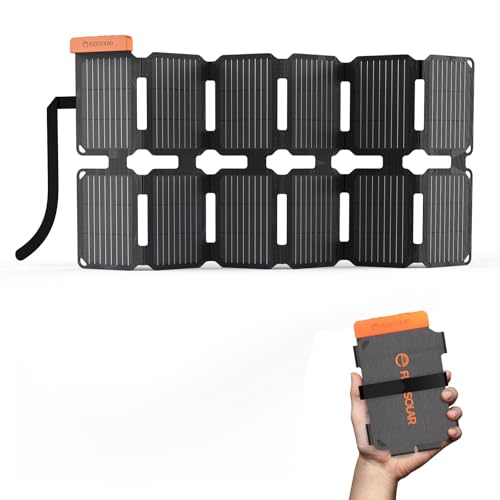
Looking for a solar charger that keeps your devices powered without weighing down your pack? I’ve used the FlexSolar 36W in rain, dust, and extreme cold, and it delivers. At 1.54 pounds and folded to just 7.7×5.1 inches, it’s compact but rugged, with an IP67 rating and a polymer baseplate that handles abuse. The 36W output uses MPPT tech to maximize sun capture, even on cloudy days, and dual USB and DC ports let me charge multiple devices fast. Military-grade monocrystalline cells hit 24% efficiency, and the build survives heavy flex and 2,000 folds. It’s reliable-no fluff, just power when you need it.
Best For: Outdoor enthusiasts and emergency preppers who need a reliable, high-output solar charger that’s ultra-portable and built to withstand harsh environments.
Pros:
- 36W high power output with MPPT technology maximizes charging efficiency even in low-light conditions
- Ultra-durable IP67-rated design with military-grade cells and 2,000 fold endurance for rugged outdoor use
- Compact, lightweight, and versatile with multiple ports (USB-A, USB-C, DC) for charging various devices on the go
Cons:
- Higher price point compared to basic solar panels due to advanced materials and technology
- Lacks built-in battery storage, requiring direct sun or external power bank for consistent charging
- DC cable is proprietary (5.5mm×2.1mm), limiting compatibility without adapters
BigBlue 30W Folding Solar Charger

I need a solar charger that keeps up when I’m miles from the grid, and the BigBlue 30W Folding Solar Charger delivers reliable power without added bulk. It weighs just 1.76 pounds and folds to a compact 12 x 8 inches, so it fits easily in my pack. The 30W monocrystalline panel hits 24.7% efficiency, and the USB-C PD port charges my phone fast in direct sun. I can charge two devices at once, though output drops if the light’s weak. It’s built tough with UV-resistant materials and survives rain thanks to its IP68 rating, though the junction box isn’t fully waterproof. Includes carabiners and a cable-simple, functional, and ready when I am.
Best For: Outdoor enthusiasts and adventurers who need a lightweight, durable solar charger for reliable off-grid power during camping, hiking, or emergency situations.
Pros:
- High 24.7% conversion efficiency with 30W monocrystalline solar cells for fast charging in optimal sunlight
- Compact, foldable design with included carabiners makes it highly portable and easy to attach to gear
- Multiple output ports (USB-A, USB-C PD 18W, DC) allow simultaneous charging of two devices
Cons:
- Power output significantly drops in low-light or indirect sunlight conditions
- Junction box is not fully waterproof despite IP68-rated panel, posing a risk in heavy rain
- No built-in battery, requiring direct sun exposure for charging functionality
FlexSolar 30W Portable Solar Charger

The FlexSolar 30W Portable Solar Charger is built for hikers who need reliable power without the weight. It delivers 30W max using efficient monocrystalline cells and ETFE film, achieving 24% conversion efficiency-better than most PET panels. I’ve charged phones, tablets, and power banks directly via its USB-A and USB-C ports, and the smart chip adjusts output while protecting against overloads. It’s IP67-rated, so dust and rain aren’t issues, and the seamless lamination resists wear better than stitched designs. Weighing just 1.1 lbs, it folds small and clips easily to my pack. Just don’t leave devices baking in sun-they may overheat and stop charging.
Best For: Outdoor enthusiasts like hikers and campers who need a lightweight, durable solar charger for reliable power on the go.
Pros:
- High 24% energy conversion efficiency with durable monocrystalline cells and ETFE film for better performance than PET panels
- IP67-rated for excellent dust and water resistance with a seamless, wear-resistant design
- Lightweight (1.1 lbs) and compact when folded, with carabiners and hanging holes for easy attachment to backpacks or gear
Cons:
- Devices may overheat and stop charging if left in direct sunlight during use
- 30W output may be insufficient for charging larger electronics like laptops
- No built-in battery, so direct sunlight is required for charging with no energy storage option
FlexSolar 100W Portable Solar Panel Charger

For backpackers and ultralight hikers who demand reliable power without the bulk, the FlexSolar 100W Portable Solar Panel Charger strikes a smart balance between output and packability. I’ve used it on weeklong treks, and its 100W output consistently charges my power bank and small power station. Monocrystalline cells deliver over 23% efficiency, even in partial shade. Weighing just 4.07 pounds and folding to under 13 inches, it’s easy to strap to my pack. The IP67 rating means I don’t worry in rain, and the 4-in-1 cable works with most gear. It’s not for charging phones alone-it’s for serious off-grid power needs.
Best For: Backpackers and outdoor enthusiasts who need high-efficiency, portable solar power for charging power stations and keeping devices running during extended off-grid adventures.
Pros:
- High 100W output with over 23% efficiency from monocrystalline cells ensures fast charging even in partial shade
- Ultra-portable, foldable design weighing just 4.07 lbs and includes a carry bag for easy transport
- IP67-rated durability and 4-in-1 charging cable provide compatibility and reliability in harsh weather conditions
Cons:
- Lacks built-in battery storage, requiring separate power banks or stations for energy storage
- Larger unfolded size (45.47 x 26.18 inches) may be cumbersome for ultralight backpackers with limited pack space
- Limited USB output speeds (45W PD3.0 and 18W QC3.0) compared to higher-end multi-port solar panels
BLAVOR 10W Portable Solar Charger

A single 10-watt panel won’t power a small town, but it’s enough to keep my phone charged over a long weekend if I’m smart about timing and sunlight. The BLAVOR 10W uses monocrystalline cells with 24% efficiency, delivering up to 5V/2A through dual USB ports-USB-A and USB-C-so I can charge my phone and earbuds at once. It weighs under a pound, folds to pocket size, and clips to my pack with included carabiners. The oxford fabric and IPX4 rating handle trail grime and splashes. No battery means it only charges in direct sun, but the ETFE surface resists scratches. I’ve used it on hikes, and it keeps up with moderate device use.
Best For: Outdoor enthusiasts who need a lightweight, durable solar charger to keep small devices powered during hikes, camping trips, or off-grid adventures.
Pros:
- High 24% conversion efficiency with monocrystalline cells ensures fast charging in direct sunlight
- Dual USB-A and USB-C ports allow simultaneous charging of two devices
- Compact, foldable design with carabiners makes it highly portable and easy to attach to backpacks
Cons:
- No built-in battery, so charging only works in direct sunlight
- Limited 10W power output is insufficient for larger devices like laptops
- Charging speed can be slow on cloudy days or with indirect sun exposure
Anker Solix PS30 30W Foldable Solar Panel

Anker’s Solix PS30 30W foldable solar panel fits hikers who demand reliable, lightweight power without bulk. I weigh mine at 2.2 pounds, and it folds to just over 10 inches, so it won’t slow me down. It outputs 30 watts max, which charges my phone and GPS at the same time via USB-A and USB-C. I’ve used it in light rain and dust, and the IP65 rating holds up. The two included carabiners clip securely to my pack, charging on the move. It’s not the cheapest, but the 18-month warranty and Anker’s support give me confidence. For fast, durable solar on serious hikes, it’s a dependable choice.
Best For: Hikers and outdoor enthusiasts who need a lightweight, durable, and high-output solar panel for reliable off-grid charging.
Pros:
- 30W high-efficiency output enables fast charging of phones, GPS, and other devices simultaneously via USB-A and USB-C
- IP65-rated for excellent water and dust resistance, ensuring reliable performance in rain and rugged conditions
- Compact, foldable design with included carabiners makes it highly portable and easy to attach to backpacks
Cons:
- Higher price point compared to basic solar panels, which may deter budget-focused buyers
- 18-month warranty, while solid, is shorter than some competitors offering 2+ years
- Performance may decrease in low-light or heavily overcast conditions, typical of solar panels
Factors to Consider When Choosing Solar Panel Hiking
You’ll want a solar panel that balances power output and efficiency without weighing down your pack-most hikers find 20–30 watts ideal for charging phones and GPS devices on the move. Look for models built to handle rain, dust, and drops, since durability directly affects how well the panel performs in real trail conditions. Make sure it charges efficiently under varying light and connects to your devices, whether via USB, USB-C, or with adapters for older gear.
Power Output Efficiency
One out of every four watts you generate on the trail depends on conversion efficiency-panels hitting 25.4% or higher turn more sunlight into usable power, cutting charge time when daylight’s limited. You’ll want monocrystalline cells with efficiency above 24%; they use advanced coatings to capture more light, especially during early morning or late afternoon. High-efficiency panels maintain stable output in low light, giving you reliable power when the sun’s at a shallow angle. Poor efficiency drops output fast under partial shade or high heat-losses can hit 70% if the cell tech isn’t up to par. Smart charge management helps, adjusting energy flow as sunlight changes. You don’t get extra watts from the sky, so maximize every beam with efficient conversion. It’s not about size-it’s how well the panel uses what’s available.
Portability And Weight
Lightweight and compact solar panels make a clear difference when every ounce counts on the trail. You’ll want models under 2 pounds to avoid unnecessary fatigue on long hikes. Foldable units that close to less than 8 x 6 inches fit easily in your pack or emergency kit without wasting space. Look for a high power-to-weight ratio-15+ watts per pound means you get solid charging without extra bulk. Panels with carabiner loops or grommets let you attach them directly to your backpack, so they charge on the move without slowing you down. Flexible materials built to survive 2,000+ fold cycles hold up to repeated use while keeping weight low. These features together guarantee reliable portability, letting you carry and use your panel day after day without compromise.
Durability In Elements
A solar panel that withstands the outdoors is built to survive more than just sun exposure. You need one with an IP67 rating or higher-this means it’s fully dustproof and can handle being submerged in 1 meter of water for up to 30 minutes. Choose models with an ETFE laminate surface; it resists UV damage, scratches, and heavy rain better than basic PET. Triple-layer construction adds lasting strength: a scratch-resistant top, UV-stabilized middle, and impact-absorbing base keep it functional in rough terrain. Hidden busbar tech cuts micro-cracks by up to 92%, so folding and drops won’t kill efficiency. Make sure it operates in extreme temps, from -4°F to 149°F (-20°C to 65°C), so you’re covered in snow or desert heat. These specs aren’t overkill-they’re essential for real trail conditions.
Charging Speed Options
Charging speed hinges on wattage, and for hiking, you want at least 30W to refill devices quickly when sunlight is limited. Higher-wattage panels generate more power under the same conditions, cutting your charge time. Look for models with Power Delivery (PD) or Quick Charge (QC), as they push up to 18W per port and work faster with compatible gear. Dual USB ports with smart chipsets let you charge two devices at once, balancing output efficiently. Real-world speed also depends on sunlight strength, panel angle, and temperature-ideal conditions can double output versus weak, indirect light. Even with a 30W panel, expect slower charging on cloudy days or if you don’t adjust the angle. Efficiency matters too; most panels convert 23% to 25% of sunlight into power, so slight differences here add up over time. Pick higher output and smarter tech if fast charging is a priority.
Compatibility With Devices
Fast charging means nothing if your solar panel can’t power the devices you rely on. You need USB-A and USB-C ports to charge smartphones, tablets, or GPS units without hassle. Check that the panel delivers at least 5V/3A per port-this matches most devices’ input needs and guarantees efficient charging. If you carry multiple gadgets, pick a model with dual outputs and enough combined current to handle all devices at once. Built-in smart IC chips help by automatically adjusting power to suit each device, preventing undercharging or damage. For faster results in good sunlight, confirm support for PD3.0 or QC3.0; these protocols cut charge times markedly if your gear is compatible. Don’t assume all panels work with all devices-verify specs match your kit. A powerful panel won’t help if it can’t talk to your gear properly.
Ease Of Setup
When you’re on the move, setting up your solar panel shouldn’t slow you down. Choose foldable designs that deploy in seconds-no tools or assembly needed. Panels under 2 pounds save pack space and speed up setup, especially when you’re fatigued. Built-in or adjustable kickstands let you angle toward the sun without extra gear. Rigid frames and reinforced hinges hold shape when unfolded, reducing fiddling and improving stability. Look for grommets or loops so you can clip the panel to your pack or tent with carabiners or straps in seconds. Avoid flimsy materials that collapse or require constant readjustment. A well-built panel stays upright on uneven terrain and handles wind without added support. You want function, not fuss-every second and ounce counts. Prioritize models that combine light weight with smart, secure deployment features. It makes recharging mid-hike practical, not frustrating.
Frequently Asked Questions
Can I Use Solar Panels in Cloudy Weather?
Yes, you can use solar panels in cloudy weather, but they generate less power-typically 10% to 25% of their rated output. You’ll still get a charge, just slower. High-efficiency models handle diffuse light better, so they’re worth considering. Don’t rely on full performance. Pair your panel with a power bank to store whatever energy you collect. It’s not ideal, but it works when you need a backup.
How Do I Clean a Solar Panel While Hiking?
You wipe the panel with a microfiber cloth and a few drops of water to remove dirt or smudges. If needed, use a small brush to clear debris from corners. Avoid abrasive materials that scratch the surface. Let it air dry before folding. Keeping it clean guarantees you get maximum efficiency, especially in low-light conditions where every watt matters. A dirty panel can lose up to 20% output, affecting charging times on long hikes.
Are Foldable Solar Panels Durable for Rough Trails?
Yes, foldable solar panels are durable enough for rough trails if they’re built with reinforced edges and weather-resistant materials. You’ll notice most reliable models use ETFE coating and aluminum or polymer frames to withstand drops and scrapes. Hinges can fail over time, so check warranty and folding cycle ratings. They’re lighter than rigid panels but less sturdy overall-accept that trade-off. Real-world tests show panels with IP65+ ratings survive rain, dust, and knocks just fine. Pick one with a protective carry case to minimize trail damage.
Do Solar Chargers Work at High Altitudes?
Yes, solar chargers work at high altitudes-you’ll often get better output because the air is thinner and sunlight is more intense. UV exposure increases roughly 10% per 3,000 feet, boosting charge rates. But cold temps can reduce battery efficiency in your power bank. Make sure your solar panel handles temperature swings. Pair it with a lithium power bank rated for subzero operation, or charge during midday sun peaks when possible.
Can I Connect Multiple Solar Panels Together?
You can connect multiple solar panels together, but only if they’re designed for it. Most portable models support daisy-chaining, boosting power output when linked in parallel. Match voltages to avoid inefficiencies-mismatched panels reduce charging speed. Use manufacturer-approved cables to maintain safety and performance. While it increases energy harvest, it adds weight and setup complexity. For hiking, a single high-efficiency panel often outperforms multiple lower-wattage ones. Check specs for compatibility before combining.