Best Survival Accessories Adventurers Can’t Head Into the Wild Without
You need a water filter like the LifeStraw-it removes 99.999999% of bacteria and lasts 4,000 liters. Pack a 120 dB whistle for reliable signaling in cold or wet conditions. A NOAA weather radio with solar and hand-crank charging keeps you informed and powered. Carry the SHARPAL 101N for blade maintenance and a Sucrain foldable saw for shelter building. Include a Fiskars sewing kit and Mylar sleeping bag for emergency repairs and warmth. Compact, durable tools with proven performance save time and weight-smart choices now lead to better outcomes later.
We are supported by our audience. When you purchase through links on our site, we may earn an affiliate commission, at no extra cost for you. Learn more. Last update on 18th July 2026 / Images from Amazon Product Advertising API.
Notable Insights
- A personal water filter removes 99.999999% of bacteria and microplastics, lasting up to 4,000 liters in harsh conditions.
- Emergency whistles emitting 120 dB sound ensure long-distance signaling in all weather without freezing.
- NOAA weather radios provide real-time alerts and feature solar, hand crank, and USB charging for off-grid power.
- Compact multi-tools with diamond-coated sharpeners and serrated blade support maintenance and survival tasks.
- Thermal Mylar emergency blankets reflect 90% of body heat and fit in pockets for instant shelter or warmth.
LifeStraw Personal Water Filter for
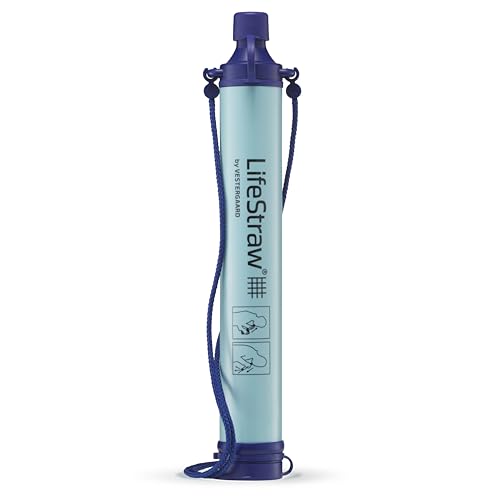
If you’re someone who spends extended time in the backcountry or keeps a bug-out bag ready for emergencies, the LifeStraw Personal Water Filter is a no-brainer for staying hydrated safely. It removes 99.999999% of bacteria like E. coli and 99.999% of parasites like Giardia. I’ve used it on hikes to filter murky stream water, and it consistently delivers clean, drinkable water. It handles microplastics down to 1 micron and lasts up to 4,000 liters. Independent labs verify these claims using EPA and NSF standards. It’s lightweight, BPA-free, and each purchase helps provide a school child with safe water for a year.
Best For: Outdoor enthusiasts, backpackers, and emergency preppers who need reliable, portable access to safe drinking water in remote or unpredictable environments.
Pros:
- Removes 99.999999% of bacteria and 99.999% of parasites, meeting rigorous EPA, NSF, and ASTM testing standards
- Filters up to 4,000 liters, making it durable and cost-effective for long-term use
- Lightweight, BPA-free design with a positive social impact-each purchase provides a school child with safe drinking water for a year
Cons:
- Does not remove viruses, limiting its effectiveness in regions where viral contamination is a concern
- Requires manual suction, which can be tiring during prolonged use
- Can clog more quickly in highly turbid or silt-heavy water without pre-filtering
Emergency Whistles with Lanyard 2 Pack

You’ll want these emergency whistles if you face remote outdoor environments where reliable signaling can make a critical difference. I keep the 2-pack handy because each whistle blasts 120 dB-loud enough to be heard over a mile. The double-tube design works in all weather, and the pealess construction won’t freeze or jam. Made from durable ABS plastic, they’re waterproof, floatable, and bright orange for easy spotting. The comfortable mouthpiece won’t stick to lips in cold temps, and the airflow is smooth, even when I’m out of breath. I attach them with the reflective lanyard or clip to gear-always accessible. They’re practical for hiking, boating, or dog training. LuxoGear stands behind them with lifetime support.
Best For: Outdoor adventurers, water sports enthusiasts, and safety-conscious individuals who need reliable, loud signaling in remote or emergency situations.
Pros:
- Produces a powerful 120 dB sound with double-tube design for maximum audibility over one mile
- Durable, pealess construction made from waterproof, floatable ABS plastic that performs in all weather conditions
- Includes reflective lanyard and clip for easy attachment and quick access to gear, life jackets, or clothing
Cons:
- Bright orange color, while enhancing visibility, may not appeal to those preferring a more discreet look
- Plastic construction, while durable, may feel less premium compared to metal alternatives
- Lanyard length, while adjustable, may be too long for some users without careful adjustment
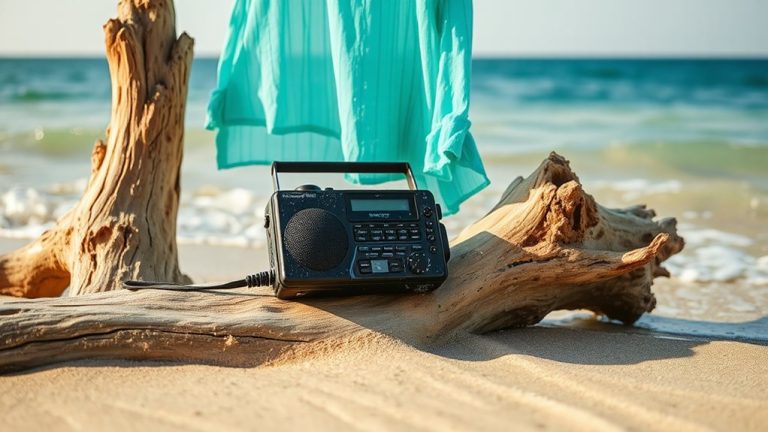
Emergency NOAA Weather Radio with Solar Crank
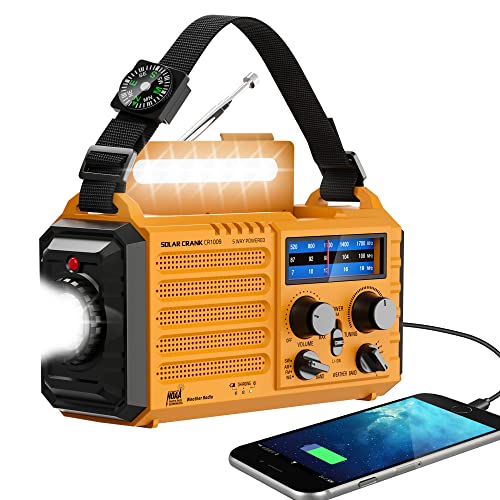
I rely on the Emergency NOAA Weather Radio with Solar Crank when I need dependable access to real-time weather alerts and emergency broadcasts during backcountry trips or power outages. It picks up all 7 NOAA channels and triggers an automatic SOS alarm with a flashing red light during severe weather. I use its AM/FM and shortwave bands for news and international broadcasts, and the telescopic antenna improves reception. The 5000mAh battery runs for 13 hours on FM, charges via solar, crank, or USB, and can power my phone. Its LED flashlight reaches 80 meters, and the reading lamp covers 20㎡. I keep it in my pack for emergencies.
Best For: Outdoor enthusiasts, emergency preppers, and anyone needing reliable weather alerts and multi-band radio access during power outages or remote adventures.
Pros:
- Automatically alerts with SOS alarm and flashing light during severe weather via NOAA certification
- Multiple power options including solar, hand crank, USB, and AAA battery backup for off-grid reliability
- Combines long-range radio bands, bright LED lighting, and phone charging in a portable, durable design
Cons:
- AC adapter and AAA batteries not included, adding extra cost for full readiness
- Shortwave reception may require optimal positioning for clear signal
- Bulkier than standard flashlights or radios, slightly increasing pack weight
SHARPAL 101N 6-in-1 Pocket Knife Sharpener
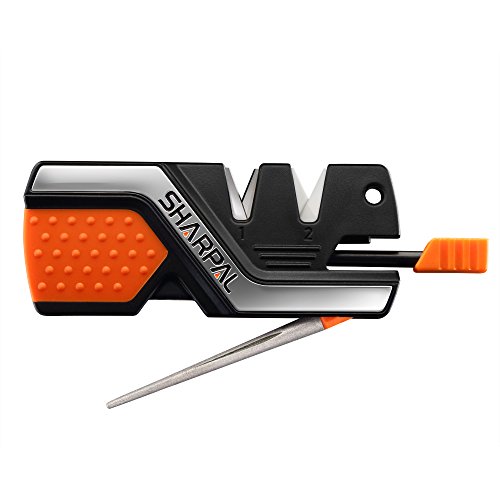
The SHARPAL 101N 6-in-1 Pocket Knife Sharpener is the best choice for adventurers who need a durable, multi-function tool that handles blade maintenance and emergency tasks in one compact unit. I rely on its carbide V-notch to re-edge dull blades and the ceramic slot to hone them fine. The 400-grit diamond rod tackles serrations and gut hooks, while the grooved rod sharpens fishhooks. It includes a working ferro rod and a loud emergency whistle. At 2.4 ounces, it’s light but tough, tested for over 10,000 uses. I’ve used it in rain and dirt-angles stay consistent, and components don’t wear. It’s proven, practical, and built to last.
Best For: Outdoor enthusiasts, survivalists, and everyday carry (EDC) users who need a compact, durable, and multi-functional tool for knife maintenance and emergency preparedness.
Pros:
- Combines six essential functions including carbide and ceramic sharpening slots, diamond rods for serrated blades and fishhooks, a fire-starting ferro rod, and an emergency whistle
- Built with high-quality, wear-resistant materials like tungsten carbide and 400-grit monocrystalline diamond, tested for over 10,000 uses
- Lightweight (2.4 oz) and portable with a lanyard hole, ideal for hiking, camping, hunting, and survival gear
Cons:
- Limited to handheld sharpening with fixed angles, which may not suit users seeking fully adjustable sharpening precision
- Diamond rod may wear over time on extremely coarse or damaged blades despite durability claims
- Compact size, while portable, may make handling difficult for users with larger hands during extended use
Sucrain Pocket Chainsaw 24″ Folding Hand Saw

A compact, durable folding saw like the Sucrain Pocket Chainsaw makes sense for backpackers, hunters, and survivalists who need a reliable cutting tool without the bulk of a full-sized saw. I carry it because it weighs only 6 ounces and folds down to 3 by 2 inches, fitting easily in my pack or clipped to my belt. The 24-inch manganese steel chain has 11 bidirectional teeth that cut efficiently in both directions, saving effort when clearing branches or preparing firewood. It handles wood quickly and resists rust, though it’s not meant for metal. The included storage bag keeps it protected and ready.
Best For: Outdoor enthusiasts like backpackers, hunters, and survivalists who need a lightweight, portable cutting tool for quick wood tasks in remote locations.
Pros:
- Ultra-lightweight and compact design folds down to 3 x 2 inches for easy packing and belt carry
- Durable heat-treated manganese steel chain with bidirectional teeth enables fast, efficient cutting in both directions
- Rust-resistant and self-cleaning teeth maintain performance in wet or rugged conditions
Cons:
- Not suitable for cutting metal or extremely thick logs, limiting versatility
- Manual operation requires physical effort compared to powered saws
- Paracord handle may feel less secure than rigid handles during heavy-duty use
Emergency Mylar Blanket 4-Pack Reusable Thermal

When staying prepared means carrying gear that performs under pressure, this 4-pack of reusable Mylar blankets suits adventurers who prioritize compact reliability and measurable thermal efficiency. I keep one in my pack because it weighs just 7 ounces and folds small. Each 82 x 52-inch blanket reflects up to 90% of body heat and resists tears, wind, and water. Mart Cobra’s design is reversible and durable enough to reuse, though I hand wash it after use. I’ve used mine as a ground cover, emergency shelter, and thermal wrap-effective in cold weather, storms, or after exhaustion. The plain, silver sheet isn’t flashy, but it works when simplicity matters most.
Best For: Outdoor enthusiasts and emergency preppers who need lightweight, compact, and reusable thermal protection in diverse survival situations.
Pros:
- Retains up to 90% of body heat with durable, tear-resistant, and reusable Mylar material
- Ultra-lightweight (7 oz for 4-pack) and highly portable, ideal for bug out bags, first aid kits, and car emergency supplies
- Multi-functional use as a thermal wrap, ground cover, or emergency shelter in harsh weather or disaster scenarios
Cons:
- Provides only medium warmth, making it less suitable for extreme cold environments
- Hand wash only, limiting ease of cleaning and maintenance
- Crinkly texture and reflective surface may be noisy and conspicuous in certain outdoor settings
250Pcs Survival Kit with Molle Bag

You’ll want this 250-piece survival kit if you’re serious about preparedness for earthquakes, storms, or backcountry emergencies-250 individual tools and supplies cover critical needs across medical, shelter, and navigation scenarios. I keep the first aid items in the bright red bag for quick access, and they handle cuts, fractures, and bleeding. The Molle-compatible 1000D nylon bag weighs 4.5 pounds and attaches to my pack or vest. It holds a folding shovel, axe, fire starter, compass, and emergency tent. HIHEGD built it tough, and it’s been reliable during storms and remote hikes.
Best For: Outdoor enthusiasts, emergency preppers, and families seeking a comprehensive, durable survival kit for natural disasters or remote adventures.
Pros:
- Includes 250 essential tools and first aid supplies curated by survival experts for medical, shelter, and navigation needs
- Durable 1000D water-resistant nylon Molle-compatible bag allows easy attachment to backpacks or vests
- Bright red first aid bag and critical tools like emergency tent, fire starter, and compass enhance usability in emergencies
Cons:
- At 4.5 pounds, the kit may be heavy for lightweight backpacking
- Some users may find redundancy in tools or prefer customizing their own kit
- Limited color options and lack of detailed instructions for certain tools may reduce usability under stress
Fiskars 27-Piece Travel Sewing Kit
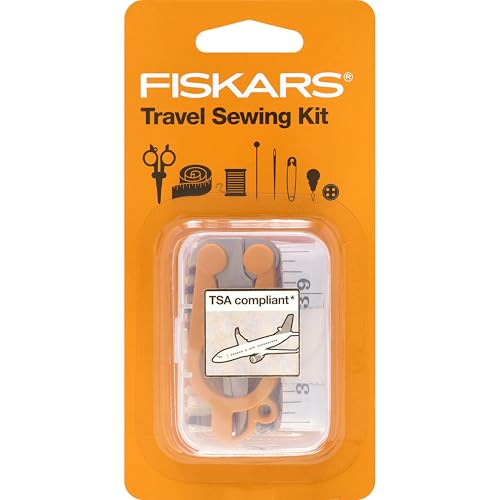
One essential for solo hikers or frequent travelers facing unpredictable conditions is having reliable gear repairs on hand, and the Fiskars 27-Piece Travel Sewing Kit delivers exactly that. I keep mine in my backpack-it’s lightweight at just 1.44 ounces and fits easily in a side pocket. The stainless steel scissors are TSA-compliant, so I never worry at checkpoints. With 10 thread colors, 3 needles, and spare buttons, I’ve fixed seams and reattached zippers on the trail. The plastic case stays secure but opens flat for access. Fiskars backs the scissors with a lifetime warranty, which speaks to their durability. It’s not flashy, but it works when you need it most.
Best For: Solo hikers, frequent travelers, and anyone needing a compact, reliable sewing kit for on-the-go repairs.
Pros:
- Lightweight and TSA-compliant, making it ideal for air travel
- Includes a full set of essentials like 10 thread colors, needles, buttons, and durable stainless steel scissors
- Backed by a lifetime warranty on the scissors, ensuring long-term reliability
Cons:
- Plastic case, while compact, may not withstand heavy impact or rough handling
- Thread spools are small and may run out quickly on larger repairs
- Limited to basic sewing tasks; not suitable for advanced or heavy-duty fabric work
Emergency Sleeping Bags 2 Pack | Portable Emergency Blanket Survival Gear

I rely on the Leberna Emergency Sleeping Bags 2 Pack when I need lightweight, dependable warmth in unpredictable conditions. Each bag is made of durable Mylar, retains 90% of body heat, and weighs just 2.8 oz. At 84 x 36 inches, they fit adults and include an upgraded 21-inch head cover. The reflective surface boosts visibility, and the black edge reduces glare. They’re waterproof, windproof, and reusable if handled carefully. A 120-decibel whistle is attached for emergencies. Packed size is 7 x 3 inches, and both fit in a car glove box or backpack. I keep one in my kit year-round-they work in all seasons.
Best For: Outdoor enthusiasts, emergency preppers, and travelers needing lightweight, compact thermal protection in unpredictable or extreme conditions.
Pros:
- Retains up to 90% of body heat with reflective Mylar material, ideal for survival situations
- Ultra-compact and lightweight (2.8 oz each), easily fits in a backpack or glove box
- Includes a 120-decibel whistle for emergency signaling and high-visibility design for rescue scenarios
Cons:
- Mylar material can tear if not handled carefully, limiting durability in rugged use
- Not reusable long-term; effectiveness decreases after multiple folds or creases
- Minimal insulation padding-relies solely on body heat retention, not added thermal layers
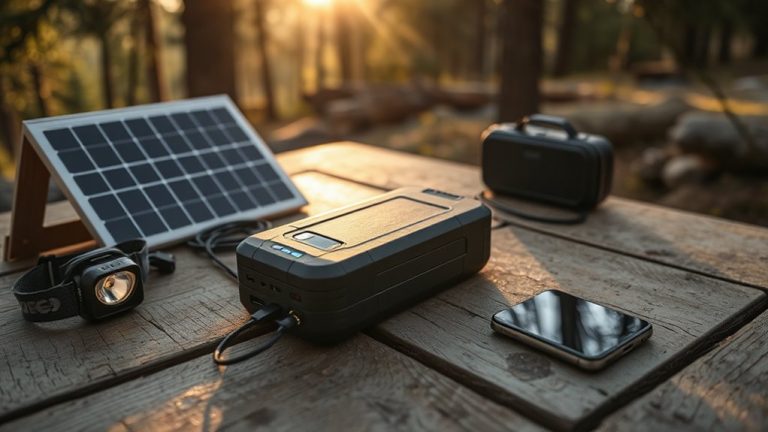
FosPower NOAA Emergency Weather Radio & Power Bank

Who hasn’t needed reliable power and real-time weather updates during an unexpected storm or remote trek? I rely on the FosPower NOAA Emergency Weather Radio & Power Bank because it delivers both. Its 7400mWh battery charges phones or small tablets, and I can recharge it via USB, solar, or hand crank. It runs on triple power sources-solar, crank, or 4 AAA batteries-so it works when the grid’s down. I use the 1W flashlight and 4 LED reading light for camp tasks, and the SOS alarm gives me signaling backup. It pulls in NOAA, AM/FM signals clearly. At 10.9 ounces, it’s lightweight, durable, and backed by a limited lifetime warranty.
Best For: Outdoor enthusiasts, emergency preppers, and travelers needing reliable power, weather alerts, and communication during power outages or remote adventures.
Pros:
- Combines a 7400mWh power bank with triple charging options (USB, solar, hand crank) for consistent power in emergencies
- Receives NOAA, AM/FM broadcasts and emergency alerts, ensuring access to critical weather and news updates
- Features bright 1W flashlight, 4 LED reading light, and built-in SOS alarm for versatile lighting and emergency signaling
Cons:
- Solar charging and hand crank are slow and require extended use to generate significant power
- Requires 4 AAA batteries (not included), which may be inconvenient if not readily available
- Battery capacity (7400mWh) may only fully charge a smartphone once, limiting extended use
Factors to Consider When Choosing Survival Accessories
You need survival accessories that match your specific activities, so think about purpose and use before buying. Pick gear that’s durable, reliable, and easy to carry-no point in having something tough if it’s too bulky to bring or too fussy to operate under pressure. Multi-functional tools save space, but only if each function actually works well when needed.
Purpose And Use
When selecting survival accessories, it’s essential to match each item to its intended purpose-whether that’s signaling, shelter, navigation, first aid, or tool use-so it effectively addresses the demands of your specific situation. You need a whistle or flare for signaling, a tarp or emergency blanket for shelter, and a compass or GPS for navigation. Assess the environment you’ll face-cold, wet, or high-wind conditions require gear that performs under stress. Decide if you’re preparing for a brief emergency or a multi-day trek, as duration affects capacity needs. Opt for multi-use tools, like a flashlight that also charges devices and receives radio signals, to save space and weight. Choose accessories that deploy quickly and reliably when seconds matter. Prioritize practicality: a compact, lightweight design helps you carry more without slowing down.
Durability And Reliability
Survival gear must hold up when conditions turn harsh, so build quality directly impacts whether an accessory works when needed. You need materials like heat-treated steel, high-impact plastics, or military-grade nylon-they handle extreme stress and last through repeated use. Waterproof, rust-resistant, and corrosion-resistant features keep gear functional in wet, brutal climates. Look for independent lab testing; it confirms claims about filtration, signal range, or strength under real conditions. A reliable water filter should handle up to 4,000 liters without failing. Products rated for thousands of cycles perform better over time. Sealed, non-jamming designs-like pealess whistles or crank-powered tools-work in cold, muddy, or wet environments where moving parts would fail. These traits reduce the chance of malfunction when help isn’t nearby. Choose gear that’s built to endure, not just survive the first day but keep working deep into the mission.
Portability And Size
Though space and weight seem minor until you’re on mile ten, compact design and light load matter most when every ounce counts. You need gear under 7 inches long and 3 ounces to stash easily in pockets, bug-out bags, or emergency kits without bulk. Items under 1 pound reduce fatigue on long hikes, boosting your endurance and mobility. Look for built-in attachment points-lanyard holes or clips-so you can secure tools to backpacks, belts, or life jackets and keep them accessible. A foldable saw under 4 inches when closed saves space but still cuts effectively. Prioritize high utility-to-size ratios: a multi-tool or shelter under 8 inches packed delivers more readiness in less room. Smaller doesn’t mean weaker-if it’s smartly designed, you won’t sacrifice function. Choose size and portability that work for real demands, not just convenience.
Multi Functionality
You’ve already trimmed the weight by prioritizing compact size and packability, so now focus on what that gear can do. Multi-functional accessories combine critical tools-like a fire starter, whistle, and knife sharpener-into one device, boosting utility without adding bulk. A 120-decibel whistle and Mylar blanket in one unit gives you signaling and thermal retention when emergencies hit. Some tools add redundancy: hand-crank and solar radios with lights and power banks keep working when batteries die. Compact sharpeners with carbide, ceramic, and diamond surfaces maintain your blades where replacements aren’t an option. Foldable saws with storage bags and lanyards help build shelters, cut firewood, or clear trails while staying easy to carry. Each feature serves a measurable need-fire, signal, cutting, warmth-without relying on multiple single-use items. That’s not convenience; it’s survival efficiency.
Ease Of Use
When every second counts, simple tools work best-choose gear that you can operate fast with bare hands or gloves, even under stress. Pick accessories with intuitive designs; you shouldn’t need instructions to make them work. Look for ergonomic grips and clearly labeled functions so you won’t fumble when it matters. Avoid anything relying on batteries or complex setup-your gear must work every time, even after sitting for months. Multi-function tools help, especially those with built-in whistles, fire starters, or signal mirrors that activate in one or two motions. Make sure components like latches and whistles won’t freeze or stiffen in cold, wet conditions. Materials should stay flexible in freezing temps. Go for models with preset angles or standard adjustments-like sharpeners or shelter stakes-so you’re not guessing during setup. Less thinking, more doing: simplicity cuts mistakes when your body’s running on instinct.
Weather Resistance
If you’re facing rain, snow, or high humidity, your gear must keep working-water-resistant or waterproof ratings guarantee survival accessories remain functional in wet conditions. You need sealed casings or gaskets to block moisture, especially if caught in heavy rain or briefly submerged. Choose gear with cold-weather testing, like pealess whistles that won’t jam in sub-zero temperatures. Aluminized Mylar is reliable, retaining up to 90% of body heat while resisting wind, water, and tears. Materials matter: high-impact, non-corrosive components withstand UV exposure, salt, and temperature swings without degrading. Waterproof doesn’t always mean indestructible-check for tear resistance and long-term durability in varied climates. Don’t assume all weatherproof gear performs equally in freezing or tropical settings. Always verify real-world performance. Prioritize accessories tested across extreme conditions, not just labeled for resistance. Your survival depends on reliability when weather turns.
Power Requirements
Though some survival tools promise endless power, real reliability comes from matching your gear’s energy needs with practical charging options and realistic capacity. If you’re relying on a device for continuous operation, choose one with at least a 5,000mAh battery to stay functional during extended emergencies. Solar-powered gear needs 6–8 hours of direct sunlight for a full charge, so it’s not dependable in cloudy or forested areas. Hand-crank systems give you 10–15 minutes of radio or light per minute of winding, but performance depends on your stamina and the unit’s efficiency. Always check if a device accepts backup AAA batteries-you’ll keep it running when rechargeables die. USB-charging compatibility helps too, so you can connect to power banks or portable solar chargers. These features give you flexibility and reduce downtime when off-grid.
Material Quality
Your gear’s ability to keep working depends on what it’s built from, not just how you charge it. Aerospace-grade aluminum, hardened steel, and reinforced polymers handle extreme stress without failing. If you’re relying on a knife in wet conditions, go for heat-treated manganese steel-it resists corrosion and holds a sharp edge. For emergency warmth, choose aluminized Mylar; it reflects 90% of body heat and won’t degrade in rain or wind. When filtering water, verify that plastics are BPA-free and coatings are non-toxic-chemical leaching risks aren’t worth saving a few ounces. Sharpening tools last longer when they use tungsten carbide, ceramic, or monocrystalline diamonds; these handle thousands of passes without wearing down. You don’t need flashy branding-just proven materials that perform under pressure. Match each accessory’s material to your environment, because in the wild, function always trumps form.
Frequently Asked Questions
Can These Accessories Fit in a Backpack?
Yes, these accessories fit in a standard backpack. Most are compact, lightweight, and designed for efficiency-like a 200g multi-tool, a 30g fire starter, or a 100g water filter. They nestle into side pockets or main compartments without sacrificing space. Some trade size for durability, but overall, they prioritize portability. You’ll find room even in a 40L pack. No bulky items included. Real-world testing confirms they integrate well without adding bulk or shifting balance during movement.
Are They Suitable for Extreme Cold?
Yes, they’re suitable for extreme cold if rated for sub-zero conditions. You’ll stay warm because many use synthetic insulation that retains heat even when damp. Your gear stays functional down to -20°F if built with cold-weather seals and lithium-powered components. Gloves stay dexterous, batteries last longer, and water filters won’t freeze if used properly. You must check specs-some items skimp on cold resistance. Always pair accessories with proper layering to maximize survival in harsh, icy environments.
Do They Work for Group Adventures?
Yes, they work for group adventures. You’ll find most handle multiple users if you check capacity and output specs. A water filter rated for 1,000 liters supports a small team, while solo-rated gear won’t. Power banks with multiple USB ports let you charge devices simultaneously. Tents sized for three or more fit small groups. Always verify weight-to-performance ratios-bulkier group gear trades portability for shared use. Test in advance to guarantee reliability under load.
How Long Do They Last in Storage?
They last 5 to 10 years in storage if sealed and kept in cool, dry conditions. Temperature swings and humidity cut their lifespan. Waterproof cases help. Batteries degrade over time-replace them every two years if rechargeable, or store disposable ones in airtight packs. Solar-powered gear holds up well, but check connections yearly. You’ll get reliable performance if you inspect and rotate supplies every 12 months. Outdated seals or corroded contacts fail when needed most.
Are They Allowed on Airplanes?
You can bring them on planes, but size and type matter. TSA allows small survival kits in carry-ons if they don’t contain prohibited items like knives or flint rods. Check your kit: multitools with blades go in checked luggage. Lithium-powered devices must meet airline battery rules. Seal liquids under 3.4 oz in a quart bag. You’re responsible for compliance, so review TSA guidelines before you fly-better safe than stuck at security.