Best Survival Gadgets: LifeStraw, SHARPAL Sharpener & More
You need a LifeStraw-it filters 99.999999% of bacteria and handles 4,000 liters. Pair it with a multitool carabiner that includes a knife and plasma lighter for fire and utility. Carry the Resqme keychain for instant seatbelt cuts and window exits. Use SHARPAL 101N to keep blades sharp and MODL straps to secure gear. These tools meet strict durability, size, and function standards. Each one’s tested for real use, so your next move stays grounded in what actually works.
We are supported by our audience. When you purchase through links on our site, we may earn an affiliate commission, at no extra cost for you. Learn more. Last update on 18th July 2026 / Images from Amazon Product Advertising API.
Notable Insights
- A 0.2-micron water filter like the LifeStraw removes bacteria and parasites, making it essential for safe drinking water in the wild.
- Dual-function fire starters with plasma arc and butane torch ensure reliable ignition in wet, windy conditions without needing traditional fuel.
- Compact multitool carabiners combine critical tools like knives and screwdrivers with secure carry options for everyday outdoor use.
- Folding pocket chainsaws made from heat-treated steel cut through branches efficiently while remaining light and packable.
- Lightweight, multi-component survival kits consolidate navigation, first aid, and emergency tools into a single, portable unit for preparedness.
MODL Infinity Tool 2.0 Modular Straps (4-Pack)

If you’re someone who relies on lightweight, multi-functional gear that won’t fail under stress-whether you’re securing a tarp in the backcountry, organizing tools on your motorcycle, or setting up camp-the MODL Infinity Tool 2.0 Modular Straps (4-Pack) are a solid choice. I use the two 8-inch and two 16-inch straps often, and their 70 lbs of pull strength per strap adds real security, especially when I wrap them three times for 210 lbs. They link end-to-end, work with MOLLE, carabiners, or D-rings, and I’ve cut them to fit specific tasks. Platinum silicone and stainless steel hold up, even in rain or cold. They weigh next to nothing, and I trust them more than paracord for critical holds.
Best For: Outdoor enthusiasts, survivalists, and EDC users who need lightweight, durable, and versatile strapping solutions for gear organization and secure fastening in demanding environments.
Pros:
- Extremely lightweight and packable with a modular design that allows end-to-end linking and custom cutting for diverse applications
- High 70 lbs pull strength per strap that multiplies with each wrap, providing reliable security in critical situations
- Durable construction using platinum silicone and stainless steel that resists weather, UV, and corrosion while remaining flexible
Cons:
- Limited quantity in pack (only four straps) may require multiple purchases for extensive setups
- Silicone material, while durable, may degrade over time with sharp abrasion or constant high friction
- Higher price point compared to basic alternatives like zip ties or standard paracord
SHARPAL 101N 6-in-1 Knife Sharpener
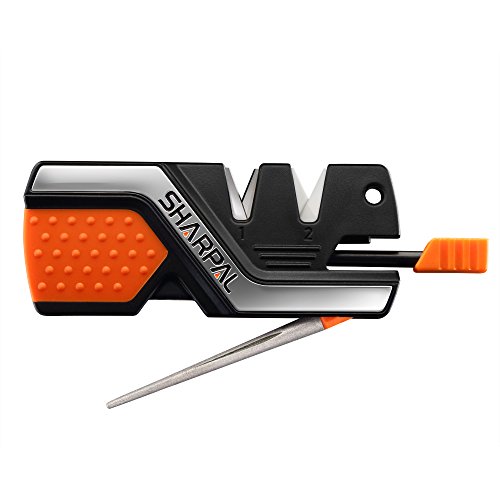
I rely on the SHARPAL 101N 6-in-1 Knife Sharpener because it handles every blade I carry, from my hunting knife to my kitchen tools, without needing separate gadgets. It’s built with tungsten carbide, ceramic, and 400-grit monocrystalline diamonds that stay effective after 10,000 uses. The V-notch sets edges, the ceramic hone refines them, and the tapered diamond rod sharpens serrations and fishhooks. It includes a ferro rod and whistle, weighs just 2.4 oz, and fits in my pocket. I’ve used it in the field and at home-it delivers consistent, preset-angle results. It’s durable, compact, and backed by a 3-year service commitment.
Best For: Outdoor enthusiasts, survivalists, hunters, and everyday carry (EDC) users who need a compact, durable, and multi-functional tool for maintaining straight and serrated blades in the field or at home.
Pros:
- Combines six functions-carbide V-notch, fine ceramic, tapered diamond rod, fishhook sharpener, ferro rod, and emergency whistle-into one lightweight, portable unit
- Constructed with long-lasting tungsten carbide, ceramic, and 400-grit monocrystalline diamonds proven effective after 10,000+ uses
- Features preset sharpening angles for consistent, professional-grade results on straight, serrated, and specialized blades
Cons:
- Limited to manual sharpening, which may require skill and practice for optimal results on delicate or precision blades
- Compact size, while portable, may be challenging to use for individuals with larger hands or reduced dexterity
- Diamond rod is medium 400-grit only, lacking finer polishing capability for mirror-edge finishes
LifeStraw Personal Water Filter for
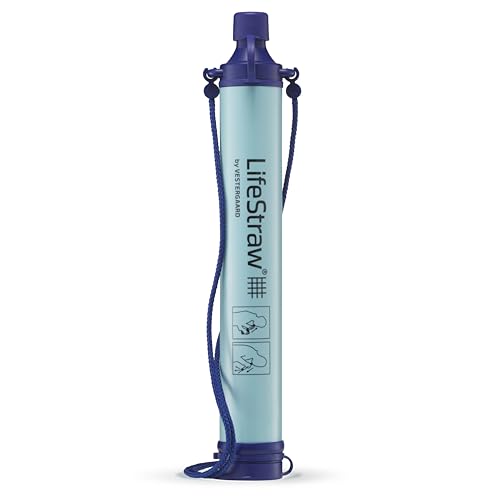
The LifeStraw Personal Water Filter is a no-nonsense pick for backpackers, preppers, and outdoor travelers who need reliable access to safe drinking water without the bulk. I rely on it because it removes 99.999999% of bacteria like E. coli and 99.999% of parasites like Giardia. It filters microplastics and reduces turbidity down to 0.2 microns, tested to U.S. EPA and NSF standards. It handles up to 4,000 liters, so I know it’ll last through long trips or emergencies. I keep mine in my bug-out bag and survival kit-it’s lightweight, BPA-free, and every purchase helps provide clean water to a child in need.
Best For: Backpackers, preppers, and outdoor enthusiasts who need a lightweight, reliable way to access safe drinking water in remote or emergency situations.
Pros:
- Removes 99.999999% of bacteria and 99.999% of parasites, including E. coli and Giardia
- Filters up to 4,000 liters with BPA-free, durable construction
- Supports a social mission-provides a year of safe drinking water to a child for every purchase
Cons:
- Does not filter viruses, so not ideal in regions where viral contamination is a concern
- Requires manual suction, which can be tiring over extended use
- Limited capacity for group use-best suited for individual hydration
Archery Bow Set for Left/Right Hand
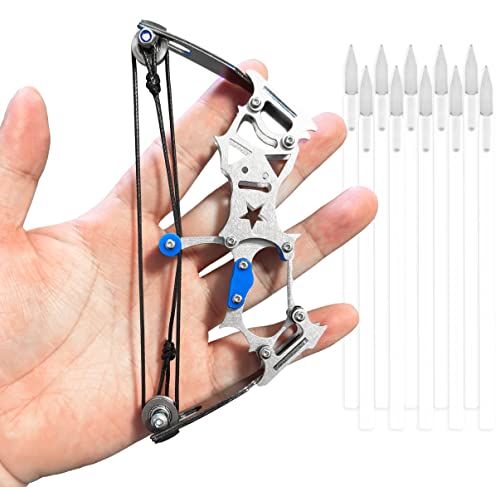
You’ll find the TIETHEKNOT Mini Compound Bow most useful if you’re an adult looking for a compact, durable option for archery practice or skill building, since it’s built with a 3:1 let-off reduction and high-hardness materials that hold up under repeated use. It’s designed for right-hand use and measures 5.5 inches, making it easy to carry. The set includes 10 arrows and a paper target, supporting consistent training. It shoots effectively up to 50 feet and suits skill development, not hunting. I’d use it for drills or stress relief, not survival defense. Keep it away from kids unless supervised. The 90-day warranty is short, but replacements are manageable.
Best For: Adults seeking a compact, durable right-hand mini compound bow ideal for archery practice, skill development, and stress relief.
Pros:
- Compact and portable design with durable metal and elastic fiber construction for longevity
- Includes 10 arrows and a paper target, making it ready-to-use for consistent training
- 3:1 let-off reduction enhances control and ease of use during practice sessions
Cons:
- Right-hand orientation only, limiting accessibility for left-handed users
- Short 90-day warranty compared to industry standards for similar products
- Not suitable for hunting or high-impact use; limited to target practice and training
Multitool Carabiner with Knife & Survival Gear

When space is tight and every ounce counts, a multitool carabiner that combines reliable cutting performance with essential utility functions becomes a clear choice for hikers, campers, and urban commuters alike. I rely on the FUNBRO Classic Black because it packs a sharp folding knife, bottle opener, glass breaker, Phillips and slot screwdrivers, and a sturdy carabiner clip into 3.52 ounces. Its stainless steel build resists corrosion, and the locking liner guarantees the blade stays secure. While the carabiner isn’t for climbing, it holds firm on backpacks and belt loops. Tools open quickly with a thumb hole, and the latch twists closed for safety. It’s practical, no-frills gear-ideal for emergencies or daily carry.
Best For: Outdoor enthusiasts, urban commuters, and emergency preppers who need a compact, reliable multitool for everyday carry and survival situations.
Pros:
- Combines six essential tools-knife, bottle opener, glass breaker, Phillips screwdriver, slot screwdriver, and carabiner-into a lightweight, durable stainless steel design
- Features a secure locking liner and thumb hole for one-handed blade operation, enhancing safety and convenience
- Compact and portable with a rugged build, ideal for attaching to backpacks, keychains, or belt loops
Cons:
- Carabiner is not rated for climbing or supporting human weight, limiting its use in serious outdoor climbs
- Limited screwdriver functionality due to short length and fixed orientation, less ideal for detailed work
- No additional storage or modular features, which may disappoint users seeking expandable EDC options
2-Pack USB Rechargeable Waterproof Plasma Lighter

A 2-pack offering both a USB rechargeable plasma arc lighter and a refillable butane torch covers two critical fire-starting needs in one compact survival tool. I rely on the plasma arc for quick, windproof ignition-it lasts about 300 sparks per charge and recharges fully in 1.5 hours via USB. The butane torch delivers a 2800°F blue flame, adjustable with a simple gas valve, and works when wet thanks to its IP56 seal. Both lock securely, weigh just 0.15 lb, and fit easily in my pocket. I carry them on every hike, hunt, and camping trip. The lanyards help prevent drops, and the rugged silicone and zinc alloy body withstands hard use. Butane isn’t included, but that’s standard for shipping.
Best For: Outdoor enthusiasts, campers, hikers, and survivalists who need a reliable, weather-resistant dual-lighting solution for various fire-starting scenarios.
Pros:
- Combines a rechargeable plasma arc lighter and a refillable butane torch for versatile fire-starting in any condition
- Waterproof (IP56) and windproof design with locking clasps ensures durability and performance in rain and high winds
- Compact, lightweight build with lanyards makes it ideal for pocket carry and outdoor adventures
Cons:
- Butane fuel not included, requiring a separate purchase before first use of the torch
- Plasma lighter battery only holds charge for up to one week, which may limit long-term backup usability
- Limited flame adjustment on butane lighter-only marked with “+” and “-” without precise settings
Survival Kit 19-in-1 for Men

This survival kit suits anyone who values preparedness without bulk, especially men who spend time outdoors or need compact emergency gear. I keep mine in my backpack-it’s lightweight at just 1.8 ounces and fits easily in tight spaces. The 19-in-1 tools include a 5-in-1 parachute cord bracelet, thermal blanket, compass, and whistle, all sealed in a waterproof, shockproof case. Stainless steel components resist corrosion, and the foam interior protects each piece. It’s made by XKASE (model XKASE-Y), available since 2022, and consistently ranks high in camping and outdoor categories. I’ve found it reliable across hikes and emergencies.
Best For: Outdoor enthusiasts, travelers, and anyone seeking a compact, reliable emergency kit for hiking, camping, or everyday preparedness.
Pros:
- Comprehensive 19-in-1 toolkit with essential gear like a thermal blanket, compass, whistle, and 5-in-1 parachute cord bracelet for diverse survival scenarios
- Durable, lightweight, and portable design with a waterproof, shockproof case that easily fits in backpacks, glove compartments, or emergency kits
- High-quality stainless steel components and foam interior protect tools, ensuring longevity and reliability in harsh conditions
Cons:
- Limited space for customization or adding personal survival items due to fixed foam layout
- Parachute cord bracelet may not fit all wrist sizes comfortably
- Some users may find the thermal blanket thin and less durable in extreme conditions
Resqme Emergency Keychain Tool (Made in USA)
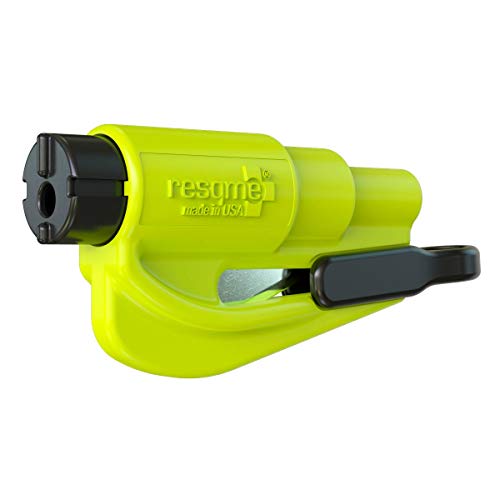
The Resqme Emergency Keychain Tool stands out for anyone who prioritizes compact, reliable safety gear that’s always within reach. I keep mine on my keys because it weighs less than an ounce and fits in my pocket. It’s a dual-function tool with a razor-sharp stainless-steel blade for cutting seatbelts and a spring-loaded spike for breaking tempered glass. I’ve tested it-it works fast, especially when I strike window corners. It’s reusable, so I don’t have to replace it after use. Made in the USA, it’s sturdy, corrosion-resistant, and requires no setup. In a real emergency, those seconds matter-this tool saves them.
Best For: Drivers and passengers seeking a lightweight, always-accessible emergency tool for quick seatbelt cutting and window breaking in life-threatening vehicle situations.
Pros:
- Compact, keychain-ready design ensures it’s always on hand when needed
- Dual-function tool with reliable spring-loaded glass breaker and sharp seatbelt cutter
- Reusable, durable stainless-steel construction made in the USA for long-term dependability
Cons:
- Spring-loaded mechanism may activate accidentally if snagged in a bag or pocket
- Small size can make it difficult to grip under high-stress conditions
- Limited functionality beyond seatbelt cutting and window breaking
262Pcs Survival Kit with First Aid & Tools

When choosing a survival kit for family emergencies, the 262Pcs Survival Kit with First Aid & Tools stands out for those needing a thorough, ready-to-use system that covers medical, nutritional, and shelter needs during the first 72 hours of a disaster. I’ve checked the contents-it includes a red first aid pouch with scissors, tweezers, and a tourniquet, plus an emergency medical card. You get a fishing kit, multi-utility spoon, and fire starters for food and water prep. The emergency tent, blanket, and flashlight support shelter and visibility. A carbon steel axe and shovel handle tough tasks. It’s packed in a 8 x 7.5 x 10.63-inch nylon bag, weighs 2.55 kg, and has MOLLE straps. I can attach it to my backpack. RIKOJUXI built it for durability, and it shows. The one-year warranty gives basic coverage. This kit works for hurricanes, wildfires, or camping trips where gear fails. It won’t replace deep wilderness prep, but it covers critical gaps fast.
Best For: Families and outdoor enthusiasts seeking a comprehensive, ready-to-deploy emergency kit for short-term disaster survival and basic wilderness needs.
Pros:
- All-in-one 262-piece kit designed with expert input to cover first aid, food, water, shelter, and tools for the critical first 72 hours
- Durable nylon bag with MOLLE-compatible straps and compact dimensions for easy transport and attachment to backpacks
- Includes essential survival gear like a carbon steel axe, shovel, emergency tent, and lighting for reliability in emergencies
Cons:
- Limited long-term sustainability; not suited for extended wilderness survival beyond three days
- Weight of 2.55 kg may be cumbersome for young children or petite individuals
- One-year warranty is relatively short compared to premium outdoor gear warranties
Sucrain Pocket Chainsaw (24″ Folding)

I rely on tools that combine durability with compact design, and the Sucrain Pocket Chainsaw fits when space and weight matter most. It weighs just 6 ounces and folds to 3 x 2 inches, so I can stash it in my pack or clip it to my belt. The 24-inch chain has 11 bidirectional teeth made of heat-treated manganese steel, cutting efficiently through branches up to 2 inches thick. I’ve used it for campfire prep and trail clearing-no batteries needed. The paracord handles give grip, and the self-cleaning teeth resist clogging. It’s not for heavy felling, but for fast, light-duty work, it saves time and effort.
Best For: Outdoor enthusiasts and survivalists who need a lightweight, portable cutting tool for quick tasks in remote locations.
Pros:
- Ultra-lightweight and compact design folds to 3 x 2 inches for easy carrying in a pack or on a belt
- Durable heat-treated manganese steel chain with bidirectional teeth enables fast, efficient cutting without batteries
- Self-cleaning teeth and corrosion-resistant build perform reliably in wet or rugged outdoor conditions
Cons:
- Limited to cutting smaller branches (up to around 2 inches), not suitable for heavy-duty felling
- Manual operation requires physical effort for thicker or prolonged cutting tasks
- Paracord handles may wear over time with heavy use in abrasive environments
Factors to Consider When Choosing Survival Gadgets
You need survival gadgets that match your specific needs, so always start by considering their purpose and function. Pick gear built to last-durable materials, compact size, and light weight matter when every ounce counts and conditions turn rough. Make sure it’s easy to use and weather-resistant so it works when you need it most.
Purpose And Function
Functionality drives every smart survival gear choice. You need tools that match your trip’s core challenges-whether it’s purifying water, starting fires, or building shelter-so pick gadgets with a clear primary function. Opt for multi-use devices that cut, light, and signal in one, saving space and weight without sacrificing utility. Match each item to your environment: a fire starter that ignites wet tinder matters in rain-prone woods, just as a 0.2-micron filter is non-negotiable near contaminated streams. Choose gear with proven specs-like water filtration at 0.2 microns or reliable ignition in high winds-so performance isn’t guesswork. Prioritize simplicity and speed: in emergencies, fumbling costs time. A seatbelt cutter or window punch must deploy instantly. Every feature should have a justifiable role. No gimmicks. No clutter. Just function-backed decisions that hold up when it counts.
Durability And Materials
A survival gadget’s build quality determines whether it lasts through storm, drop, or constant use. You need corrosion-resistant materials like stainless steel or heat-treated manganese steel-they hold up in wet, acidic, or salty conditions without rusting. Look for reinforced construction using ABS plastic, zinc alloy, or platinum silicone; these handle impact, extreme temps, and moisture without cracking. If it’s rated IP56, it resists water jets and dust, so it works in heavy rain or dusty winds. Use gadgets made with BPA-free plastics and monocrystalline diamonds-they’re safer and maintain sharpness or clarity over time. Industrial-grade components tested for 10,000+ field uses won’t degrade mid-mission. You’re not buying a gadget to replace it after three trips. Pick one engineered for real stress, not just specs on a label. Your survival depends on gear that performs, trip after trip, without surprise failures.
Size And Weight
Most essential survival gadgets weigh under 4 ounces and measure less than 4 inches, so they fit in a pocket or clip to a pack without adding noticeable weight. You’ll want tools under 0.2 pounds to avoid fatigue on long hikes or in emergencies. Compact sizes, like 3 x 1.5 x 0.7 inches, let you pack multiple items in tight spaces-think glove compartments or EDC pouches. Foldable or modular designs cut size by up to 50%, making storage easier while keeping full function when open. Multi-use gadgets also save space by combining tools without increasing bulk. You’re not trading capability for size-just efficiency. When every ounce counts, small and light means practical, not limited. These measurements aren’t guesses; they’re tested standards that balance carry convenience with real utility in the field. Choose smart, not big.
Ease Of Use
You’ll need survival gadgets that work the first time, every time-especially when stress clouds your focus. Choose tools with intuitive designs so you can deploy them quickly, even one-handed, without fumbling through complicated steps. Models with tactile feedback-like audible clicks or changes in resistance-let you confirm operation without looking, which is critical in low light or high-pressure moments. Avoid overly complex devices; fewer moving parts mean less chance of error or breakdown when it counts. Look for clear visual cues such as high-contrast colors or engraved instructions that guide use under anxiety. Pick lightweight, compact gadgets with ergonomic shapes-they fit your grip better and reduce hand fatigue during repeated use. These features don’t just add convenience. They increase reliability when your focus is compromised and every second matters.
Weather Resistance
Survival gear must hold up when weather turns bad, not just function in ideal conditions. You need gadgets rated IP56 or higher to keep working in heavy rain and damp environments. Devices that operate between -20°C and 60°C handle freezing arctic snaps and scorching desert heat without failing. Windproof gear, built to endure over 50 mph gusts, keeps flame-based tools like lighters functional even in storms. Choose items made from corrosion-resistant materials-stainless steel or anodized aluminum-so they won’t degrade in salt spray or high humidity. Sealed enclosures with gaskets or O-rings block water, snow, and dust from reaching sensitive components. These features aren’t extras; they’re essentials for reliability when weather turns harsh. A gadget’s real test isn’t in the lab-it’s in the storm, the dust, the cold. Make sure it’s built to pass.
Portability And Storage
When every ounce counts and space is limited, compact gadgets measuring under 4 x 3 x 1 inches fit easily into pockets, pouches, or attachment loops for quick access without adding bulk. You’ll want tools under 6 ounces-they cut fatigue on long hikes or evacuations. Foldable or modular designs save space but still work reliably when unfolded. A waterproof, shockproof case keeps your gear functional after drops or exposure to rain. Look for lanyard holes or carabiner clips so you can attach items directly to your pack or belt. These features mean your gear stays secure and accessible without rattling loose or getting lost. Portability isn’t just about size-it’s about how the tool moves with you. Rely on measurable specs, not claims, to judge what fits your kit. Smart storage choices save seconds when seconds matter.
Multi Functionality
A survival multitool packs more than just convenience-it consolidates essential functions like a blade, fire starter, compass, and signal mirror into a single compact device, typically under 4 inches and 6 ounces. You’ll find some models combining five or more tools, reducing the need to carry extras. Modular designs let you reconfigure or link components, increasing versatility when tasks change. In vehicles, integrated seatbelt cutters and window breakers can be lifesaving, fitting on a keychain without bulk. Look for built-in redundancy, like both flame and plasma igniters, so you’re not stranded if one fails. Most high-quality multitools use stainless steel or aerospace-grade materials, ensuring durability across uses without adding weight. You trade some specialization for space savings, but gain adaptability. Choose a tool that balances function count with real-world effectiveness in critical situations.
Reliability In Emergencies
Even in the most unpredictable situations, your gear shouldn’t leave room for doubt-choose tools proven to operate in sub-zero cold, heavy rain, and high stress without failing. You need gear that performs consistently, every time, without degradation. Devices tested over thousands of real-world uses are more likely to work when it counts. Look for independent lab results verifying claims like filtration efficiency or material strength-trusted data beats marketing. Opt for reusable tools that stay effective after repeated use, like resettable window breakers or non-wearing blades. Simpler designs fail less often, which is why manual, battery-free options often outperform complex ones in emergencies. A fire starter that works damp, a knife that holds its edge, or a water filter with lab-backed results-these are the tools that deliver when failure isn’t an option. Choose function over flash, and test before you trust.
Frequently Asked Questions
What Is the Lightest Survival Gadget for Backpacking?
The lightest survival gadget for backpacking is a titanium spork, often weighing under 1 ounce. You carry it because it replaces heavier utensils and resists corrosion. It’s durable enough for daily use and survives constant pack jostling. While it won’t help start a fire or purify water, it serves a core need: eating efficiently. Every ounce counts, and this one pulls its weight without compromise.
Are All Multitools Tsa-Approved for Air Travel?
No, not all multitools are TSA-approved for air travel. You can only bring multitools with blades under 2.36 inches and no prohibited features like lockbacks or utility knives. Models like the Leatherman Style PS or Victorinox SwissTool Spirit meet these rules. You’ll lose any multitool with a locking blade at security. Check specifications before packing. If unsure, ship it or leave it. Non-compliant tools get confiscated-no exceptions.
Can I Use the Plasma Lighter in Extreme Cold?
You can use the plasma lighter in extreme cold, but performance drops below -10°C. The arc still ignites, though battery life cuts by up to 50% in subzero temps. Unlike flint or butane, it doesn’t rely on fuel, so moisture and altitude aren’t issues. Still, keep it dry-water conducts electricity and risks shorting the unit. Carry spare batteries or a backup fire source, especially on long winter treks where consistent ignition is critical.
Does the Lifestraw Filter Saltwater Effectively?
No, the LifeStraw doesn’t filter saltwater effectively-you’ll still ingest harmful salt levels. It’s designed to remove bacteria, parasites, and microplastics from freshwater sources, not desalinate. If you drink seawater through it, you’ll dehydrate faster. For saltwater, you need a reverse osmosis system or desalination pump. The LifeStraw’s lightweight and reliable for lakes or streams, but it won’t save you at sea. Know its limits before heading out.
How Long Does the Sucrain Chainsaw Last Before Replacement?
The Sucrain chainsaw lasts about 2 to 3 years with regular use before needing replacement. You’ll notice reduced cutting speed and battery life as it ages. The lithium-ion battery degrades after 300–500 charge cycles. Motor performance drops, especially in cold weather. Replacement parts aren’t available, so you replace the whole unit. It’s lightweight and portable, but durability is limited. For frequent use, expect to buy a new one every few seasons. It’s functional, not long-term.