Creating a Water Reserve That Supports Long-Term Survival Cooking Demonstrations
You need a reliable water reserve for long-term survival cooking-store at least 240 quarts for a family of four over 30 days. Use durable, BPA-free HDPE containers like 5-gallon Jerry cans or 55-gallon food-grade drums with sealed spigots. Purify with boiling or bleach, keeping in mind fuel use and taste trade-offs. Rotate every six months and label with dates. Pre-filter cloudy water and avoid milk jugs-they degrade fast. There’s more to optimizing your system efficiently.
Notable Insights
- Store at least 2 quarts per person daily for cooking and cleaning to ensure sufficient water for survival meal prep.
- Use durable, BPA-free HDPE containers with UV inhibitors to maintain water quality and container integrity over time.
- Employ 5-gallon jerry cans or 55-gallon food-grade drums for efficient, scalable, and portable water storage.
- Purify stored water using boiling or chemical treatment to eliminate pathogens before use in cooking demonstrations.
- Rotate and sanitize water reserves every six months, labeling containers with dates to ensure long-term safety and reliability.
Why You Need a Water Reserve for Off-Grid Cooking
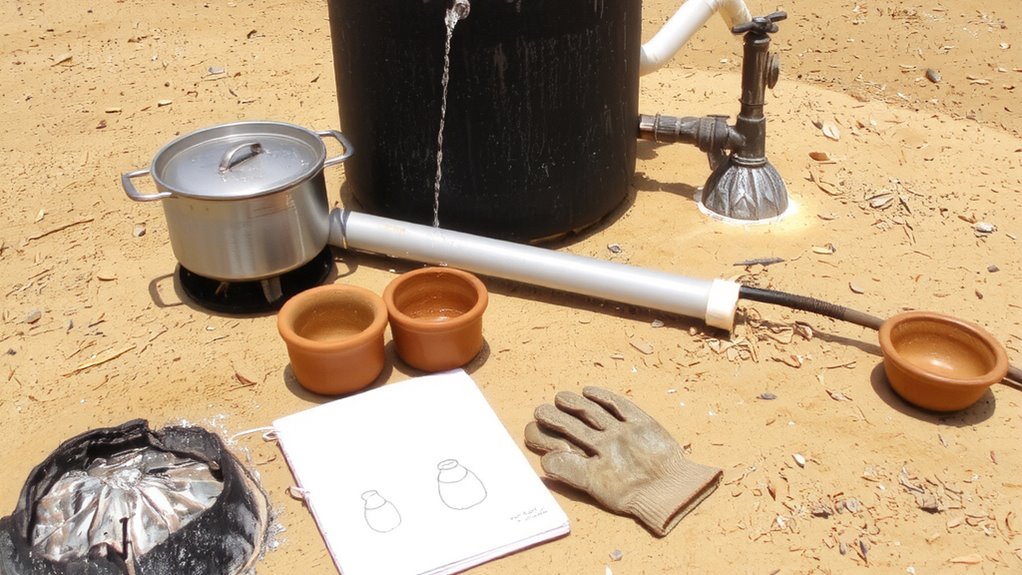
If you’re cooking off-grid, you’ll need a reliable water reserve because fuel and heat aren’t the only constraints-water is just as critical. You can’t rinse grains, rehydrate meals, or clean cookware without it. Water efficiency matters when every drop must be carried or filtered manually. Some fuel types, like alcohol or canister stoves, burn cleanly but demand more water for pot cleaning due to sootless residue. Wood stoves produce ash, requiring extra water for scrubbing. A 5-gallon collapsible container takes minimal space and supports three days of basic cooking for two. Gravity filters outperform pump models in volume processed per minute, aiding refill speed. You’ll balance fuel types with available water sources-boiling increases usage, so plan reserves accordingly. Without efficient systems, you’ll deplete supplies fast. Prioritize low-volume cooking methods and containers that minimize waste. Your survival depends on consistent, measured use-not improvisation. For long-term readiness, consider storing water in Best Water Containers designed for durability and space efficiency.
Calculate Water for Cooking and Cleaning
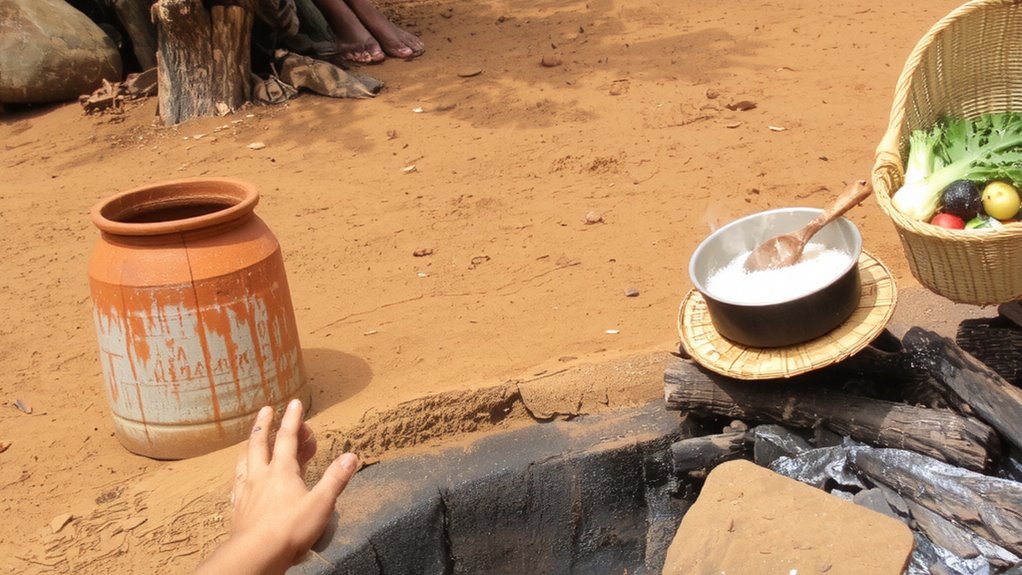
Most survivors underestimate how much water cooking and cleaning really take-plan for at least 2 quarts per person per day for basic meal prep and pot maintenance. This accounts for boiling grains, rehydrating meals, and scrubbing utensils without excess. For a family of four over 30 days, that’s 240 quarts-just for cooking and cleaning. Accurate water measurement guarantees you don’t over-allocate or run short. Use marked containers or measuring jugs to track each pour. Implement daily usage tracking to identify waste or inefficiencies, like rinsing with running water instead of using a basin. Adjust habits early to reduce consumption without sacrificing hygiene. Batch cooking saves water compared to daily small meals. Cold-washing pots with minimal water beats boiling cleanup later. Track actual use for a week and average it-this real-world data beats guesswork. Rely on measurable input, not estimates, to scale your reserve correctly.
Pick the Best Water Storage Containers
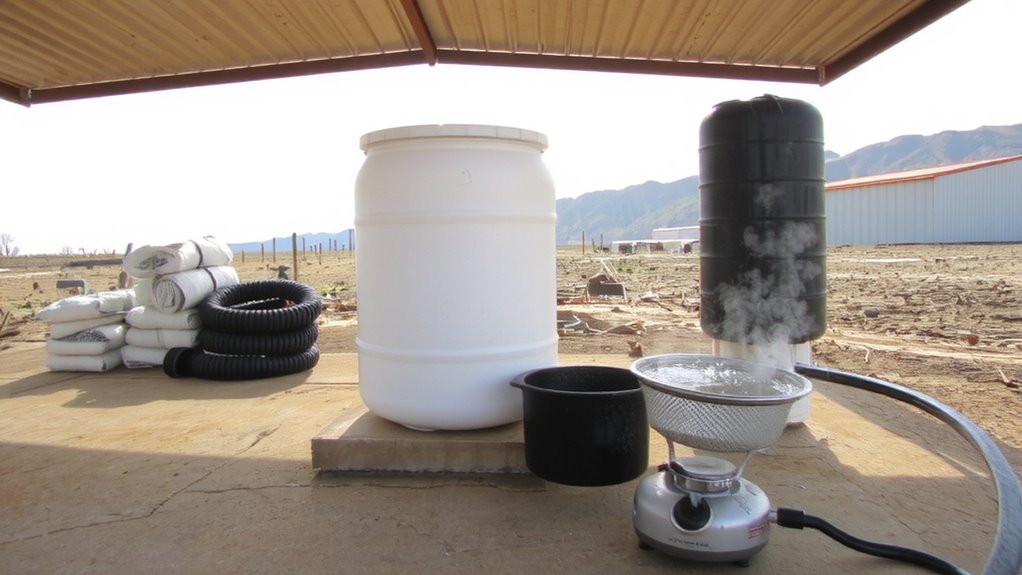
You’ll want containers that are durable, easy to handle, and proven to keep water safe over time-look for those made from FDA-approved, BPA-free polyethylene plastic, specifically rated for long-term water storage. Container durability matters because impacts, UV exposure, and temperature swings can cause cracks or leaks. High-density polyethylene (HDPE) containers with UV inhibitors resist degradation, maintaining integrity for 5–10 years when stored properly. Material safety is non-negotiable; even trace chemical leaching compromises water quality. Avoid repurposed containers like milk jugs-they degrade quickly and aren’t designed for long-term use. Five-gallon Jerry cans with sealed spigots offer portability and measured access. For bulk storage, 55-gallon drums with wide mouths allow filling and cleaning. All containers should be food-grade, clearly labeled, and stored in cool, dark spaces. Rotate water every six months to maintain freshness. Based on expert testing and real-world performance, the top picks include options that balance capacity, durability, and ease of use.
How to Purify Stored Water
Even when stored correctly, water can develop biological contaminants over time, so it’s essential to purify it before use. You can rely on boiling methods to kill pathogens-bring water to a rolling boil for at least one minute (three minutes at higher altitudes). This method is effective and requires no chemicals, but it consumes fuel. Alternatively, chemical treatment using unscented household bleach (5–6% sodium hypochlorite) works when boiled water isn’t practical. Add eight drops per gallon, stir, and wait 30 minutes before use. You’ll detect a slight chlorine smell if done correctly. Chemical treatment is lightweight and low-cost, but some find the taste unpleasant and it doesn’t remove physical particles. Use filtration before chemical treatment if the water is cloudy. Both methods have trade-offs: boiling is reliable but fuel-intensive, while chemical treatment is convenient but less effective against certain parasites like Cryptosporidium. For comprehensive removal of contaminants including parasites, consider using a high-quality water filter system.
Rotate Your Water Supply for Safety
A well-maintained water reserve stays safe and usable when you rotate it every six months. You should replace stagnant water to prevent microbial growth and chemical degradation from long-term storage. Use container labeling to mark fill dates and contents-this helps you track when rotation is due. Clear labels reduce confusion and keep your system organized. Before refilling, sanitize containers thoroughly and perform water testing on the source to confirm it’s safe for cooking and drinking. Test for contaminants like bacteria or heavy metals, especially if using municipal or well water. Even treated water can degrade in plastic over time, so rotating maintains quality. Don’t rely on looks or taste-testing gives objective data. Stored water meant for survival cooking must meet hygiene standards when needed. Regular rotation, paired with testing and labeling, guarantees your supply remains reliable under stress. It’s simple, cheap insurance.
On a final note
You’ll need a reliable water reserve to cook and clean off-grid. Store at least one gallon per person per day, using food-grade containers rated for long-term use. Rotate water every six months to prevent stagnation. Use filtration or bleach to purify when needed. Smaller containers are easier to handle but take more space. Larger barrels save room but require siphons or pumps. Balance capacity with access.