Creating a Systematic Plan for Gathering, Filtering, and Storing Water Safely
You start by scouting high-elevation springs or melting snow, since flowing water up high is less likely to be contaminated. Avoid spots near animal trails or farms. Use a portable filter with 0.2-micron pores to remove bacteria and protozoa, then add chemical treatment to kill viruses. Collect rainwater with a filtered gutter system into food-grade barrels, and store water in clean, sealed containers off the ground. Test every six months for pH and chlorine levels. Rotate supplies regularly. A reliable setup balances source quality, proven filtration, and disciplined maintenance-your next step reveals how to build it step by step.
Notable Insights
- Identify safe water sources by prioritizing flowing water from high elevations and avoiding areas contaminated by animals or human activity.
- Use portable filters with appropriate pore size to remove pathogens, and combine with chemical treatment for full microbial protection.
- Collect rainwater using gutter systems and food-grade storage barrels equipped with filters and tight-sealing, insect-proof lids.
- Store water in sanitized, food-grade containers elevated off the ground and kept in cool, dark locations to prevent contamination.
- Test stored water every six months for pH, chlorine, and contaminants, and rotate supplies every 6–12 months to ensure safety.
How to Identify Reliable Water Sources in the Wild
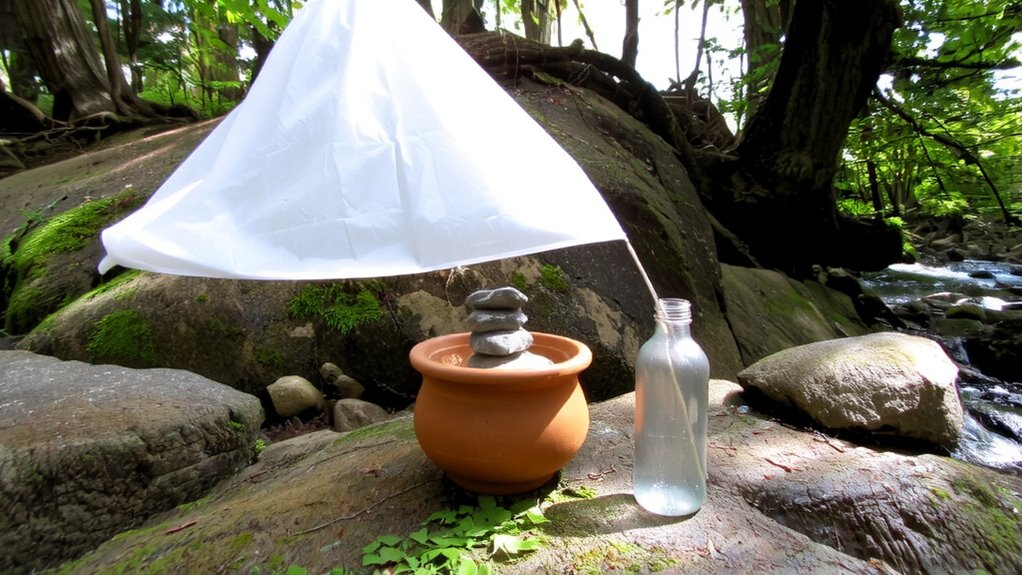
Where can you find water that won’t make you sick? You need reliable sources, not just the closest stream. Stagnant pools and slow-moving rivers often carry contaminants. Flowing water from high-elevation springs or snowmelt is usually safer, but you still must verify. Use water mapping to identify likely clean zones-ridgelines feed springs; dry valleys don’t. Avoid areas downstream from animal trails or grazing land. Source tracking helps: note changes in clarity, odor, or discoloration after rain. Water near human activity or agriculture risks chemical and pathogen exposure. GPS and topographic maps aid your tracking, letting you log and revisit dependable spots. Even clear water can be unsafe, so assume all untreated water is risky. Relying on consistent patterns-not guesses-improves survival odds. Water mapping and source tracking aren’t optional extras; they’re core tools for long-term safety in the wild.
Purify Water With Portable Filters and Tools
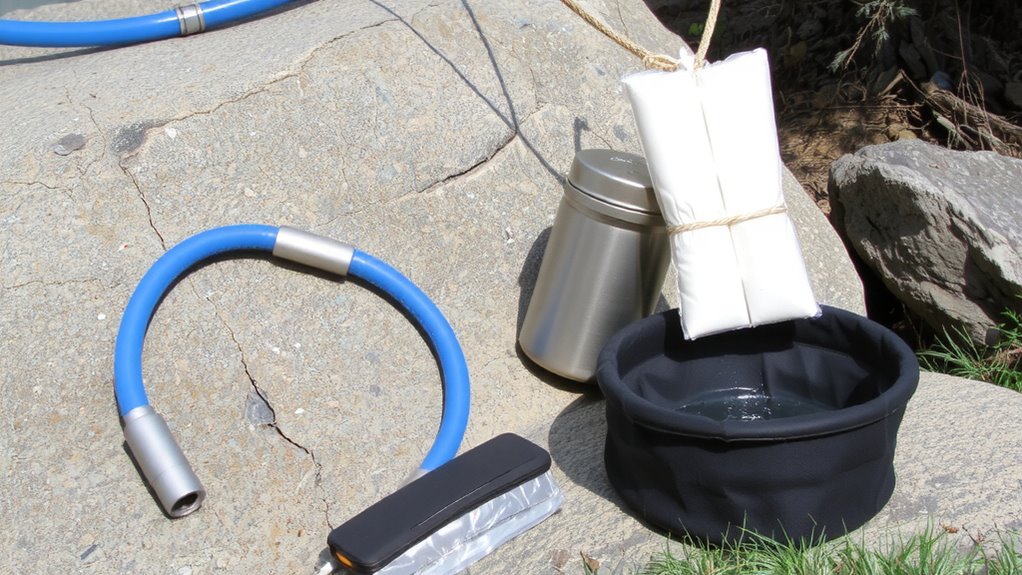
Even if you’ve found a clean-looking source, you still need to purify the water before drinking it-relying on appearance alone is a gamble. Portable filters are reliable when chosen and maintained correctly. Pump filters handle high volumes but require regular cleaning. Gravity filters offer hands-free operation but take up more space. Straw filters are lightweight but limit on-the-go intake. All filter types remove bacteria and protozoa, but not all stop viruses-check pore size and certification. For viruses, pair filtration with chemical treatment. Tool maintenance is critical: rinse filters after use, backflush as directed, and replace membranes when flow drops. Store components dry and protected. A clogged or cracked filter fails when needed most. Test your system before leaving. Real-world conditions expose flaws lab tests miss. Choose durability, ease of service, and proven performance over marketing claims. Some of the most effective options for backcountry use are listed in reviews of the best water filters for survival situations.
Collect Rainwater and Runoff With Simple DIY Setups
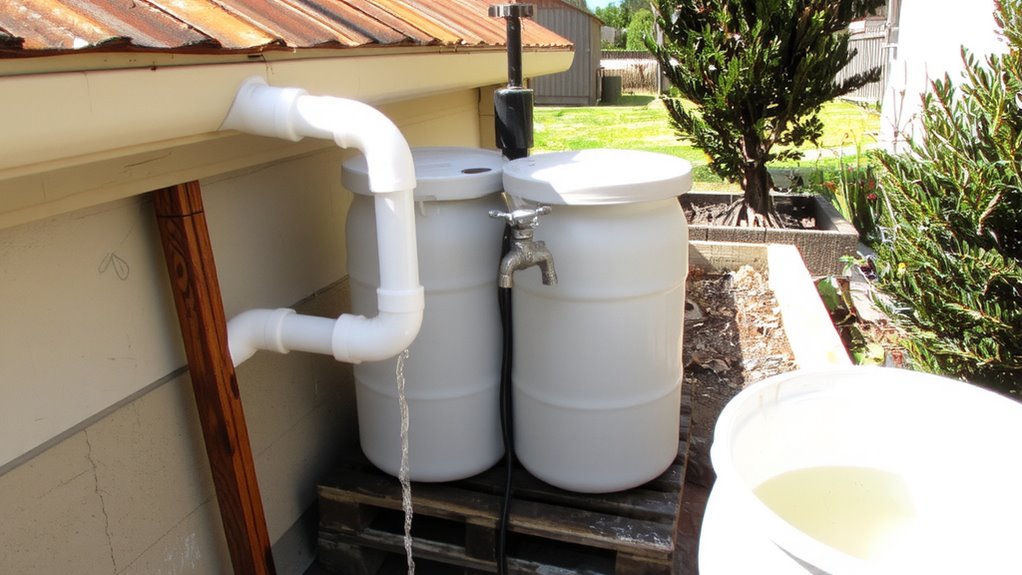
Rainwater’s free, but you’ll need a way to catch it. Start with gutter collection from rooftops-most standard aluminum or vinyl gutters channel water effectively, especially during moderate rain. You won’t capture everything, but even light storms yield 0.5 gallons per square foot of roof. Direct the downspout into a filter screen to exclude debris, then into a barrel storage setup. Use food-grade 55-gallon drums or BPA-free plastic tanks. These hold enough for short-term use and withstand UV exposure if opaque. Position barrels on a raised pallet for gravity-fed access and easier hose attachment. Guarantee each has a tight lid to keep out insects and reduce evaporation. Gutter collection won’t work in freezing weather or droughts, and barrel storage limits volume, but together they offer a low-cost, proven way to gather runoff with minimal tools. Maintenance is simple but required monthly.
Store Water Safely and Prevent Contamination
Water stored wrong won’t keep you safe. You need clean, durable water containers made of food-grade plastic or stainless steel-these resist algae and don’t leach chemicals. Avoid milk jugs or repurposed containers; they’re hard to clean and degrade faster. Always sanitize containers before use with a bleach solution (one teaspoon per quart of water) and rinse thoroughly-this is essential for storage hygiene. Seal containers tightly to block contaminants and pests. Store them in a cool, dark place to slow bacterial growth and prevent UV degradation. Don’t let containers sit on bare ground; use pallets or shelves to reduce contamination risk. Rotate water every six months to maintain freshness. Even filtered water spoils if storage hygiene fails. You’re not just storing water-you’re preserving safety. Stick to proven materials and routines. That’s how you stay protected. For long-term reliability, choose best water containers that meet safety and durability standards.
Test Water Quality and Keep It Safe Long-Term
How do you know your stored water is still safe after months in storage? You rely on consistent water testing. Test every 6 months using simple strips or a digital meter to check pH, chlorine levels, and total dissolved solids. If readings fall outside safe ranges-like chlorine below 0.2 ppm or pH under 6.5-your supply may be compromised. Visual clarity doesn’t guarantee safety, so don’t skip testing even if the water looks clean. For contamination prevention, keep containers sealed with tight-fitting lids, store them away from chemicals and sunlight, and label each with fill dates. Rotate stock every 6 to 12 months. Algae or biofilm growth means your prevention measures failed. Use food-grade, BPA-free containers rated for long-term use. Regular testing and strict contamination prevention aren’t optional-they’re the baseline for safe, reliable water storage.
Create a Long-Term Water Supply Plan
You’ve tested your water and kept it safe, but that’s only part of the picture-you need a plan that sustains supply over months or even years. Start by calculating your daily needs: 1 gallon per person covers drinking and hygiene. Multiply by the number of people and days you’re preparing for. Store at least a two-week emergency reserve in food-grade containers, but aim for 3–6 months if disruptions are likely. Rotate stored water every six months to maintain quality. Implement water rationing early in shortages-reduce non-essential use to stretch supply. Relying solely on bottled water is expensive and unsustainable; instead, pair storage with reliable filtration like reverse osmosis or ceramic filters for long-term reuse. Wells, rain catchment, and nearby surface sources add resilience. Each has limits-test regularly and integrate redundancies. A solid plan balances storage, purification, and consumption discipline without over-reliance on any single method. For effective long-term filtration, consider a system with ceramic filters based on performance and durability benchmarks.
On a final note
You need clean water to survive, and now you know how to get it. A portable filter removes 99.9% of bacteria, but doesn’t eliminate viruses-so pair it with chemical treatment. Collect rainwater using a clean tarp and store it in food-grade containers. Test pH and chlorine levels monthly. Rotate stored water every six months. No single method works alone-layering tools gives reliable results. Plan for droughts or filter failure.