Survival Gear Essentials for Navigating Dense Forests
You’ll need durable 500D nylon gear that withstands abrasion and moisture when the forest stays wet for days. A baseplate compass and topographic map beat GPS under thick canopy, especially with adjusted declination. Carry a full-tang knife with a grippy handle for reliability, and a ferro rod with petroleum-soaked tinder to start fires in rain. Use ultralight silicone-coated shelters pitched with trekking poles to save weight without sacrificing storm resistance-smart choices keep you moving when conditions worsen.
Notable Insights
- Use a baseplate compass and topographic map for reliable navigation when GPS fails under dense tree cover.
- Adjust for magnetic declination and practice terrain association to accurately track your position in thick forests.
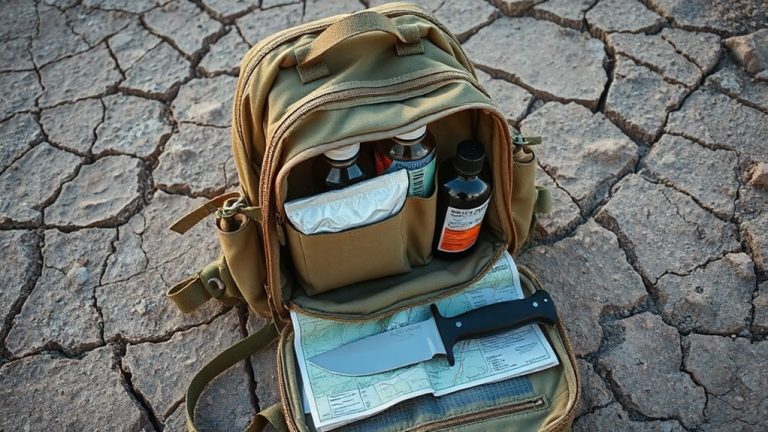
- Carry a fixed-blade knife with a full tang and wet-grip handle for durability and safety in rugged woodland conditions.
- Pack waterproof matches or a ferro rod with petroleum-soaked cotton balls for fire-starting in damp, sheltered environments.
- Choose ultralight, durable shelters with high hydrostatic head ratings to minimize weight while resisting rain and tears.
Forest Survival: Why Gear Choices Matter
While venturing into dense woodland, your gear becomes the difference between manageable discomfort and real danger, so choosing the right items isn’t optional-it’s essential. You need gear durability that withstands abrasion, moisture, and constant use-materials like 500D nylon or reinforced polyester outperform lighter fabrics in prolonged brush contact. A torn jacket or failed boot seam compromises your protection fast. Your survival mindset depends on reliability; knowing your equipment won’t fail lets you focus on navigation and shelter. Lightweight isn’t always better-if a 3lb tent collapses in wind, it’s a liability. Test gear under real conditions: rain exposure, weight load, friction. A durable backpack with thick stitching and weather-resistant zippers lasts longer than one optimized only for weight. You’re not just packing tools-you’re carrying confidence. When exhaustion hits, your survival mindset hinges on trust in gear that performs, not promises. Choose function, test results, and longevity. A well-chosen survival bushcraft knife can be crucial for building shelter, preparing food, and ensuring overall safety in remote forests.
Top Navigation Tools for Dense Woods
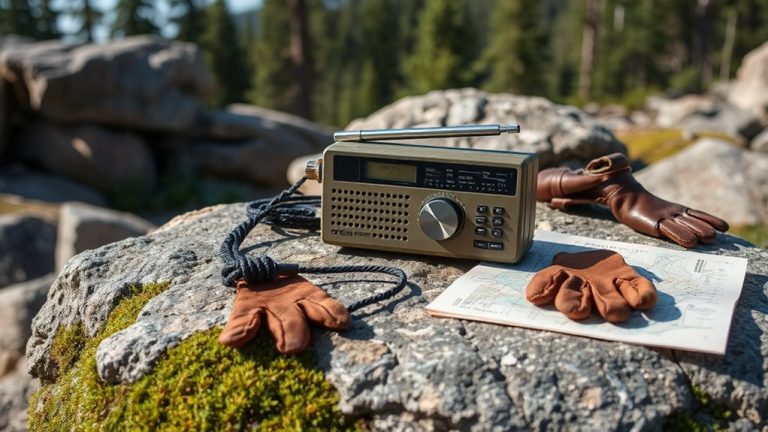
How do you stay on course when tree cover blots out GPS signals and trails vanish under fallen leaves? A reliable compass and topographic map are your best bet. GPS units fail in heavy canopy, but a baseplate compass won’t. Just make sure you account for magnetic declination-adjusting for the difference between true north and magnetic north keeps your bearings accurate. Pair your compass with terrain association: match visible ridges, valleys, and streams to the map to confirm your position. This method doesn’t rely on batteries or signals. A clinometer-equipped compass adds slope angle, useful in steep terrain. While digital tools offer convenience, analog tools win for dependability. You’ll need practice to read terrain effectively, but once mastered, terrain association reduces navigation errors. Don’t trust a compass alone-combine it with map reading and natural landmarks for the most consistent results in dense woods. For added confidence, choose one of the best hiking compasses tested for accuracy and durability in rugged conditions.
Best Knives and Multi-Tools for Forest Use
A solid navigation setup keeps you on track, but once you’ve found your way, you’ll need tools to handle tasks like cutting wood, preparing food, or making repairs. A fixed-blade knife with high carbon steel offers reliable blade durability, holding an edge even after repeated use on tough materials like rope or branches. Look for a full tang design and a grip that stays secure when wet. For everyday tasks, a folding knife with a lock mechanism works well and is easier to carry. Multi-tools add tool versatility, combining pliers, screwdrivers, and blades in one compact unit-ideal when space is limited. While multi-tools sacrifice some strength, they save weight and cover more functions. Choose based on mission needs: knives for heavy-duty cutting, multi-tools for adaptability. Test each for ergonomics and real-world performance before relying on them in the forest. Some of the top survival knives feature full tang construction for maximum durability in rugged environments.
Fire-Starting in Wet, Windy Conditions
If you’re stuck in a downpour with wind slicing through the trees, getting a fire going means more than comfort-it’s about survival, and not every fire starter will work when soaked or battered by gusts. Waterproof matches and ferro rods perform reliably in wet conditions; ferro rods spark at 5,000°F and ignite even with gloved hands. Use a metal scraper to direct sparks into your prepared nest. For damp tinder, cotton balls soaked in petroleum jelly ignite with minimal effort and burn long enough to catch wet wood. Shave dry wood from protected areas underneath logs to build your fuel stack. Windproof lighters can fail when wet, so carry backups. Once lit, fire maintenance requires constant adjustment-shield the base with rocks and feed small, dry pieces first. Keep your fire elevated off wet ground using a platform of green wood to improve airflow and sustain burning.
Ultralight Shelters for Forest Survival
Keeping dry in a forest storm starts with more than just fire-you need shelter that won’t weigh you down or fail when the wind picks up. Ultralight shelters save energy on long treks, where every ounce matters-shelter weight under 2 pounds is ideal for fast travel. But lighter isn’t always better if material durability suffers. Look for ripstop nylon or silicone-coated fabrics with a hydrostatic head rating of at least 1,500mm; they resist tears and hold up in prolonged rain. A trekking pole-supported tarp weighs less than a tent but offers less storm protection unless pitched well. Double-wall tents add weight but improve condensation control. Mesh panels aid ventilation but reduce wind resistance. Balance shelter weight with material durability based on expected conditions-dense forests may allow low, secure pitches, reducing exposure. No shelter is indestructible, but a well-chosen ultralight model handles typical forest weather without bulk.
First-Aid Must-Haves for Wilderness Injuries
Your first-aid kit’s worth hinges on what it carries and how fast you can use it when blood’s soaking through a shirt or a sprained ankle swells mid-hike. You need quick access to trauma dressings that seal wounds and stop heavy bleeding-Celox or QuikClot gauze works fast. Include antiseptic wipes and iodine ampules for wound cleaning, since dirty injuries in forests raise infection risks. Add antibiotic ointment and adhesive bandages for minor scrapes. Moleskin prevents blisters but doesn’t treat them-pack it anyway. A 1-inch elastic wrap supports sprains; include a pair of nitrile gloves to keep your hands clean. Tweezers pull splinters; scissors cut tape or clothing. Infection prevention matters most-seal everything in waterproof bags. Don’t rely on home remedies. Test your kit before leaving. If it takes more than 20 seconds to find a bandage, reorganize it. Real use beats theory.
Smart Packing: Carry Less, Survive Better
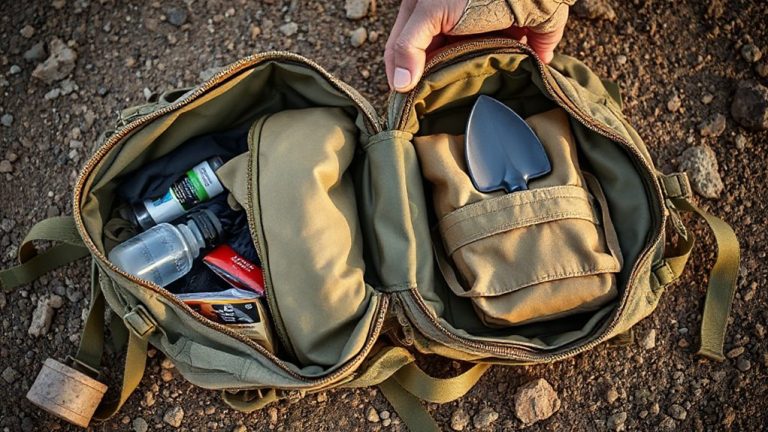
A well-stocked first-aid kit means little if you’re too exhausted to reach it after miles of rough terrain. You need minimal weight and maximum efficiency in every item you carry. Prioritize gear that serves multiple functions-like a knife with a saw and fire starter-so you reduce bulk without sacrificing utility. Use compact storage solutions: vacuum sacks cut clothing volume by 50%, and nested cookware saves space. Keep essentials in external pockets for quick access during emergencies. A 30-liter pack often holds enough for three days if packed strategically. Heavy items slow you down, increasing fatigue and risk. Lightweight titanium tools weigh less than half of steel equivalents but last nearly as long. Every ounce saved improves endurance and mobility. Test your load on short hikes. If something wasn’t used or needed, leave it next time. Smart packing isn’t about comfort-it’s about surviving better with less.
On a final note
You need reliable gear to move fast and stay safe in dense forests. A lightweight compass and topo map outperform GPS when signals fail. Your knife should have a full tang and grip that works wet. Waterproof fire starters ignite in under 30 seconds, even in rain. Tarp shelters weighing under 2 lbs offer more protection than bivy sacks. First-aid kits must include clotting gauze and blister care. Carry only what you’ve tested.