How to Identify Risks From Propane Tanks During Disasters
Check your propane tank after a disaster-you might miss dangerous damage. Look for dents, rust, or warping, especially near valves. If you smell rotten eggs or hear a hiss, there’s likely a leak. Keep tanks 10 feet from flames and never use one that’s been in flood or fire. Even small damage can fail under pressure. A trained pro must inspect it to confirm safety-skip this, and you’re gambling with explosion risks. Action now prevents bigger dangers later.
Notable Insights
- Inspect tanks for dents, rust, or warping after storms, as these indicate structural damage and potential failure.
- Never refill or reuse tanks with cracks, deep rust, or dents near valves or welds due to high rupture risk.
- Smell for a rotten egg odor or listen for hissing sounds to detect propane leaks near tanks or connections.
- Keep tanks at least 10 feet from flames, heat sources, or fire-damaged areas to prevent pressure buildup or ignition.
- Evacuate and call a professional if you suspect damage or a leak-only technicians can safely assess and repair tanks.
Recognize Propane Tank Dangers After Disasters
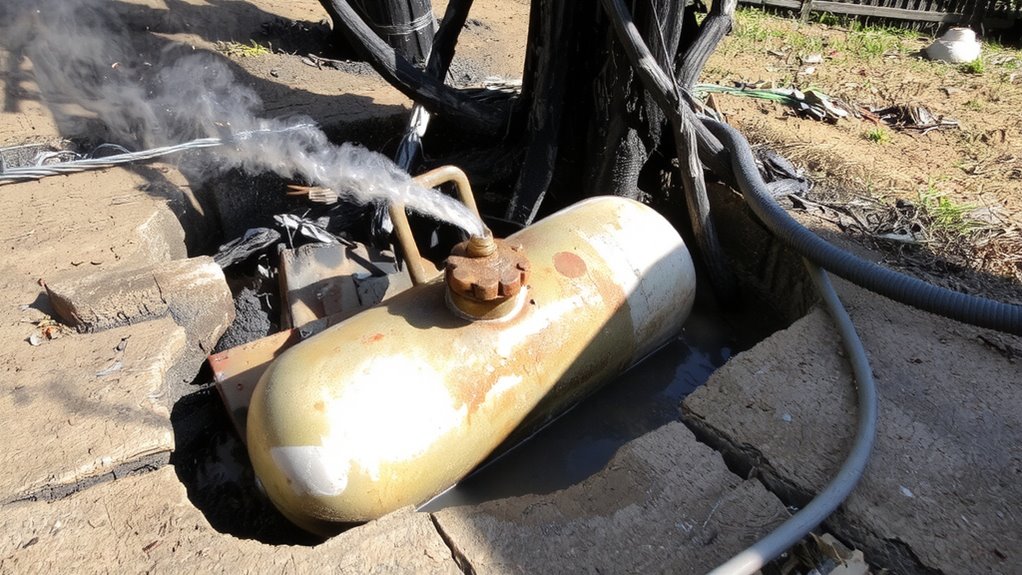
What could go wrong if you ignore a damaged propane tank after a storm? A compromised tank risks leaks, fires, or explosions due to tank corrosion or structural instability. Corrosion weakens the metal, making it more likely to fail under pressure. If the tank’s frame or mounting system shifts due to impact or flooding, structural instability increases, raising the chance of tipping or rupture. You can’t assume it’s safe just because it’s still upright. Even small dents or rust spots may signal deeper damage. Propane is highly flammable, and a single ignition source nearby-like a pilot light or electrical spark-can trigger disaster. You need to treat every storm-exposed tank as potentially hazardous until a qualified technician inspects it. Skipping this step risks property damage and personal harm. Immediate shutdown and professional assessment aren’t optional-they’re necessary precautions to prevent avoidable accidents.
Spot Visible Damage on Propane Tanks
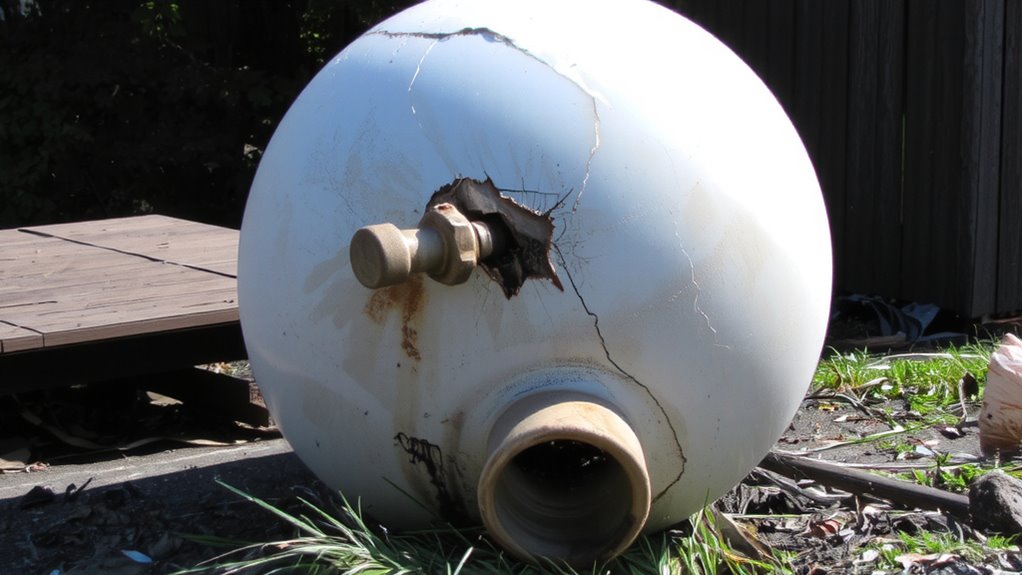
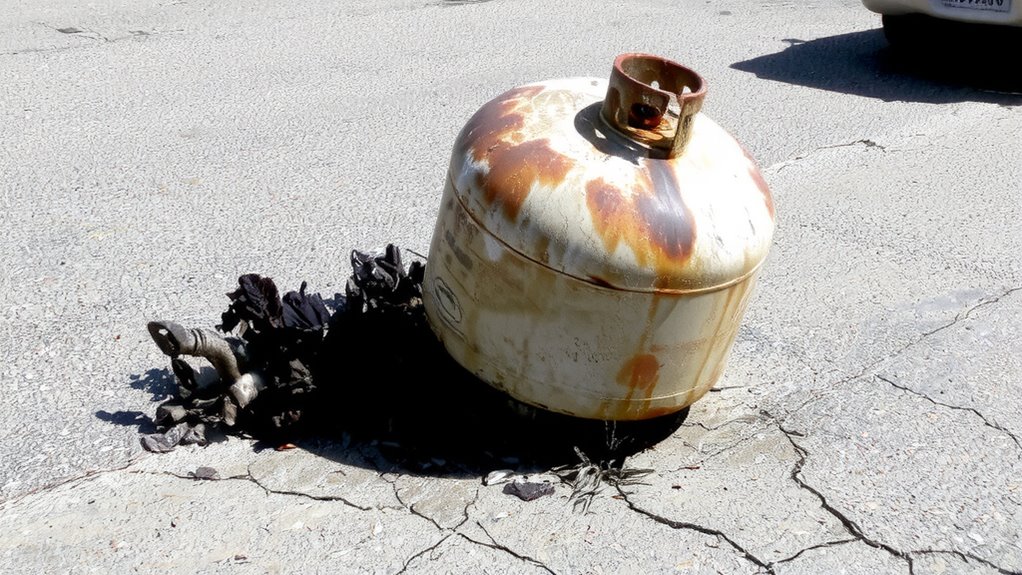
Look for dents, rust, or warped metal-any visible imperfection on a propane tank after a storm could mean trouble. Cracks and dents compromise structural integrity, increasing the risk of failure under pressure. Even small dents in the tank’s body or near the valve can weaken metal, making it prone to rupture. Cracks, especially around welds or fittings, are serious-don’t try to repair them. If you see deep rust that’s eaten into the surface, treat it like damage. Propane tanks are built tough, but impact from flying debris or falling objects can exceed design limits. A slightly dented tank might seem okay, but internal stress isn’t visible. Tanks with noticeable dents or hairline cracks shouldn’t be refilled or used. When in doubt, have a certified technician inspect it. Never rely on tape or sealant as a fix-compromised tanks must be replaced. Safety’s not worth the gamble.
Detect Propane Leaks Using Your Senses
You’ve checked the tank for dents, rust, or warping-now turn your attention to the next step: checking for leaks. Propane is odorized so you can Smell gas easily; it has a strong, rotten egg-like odor added for safety. If you notice this scent near the tank or connection points, a leak is likely present. Don’t ignore it. Next, listen for hissing. A steady hissing sound near valves, regulators, or hoses often indicates escaping gas. Stay calm, move away, and don’t operate electrical switches. Use your senses first-no tools needed. Smelling gas or hearing a hiss means immediate action is necessary. These signs are reliable under most conditions, though wind or rain can sometimes mask them. Relying on smell and sound is standard practice and effective if done carefully. Your quick recognition of these cues reduces risk.
Keep Propane Tanks Away From Fire and Heat
Even though propane tanks are built to withstand tough conditions, placing them too close to open flames or high heat sources increases the risk of rupture or explosion. You need to keep at least 10 feet between your tank and any flame exposure, including grills, campfires, or burning debris. Prolonged heat sources like direct sunlight on hot days or nearby machinery can also build pressure inside the tank, weakening safety valves over time. Always store your propane tank upright and in a shaded, well-ventilated area away from ignition risks. Never use a damaged tank or one exposed to fire, even briefly-internal integrity may be compromised. In disaster scenarios, common hazards like downed power lines or smoldering wreckage count as heat sources. Staying aware of surroundings minimizes accident likelihood. Simple positioning choices markedly reduce risk, giving you safer, more reliable propane use when you need it most.
Secure Tanks Before Severe Weather Hits
Securing your propane tank before severe weather arrives prevents dangerous shifts or impacts during high winds, flooding, or storms. You need proper tank anchoring to keep it stable-use certified straps and ground anchors rated for at least 180 mph winds. Unsecured tanks can tip or roll, increasing rupture and leak risks. Place the tank on a flat, non-combustible surface away from drainage paths. Check that protective shutoff valves are accessible and functional. Weatherproofing vents is essential; install covers that block rain and debris without restricting airflow. Avoid DIY seals that could trap pressure. Make certain the relief valve discharge points away from structures and walkways. Metal stands or concrete pads improve stability over asphalt or soil. If flooding’s expected, elevate the tank on a secure platform, but never indoors or in a basement. Inspect connections and supports after any minor shift. Maintenance and preparation reduce failure chances when conditions worsen.
Respond Safely to Propane Tank Emergencies
What should you do if your propane tank starts leaking during a storm? Stay calm and act quickly. Immediately shut off the gas valve if it’s safe to do so-don’t wait. Evacuate everyone from the area and avoid using electronics, switches, or flames that could ignite fumes. Move upwind and keep a safe distance. Your emergency preparedness plan should include knowing how to turn off your tank and having evacuation routes mapped. Follow established response protocols: never try to repair a leak yourself during bad weather. Use a battery-powered radio to monitor updates and only return when authorities confirm it’s safe. These steps reduce risk and protect lives. Good preparation doesn’t guarantee safety, but it improves outcomes when things go wrong. Stick to proven procedures, not guesses.
When to Call a Pro for Tank Safety?
How do you know when it’s time to call a professional about your propane tank? If you notice dents, rust, or leaks, don’t wait-schedule a tank inspection right away. You should also call a pro after any disaster event, like a flood or storm, even if damage isn’t obvious. Hidden issues can compromise safety. A professional assessment guarantees valves, regulators, and connections function properly. Never attempt repairs yourself; improper handling increases explosion and fire risks. If your tank’s over 10 years old, get annual inspections to maintain reliability. You’ll want certified technicians-they follow safety codes and use calibrated tools. Skip shortcuts; your safety depends on accurate diagnostics. When in doubt, a pro can verify integrity and recommend upgrades or replacements. Don’t assume small issues are harmless. Early detection through expert evaluation prevents emergencies. Make safety routine, not reactive.
On a final note
Check your propane tank after any disaster-even small dents or rust can cause leaks. Use smell and sight to spot issues; never rely on one method. Keep tanks clear of flames, debris, and high heat. Secure them before storms. If you suspect a leak or damage, shut off the gas and get help. Don’t fix it yourself-pros have the tools and training to assess risks safely.