Sterilize Scissors for Medicinal Plants: 70% Alcohol or Bleach
Wipe debris from your scissors with a damp cloth, then sterilize after every use to prevent spreading pathogens. Use 70% isopropyl alcohol-wipe all surfaces and keep wet for 30 seconds. For full sterilization, boil metal scissors for 10 minutes or soak in 10% bleach for 10 minutes, then rinse and dry thoroughly. Avoid cross-contamination by never reusing cloths or skipping drying. Stainless steel holds up better; other metals may rust. There’s more to get right if you’re cutting multiple species back to back.
Notable Insights
- Clean scissors with a damp cloth to remove plant debris before sterilizing to ensure effective disinfection.
- Wipe all surfaces with 70% isopropyl alcohol, keeping them wet for at least 30 seconds to kill pathogens.
- Fully submerge metal scissors in boiling water for 10 minutes to destroy bacteria, fungi, and spores.
- For bleach disinfection, use a 10% solution, soak for 10 minutes, then rinse and dry thoroughly.
- Sterilize after each use or between plant species to prevent disease transmission and cross-contamination.
Clean Scissors Before Sterilizing
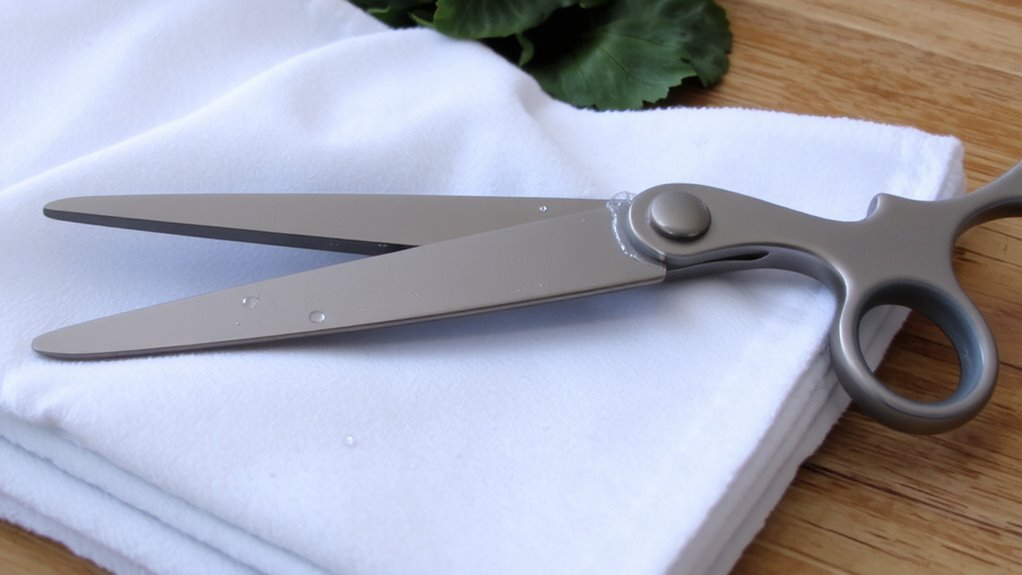
Dirt and plant residue are your first hurdles-wipe the blades down with a damp cloth to remove visible debris before sterilizing. You can’t sterilize effectively if organic matter blocks contact with the disinfectant. Once cleaned, inspect the blades for buildup near the pivot; use a soft brush if needed. Proper handling means avoiding contact with contaminated surfaces post-cleaning. Don’t set the scissors on the ground or a dirty countertop. Use a clean towel or tray. Immediate sterilization after cleaning guarantees contaminants aren’t given time to re-adhere or degrade the metal. Storage conditions matter: keep the scissors in a dry, covered container after use. Moisture invites rust, which compromises cutting precision and hygiene. A damp tool is a breeding ground. Cleanliness starts before sterilization-if the tool isn’t physically clean, chemical agents won’t work uniformly.
Sterilize With Rubbing Alcohol
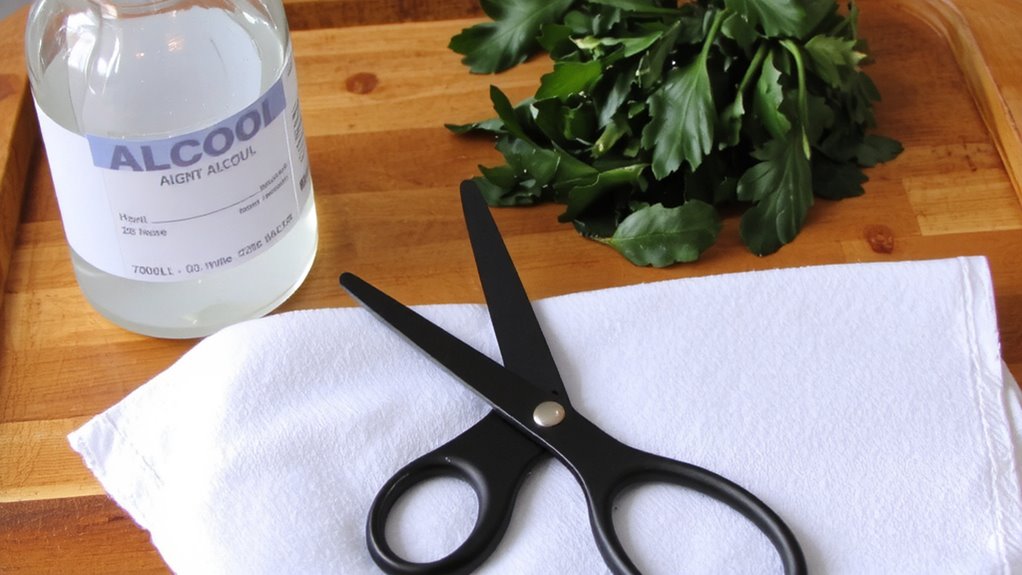
You’ve wiped away the debris and checked for residue, so now it’s time to neutralize microbes with rubbing alcohol. Soak a clean cloth or cotton ball in 70% isopropyl alcohol and thoroughly wipe all surfaces of the scissors, including the pivot and blades. For effective disinfection, maintain a contact time of at least 30 seconds-this duration guarantees most bacteria, fungi, and viruses are inactivated. Don’t just swipe once and call it done; reapply alcohol as needed to keep surfaces wet during this window. After wiping, allow the scissors to air dry completely via evaporative drying, which guarantees no residual moisture promotes microbial growth. Avoid using heat or towels, as they introduce contaminants. Alcohol is fast, effective, and practical for frequent use, though it won’t sterilize in the strictest sense. It’s a reliable, accessible method for reducing pathogen load between clippings.
Boil to Sterilize Metal Scissors
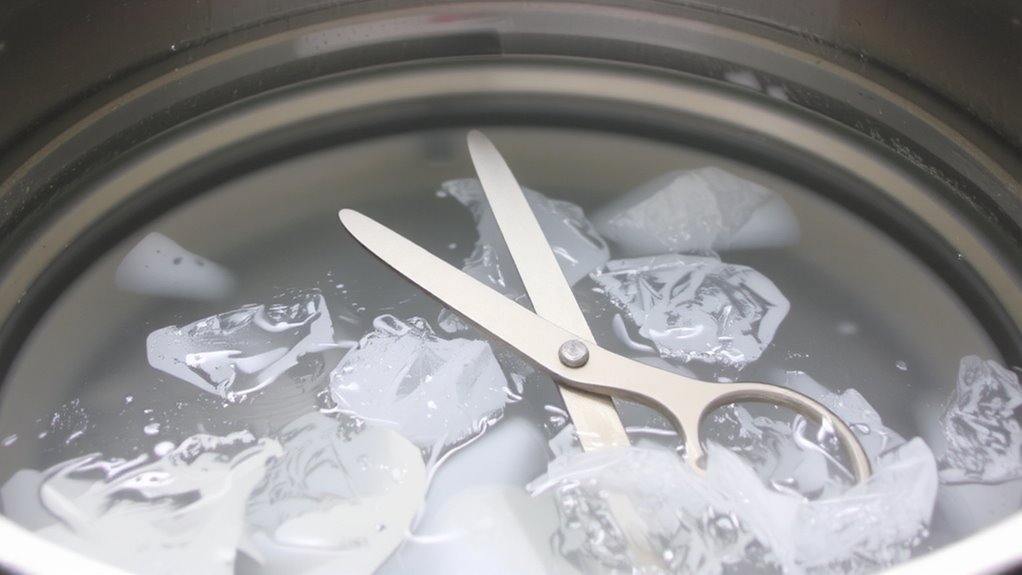
While boiling won’t work for all scissors, it’s a surefire way to fully sterilize metal ones if you need a higher level of microbial kill than alcohol can offer. You’ll need to submerge the scissors completely in boiling water, guaranteeing all parts are exposed. The water temperature must reach and maintain a rolling boil of 100°C (212°F) at sea level. Elevation affects boiling point, so adjust accordingly. For effective sterilization, the boiling duration should be at least 10 minutes. This duration accounts for heat penetration and guarantees pathogens, including spores, are destroyed. Metal blades and pivots handle this well, but repeated boiling may accelerate wear over time. Avoid boiling any scissors with glued or plastic components-those can warp or degrade. It’s a simple method with measurable results, but it’s only suitable for fully metal tools. After boiling, let them air-dry on a clean surface or use sterile tongs to place them in a sealed container.
Disinfect Scissors With Bleach
Bleach offers a strong alternative when boiling isn’t suitable or when you need rapid disinfection of metal scissors. Use a bleach concentration of 10% (1 part household bleach to 9 parts water) for effective pathogen kill without excessive corrosion. Submerge the blades fully, ensuring all surfaces are exposed. Maintain a contact time of at least 10 minutes to guarantee microbial inactivation, especially if the tools were used on diseased plant material. Longer contact times increase corrosion risk, so don’t exceed 15 minutes. Afterward, rinse thoroughly with clean water to remove residue and dry immediately with a lint-free cloth. This step prevents rust, particularly on non-stainless steel. Bleach is fast and reliable but more corrosive than alcohol or boiling. It’s best when speed matters and heat isn’t an option. You’ll trade some tool longevity for dependable disinfection when time is limited.
How Often to Sterilize Your Tools
Regularly sterilizing your scissors keeps herb contamination in check and guarantees clean cuts that promote plant health. You should sterilize after every use, especially when moving between different plant species or harvesting diseased material. Frequent sterilization prevents pathogen transfer and supports effective tool maintenance. If you’re processing the same herb in a single session, sanitizing every few plants is sufficient. However, skipping this step increases infection risks. Your sterilization routine directly impacts tool longevity and performance. After cleaning, make certain of proper storage in a dry, covered container to prevent rust and dust accumulation. Moist or unclean storage spaces compromise sterility. Even with minimal use, re-sterilize tools before the next harvest. It’s not about how often you cut-it’s about minimizing biological risk. Stick to a consistent schedule, and your tools will remain reliable field assets.
Avoid Common Sterilization Mistakes
Skipping sterilization between different herbs or after handling diseased plants puts your entire harvest at risk, but even if you’ve got a solid routine, mistakes in how you sterilize can undo all your effort. Rinsing scissors without proper drying leads to improper drying, which fosters microbial growth-moisture trapped in hinges or joints is a common oversight. Using the same wipe or cloth on multiple tools spreads pathogens, causing cross contamination. Alcohol solutions below 70% are less effective; higher concentrations evaporate too fast, lower ones don’t kill reliably. Soaking too long in bleach corrodes metal, weakening blades over time. Always air-dry tools completely before reuse-don’t towel dry, as cloths can reintroduce contaminants. Sterilizing isn’t just about the agent you use-it’s about technique. One missed step, like skipping a rinse after bleach or storing damp tools, compromises the whole process. Stay consistent, follow precise steps, and treat every cut as a potential entry point for disease.
On a final note
You should sterilize your scissors after each plant batch to prevent pathogen spread. Rubbing alcohol works fast and leaves no residue, making it ideal for quick field use. Boiling is effective but risks rust on prolonged exposure. Bleach kills pathogens but must be rinsed thoroughly to avoid plant damage. Metal scissors hold up best to heat and chemicals. Frequent sterilization prolongs tool life and guarantees clean cuts. Skip steps, and you risk contamination.