Creating High-Protein Survival Biscuits From Foraged Seeds and Flour
You can make high-protein survival biscuits using foraged amaranth, lamb’s quarter, or sunflower seeds-they’re 15–25% protein when dried and ground fine. Dry seeds fully to prevent mold, then crush and sift into flour. Mix with water and salt, form flat biscuits, and cook on a hot stone over coals for 8–12 minutes. Add insect powder or chopped nuts to boost protein and fat. These biscuits won’t rise but are filling and nutritious. More details on safe foraging and cooking methods follow.
Notable Insights
- Identify high-protein wild seeds like amaranth, lamb’s quarter, or sunflower using reliable field guides to avoid toxic look-alikes.
- Dry foraged seeds thoroughly before grinding into flour to prevent mold and improve shelf life.
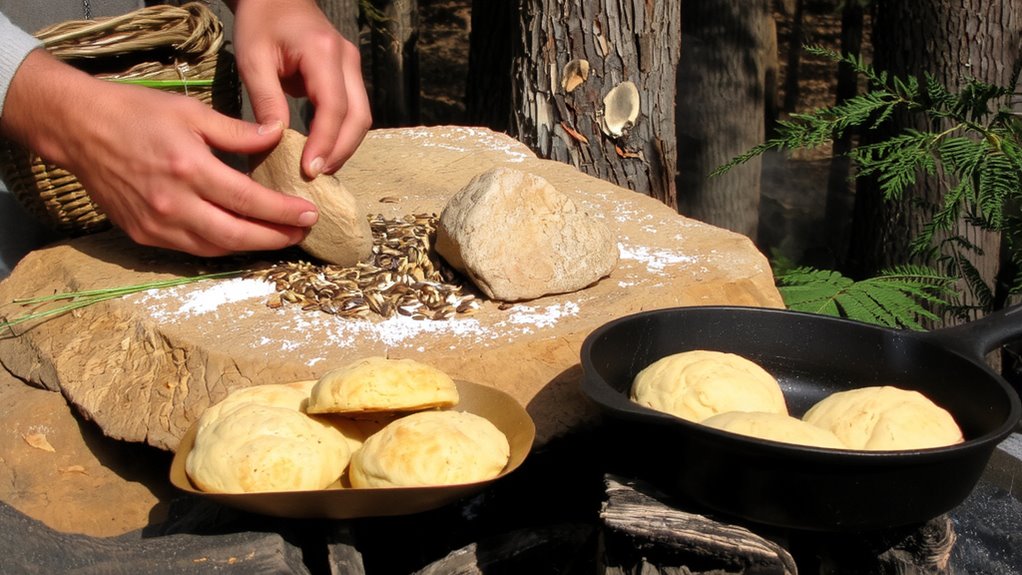
- Process seeds into fine flour using stones or a mortar and pestle, then sift to remove grit and husks.
- Mix two parts wild seed flour with one part water and a pinch of salt to form a dense, kneadable dough.
- Cook flat biscuits over hot coals or on a heated rock, flipping frequently for even cooking in 8–12 minutes.
Find High-Protein Wild Seeds You Can Eat
Wild seeds can be a reliable protein source when you’re off the grid and need sustenance. You’ll need accurate seed identification to avoid toxic look-alikes-mistakes can be dangerous. Common edible species like amaranth, lamb’s quarter, and sunflower offer protein levels between 15–25%, based on nutritional analysis. These values compare favorably to some store-bought grains, but availability varies by season and region. You must learn to recognize mature seed heads and distinguish them from immature or inedible plants. Not all seeds are worth the effort; some have low yields or poor digestibility raw. You should prioritize those with documented edibility and verified nutrient content. Field guides and regional foraging databases support accurate identification. Nutritional analysis from reputable sources gives realistic expectations on caloric and protein returns. Use this data to target species that deliver the most benefit with minimal risk. Your survival depends on precision, not guesswork.
Turn Foraged Seeds Into Survival Flour
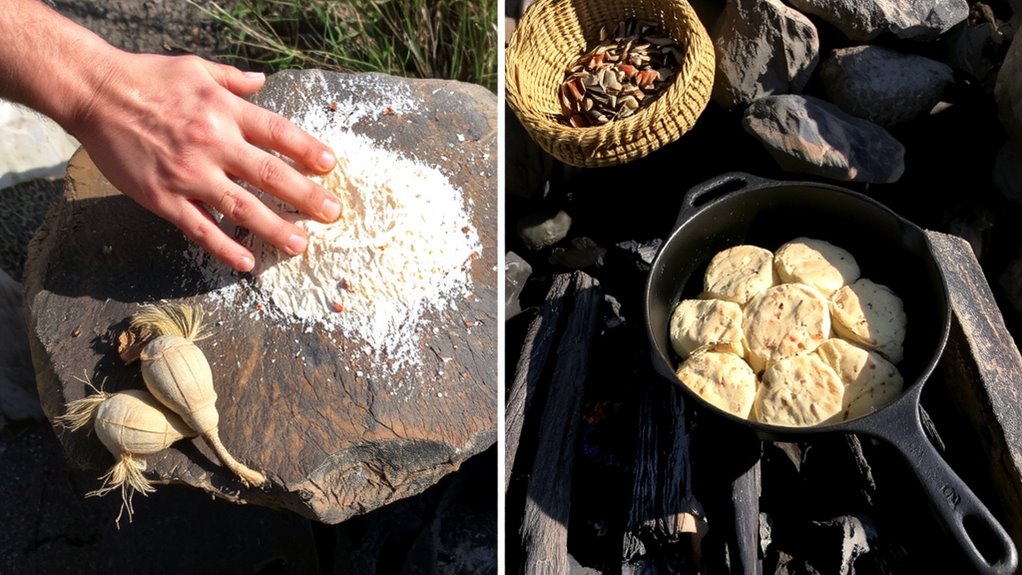
Flour from foraged seeds starts with proper preparation-your first step is drying the seeds completely, because moisture leads to mold and ruins shelf life. Seed drying can be done in sunlight, near a fire, or with a low-heat oven; aim for at least 24 hours to guarantee thorough dehydration. Once dry, crush the seeds using a mortar and pestle or grind between stones until fine. The coarser particles affect texture and digestibility, so flour sifting is essential. Use a tightly woven cloth or improvised mesh to separate finer flour from husks and grit. Re-grind the larger bits and sift again to maximize yield. A second sift improves consistency, which matters in cooking performance. This flour won’t match store-bought in uniformity, but it delivers usable nutrition. Expect lower rise and denser results, though that’s expected with wild-processed flours. Store in a dry, airtight container to preserve quality.
Make Biscuits With Wild Ingredients
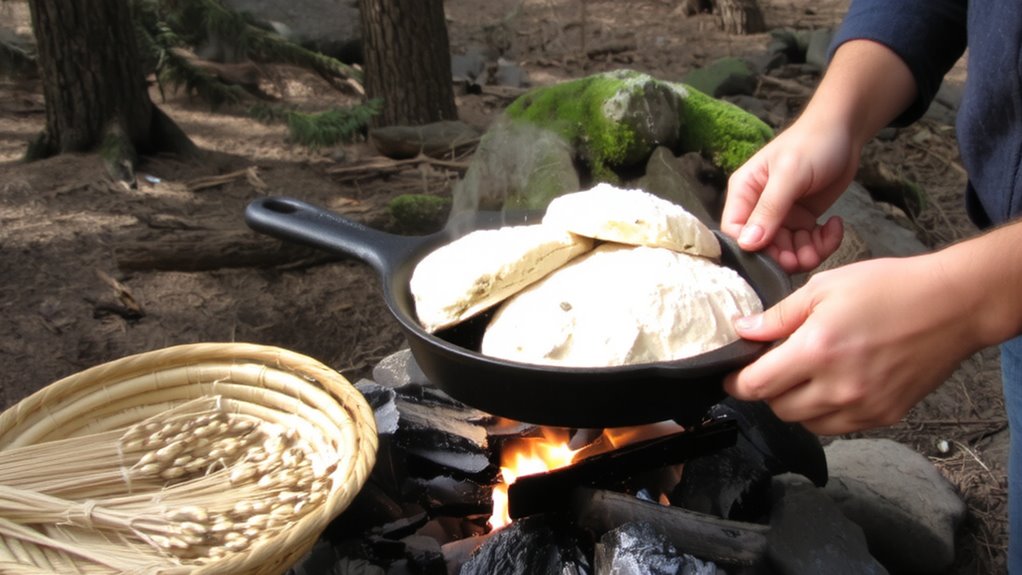
You’ve got your flour from foraged seeds-now it’s time to turn it into something you can eat. Mix two parts wild seed flour with one part water and a pinch of salt if available. Knead it into a firm dough; moisture content matters, so adjust carefully. Using your knowledge of foraging techniques, confirm all ingredients are non-toxic and properly identified. Shape small, flat biscuits by hand-thinner ones cook faster and more evenly. Before forming the dough, make certain your flour was finely processed through seed grinding to avoid grittiness and improve digestibility. These biscuits won’t rise like store-bought versions-they’re dense and simple, but they deliver usable calories and protein in the wild. They’re not fluffy, but they’re functional. Their texture depends on how well you milled the seeds and mixed the dough. Carry minimal tools? This method works with bare essentials and scales with your resources.
Cook Without an Oven Using Natural Heat
If you’re relying on natural heat sources, your best bet is direct exposure to flame or radiant heat from hot coals, which deliver consistent cooking temperatures without extra gear. Set a flat rock or greased metal near the fire’s edge for even baking-biscuits cook in 8–12 minutes with frequent flipping. Solar cooking works in strong, direct sunlight but takes 2–4 times longer and requires clear weather; output drops markedly when UV index falls below 8. Fireless heating, using retained warmth in insulated wraps or hot ash pits, finishes cooking but won’t brown the crust. It’s efficient for conserving fuel once biscuits are partially baked. Combine methods: start over flame, finish in embers. Solar ovens need reflective alignment and stability, adding setup time. Each method has trade-offs-speed vs. fuel use, consistency vs. weather reliance. Choose based on conditions, not convenience. You’ll adapt better if you understand the limits.
Add Wild Nutritional Boosters to Your Biscuits
A handful of wild-edible seeds, chopped nuts, or dried insects mixed into your biscuit dough can boost protein by 15–30%, depending on the additive. You can increase nutritional density without extra gear by using what’s foraged. Edible lichens add fiber and trace minerals, though they require proper identification and boiling to reduce bitterness. Insect powder is compact, rich in complete protein, and blends easily into flour. Mixed in moderation, these boosters maintain texture while improving survival value.
| Booster | Protein Gain | Notes |
|---|---|---|
| Chopped nuts | 15–20% | Adds fat; use sparingly |
| Insect powder | 25–30% | High lysine; neutral taste |
| Edible lichens | 10–15% | Prepare correctly to avoid upset |
On a final note
You now have a reliable way to make protein-rich survival biscuits using foraged seeds and natural heat. These biscuits provide sustained energy, with protein content depending on seed types-amaranth and lambsquarters deliver 15–20% protein by weight. Cooking on heated stones works when ovens aren’t available. Adding ground acorns or crushed insects boosts calories and nutrients. The method is simple, requires minimal tools, and performs well in field tests. Trade-offs include longer prep time and variable texture.