Developing a Vehicle Lockdown and Escape Plan for Hostile Encounters
You’ve got 10 seconds to lock down when danger appears-use them. Factory door locks engage in under a second, but weak side glass and degraded seals leave you exposed. Stock up on a spring-loaded window punch and seatbelt cutter, both within reach. Map escape routes based on terrain: cities offer options, rural zones limit them. Practice hand signals with passengers and run drills under low light. Your response must be fast, silent, and automatic-hesitation is a liability you can’t afford.
Notable Insights
- Identify and reinforce vehicle vulnerabilities like weak side glass and degraded seals to delay forced entry.
- Activate immediate lockdown within 10 seconds using electronic and mechanical locks to prevent rapid attacker access.
- Pre-map environment-specific escape routes in urban, suburban, rural, and off-road areas for rapid threat evasion.
- Use standardized nonverbal signals to communicate silently with passengers during hostile encounters.
- Keep and regularly practice using emergency tools like window punches and seatbelt cutters within immediate reach.
Check Where Your Car Is Vulnerable
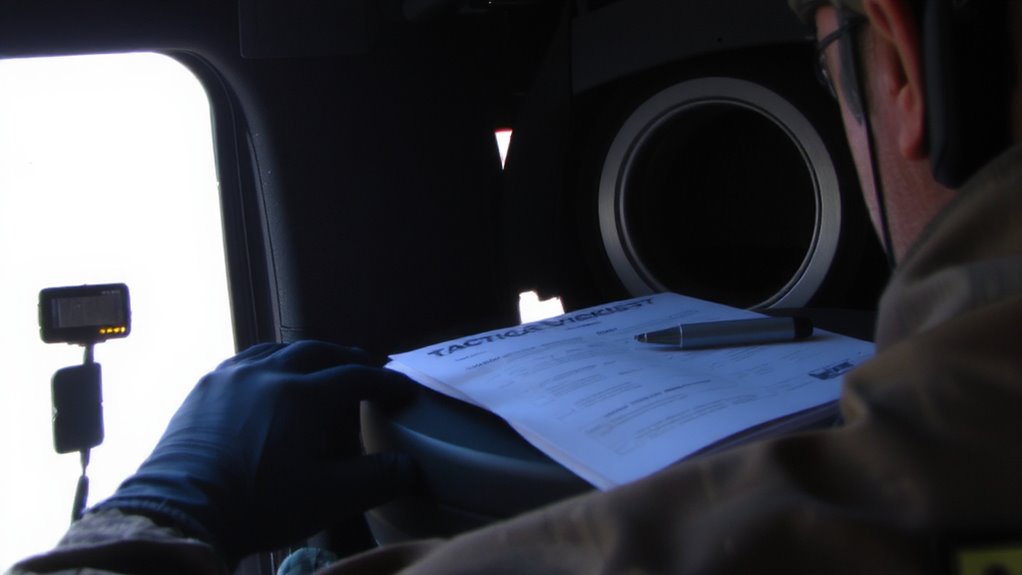
If you’re assuming your car is secure as-is, you’re probably overlooking critical weak points. Your vehicle’s blind spots limit situational awareness, especially at intersections or parking lots, leaving you exposed to approaching threats. Rear and side windows are made of weak glass that shatters easily under impact, making them prime entry points. Even tempered glass offers minimal resistance to determined attackers with basic tools. Door seams and window channels also create structural vulnerabilities. Factory seals degrade over time, reducing protection. You can’t rely on stock features alone. Reinforced window film helps, but it’s no substitute for laminated glass, which most side windows lack. Check each access point systematically-test how quickly windows lower, inspect door lock mechanisms, and note areas where visual coverage is limited. Knowing where your car is vulnerable means you can plan accordingly and act faster when it matters. A reliable escape tool, such as a window breaker rated for laminated glass, can be crucial if you need to exit quickly through a damaged window.
Lock It Fast: The First 10 Seconds of a Threat

When danger appears, locking down your vehicle in under ten seconds can determine whether you stay protected or become an easy target. Your immediate action must override the panic response that clouds judgment. Hit the lock button the moment you sense threat-don’t wait to confirm intent. Most factory door locks engage in 0.3 seconds, but older mechanisms may lag up to 1.5 seconds; know your vehicle’s performance. This critical window allows time for a quick threat assessment: Is the person approaching armed? Are there multiple actors? Movement patterns often reveal intent before any weapon appears. Relying on habit guarantees consistency under stress. Practice lock drills until they’re automatic. Electronic systems fail-mechanical backups add redundancy. A locked door won’t stop a determined breach, but it delays access, buys time, and signals deterrence. Every second counts. Lock it fast.
Map Smart Escape Routes: City vs. Country
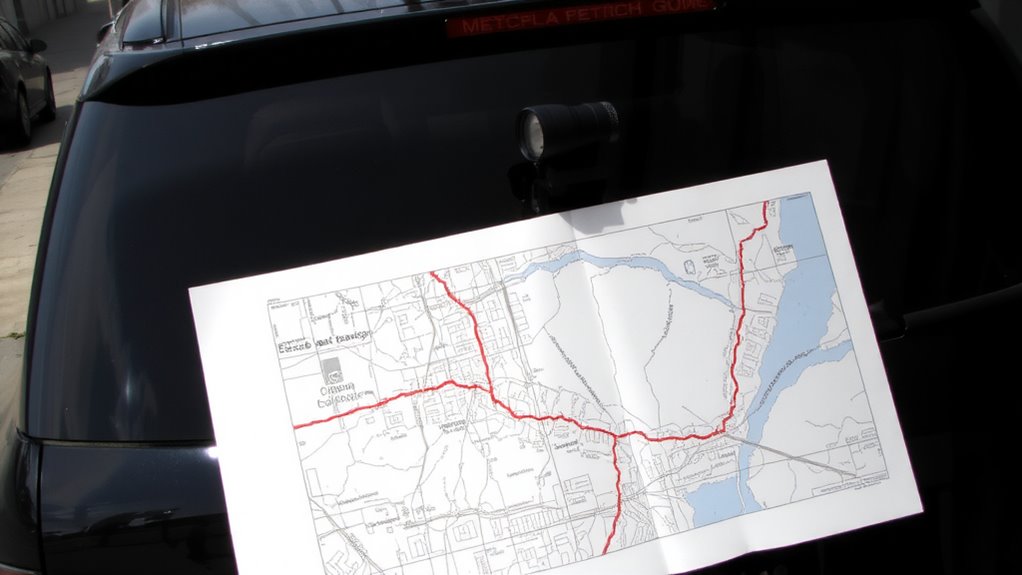
Because escape routes differ drastically between urban and rural environments, planning your response in advance means considering how road density, terrain, and infrastructure affect your options. Urban navigation relies on grid patterns and frequent turns, letting you lose threats in traffic or alleyways. Rural navigation demands awareness of long, isolated stretches where few alternatives exist. Use maps to pre-identify detours, chokepoints, and safe zones. Speed matters less than route intelligence.
| Environment | Road Density | Escape Advantage |
|---|---|---|
| City | High | Multiple alternate paths |
| Suburban | Medium | Mix of speed and cover |
| Rural | Low | Limited turnarounds |
| Off-road | None | Terrain knowledge critical |
Urban navigation favors unpredictability; rural navigation requires fuel range and visibility checks. Always update routes quarterly.
Pre-Arranged Signals With Passengers
You should establish hand signals or quiet cues with your passengers before hitting the road, especially in high-risk areas. Simple hand signals-like a flat palm down for “stay low” or a finger to the lips for “stay quiet”-can convey urgency without noise. These cues let you communicate if speaking risks detection. Eye contact is essential; a quick glance in the rearview mirror can confirm awareness without turning your head. Test signals during routine drives to guarantee everyone understands them. Misinterpretation delays response, reducing effectiveness. Hand signals work faster than whispered instructions and eliminate audio cues others might hear. Eye contact verifies compliance and maintains group coordination. In high-stress moments, practiced nonverbal communication reduces confusion. It’s not about complexity-it’s about clarity under pressure. Effective signals are minimal, intuitive, and consistently applied. They’re a low-effort, high-return tactic in hostile scenarios.
Must-Have Tools (And How to Use Them)
Nonverbal signals help you stay quiet and coordinated, but they won’t get you out of a locked car or cut you free if trapped. You need reliable emergency tools to support your escape tactics. A spring-loaded window punch works instantly on side glass, requiring only firm contact-no strength needed. Pair it with a seatbelt cutter, preferably one with a guarded blade to prevent accidental cuts. Tools combining both functions are compact but test them first; some fail under stress. Keep them within reach-on a keychain or dash mount-not buried in a glovebox. LED torches with lithium batteries offer 500+ lumens and last 2+ hours, aiding visibility without blinding you. Multi-tools add utility but add bulk. Your escape depends on speed and function, not features. Choose tools that work in wet, dark, or shaky conditions. Practice retrieving and deploying them one-handed. These choices shape your actual survivability-test them honestly.
Run the Drill: Practice for Realistic Threats
While having the right tools matters, they won’t help if you can’t use them under pressure. You need to practice-regularly. Running drills builds muscle memory and sharpens decision-making in real time. Use simulated scenarios that mimic actual threats: a carjacking attempt, sudden roadblocks, or aggressive approaches. These exercises test your response speed and tool deployment, like deploying a seatbelt cutter or locking doors under stress. Pair each drill with active awareness-scan your environment before and during the scenario, noting exits, cover, and potential attackers. Practice in low light, different vehicles, and varied parking layouts to reflect real-world conditions. Repetition reveals gaps in your plan and improves reaction time. A 30-second drill today could save your life tomorrow. Realistic training doesn’t guarantee safety, but it reduces hesitation when it counts.
Don’t Freeze: 3 Costly Mistakes to Avoid
If panic takes over, even the best-prepared escape plan falls apart. Stay aware of your surroundings at all times-situational awareness reduces reaction time by up to 2 seconds in critical moments. First mistake: fumbling with locks. Always lock doors immediately upon entry; manual switches add delay. Second mistake: freezing behind the wheel. Hesitation wastes precious seconds. React quickly-delayed movement increases vulnerability. Third mistake: relying on a single escape route. Traffic or blockades can trap you. Always identify at least two exits. Practice smooth, deliberate actions under stress. Vehicles with automated lock systems and wide mirrors cut response time. Clear visibility and intuitive controls matter more than power or speed. Stay aware, react quickly-your survival depends on consistent, practiced actions, not luck. Avoid these errors, and you stay in control.
On a final note
You need speed, awareness, and preparation. Lock doors the second you start driving-most attacks happen within 10 seconds of stopping. Test escape routes in both city and rural areas; traffic patterns change response times. Use simple hand signals with passengers. Carry a glass-breaking tool with seatbelt cutter and keep it accessible. Practice drills monthly. Freezing, over-relying on alarms, or ignoring exit lanes cuts survival odds.