Creating a Night Vision Goggle Protocol for Evacuating in Darkness
You need Gen 2+ or Gen 3 night vision goggles for evacuations-they give you up to 100 yards of visibility in near-total darkness. Avoid digital models; they lag during fast movement. Use monoculars for lighter weight and longer battery life, or binoculars to reduce eye strain. Test your unit in real darkness, check for even illumination, and carry spare AA or CR123 batteries. Move slowly, scan often, and don’t fixate on the viewfinder-situational awareness saves lives. There’s more to getting it right when every second counts.
Notable Insights
- Select Gen 2+ or Gen 3 night vision goggles for reliable performance in near-total darkness and compatibility with protective gear.
- Test devices in low-light conditions before evacuation to ensure image clarity, even illumination, and battery endurance under load.
- Use common battery types like AA or CR123 and carry spares to prevent unexpected power failure during extended operations.
- Move slowly and scan systematically to compensate for reduced depth perception and limited peripheral awareness in darkness.
- Avoid fixation on the viewfinder; alternate between using NVGs and natural night vision to maintain situational awareness.
Why You Need Night Vision for Emergency Evacuations
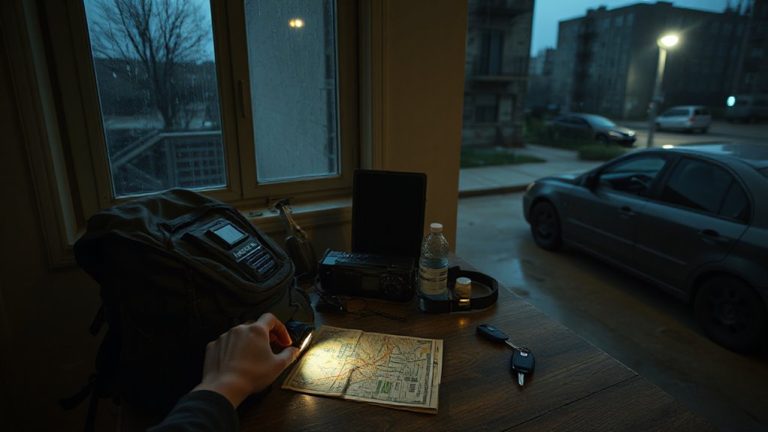
How far can you see in the dark when every second counts? Not far without night vision. In emergencies, power failures or nighttime crises limit your sight to inches, increasing risk. Night vision changes that with increased visibility up to 100 yards, depending on ambient light and device quality. You’ll detect walls, debris, stairs, and trip hazards faster than with flashlights, which create shadows and require one hand. Effective obstacle detection reduces falls and false turns in smoke-filled or unfamiliar spaces. Image intensification technology amplifies available light, delivering real-time input without motion delays. Units with Gen 2+ tubes perform better in near-total darkness. While thermal detects heat signatures, image intensifiers offer higher resolution for navigation. You won’t move faster, but you’ll move smarter. Clear visuals mean fewer mistakes. In evacuation, that’s the difference between exit and entrapment. Some of the most reliable options for civilians are the best night vision goggles on Amazon, which offer a balance of performance, durability, and cost for emergency preparedness.
Pick the Right Night Vision Goggles for Emergencies
Your life depends on seeing clearly when the lights go out, so choosing the right night vision goggles matters. Prioritize Gen 2+ or Gen 3 image intensifier tubes for reliable low-light performance; they offer the best balance of clarity, durability, and cost. Check goggle compatibility with helmets, masks, or eyewear you’ll wear during evacuation-poor fit limits mobility and response time. Monoculars are lighter and conserve power, but binocular systems reduce eye strain during prolonged use. Power sourcing is critical: models using common AA or CR123 batteries let you swap in a pinch, while proprietary cells may fail when recharging isn’t an option. Runtime matters-aim for at least 40 hours on a set. Avoid digital NV unless analog is unavailable; they lag in real-time tracking. Weight under 1.5 pounds cuts fatigue. These specs aren’t optional-they’re survival benchmarks.
Test Your Night Vision Goggles Before Escape
Even if you’ve picked high-quality night vision goggles, they’re only as reliable as your last test-because gear can fail silently. Check battery life first; weak power cuts operational time and dims the image, compromising visibility when it matters most. Insert fresh batteries or verify charge levels under load, not just at rest. Then inspect lens clarity-smudges, cracks, or internal fogging scatter light and reduce contrast, making it harder to spot obstacles. Test in low-light conditions similar to those you’d face during escape, not just in dim rooms. Confirm the image is evenly illuminated, with no dark spots or flickering. If your goggles have multiple settings, cycle through them to guarantee each mode functions. Doing this regularly guarantees you won’t discover failures in the field. A working unit today isn’t guaranteed tomorrow-test every time. Consider using a night vision clip-on scope to enhance your goggles’ range and precision in complete darkness.
Navigate Safely With Night Vision in Total Darkness
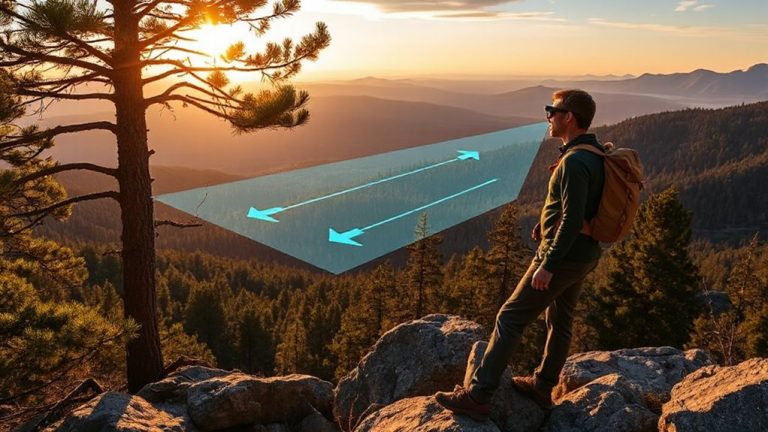
When relying on night vision goggles in total darkness, depth perception and peripheral awareness are reduced, so you’ll need to move slower than you think-rushing increases missteps and noise. Maintain a steady pace and scan systematically to improve obstacle detection, especially near the ground or at head level. Use thermal imaging if available, as it can reveal heat signatures from people or equipment through smoke or debris, complementing your night vision. Don’t rely solely on magnification; wide field-of-view models aid in detecting movement and changes in terrain. Test your unit’s resolution and signal-to-noise ratio beforehand-higher values improve clarity. Dual-tube models offer better depth perception than monoculars but add weight. Keep your head still when judging distances, as motion parallax helps. In complete blackout conditions, even high-spec goggles have limits, so combine visual input with tactile cues and route memorization for safer navigation.
Avoid These 5 Night Vision Evacuation Mistakes
Relying too heavily on night vision during evacuations can get you into trouble if you’re not careful. You might overlook simple issues that become critical under stress. First, ignoring light leakage from devices or gear can compromise your position and ruin night adaptation. Always check for glowing indicators or uncovered screens. Second, battery failure is a common flaw-carry spares and monitor power levels. NVGs fail silently, leaving you blind. Third, moving too fast distorts depth perception; slow down to avoid trips or falls. Fourth, fixating on the viewfinder narrows situational awareness. Scan periodically without the device. Finally, trusting cheap or untested models risks malfunctions when it matters most. Not all NVGs perform reliably in total darkness. Choose units with proven low-light clarity and durability. Test before relying on them. Simple checks prevent big mistakes.
Drill: Escaping in Darkness With Night Vision Goggles
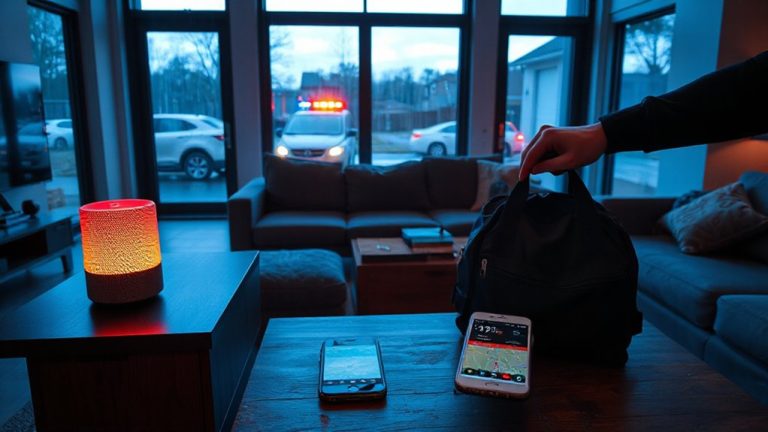
If you’re moving through pitch-black terrain during an evacuation, your night vision goggles need to deliver clear optics and reliable performance without slowing you down. You’ll rely on signal visibility to maintain contact with team members, especially when using infrared strobes or hand signals that must be seen at 50+ meters. Poor signal visibility compromises team coordination, increasing the risk of separation. Test your goggles in total darkness to confirm they resolve edges and movement at 100 yards with minimal halo or distortion. Gen 3 devices typically offer better contrast and range than Gen 2+, but they cost more and require careful battery management. Keep goggles mounted securely and practice donning them in under 10 seconds. Run drills at varying paces to assess balance and field of view. Effective drills build muscle memory, so you react correctly when stress is high and visibility is zero.
On a final note
You need night vision to move fast and stay safe in total darkness. Test your unit’s range, battery life, and durability before relying on it. Monoculars are lighter, but binoculars reduce eye strain over time. Infrared can give you away, so use it sparingly. A successful evacuation depends on knowing your gear, your route, and your limits-nothing more.