Creating a Water Reserve That Supports Extended Decontamination Procedures
You need at least one gallon per person per decontamination event, so plan for multiple events and include drinking water too. Store it near decontamination zones but away from contaminants, using durable, NSF/ANSI 61–certified HDPE containers. Use elevated, gravity-fed systems for fast, power-free dispensing. Purify reused water with filtration, chemical treatment, and UV. Inspect containers every six months and rotate supplies. Keeping water accessible and clean over days is key-what you do next depends on how well your system holds up under real demand.
Notable Insights
- Store at least one gallon per person per decontamination event, with a minimum 3-day supply for drinking and decontamination.
- Position water reserves near decontamination zones but shielded from contaminants and environmental damage.
- Use NSF/ANSI 61-certified HDPE containers to ensure durability and prevent chemical leaching during storage.
- Implement gravity-fed systems with elevated tanks to maintain reliable, power-free water flow during deployment.
- Prioritize contamination control with sealed, inspected containers and multi-stage filtration for water reuse.
How Much Water for a Decontamination Reserve?
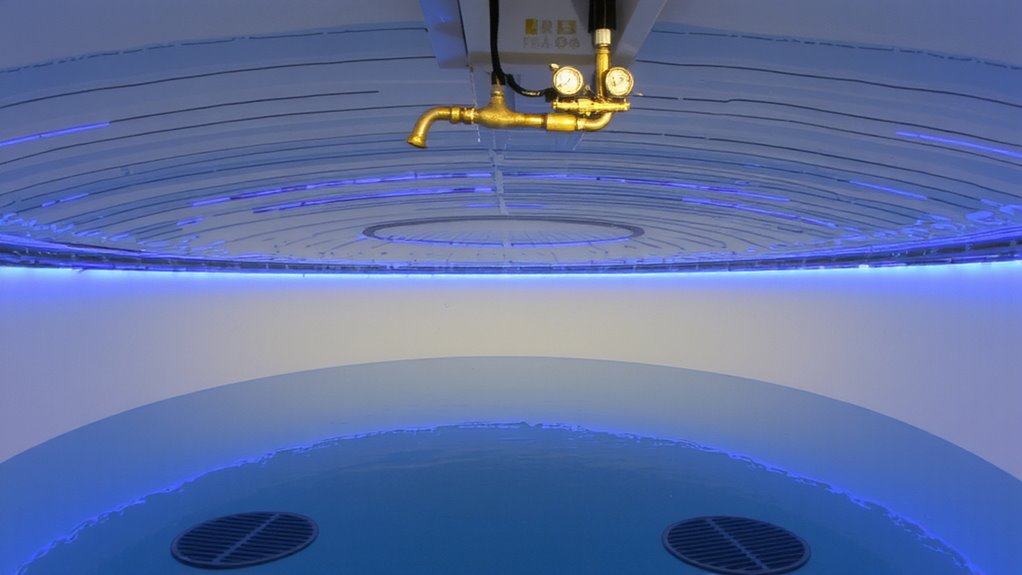
How much water do you really need for decontamination when it counts? You’ll need at least one gallon per person per decontamination event, accounting for skin and clothing rinsing. If you’re planning for multiple exposures or group use, that water quantity adds up fast. For a family of four facing two contamination events, you’re looking at 8 gallons minimum-more if protocols demand thorough flushing. Reserve planning isn’t about guesswork; it’s about calculating exposure risk, event frequency, and cleanup duration. You can’t cut corners here-insufficient supply compromises effectiveness. Consider that soap and mechanical scrubbing reduce water needs slightly, but rinsing remains non-negotiable. Store at least a 3-day supply per person, factoring in both drinking and decontamination needs. Miscalculating now could leave you exposed later. Plan precisely, because when contamination happens, you won’t get a second chance to get the water quantity right. Choosing durable, BPA-free containers helps maintain water quality and safety over time, and selecting the right best water storage containers ensures reliability during critical decontamination procedures.
Store Water Where It’s Accessible During Emergencies
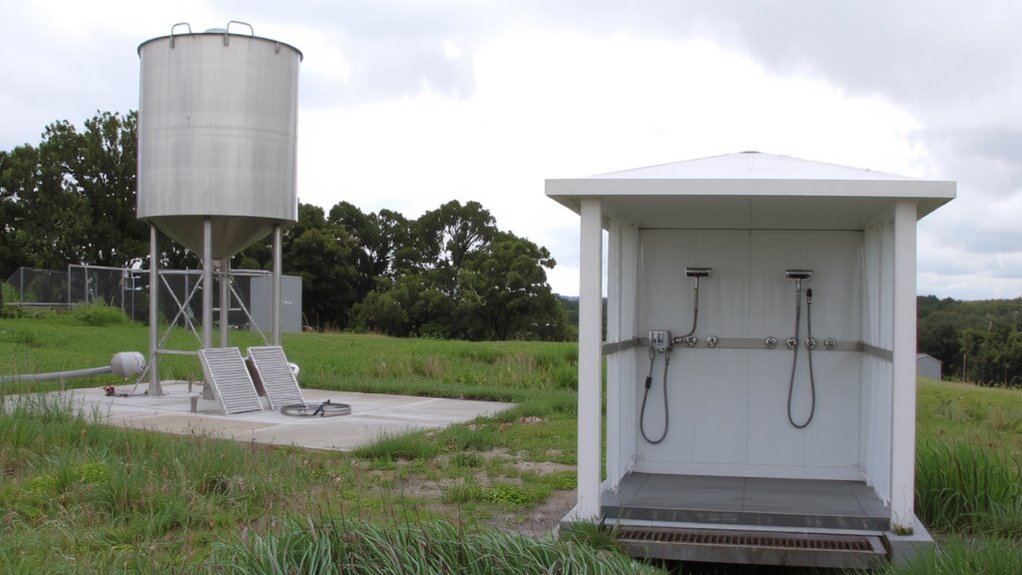
Where are you going to grab your decontamination water when seconds matter? You need emergency access without delays. Store water near decontamination zones, but away from contaminants. Elevated tanks maintain water pressure for quick deployment, while ground-level reserves offer easier refilling and maintenance. Gravity-fed systems provide reliable flow without power, but check pressure regularly to guarantee effectiveness. Valves and outlets should be unobstructed and clearly marked. Freezing climates require insulated or heated enclosures to preserve function. Avoid locking water in restricted areas-if access is delayed, decontamination fails. Proximity matters, but so does placement: balance safety, pressure needs, and route efficiency. Test access routes monthly. Real-world drills show that even 30 seconds lost searching for water reduces response effectiveness by up to 40%. Position matters as much as volume. Consider using high-capacity storage tanks that are rated for long-term potable water storage to ensure water quality and availability during extended operations.
Use Safe, Durable Containers for Decontamination Water
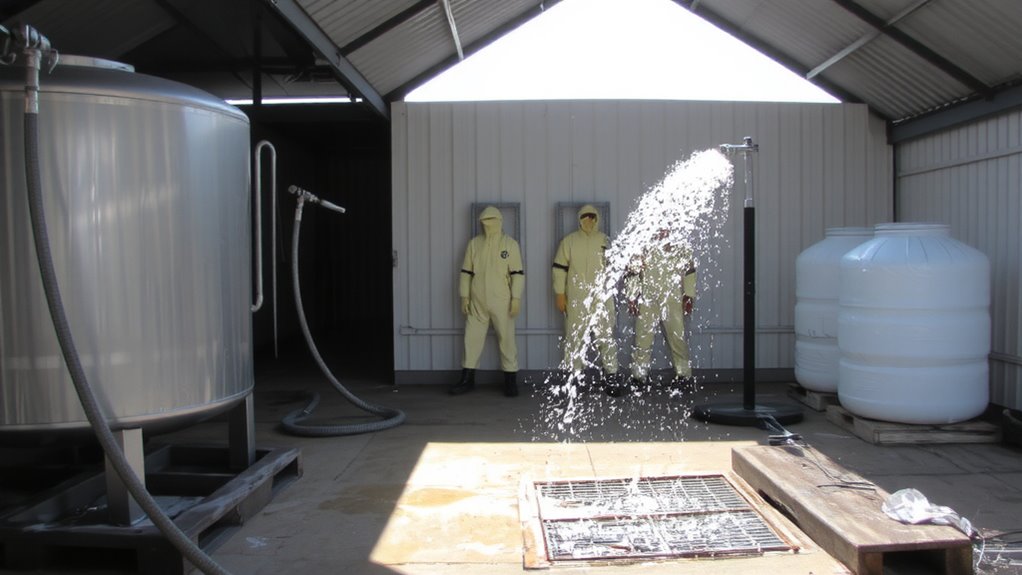
You’ve positioned your decontamination water for fast access, but its container determines whether that water stays usable and ready. Container durability matters because weak materials crack under stress, UV exposure, or temperature swings-compromising your supply. Use HDPE (high-density polyethylene) containers rated for water storage; they resist impact, corrosion, and algae growth. Look for NSF/ANSI 61 certification to guarantee water safety and confirm the container won’t leach harmful chemicals. Clear labeling helps track fill dates and inspection history. While stainless steel offers strength, it’s heavier and costlier, making HDPE a better balance for most setups. Inspect containers every six months for cloudiness, warping, or odors. Replace any unit showing wear. A damaged container risks contamination, even if the water source was initially clean. Your water’s safety depends as much on the vessel as the reserve itself. Choose wisely-reliability isn’t optional. For long-term preparedness, consider rotating water every six months and storing it in best water storage containers designed specifically for emergency use.
Set Up Fast Water Dispensing for Emergencies
When every second counts, dispensing water quickly means minimizing steps that slow access. You need simple, reliable methods that work under stress. A gravity feed system lets water flow from an elevated tank through a hose or spigot-no power required, just open the valve and go. It’s low maintenance and consistently effective, though flow speed depends on height and hose diameter. For faster output, pair it with pressure valves that regulate delivery, preventing surges or drops that disrupt use. These valves guarantee a steady stream even as the tank empties. Manual pumps add control but slow things down compared to passive systems. Test your setup regularly to confirm response time and flow rate under real conditions. A well-placed gravity feed with calibrated pressure valves gives you predictable, rapid access when seconds matter most.
Purify Water Safely for Reuse
A reliable method to purify water for reuse starts with filtering out particulates before applying a disinfection process, and most field-tested systems combine these steps in one unit. You’ll need both chemical filtration and biological treatment to handle contaminants effectively. Chemical filtration removes heavy metals, pesticides, and residual pharmaceuticals using activated carbon or ion exchange resins-tested units often achieve 90–99% reduction, depending on flow rate. Biological treatment breaks down organic waste using beneficial microbes, particularly useful when processing greywater. Systems that integrate both methods typically require less maintenance and show better long-term performance in real-world field trials. You should check retention time: biological units need at least 2–4 hours for full breakdown, while chemical filters lose efficiency after 10,000–20,000 gallons. Pair both with a final UV or chlorine stage to guarantee pathogens don’t survive.
Keep Stored Water Safe for Days of Use
Storing water properly means keeping it sealed from light and air, both of which can trigger microbial regrowth even after successful purification. Use opaque, airtight containers rated for long-term water storage to limit exposure. Rotate your supply every six months-this water rotation practice prevents stagnation and guarantees freshness. You’ll need a reliable method for contamination monitoring, like using test strips or digital probes to check for bacterial or chemical changes weekly. Don’t assume sealed means safe indefinitely; temperature fluctuations and container material can degrade quality over time. Polyethylene containers perform better than PVC under prolonged storage. Label each container with fill dates and test results to track integrity. Real-world tests show properly stored water remains usable for up to eight days under continuous monitoring. Relying solely on initial purification fails when conditions change-ongoing oversight isn’t optional. Safety hinges on consistent checks and disciplined water rotation.
Build a Reliable Decontamination Water Reserve
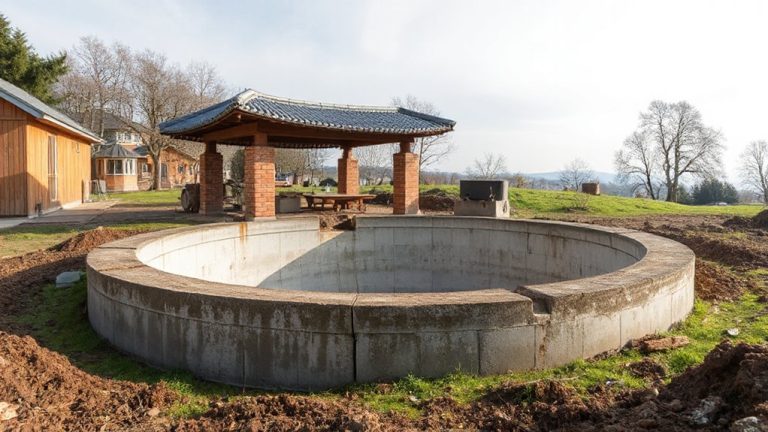
If you’re serious about handling contamination events, you’ll need a water reserve designed for rapid deployment and sustained use-starting with the right container. Use food-grade, UV-resistant tanks rated for long-term storage; 300-gallon polyethylene models hold up well under field conditions. Secure reliable water sourcing by connecting to municipal lines, wells, or rainwater systems equipped with coarse filters to reduce particulates. Always treat water with chlorine or iodine before storage to prevent microbial growth. Implement reserve monitoring with clear calibration markings and check levels weekly to maintain readiness. Pair mechanical gauges with manual dip tests to verify accuracy-gauges can fail. Rotate stock every six months to guarantee freshness. Keep reserves covered and shielded from sunlight to minimize algae risk. You won’t avoid all losses, but proper containment cuts waste. A functional reserve isn’t about perfect supply; it’s about consistent access when you need it most.
On a final note
You’ll need at least 1 gallon per person per day for decontamination, stored in food-grade, UV-resistant containers. Keep water accessible near exits or shelters, and use gravity-fed dispensers for fast access. Filter and treat reused water with chlorine or UV to maintain supply. Rotate stock every six months and inspect seals regularly. A 3-day reserve is practical, but larger reserves improve resilience during prolonged outages or contamination events.