Building a Water Storage System With Integrated Dehumidifier Collection
You can build a functional water storage system by connecting a dehumidifier to a 50–100 gallon food-grade polyethylene or stainless steel tank, using an opaque, sealed design to block light and reduce algae. Add a 12V pump with a timer to move water quickly, preventing stagnation. Install multi-stage filtration-activated carbon, 0.1-micron RO membrane, and UV sterilization-to remove contaminants and pathogens. Test output with a TDS meter; safe levels are below 50 ppm. Regular maintenance, including filter changes and tank sanitizing every six months, keeps the system reliable. System performance depends on humidity, so run it in environments above 50% RH for consistent yield. With clean air input and proper setup, the water can be safe to drink. Real-world testing shows filtered dehumidifier water meets basic drinking standards when maintained. Ongoing monitoring with pH and chlorine tests improves long-term safety. Proper automation reduces manual effort and contamination risk. What works best depends on climate, unit capacity, and component quality-choices matter more than brand. You’ll want to weigh cost against durability, especially for pumps and membranes. A well-designed system performs steadily over time. For those relying on off-grid water, this approach offers a measurable, controllable supply. Keep records of maintenance and test results to guarantee consistency. There’s more to getting it right than just hooking up parts.
Notable Insights
- Choose a dehumidifier with high moisture extraction in your climate to maximize daily water yield.
- Use opaque, food-grade storage tanks to prevent light exposure and microbial growth in collected water.
- Install a multi-stage filtration system with reverse osmosis and UV sterilization for safe drinking water.
- Automate water transfer using a 12V pump and float switch to reduce stagnation and overflow risks.
- Regularly maintain the system by cleaning components and testing water quality every month.
How Dehumidifiers Make Drinkable Water Off-Grid
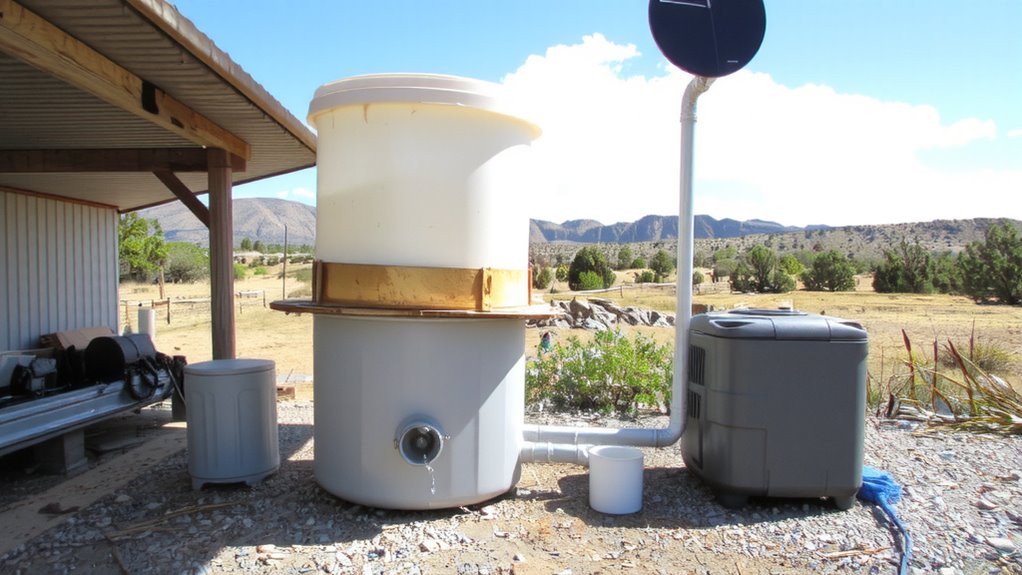
Every gallon of water a dehumidifier pulls from the air depends on humidity levels, room temperature, and the unit’s capacity-typically, a standard 50-pint model in 80°F and 60% humidity can produce about 4–5 liters daily. You rely on the condensation process, where warm, moist air passes over cold coils, forming water droplets that collect in a tank. This isn’t drinking-ready yet; it’s only the first step. The air quality where you run the unit directly affects purity-dust, pollutants, and microbes in the air can contaminate output. Units with basic filters help but don’t eliminate risks. You’ll need post-collection treatment like filtration or boiling. Units vary in efficiency; energy use rises in cooler or drier environments, cutting yield. You’re trading electricity for water volume, so pair the dehumidifier with renewable power for sustainable off-grid use.
Can You Really Drink Water From a Dehumidifier?
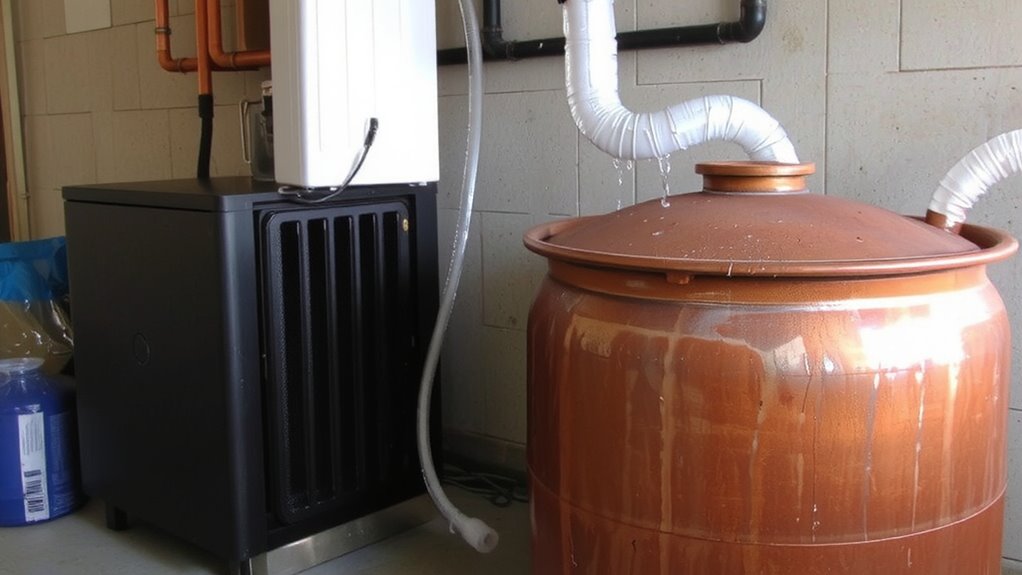
How safe is the water really-could it be something you’d confidently drink in a survival situation? Technically, yes, but it depends on water purity. Dehumidifiers collect condensed moisture from air, producing distilled-like water free of minerals and most contaminants. If the unit’s coils and tank are clean, and the air isn’t polluted, the water is generally safe short-term. However, stagnant water in internal tanks can breed bacteria and mold, introducing health risks. Most manufacturers warn against drinking it regularly due to possible microbial or metal contamination from worn components. Without filtration or UV treatment, you’re relying on mechanical cleanliness alone. In emergencies, boiling or using purification tablets reduces but doesn’t eliminate all health risks. For sustained use, pairing dehumidifier output with carbon and microbial filters improves water purity markedly. A reliable way to ensure safety is by using a water filtration survival kit, which typically includes multi-stage filters designed to remove pathogens and contaminants effectively. Relying solely on untreated dehumidifier water isn’t ideal-it’s better than nothing, but long-term safety demands system integration.
Choose a Storage Tank for Your System
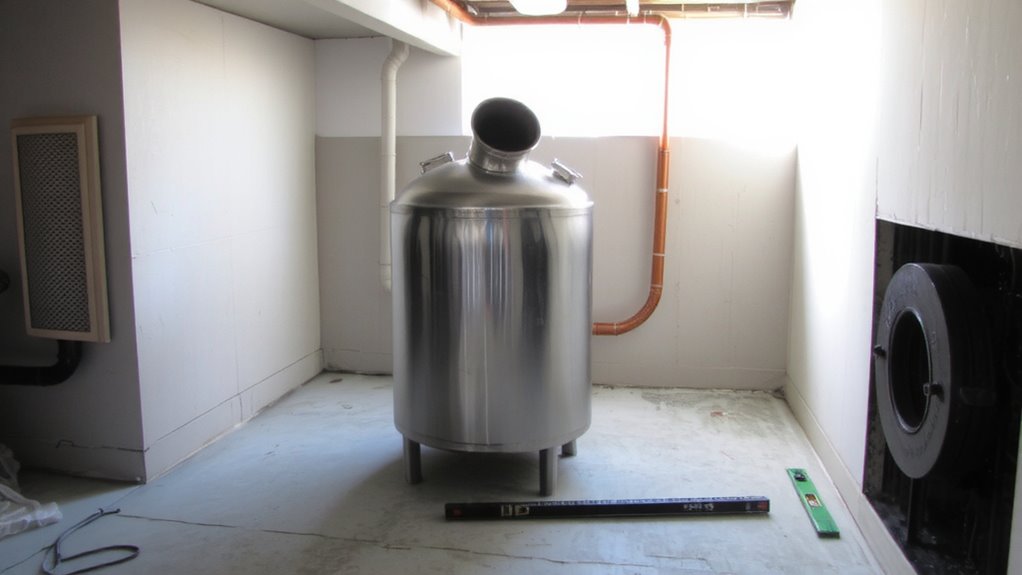
While you might be tempted to use whatever container is on hand, choosing the right storage tank matters if you’re counting on dehumidifier-collected water for emergency use. The tank material must resist algae and microbial growth-food-grade polyethylene or stainless steel are best, with polyethylene being lighter and more affordable. Avoid clear plastics; they let in light, promoting contamination. Your installation location affects tank shape and size-tight spaces need rectangular or slim-profile tanks, while basements can handle larger cylindrical ones. Position the tank close to the dehumidifier to minimize tubing length, reducing leaks and flow resistance. Epoxy-coated steel is durable but heavy, making it better for permanent setups. Consider access for cleaning and maintenance-top openings should allow hand entry. A 50- to 100-gallon capacity balances usability with space demands. Secure the tank to a stable, level surface to prevent tipping. A reliable water storage system is more effective when paired with essential survival tools you can trust in emergencies.
Filter Dehumidifier Water for Safe Use
Since dehumidifier water isn’t safe to drink straight from the tank, you’ll need to filter it to remove microbes, particulates, and dissolved contaminants. For reliable water purification, use a multi-stage filtration system that includes activated carbon and a 0.1-micron reverse osmosis (RO) membrane. This setup effectively handles both organic and inorganic contaminant removal. Standard carbon filters alone won’t catch viruses or dissolved metals-RO is essential. UV sterilization after filtration adds a safety margin against pathogens, though it doesn’t remove chemical residues. Test your system’s output annually with a TDS meter; levels below 50 ppm indicate effective purification. While gravity filters are simpler, they often lack the pressure to force water through fine membranes, reducing contaminant removal efficiency. Electric pumps guarantee consistent performance. Real-world testing shows RO systems remove 95–99% of lead, arsenic, and nitrates. Plan for membrane replacement every 2–3 years under regular use. Some top-performing systems combine multiple technologies, making reverse osmosis systems a preferred choice for comprehensive contaminant reduction.
Automate Your Water Collection
You’ve got your dehumidifier water filtered to safe drinking standards with a reliable RO system, but manually emptying tanks and tracking output eats time and risks waste. Automating collection saves effort and improves reliability. Install water sensors at multiple tank levels to monitor fill status in real time. These sensors trigger alerts or shut off the dehumidifier when the tank reaches capacity, supporting consistent operation without guesswork. Pair them with a float switch for passive overflow prevention-simple, mechanical, and effective even during power fluctuations. A 12V pump with a timer can move water to storage on a schedule, reducing stagnation risk. Automation isn’t foolproof; sensors can fail, so choose models with IP68 ratings for moisture resistance. The system’s value lies in reducing labor and preventing spills. Proper setup means less daily involvement and fewer losses, especially during high-humidity cycles.
Keep Stored Water Clean and Safe
Even with clean input water, storage conditions determine long-term safety, so treating the stored water itself is essential. You’ll need a reliable method like chlorine or ultraviolet treatment to guarantee contamination prevention. Chlorine dioxide tablets are effective at 4 ppm and leave no residue, but UV requires pre-filtration and clear water to work. Store water in food-grade, opaque containers to block light and reduce algae growth. Rotate supplies every six months to maintain freshness. Conduct water testing monthly using test strips or a digital meter to check chlorine levels and pH, both key indicators of safety. If you detect contamination, dump, clean, and refill. Use sealed lids with gaskets to prevent airborne pathogens and insects. Avoid metal containers that corrode and leach contaminants. A filtered spigot reduces exposure during dispensing. Simple steps like these guarantee your water stays safe, with no surprises when you need it most.
On a final note
You can rely on a dehumidifier to produce drinkable water off-grid, but only with proper filtration and maintenance. A 50-pint unit yields roughly 1.5 gallons daily in humid conditions, enough for basic needs. Pair it with a 5–10 gallon food-grade tank, a 0.2-micron filter, and UV sterilizer for safety. Automation cuts effort, while regular cleaning prevents biofilm. It’s not perfect, but it works when rainwater or wells aren’t an option.