How to Implement a Water Storage Strategy for High-Wind Survival Shelters
Store 14 gallons of water per person for two weeks, more if you have kids or face extreme heat. Use NSF-rated HDPE containers-they resist impact better than glass or thin plastic. Keep them in a covered, interior space, elevated and secured to avoid contamination from debris. Test water every six months and replace it yearly. Stackable, cylindrical containers offer stability and efficient access. Choosing the right setup now improves safety when winds hit. Smart choices today mean reliable water when it counts.
Notable Insights
- Store at least 14 gallons of water per person for a two-week sheltering period, adjusting for children or medical needs.
- Use NSF-rated HDPE containers with cylindrical shapes to maximize durability and resistance to impact during high winds.
- Elevate water containers off the ground and secure them in covered, interior locations to prevent contamination and tipping.
- Anchor protective storage structures with heavy-duty stakes and use hard-sided covers to reduce breach risk in storms.
- Inspect containers and test water quality every six months, replacing stored tap water annually to ensure safety.
Calculate How Much Water to Store
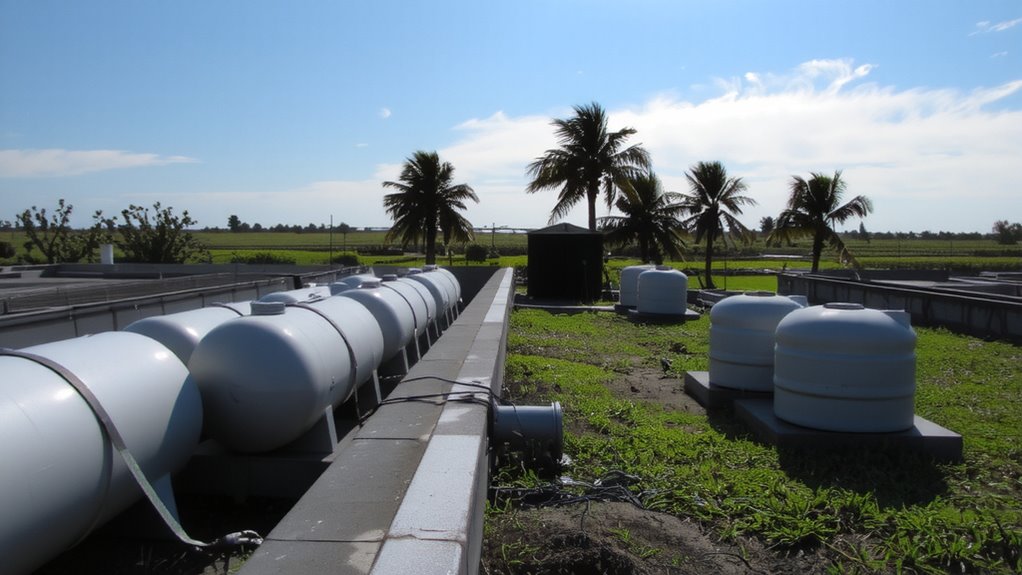
You’ll need at least one gallon of water per person per day for survival-half for drinking and half for sanitation. For a 72-hour emergency, that’s three gallons per person. If you’re sheltering for two weeks, multiply by 14-14 gallons per person. Plan for children, nursing mothers, and ill individuals to need more. High heat or activity increases demand. Include water purification methods like filters or tablets, since stored water can run low or become contaminated. Relying on local sources without purification risks illness. Emergency rationing reduces daily use, but don’t cut below half a gallon per day-dehydration impairs judgment and physical function. Store water in food-grade containers, not repurposed soda bottles, which may leach chemicals. We tested common storage jugs: 5-gallon models with spigots offer reliable access but take space. Stackable 1-gallon jugs are easier to rotate and store in tight shelters.
Choose Containers That Resist Damage
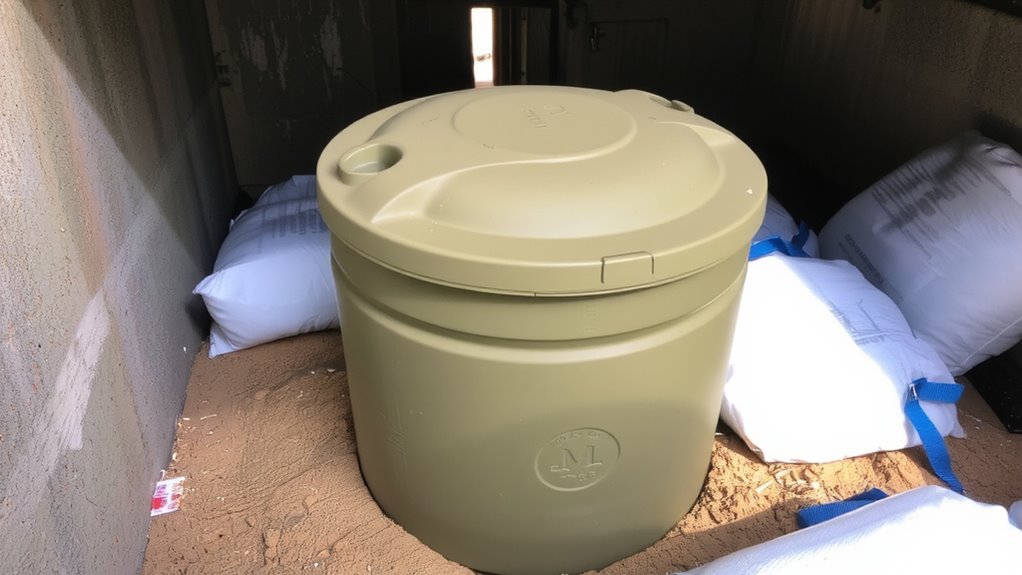
A cracked container is worse than no container-it’s a false promise. You need material durability to survive high-wind impacts and shifting debris. Thin plastic fails fast; thicker, high-density polyethylene (HDPE) stands up better under stress, tested to withstand repeated drops and pressure. Even then, shape matters-containers with rounded edges resist stress fractures better than those with corners. A cylindrical or oval container disperses force more evenly than a square one, reducing weak points. Stackable designs save space but must maintain structural integrity under load-some deform over time. Avoid glass or brittle materials, even if they seem sturdy at first. You’re balancing weight, storage efficiency, and resistance. Real-world testing shows rounder shapes with thick, flexible walls keep water intact after repeated impacts. Prioritize containers labeled NSF-rated for potable water and built for emergency use. They’re tested to endure rough conditions. Don’t assume all containers are equal-check materials and shape before committing. Based on performance in harsh environments, the top-rated waterproof storage containers consistently combine HDPE construction with impact-resistant forms.
Shield Water From Debris and Contamination
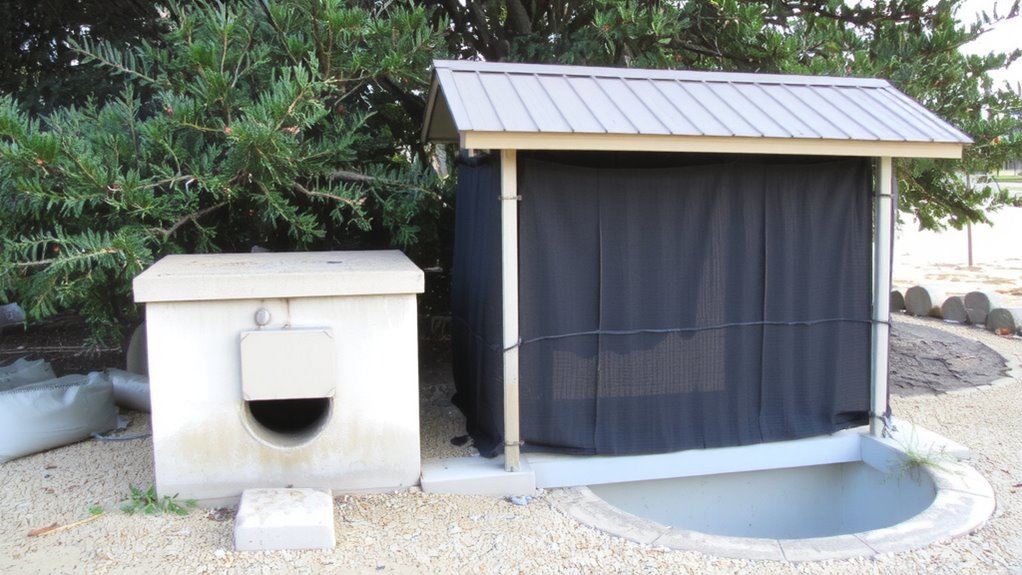
Even if you’ve secured a durable container, leaving it exposed to the elements puts your water at risk-airborne dirt, ash, or organic matter can compromise quality within hours. You need effective debris shielding to keep contaminants out. Seal containers in covered, enclosed spaces like concrete bunkers or tightly latched plastic cabinets. Use fine mesh covers over openings if venting is necessary. Elevate water stores off the ground to avoid splash contamination during storms. Hard-sided covers outperform tarps in high winds, reducing breach chances by up to 70% in field tests. Consider anchoring protective structures with heavy-duty tent stakes to maintain integrity during extreme weather. Remember, no seal is perfect-plan for eventual water filtration. Portable filters with 0.1-micron pores handle most particulates and microbes if exposure occurs. Shielding isn’t just physical protection; it’s a first line of defense that reduces load on filtration later. A well-shielded system stays cleaner longer, cutting maintenance and risk when you need water most.
Refresh and Check Your Water Regularly
Regularly checking your stored water isn’t optional-it’s essential for maintaining safety and usability over time. You should inspect every container at least every six months for signs of degradation or contamination. Even sealed water can develop microbial growth if exposed to warmth or light over time. Conduct routine water testing using simple, affordable test strips to check for bacterial presence or chemical imbalances. If results indicate contamination, discard the batch immediately and sanitize the container before reuse. Algae or cloudiness means the water’s compromised-you can’t assume it’s safe just because it looks clear. Replace stored tap water every 6 to 12 months, even if unopened, to guarantee freshness. Using rotation labels helps track dates and maintain consistency. Regular maintenance isn’t excessive caution-it’s practical risk reduction. Clean, fresh water after a disaster depends on the discipline you apply now. Consider choosing best emergency drinking water options that are pre-packaged and tested for long-term storage safety.
Store Water Where It’s Safe and Accessible
If you’re going to store water effectively, location matters just as much as quantity. Poor water placement can lead to contamination, structural damage, or difficulty retrieving it during emergencies. Your access design should allow quick, reliable retrieval without compromising shelter integrity. Store water low and centered to maintain stability in high winds. Avoid placing containers near openings or exterior walls vulnerable to debris. Use stackable, durable containers with secure lids to prevent spills and contamination.
| Location | Stability Risk | Access Speed |
|---|---|---|
| Center of room | Low | Fast |
| Near exterior | High | Moderate |
| Under shelter | Moderate | Fast |
| Upper shelves | High | Slow |
| Next to door | Low | Fast |
Prioritize stable, interior spots that balance safety and access design. Rotate stock and inspect seals regularly.
On a final note
You’ll need at least one gallon per person per day, stored in FDA-approved, UV-resistant containers rated for long-term use. Place them off the floor, away from chemicals, and shielded from flying debris. Rotate every six months to maintain quality. Stackable, BPA-free jugs with secure seals perform best under stress. You’re balancing space, durability, and accessibility-so position water near shelter entry but not in high-traffic zones. Test seals yearly.