Safe Methods for Dehydrating Wild Mushrooms to Prevent Rehydration Mold
Pick mushrooms like porcini or morels-they dry well and rehydrate without molding. Brush off dirt and slice them evenly, about 1/8 to 1/4 inch thick, for consistent drying. Dry at 95°F to 115°F for 6–12 hours; higher heat cooks, lower invites mold. They’re done when brittle and snapping cleanly-no leathery bends. Store in airtight glass jars only when fully dry. Vacuum sealing helps. Proper prep means they’ll rehydrate safely later.
Notable Insights
- Choose low-moisture mushroom varieties like porcini or morels that dry well and resist mold during rehydration.
- Clean mushrooms gently with a brush and slice uniformly to 1/8–1/4 inch to ensure even, complete drying.
- Dry at 95°F to 115°F with steady airflow to prevent cooking, spoilage, and mold growth.
- Confirm full dehydration by testing for brittleness and absence of leathery or bendable pieces.
- Store only completely dry mushrooms in airtight glass jars or vacuum-sealed containers to block moisture and mold.
Pick Mushroom Varieties That Dry Well
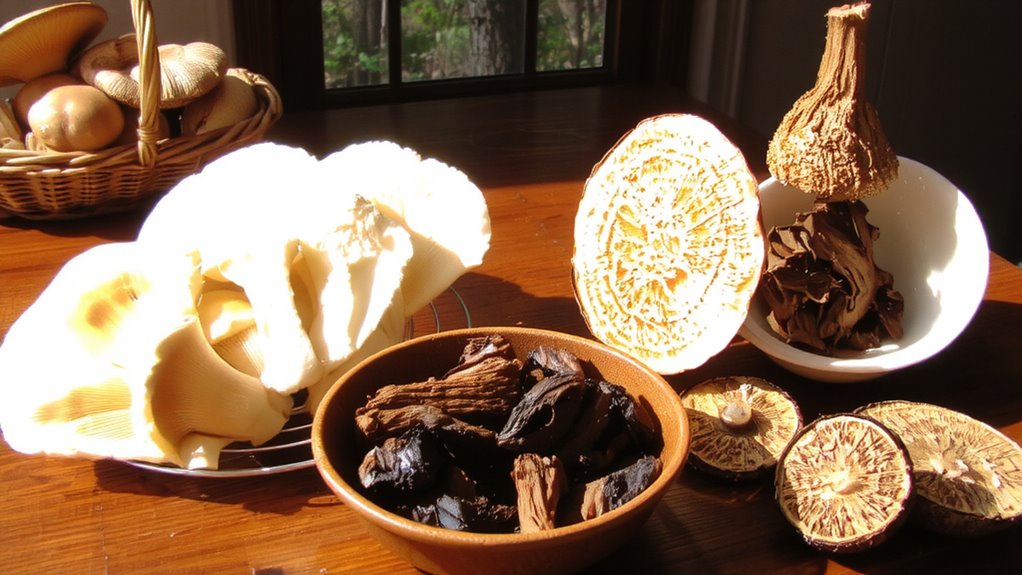
Not all wild mushrooms handle dehydration equally-some lose flavor, others turn leathery or fail to rehydrate properly. You need to pick varieties known for drying well, like porcini, morels, or black trumpets. These maintain texture and taste after rehydration, unlike water-rich types such as chanterelles, which can degrade. Proper mushroom identification is essential-drying won’t make a toxic species safe. Misidentification leads to dangerous outcomes, no matter the preservation method. During seasonal foraging, focus on mature, firm specimens free of pests and moisture. Young or damp mushrooms dry poorly and are prone to mold during storage. Choose dry weather for collection to reduce field moisture. Leathery or fibrous mushrooms often rehydrate slowly but retain structure. Mushrooms with dense caps and tight gills typically perform best. Select wisely to guarantee shelf stability and usability months later.
Brush Off Dirt and Slice for Even Drying
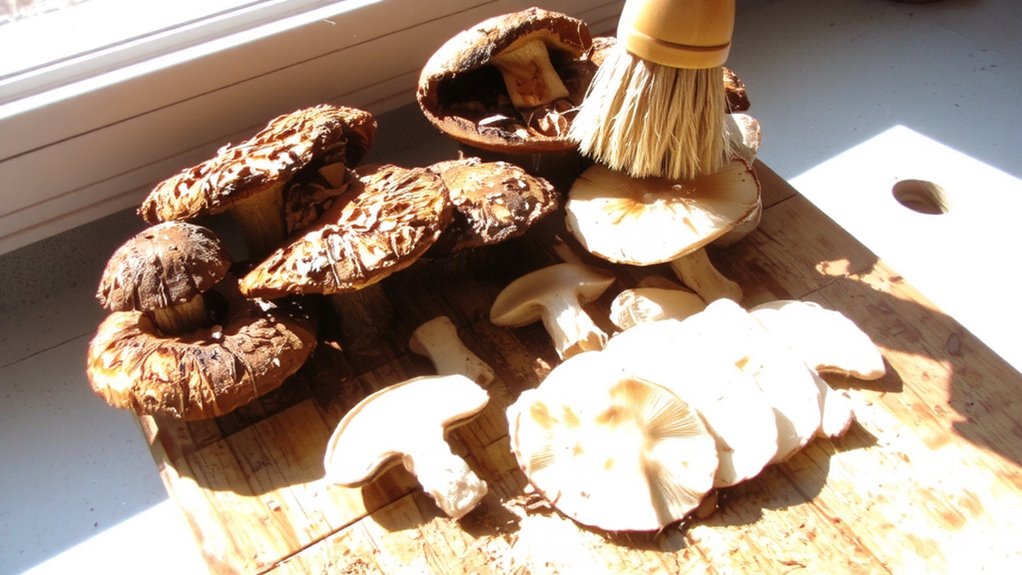
Start by gently brushing off any dirt or debris with a soft mushroom brush or a dry cloth-rinse only if absolutely necessary, since water slows drying and can lead to spoilage. Proper mushroom brushing preserves texture and reduces mold risk during dehydration. After cleaning, use a consistent slicing technique to guarantee uniform thickness. Even slices dry at the same rate, preventing some pieces from over-drying while others stay too moist.
| Factor | Impact on Drying |
|---|---|
| Thin slices (1/8″) | Dry faster, risk becoming brittle |
| Thick slices (1/4″) | Retain moisture longer, higher mold risk |
| Irregular cuts | Uneven drying, potential spoilage |
| Uniform slices | Consistent results, better storage |
Slice all mushrooms to about 1/8–1/4 inch thick depending on size. Uniformity matters more than exact thickness.
Dry Mushrooms at 95°F–115°F for Safety
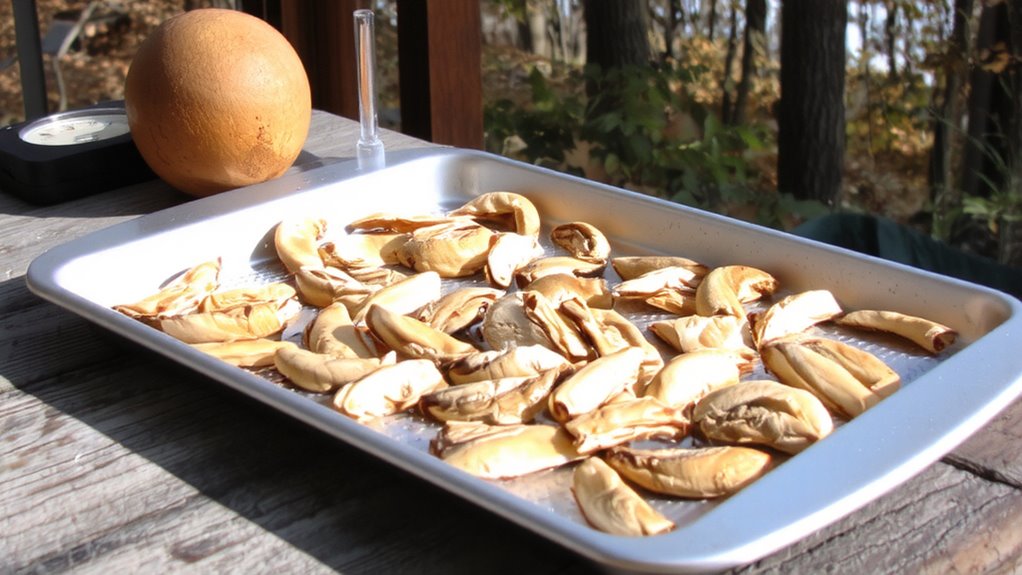
While you might be tempted to crank up the heat to speed things along, drying mushrooms between 95°F and 115°F keeps them safe and preserves quality. This range guarantees proper temperature control, preventing harmful bacterial growth while removing moisture effectively. Higher temps can cook rather than dry, leading to spoilage or texture loss. At 95°F–115°F, drying duration typically spans 6 to 12 hours, depending on slice thickness and humidity. Too low, and drying takes too long, raising mold risk; too high, and the exterior seals before interior moisture escapes. Consistent airflow and steady temperature control are critical for a safe, uniform result. Your dehydrator should maintain settings within this window without wide fluctuations. Wild mushrooms vary in moisture content, but staying in this range minimizes risks without guesswork. It’s not the fastest method, but it’s the most reliable for long-term storage safety.
Check for Full Dehydration Before Storing
Most wild mushrooms need to be brittle enough to snap cleanly when fully dehydrated, not just dry to the touch. If they bend or feel leathery, residual moisture remains, increasing mold risk during storage. Perform a visual inspection first-slices should look shriveled and pale, with no glossy or dark spots indicating dampness. Then do moisture testing by breaking a larger piece in half; condensation or soft fibers inside mean they need more time. Smaller or thinner mushrooms dehydrate faster, so check them first. Different species dry unevenly, so inspect a representative sample, not just one piece. Skipping moisture testing risks spoilage, even in airtight containers. Proper dehydration guarantees long-term safety. You can’t rely on touch alone-true dryness is structural, not superficial. Always confirm full dehydration before moving to storage.
Seal Wild Mushrooms in Airtight Jars
A well-sealed jar keeps your dehydrated mushrooms dry and safe over time, so choose containers with airtight lids-Mason jars with rubber gaskets work best. Glass jars are ideal because they don’t absorb moisture or odors and let you inspect contents without opening. Make certain mushrooms are fully dehydrated before sealing to prevent internal condensation. Vacuum sealing within glass jars adds extra protection by removing air, which slows oxidation and inhibits mold spore activity. The vacuum process compresses headspace, reducing humidity fluctuations when stored in varying temperatures. While not required, vacuum sealing extends shelf life from months to over a year under stable conditions. Regular airtight lids perform well if jars are kept in a cool, dark place. Avoid plastic containers-they’re more permeable over time. Check seals periodically by pressing the lid; no flex should occur. Proper sealing cuts rehydration risks markedly, preserving potency and texture without preservatives.
Rehydrate Without Risking Mold
How do you bring dried mushrooms back to life without inviting mold? Use clean, cool water and limit soak time to 20–30 minutes. Longer soaking increases moisture absorption, raising the risk of mold if not cooked immediately. Always check your mushrooms before rehydrating-any musty smell or soft spots mean discard them. Storage duration matters: mushrooms kept over a year, especially with repeated humidity exposure, degrade faster and rehydrate poorly.
| Factor | Risk Level |
|---|---|
| Short soak (≤30 min) | Low |
| Room-temperature water | Moderate |
| High humidity exposure | High |
| >12-month storage duration | High |
Drain well and cook thoroughly-never store rehydrated mushrooms. The combination of age and improper handling defeats the purpose of careful drying. Use them fast, eat them fresh after rehydration.
On a final note
You’ve dried mushrooms safely by picking suitable varieties, slicing evenly, and holding temps between 95°F and 115°F. They’re ready when crisp and snap cleanly. Store them sealed in airtight jars, away from light and moisture, to prevent mold. Rehydrate only what you need, using clean water, and cook immediately. This method guarantees shelf stability, preserves usability, and minimizes spoilage risk. It works reliably across seasons and storage conditions.