Capturing Ambient Heat From Cooking Fires to Warm Adjacent Rooms
You can capture up to 30% of wasted heat from cooking fires using metal ducts or heat exchangers near the flue, sending warmth to adjacent rooms with no moving parts. Dense thermal mass like concrete or stone stores heat, releasing it slowly for 6–12 hours. Pairing radiant underfloor systems with insulation extends warmth longest. Dampers help control airflow and protect stove draft. Balance efficiency with function-over-optimizing hurts performance. There’s more to think about for real-world results.
Notable Insights
- Install metal ducts to channel excess heat from cooking fires into adjacent rooms using natural convection.
- Use dampers in ducting systems to control airflow and maintain proper stove draft.
- Pair heat recovery with thermal mass materials like concrete or stone to prolong warmth release.
- Add a heat exchanger near the flue to capture 20–30% of lost thermal energy for ambient heating.
- Insulate ducts and joints to minimize heat loss and condensation during passive heat transfer.
Why Cooking Heat Is Worth Capturing
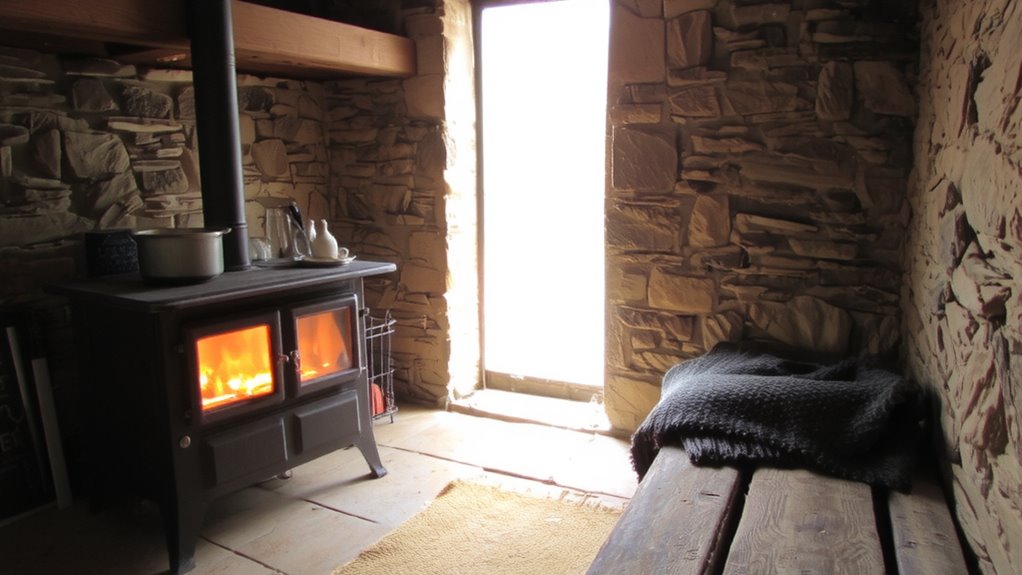
Every scrap of heat from your cooking fire counts when you’re trying to stay warm or generate power off-grid. You’re already burning fuel, so letting heat escape is a waste. With basic heat recovery, you redirect warmth that would otherwise vanish into the air. That boost in energy efficiency means less wood burned over time, lowering your load and environmental impact. Metal stovepipes, simple ducting, or heat exchangers near the flue can capture ambient warmth and vent it into adjacent rooms. Tests show these setups can recover 20–30% of lost thermal energy. The improvement isn’t huge, but it’s free once installed. There’s no moving part, no cost after initial setup, and it works immediately. The trade-off? Slightly reduced draft if overdone. But with careful design, heat recovery adds measurable warmth with little risk. You won’t replace insulation, but you stretch every BTU further.
How Thermal Mass Stores and Releases Cooking Heat
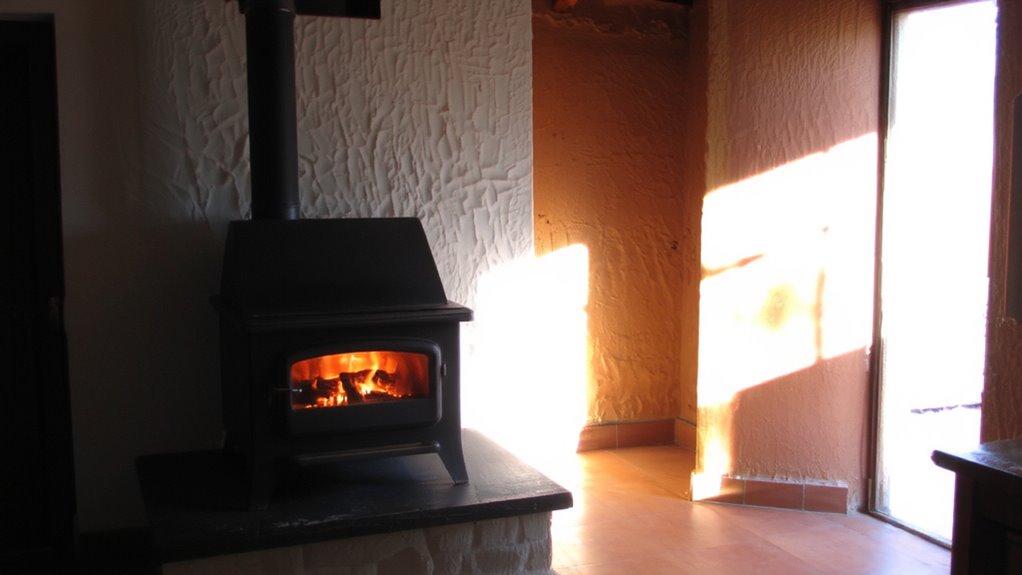
Thermal mass turns excess heat from your cooking fire into lasting warmth. You feel it later, even after flames die, because materials like stone, brick, or concrete absorb and store heat through heat retention. The denser the material, the more it holds. These materials don’t release heat instantly-that’s thermal lag. Instead, they slow the flow, radiating warmth gradually over hours. That delay matches well with living patterns, delivering comfort when you need it most. A 6-inch concrete slab, for example, might absorb heat for three hours and emit it steadily for six. Thinner materials release quicker but store less. Thermal lag isn’t a flaw-it’s a feature. It smooths out temperature spikes. Properly placed thermal mass near your stove improves efficiency without moving parts or maintenance. It works silently, predictably, using physics you can rely on.
Warm Floors That Keep Capturing Heat After Cooking Ends
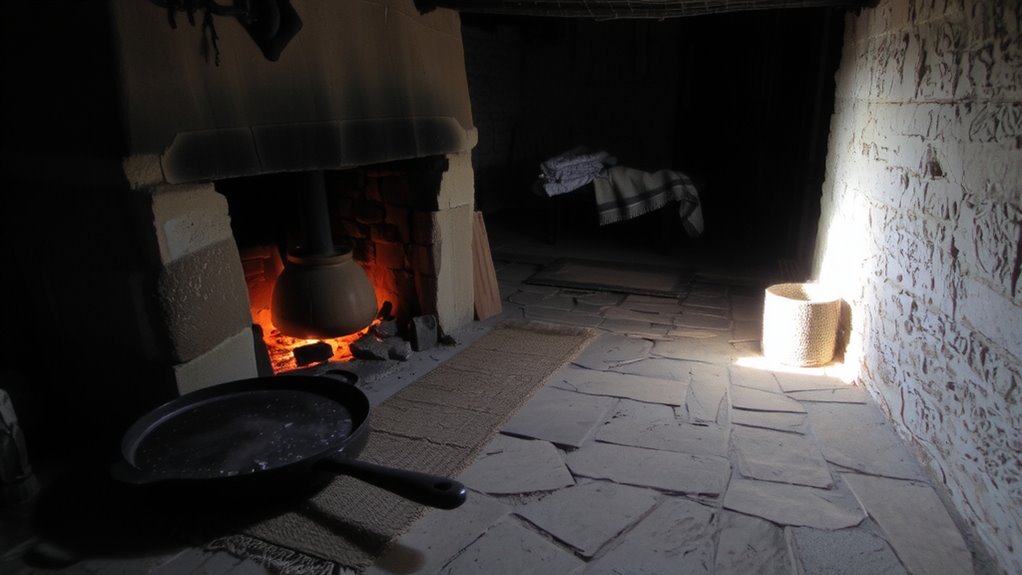
You’ve felt the lingering warmth from a masonry stove or a thick concrete slab after cooking-that stored heat doesn’t vanish when the fire dies, and your floor doesn’t have to go cold either. With a radiant underfloor system paired with thermal mass, you get extended retention that keeps rooms warm for hours. Materials like concrete or clay tile absorb heat during cooking and release it slowly, stabilizing indoor temperatures without extra fuel.
| Material | Retention (hrs) | Heat Output (W/m²) |
|---|---|---|
| Concrete | 8–12 | 45–60 |
| Adobe | 6–10 | 40–55 |
| Tile | 5–8 | 50–65 |
| Stone | 7–11 | 42–58 |
| Insulated slab | 10–14 | 40–50 |
Properly designed, radiant underfloor systems leverage extended retention to deliver steady, usable heat long after cooking.
Send Cooking Heat to Other Rooms With Simple Ducts
While cooking, excess heat can be redirected efficiently to other rooms using simple, well-placed ducts made from galvanized steel or rigid insulated flex. Proper duct placement matters-run ducts vertically where possible to boost natural convection, and keep runs short to reduce heat loss. You’ll need at least 6-inch diameter ducting to move enough air without excessive resistance. Airflow control is critical; install dampers to regulate heat distribution, especially when some rooms are warmer than needed. Without dampers, you risk overheating spaces or losing draft to your stove. These ducts won’t replace heating systems but can deliver 15–25°F gains in adjacent rooms during prolonged cooking. Test different outlet locations to avoid cold spots. Insulated flex resists condensation better than bare metal but costs slightly more. Galvanized steel holds up longer near high heat. Both require sealing at joints to prevent leaks.
Upgrade Your Existing Stove to Spread More Heat
Adding ducts helps move heat beyond the kitchen, but if your stove isn’t built to release much ambient warmth, the gains are limited. You can upgrade your existing stove with heat exchangers or radiant panels to boost output. Heat exchangers capture more warmth from flue gases and transfer it into the room instead of losing it up the chimney. Radiant panels absorb heat and re-emit it steadily, warming nearby spaces efficiently. These upgrades work best when matched to your stove’s design and burn habits. Below are common modifications and their real-world impact:
| Upgrade | Perceived Comfort Increase |
|---|---|
| Heat exchanger | Moderate warmth, steady |
| Radiant panels | Soothing, even heat |
| Ducts only | Minimal change |
| No upgrade | Cold rooms, wasted energy |
Choose based on your space and stove type.
Stay Safe When Reusing Heat Indoors
A heat recovery system can make your cooking fire more efficient, but safety comes first. You must maintain clear airflow and avoid blocking exhaust paths, as restricted ventilation increases fire safety risks. Always install a certified carbon monoxide detection alarm within 10 feet of the stove-it’s non-negotiable. Units with battery backup and digital readouts provide faster alerts and reliable monitoring. Check them monthly. Use only noncombustible materials-like metal ducting or masonry-for heat channels; wood or plastic could ignite under sustained heat. Keep combustibles at least three feet from any heat path. Your system should allow quick shutdown if fumes build up. Testing shows passive grills and blocked flues raise indoor CO levels within minutes. You gain warmth, but only if you manage risk. Prioritize detection, materials, and airflow-every time.
Design Kitchens That Trap and Share Cooking Heat
Since cooking heat escapes quickly in most kitchens, trapping and redirecting it requires deliberate design choices. You need materials and layout strategies that boost heat retention and enable airflow optimization. Thermal mass walls, like brick or stone, absorb warmth during cooking and release it slowly. Open shelving instead of upper cabinets reduces heat barriers. Position doorways and vents to channel warm air into adjacent rooms without creating drafts. Ceiling fans on low reverse mode help circulate heat without discomfort. Always balance ventilation to avoid moisture buildup.
| Feature | Benefit |
|---|---|
| Thermal mass walls | Improve heat retention |
| Open shelving | Enhance airflow optimization |
| Ceiling fan (reverse) | Distribute heat to adjacent spaces |
On a final note
You can capture cooking heat to warm nearby rooms, but it works best with thermal mass like masonry, which stores heat and releases it slowly. Ducts direct warmth, but gains are modest-expect a few degrees in adjacent spaces. Upgraded stoves or radiant ovens add efficiency. Safety is critical; avoid indoor air pollution with sealed systems. Results vary by layout and insulation, so measure gains realistically.