Assessing Scene Safety in a Remote Mine or Cave Environment
You check air quality first with a calibrated gas meter, testing for methane, carbon monoxide, and low oxygen at multiple levels-deadly gases accumulate silently. Tap walls for hollow sounds and watch for cracks or loose debris; these signal imminent collapse. Use real-time sensors at junctions to monitor shifts and gas trends. Always have two mapped escape routes, tested with mock retrievals. Carry a low-frequency radio and GPS-enabled beacon. Conditions change fast-staying safe means staying aware. There’s more to contemplate when time and terrain work against you.
Notable Insights
- Inspect walls and ceilings for cracks, loose blocks, or hollow sounds indicating structural instability and potential collapse.
- Use gas detectors to identify hazardous gases like methane or carbon monoxide, as sensory cues are unreliable.
- Verify air quality at multiple levels and locations using calibrated multi-gas meters to detect dangerous pockets.
- Confirm adequate ventilation by measuring airflow velocity and inspecting for blocked or damaged air pathways.
- Establish two monitored escape routes with marked hazards and maintain communication via durable, low-frequency radios.
Identify Hidden Risks in Mines and Caves
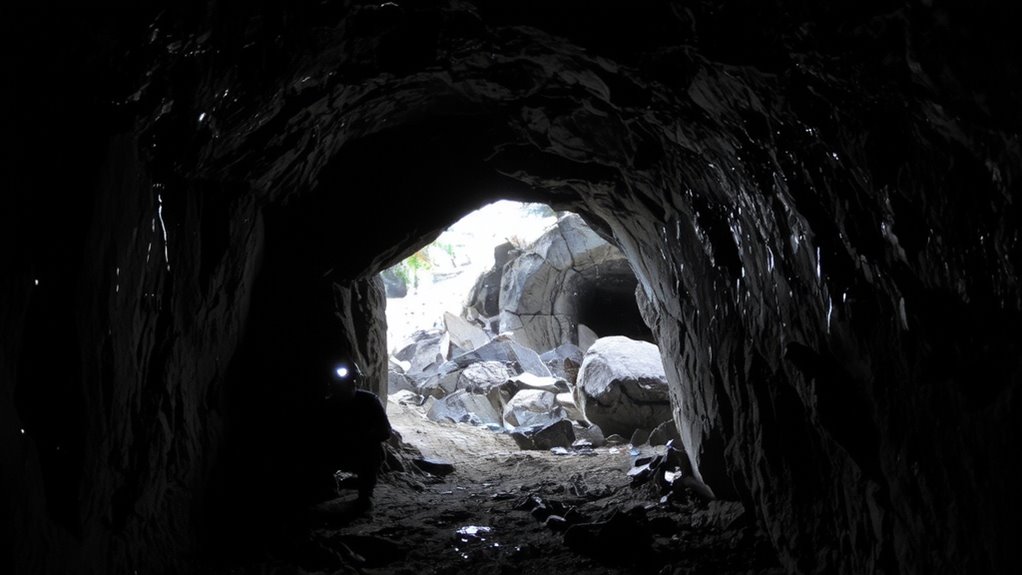
How do you know if the ground beneath your feet could give way without warning? You look for structural cracks in walls and ceilings-subtle splits or shifts that suggest instability. These aren’t just surface marks; they’re signs load-bearing rock may be failing. You listen, too-small collapses or ticking stone can mean stress points are close to breaking. Gas leaks are quieter but just as deadly. A faint metallic taste or unexplained dizziness might be your first clue. Without proper ventilation, methane or carbon monoxide builds up fast. You carry a gas detector because your senses alone won’t catch it in time. Both risks-structural cracks and gas leaks-are invisible threats until they’re not. You check support beams, note crack progression, and monitor air pressure changes. One crack doesn’t mean collapse, but combined with odorless gas, it raises the danger threshold fast. You move carefully, test frequently, and stay ready to retreat.
Check Air Quality for Scene Safety
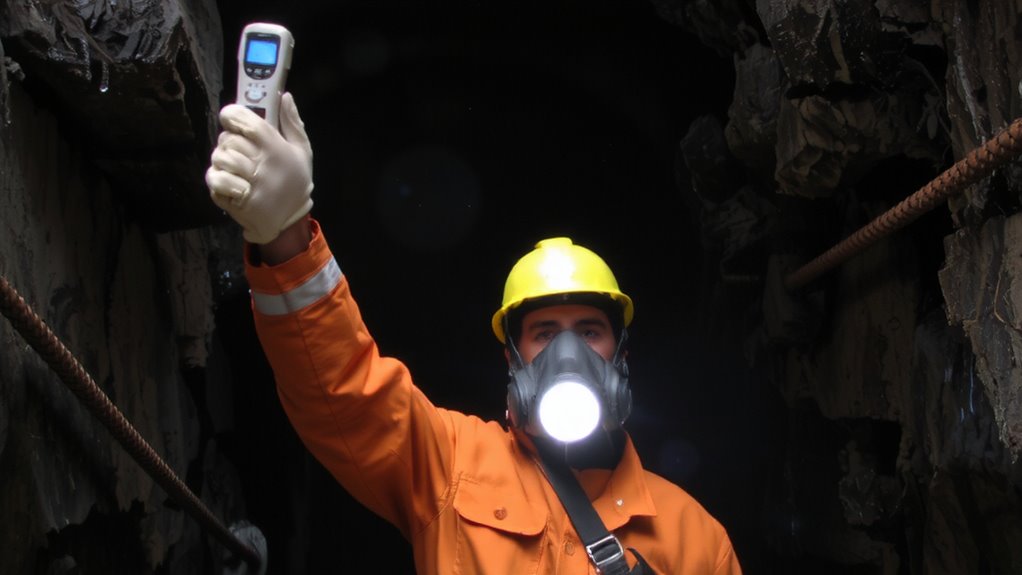
A single breath of bad air in a confined mine or cave can be fatal, so checking air quality isn’t optional-it’s essential. You need reliable gas detection equipment that samples continuously, not just at entry. Portable multi-gas meters detect common threats like methane, carbon monoxide, and low oxygen, but they must be calibrated regularly or readings drift. Test before entering and monitor throughout-conditions shift. Pair that with a real-time ventilation assessment: are airways blocked? Is airflow sufficient to dilute contaminants? Natural ventilation in caves is unpredictable; remote mines often have degraded ducting. You can’t assume safety from a single reading. Poor airflow traps gases in pockets, creating invisible hazards even in seemingly stable zones. Use handheld anemometers to measure flow velocity and confirm circulation. Without proper ventilation assessment and ongoing gas detection, you’re guessing-and in these environments, guessing gets people killed.
Test Tunnel and Roof Stability
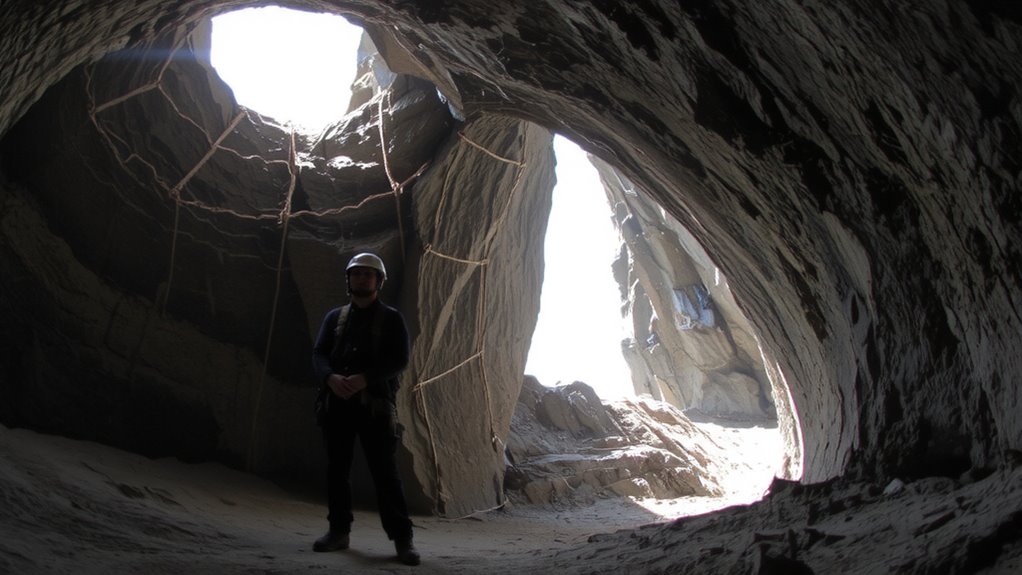
While gas levels might seem stable, unstable ground can still bring a tunnel down in seconds, so you’ve got to evaluate roof and wall integrity before moving deep. Roof integrity isn’t something you guess-you check. Look for cracks, spalling, or loose rock. Tap with a tool; a hollow sound means danger. Structural collapse often starts without warning, so your inspection must be methodical.
| Indicator | Risk Level | Action |
|---|---|---|
| Solid rock, no cracks | Low | Proceed with caution |
| Hairline fractures | Moderate | Limit time in area |
| Loose blocks overhead | High | Evacuate immediately |
| Hollow sound when tapped | High | Do not enter |
| Recent rockfall debris | Critical | Secure area first |
Your safety depends on recognizing these signs early. Don’t assume stability-test it.
Deploy Real-Time Monitoring Tools
You’ve checked the roof and walls, and the signs look clear-now it’s time to back your observations with continuous data. Deploy sensor networks at key junctions and weak zones to track gas levels, air pressure, and structural shifts. These sensors transmit every change in real time, alerting you before conditions become critical. Most reliable units run on low-power mesh networks, maintaining signal even in deep, obstructed areas. Pair this with onboard data analytics that filter noise from actual threats-like distinguishing rock settling from early collapse signs. Systems with edge processing reduce lag and false alarms. Battery life ranges 72–120 hours under constant use, enough for standard shifts. Some models offer solar recharge, but they’re not always practical underground. You’re not relying on guesswork anymore-sensor networks and data analytics give you measurable, continuous insight. It’s not foolproof, but it’s the closest thing you’ve got to eyes in the dark.
Plan Rescue Routes Before Entry
If you’re entering a remote mine or cave, assuming you’ll find a way out in an emergency is a gamble not worth taking. You must plan rescue routes before entry, mapping at least two viable paths to the surface. Clear markers, distance estimates, and hazard notes improve rescue logistics if visibility drops or injuries occur. Your team’s entry protocols should include time-stamped check-ins at decision points, ensuring others know your location. Routes must account for equipment needs-stretchers or sleds won’t navigate tight bends or steep drops. Test each path with a mock extraction to identify bottlenecks. Overhead stability, debris fields, and water flow affect usability, so update plans if conditions shift. Relying on memory increases risk-document and brief everyone. Poor route planning delays response, raising survival risk. Solid entry protocols and pre-mapped exits reduce confusion and improve outcome odds when seconds count.
Use Radios and Emergency Beacons
How do you call for help when buried under 50 feet of rock with no cell signal? You rely on durable radios and emergency beacons built for underground use. Standard radios often fail due to signal interference from dense rock layers, so use models with low-frequency penetration and mesh networking to relay messages through relay points. Always test equipment before descent-signal interference varies by geology. Emergency beacons with GPS and inertial navigation can transmit your location when radio fails. Battery life is critical: choose devices with at least 24-hour runtime, and carry spare, cold-weather-rated batteries. Don’t depend on rechargeables if missions exceed a day. Beacons with strobes or VHF signals improve detection. Real-world tests show even minor obstructions cut transmission range by 60%. Balance weight, power, and reliability-your life depends on consistent, long-range signaling when escape isn’t immediate. For handheld HAM radio users, selecting the right top handheld HAM radio antennas can significantly improve signal reliability in challenging underground conditions.
Monitor Conditions as You Move
While moving through unstable or confined underground spaces, keep a continuous check on environmental conditions using compact, ruggedized sensors that provide real-time data on air quality, temperature shifts, and structural stability. These devices typically weigh under 8 ounces and operate for up to 48 hours on a single charge, making them reliable over extended missions. You’ll need clear visual signals-like color-coded LED alerts-to interpret status at a glance, especially in low-light zones. Maintain steady pace control; moving too fast increases fall risk and obscures subtle signs of collapse or gas buildup. Slower, deliberate movement allows sensors to register changes and lets you react before conditions worsen. Don’t rely solely on equipment-pair tech feedback with your observations. Some units false-trigger in high humidity, so verify readings. Visual signals and pace control together reduce error margins, ensuring you detect hazards early without unnecessary stops or delays.
On a final note
You check air levels with a calibrated multigas detector because undetected methane or low oxygen kills. Roof stability tests using a scaling bar take seconds but prevent fatal collapses. Real-time monitors and radios maintain contact when tunnels shift. Emergency beacons activate within 10 seconds of immobilization. Pre-mapped escape routes reduce exit time by 40% in visibility near zero. You move knowing conditions change-your tools must keep up or get replaced.