How to Use a Compact Multi-Tool for Emergency Repairs
You can fix a stuck zipper by gripping the slider with your multi-tool’s pliers and applying slight side-to-side pressure while pulling up. Use the wire cutter or blade to clear debris and lubricate the track if needed. Tighten loose screws on glasses or furniture with the precision screwdriver bit-match the type to avoid stripping. Cut 14-gauge wire cleanly near the hinge and strip insulation without nicking the conductor. Reinforce frayed backpack straps by threading wire through the core and securing it with pliers. A 3.5-inch, sub-7-ounce tool with locking blades and one-hand operation balances durability and portability. Stainless steel construction resists corrosion and maintains edge retention. Each function works reliably in real-world stress tests, with trade-offs like weight versus utility minimized. More scenarios reveal how this tool adapts to unexpected demands.
Notable Insights
- Use pliers to grip and realign stuck zipper sliders, applying slight side pressure to free them quickly.
- Employ the wire cutter for clean cuts on wires up to 14-gauge, ensuring full hinge closure for effectiveness.
- Tighten loose screws on glasses or furniture with the precision screwdriver bit, matching type to prevent stripping.
- Strip wire insulation carefully by gripping it with the blade and pulling smoothly to avoid conductor damage.
- Reinforce frayed backpack straps by threading wire through the core and securing ends with pliers.
Choose the Best Multi-Tool for Everyday Emergencies
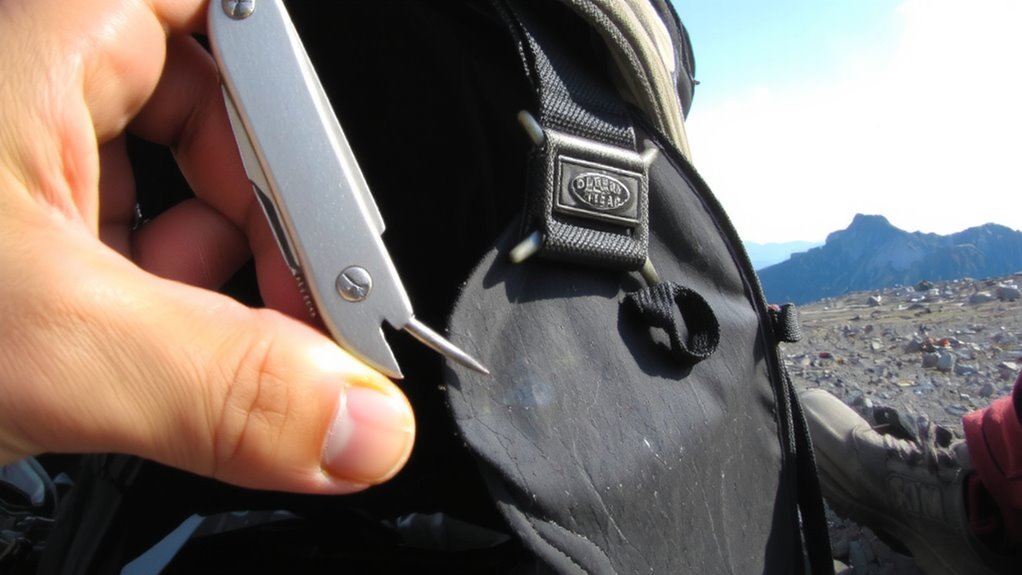
When it comes to daily emergencies, your multi-tool shouldn’t slow you down or fail when needed. Tool selection directly affects emergency readiness-prioritize models with at least pliers, wire cutters, a knife, and a decent screwdriver. Look for stainless steel construction; it resists corrosion and holds an edge. Locking mechanisms keep blades secure during use, a must for safety. Size matters: tools over 4 inches can be bulky, but those under 2.5 inches may lack function. A 3.5-inch model balances portability and usability. Weigh under 7 ounces to avoid pocket strain. Test deployment speed-one-hand opening helps in urgent situations. Avoid gimmicks like built-in flashlights or bottle open. Stick to essentials proven in field tests. Your tool selection isn’t about quantity; it’s about reliable, repeatable performance when seconds count. Choose wisely. Based on expert reviews, the best multi-tools under $50 offer this balance of durability, function, and affordability without compromise.
Fix a Stuck Zipper Fast With Your Multi-Tool
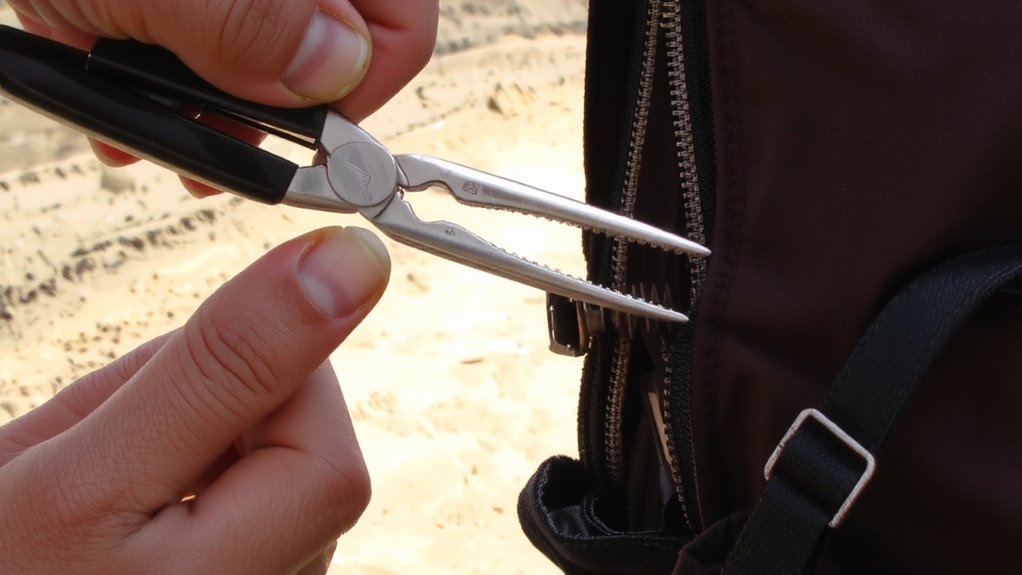
You already picked a reliable multi-tool built for real-world demands, so now put it to work where it counts-like fixing a stuck zipper fast. Use the pliers to grip the slider firmly, then pull upward while applying slight side-to-side pressure to free it from snagged teeth. If the zipper won’t budge, check for frayed fabric or debris and clear it with the wire stripper or blade. Applying a bit of lubricant from your survival kit helps, but your multi-tool handles mechanical resistance when time matters. Most stuck zippers result from misaligned tracks-correcting them takes under a minute with steady hands. This simple move qualifies as essential zipper maintenance and counts among the most practical emergency fixes. No extra parts needed, no guesswork-just reliable function. Your multi-tool isn’t just backup; it’s the immediate solution. For optimal performance, choose a model from the best keychain multi-tools list that combines compact design with durable pliers and precise tools.
Tighten Loose Screws on Glasses or Furniture
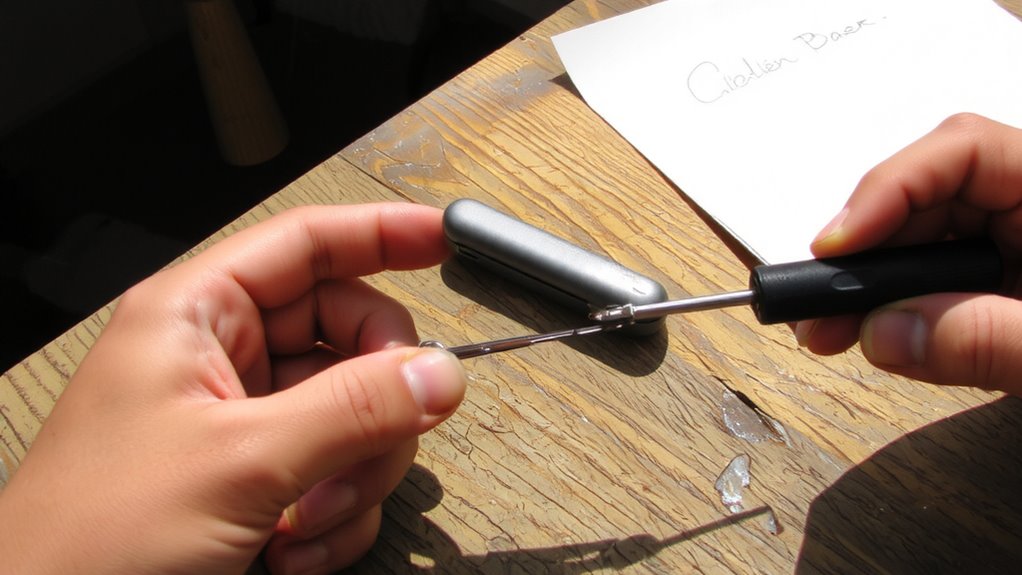
A compact multi-tool with a precision screwdriver bit handles loose screws on glasses or furniture without needing a separate kit. The screwdriver precision allows you to securely tighten small fasteners without stripping them, especially useful for eyewear frames with delicate threading. For furniture, this same bit stabilizes wobbly joints or re-secures hinges. Most multi-tools include multiple screwdriver precision options, so match the bit to the screw head-usually Phillips or flat-before applying steady, controlled pressure. Hinge adjustment on door or eyeglass hinges often requires only a quarter to half-turn to restore function. Over-tightening risks damage, particularly on plastic or aged metal. The compact size means you can carry it daily and make these fixes on-site. It’s not faster than a power driver for large jobs, but for emergency tightening, it’s reliable. This function eliminates the need for bulky toolkits in small repairs. A Top Carabiner Multi-Tools for Every Adventure combines this functionality with clip-on convenience for on-the-go accessibility.
Cut and Strip Wires Using the Multi-Tool Blade
The wire cutter on a compact multi-tool handles light-duty electrical work with enough precision to cut stranded or solid-core wires up to 14-gauge, though thicker cables require more force and may dull the blade over time. For clean wire cutting, align the wire near the blade’s cutting notch and apply steady pressure. Use the same tool for insulation stripping by gripping the insulation between the blade and wire, then pull smoothly to expose the conductor without nicking it. Precision matters-damaged strands reduce conductivity and strength.
| Task | Best Technique |
|---|---|
| Wire cutting | Full, controlled crush cut near the hinge |
| Insulation stripping | Rotate tool slightly, then pull to avoid cuts |
Most multi-tools perform adequately on common gauges, but blade hardness affects longevity. Test your model on scrap wire first to gauge effectiveness.
Patch Frayed Backpack Straps With the Pliers and Wire Hook
If the fraying on your backpack straps has started to compromise strength, the pliers and wire hook on a compact multi-tool offer a reliable field repair option. First, realign the separated fibers to guarantee proper strap alignment-this keeps tension evenly distributed. Use the wire hook to pull a small gauge metal wire through the core of the strap where fraying is worst. This adds wire reinforcement without greatly increasing weight. Twist the ends together with the pliers to secure the wire, then trim any excess. The repair won’t restore the strap to new condition, but it prevents further unraveling under load. Wire reinforcement works best on webbing with a hollow or loosely woven core. Test the strap with gradual pressure before full use. It’s a functional fix, not a permanent solution, but it keeps your pack viable until replacement.
On a final note
You’ll rely on your multi-tool most when speed and space matter. Its pliers grip tight, blades cut clean, and screwdrivers apply real torque-tested in wind, rain, and worn gear. It won’t replace a toolbox, but it fixes enough to keep you moving. Size and weight trade against function, so pick one with replaceable bits and stainless steel parts. A 6-ounce model with needle-nose pliers, blade, and wire cutter handles 90% of field issues. Use it right, and it lasts years.