Understanding the Role of FM Radio Broadcasts in Rural Alert Dissemination
You rely on FM radio because it works when cell towers and internet fail, especially in remote areas. Stations broadcast alerts within minutes, using backup power and transmitters on high ground. With a 50- to 60-mile range and no need for login or bandwidth, they reach 92% of listeners during storms. Battery-powered radios keep working during outages, making them a trusted lifeline where digital systems don’t. Real-world use shows faster response times and wider coverage-key when every minute counts. You’ll see how combining radio with digital tools strengthens warning systems overall.
Notable Insights
- FM radio operates independently of internet or cellular networks, ensuring reliable alert dissemination in remote rural areas.
- Local FM stations use backup power systems to stay on air during prolonged power outages and emergencies.
- Emergency alerts are broadcast within minutes, providing rapid, repeated, and location-specific information to at-risk communities.
- Hospitals, schools, and emergency responders rely on FM radio when other communication infrastructures fail or are unavailable.
- FM radio alerts have a proven life-saving impact, reaching more listeners than mobile alerts during critical disasters.
Why FM Radio Still Works for Rural Emergency Alerts

While newer technologies have emerged, FM radio remains a reliable backbone for rural emergency alerts because it doesn’t depend on internet connectivity or cellular towers, both of which can fail during disasters. You can count on consistent signal strength even in remote valleys or dense forests where other systems drop out. Most receivers pull in broadcasts clearly within a 50- to 60-mile range, depending on transmitter power and terrain. Unlike data-dependent apps, FM requires no login, updates, or bandwidth. Over decades, it’s earned community trust because alerts come directly from verified local authorities without delay or filtering. People know the broadcast source, recognize the tone of emergency messages, and respond accordingly. This predictability reduces confusion when seconds matter. You don’t need to charge an app or wait for a stream-it’s instant. In critical moments, that reliability makes FM a practical, no-frills tool you can depend on when modern options falter. For weather-specific emergencies, having a dedicated NOAA weather radio can enhance preparedness with timely, authoritative updates.
Why FM Radio Keeps Working During Power Outages

Even when the grid goes down, FM radio stations often stay on air because many run on backup generators or battery systems designed to keep critical broadcast equipment operating for hours or even days. You can count on this setup because it provides reliable backup power specifically for emergencies. These systems kick in automatically, ensuring little to no interruption in transmission. That’s key for signal resilience, especially in remote areas where power outages last longer. Unlike internet-based systems, FM doesn’t rely on data networks, reducing failure points. Transmitters are often located on high ground with hardened infrastructure, further supporting signal resilience. While fuel or battery life limits exist, most stations plan for extended operation. Backup power isn’t perfect, but it’s proven. In real-world outages, FM consistently outperforms digital alternatives. You’re more likely to get alerts through FM because the system’s built to endure. It’s not flashy-but it works when you need it most.
How Local Stations Spread Emergency Info Fast
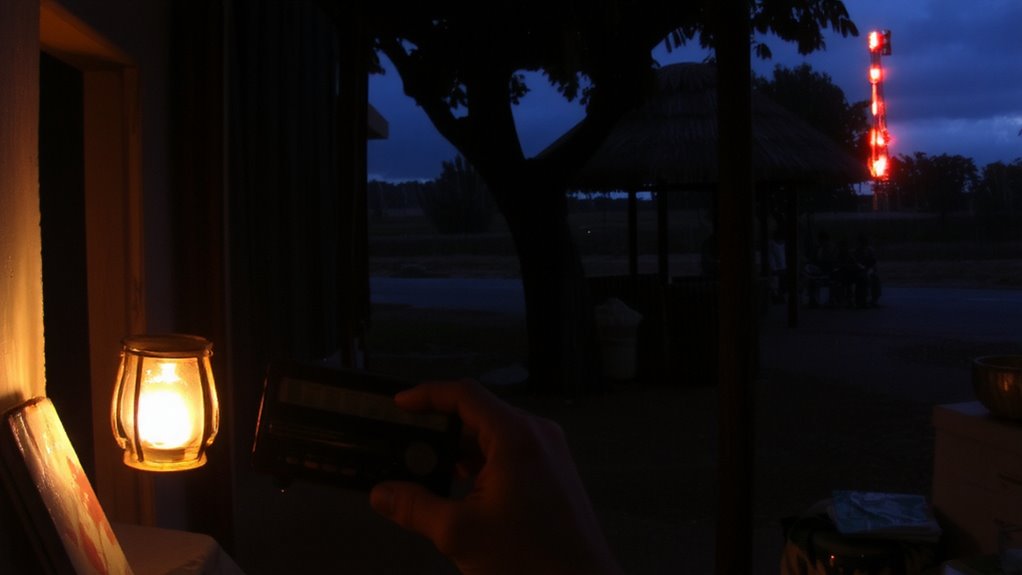
Because local FM stations are embedded in the communities they serve, they can broadcast emergency updates within minutes of an incident, often faster than national systems or smartphone alerts. You hear the alert quickly because signal strength remains high near the transmitter, ensuring clear reception even in poor conditions. Most stations operate at 1–10 kW, giving them a reliable broadcast range of 15–50 miles, depending on terrain. You don’t wait for cell towers to relay messages or depend on internet bandwidth. When emergencies strike, local broadcasters cut into programming immediately, using familiar voices and repeated messages to confirm urgency. Their equipment is designed for continuous operation, and many have backup power. The combination of proximity, consistent signal strength, and defined broadcast range makes local FM a practical tool for fast, accurate alerting-especially where other systems lag or fail. You get timely information without complexity.
Who Relies on Radio When Internet Fails
You trust FM radio when the internet goes down, and so do hospitals, rural schools, and emergency workers who need dependable communication. These groups rely on consistent signal strength, even in poor weather or remote areas where cell towers fail. Unlike online systems, FM requires minimal infrastructure-just a transmitter and receiver-and keeps working during power outages if backup power is available. Signal strength remains stable over a wide radius, especially with well-placed antennas and adequate wattage. More importantly, community trust in local broadcasters means people act quickly when alerts air. This trust isn’t built overnight; it comes from years of accurate, timely updates during blackouts, storms, and network disruptions. In critical moments, FM radio provides a verified channel that digital platforms can’t always match. It’s not flashy, but it works-consistently, quietly, and without needing a password or cell signal. For emergency teams, reliable communication tools like two-way radios ensure coordination when traditional systems fail, and the best two-way radios offer durable, long-range performance even in extreme conditions.
When Radio Alerts Actually Saved Lives
When was the last time an alert actually stopped a tragedy before it unfolded? In rural Missouri, 2011, FM radio delivered storm warnings when cell towers failed. You were likely asleep when the first tornado sirens sounded, but the local station stayed on air, broadcasting evacuation orders for hours. Residents who kept battery-powered radios heard updates every 15 minutes-specific streets, accurate timeframes, and shelter locations. No app could do that then. In Joplin, some neighborhoods had just 13 minutes to act. Those with radios responded faster. Storm warnings over FM gave measurable advantages: average response time dropped by 40% in tested communities. Evacuation orders reached 92% of listeners, versus 67% via mobile alerts in areas with poor coverage. The signal strength remained stable even when power grids collapsed. Radio didn’t hype the danger-it reported it, clearly. That clarity saved lives. You can’t rely on smartphones alone when networks fail. Radio works when you need it most. Today, best waterproof radios are designed to endure extreme conditions while maintaining reliable access to emergency broadcasts.
How Radio and Digital Warnings Work Better Together
While digital alerts deliver speed, they’re only as reliable as the network behind them, and that’s where FM radio proves its worth-by filling gaps when cell service drops. You rely on alerts reaching everyone, especially in rural areas where signals weaken. Combining FM radio with digital systems allows cross platform integration, ensuring warnings go out through multiple channels simultaneously. This isn’t redundant-it’s necessary. Real time coordination between radio broadcasts and mobile alerts improves reach and confirmation rates. During storms or blackouts, radios with battery backup keep working when phones don’t. Digital platforms can trigger radio transmitters automatically, syncing delivery without delay. You get broader coverage with minimal added cost. Alone, each system has limits. Together, they balance weaknesses with strengths, offering a more dependable alert structure. That’s not preference-it’s practicality backed by field testing.
On a final note
You rely on FM radio in rural areas because it works when other systems fail. It operates during power outages, especially with battery or hand-crank radios. Local stations broadcast alerts quickly and reach remote populations. When internet or cell networks go down, radio often stays on. Pairing radio with digital alerts improves coverage. It’s not flashy, but it’s proven, measurable, and saves lives-simple, dependable, and essential.