Safe Procedures for Cleaning Wild Foraged Insects Before Cooking
Start by foraging in clean areas like remote forests or high-elevation meadows-avoid roads and farms, as insects absorb environmental toxins. Fast them 24–48 hours on a damp cloth to clear their guts. Rinse with cold water (40–50°F) for 30–60 seconds using a mesh strainer. Blanch in boiling water 60–90 seconds or dry at 200°F until crisp to kill bacteria. Store in airtight containers at 40°F or lower, or freeze at 0°F. Full safety depends on each step being followed without shortcuts. More details follow on how to apply these steps effectively in different conditions.
Notable Insights
- Choose foraging sites away from roads, farms, and industrial areas to minimize chemical contamination.
- Fast foraged insects for 24–48 hours in clean, ventilated containers with moisture from a damp cloth.
- Rinse insects in cold water (40–50°F) using a fine-mesh strainer to remove surface debris.
- Blanch in boiling water for 60–90 seconds to kill bacteria and loosen exoskeletons.
- Refrigerate for short-term storage or freeze in airtight containers for long-term preservation.
Choose Safe Foraging Spots to Avoid Toxins
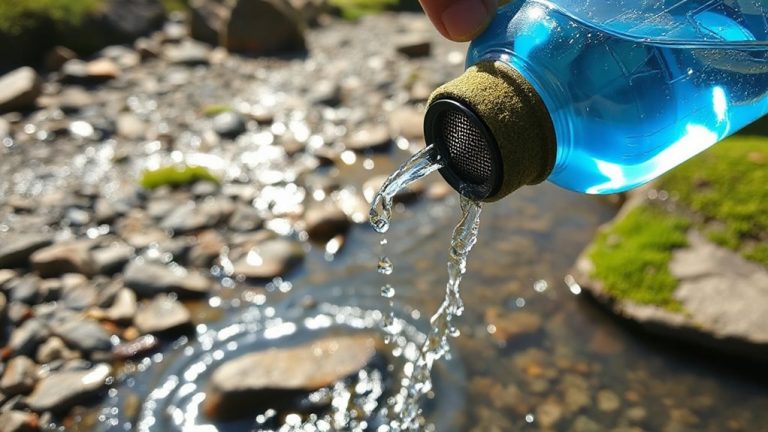
Most contamination in foraged insects comes from poor location choices, so picking clean areas matters more than you might think. You’re exposing yourself to pollution risks if you collect near roads, industrial zones, or agricultural fields. These spots increase exposure to chemical contamination like pesticides, heavy metals, or vehicle emissions. Insects absorb and retain toxins from their environment, so even thorough cleaning won’t remove ingested pollutants. Stick to remote forests, high-elevation meadows, or protected natural reserves where human activity is minimal. Test sites by checking nearby water sources and plant health-lush, diverse flora often signal lower contamination. Avoid areas with visible waste, strange odors, or discolored soil. Your safety hinges on these upfront choices, not just post-foraging steps. Choosing wisely reduces long-term health risks and makes later cleaning more effective. It’s a simple trade-off: extra scouting effort now prevents potential harm later.
Fast Insects 24–48 Hours to Clean Their Digestive Tracts
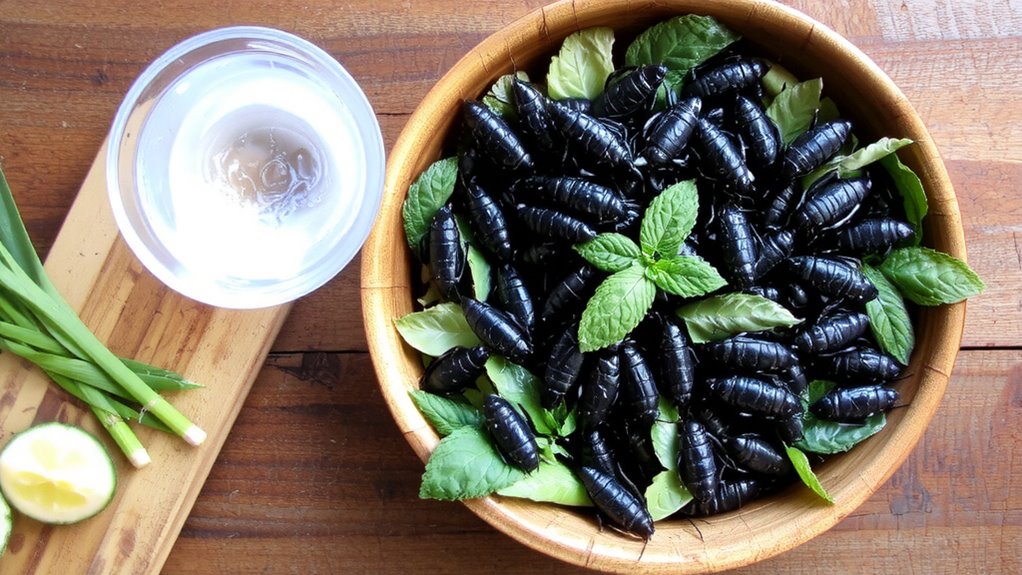
While you can’t remove toxins already absorbed into an insect’s tissues, you can clear out harmful gut contents by fasting them for 24 to 48 hours. This period allows for complete gut emptying and natural digestive purging. Store the insects in a clean, ventilated container without food, but with access to water via a damp cloth. Most species stop defecating within 24 hours, signaling effective digestive purging.
| Insect Type | Fasting Time | Resulting Gut Condition |
|---|---|---|
| Crickets | 24 hours | Fully emptied |
| Mealworms | 48 hours | Partial residue |
| Grasshoppers | 36 hours | Clean, purged |
Fasting guarantees safer consumption by reducing bacteria and parasites from gut contents. Always observe fecal output-no droppings mean gut emptying is complete. This step is essential, not optional, for safe preparation.
Rinse Bugs in Cold Water to Remove Dirt and Debris
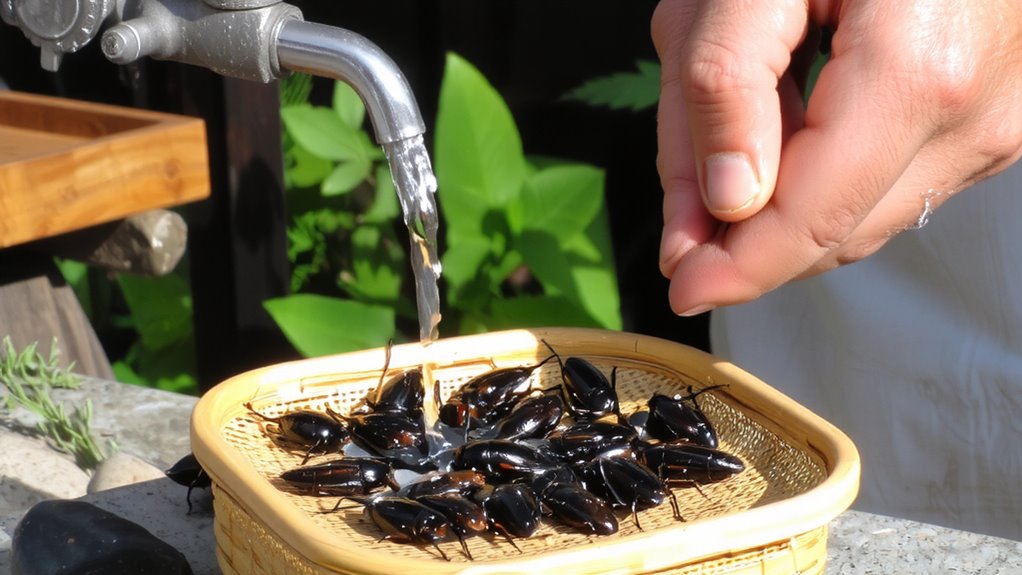
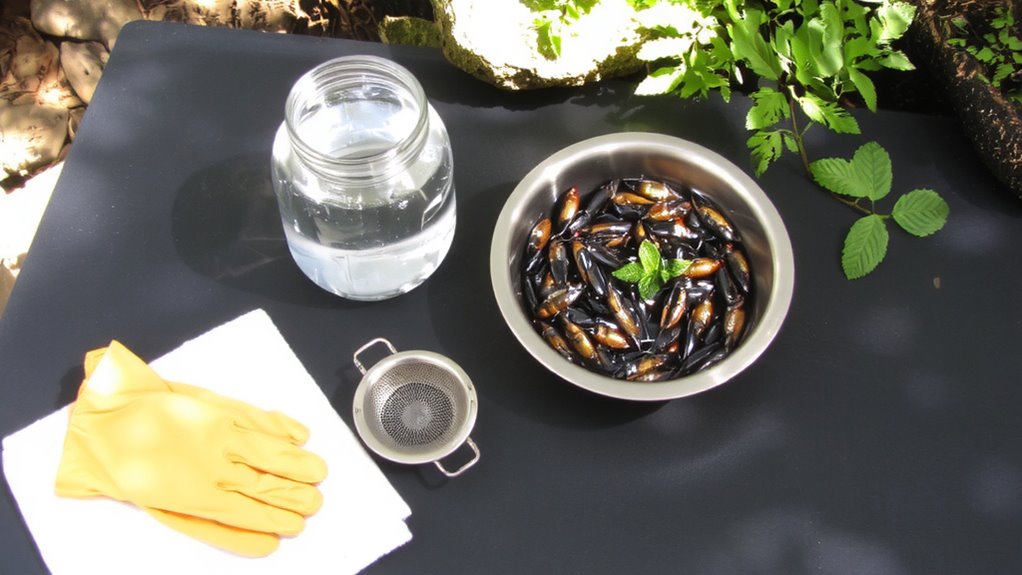
After fasting your insects to clear their guts, give them a thorough rinse in cold water to wash away surface dirt, dust, and any remaining debris. Use cold water-ideally between 40–50°F (4–10°C)-to maintain safe water temperature and prevent cooking or damaging the exoskeleton. Cold water also helps keep insects inert during handling, reducing movement and making rinsing more effective. Gently swirl them in a fine-mesh strainer under running water, ensuring even coverage without crushing delicate bodies. This step is essential for safe insect handling, removing environmental contaminants like soil, pollen, or tiny particles caught in joints or hairs. Don’t soak them; a 30–60 second rinse is sufficient. Prolonged exposure to water may affect texture or promote moisture retention, which impacts later cooking. Immediate, brief rinsing balances cleanliness with structural integrity, preparing your bugs safely for the next stage without compromising quality.
Kill Bacteria With Heat (Blanch or Dry)
You’ve rinsed off the surface grime, but that doesn’t mean your foraged insects are safe to eat. Rinsing removes dirt, not bacteria. To guarantee thermal sanitation, apply heat promptly. Blanch insects in boiling water for 60–90 seconds. This step kills pathogens and loosens exoskeletons, aiding in prep. Drain and pat dry. Alternatively, dry them in an oven at 200°F (93°C) for 10–15 minutes until crisp. Both methods achieve cooking sterilization by denaturing microbial proteins. Blanching preserves texture better; drying enhances shelf stability pre-cooking. Heat exposure must be consistent-partial treatment risks incomplete pathogen kill. Use a food thermometer to confirm internal temps hit at least 165°F (74°C), the threshold for microbial reduction. Don’t rely on visual cues alone. These techniques are proven, accessible, and necessary. Skip them, and you gamble on illness. Thermal sanitation isn’t optional-it’s essential food safety.
Freeze or Refrigerate Insects to Prevent Spoilage
If you’re not cooking your foraged insects right away, you’ll need to chill or freeze them to halt bacterial growth. Refrigeration works for short-term storage duration-up to three days at 40°F (4°C) or below. For longer preservation, freeze them at 0°F (-18°C) or lower. Proper temperature control is critical; fluctuating temperatures increase spoilage risk. Place insects in airtight containers or vacuum-sealed bags to prevent moisture loss and freezer burn. Label each container with the date to track storage duration and avoid over-retention. Thaw frozen insects in the refrigerator, not at room temperature, to maintain safety. Refrigerated insects degrade faster than frozen ones, so plan accordingly. Freezing preserves texture and nutritional value better over time. You’re responsible for maintaining temperature control from harvest to table. There’s no margin for error when safety and quality depend on it.
On a final note
You’ve cleaned your foraged insects properly when they’re safe to eat and free of contaminants. Fasting, rinsing, and heat-treating cut bacterial risks effectively. Freezing or refrigerating keeps them usable for days. These steps aren’t optional-they’re necessary for safety. Skipping one increases the chance of illness. Simple methods work best, and consistency matters more than speed. You can eat wild insects safely, but only if you follow each step without exception.