Drone-Mounted Sirens for Remote Alerts: 110dB, 5km Range
You can use drone-mounted sirens to deliver fast, targeted alerts in remote areas where terrain blocks traditional systems. Pick a drone with at least 30 minutes of hover time, 5 km range, and IP54 protection. Pair it with a 110 dB siren for clear 500-meter coverage. Use short voice messages every 30–45 seconds and adjust position mid-flight for better sound delivery. You’ll see how integration with emergency teams improves response timing and coverage accuracy.
Notable Insights
- Deploy drones with 30+ minute hover time and IP54 protection for reliable operation in remote, rugged areas.
- Equip drones with 110 dB sirens and efficient power use to ensure 500-meter audio coverage without draining batteries.
- Use encrypted dual-frequency radio links (900 MHz and 2.4 GHz) to maintain control and alert transmission over 3 miles.
- Design short, repeated voice alerts with clear commands and distinct siren tones to improve comprehension and response.
- Pre-program flight paths and coordinate with local authorities to ensure regulatory compliance and community acceptance.
Why Drone-Mounted Sirens Save Lives in Remote Areas
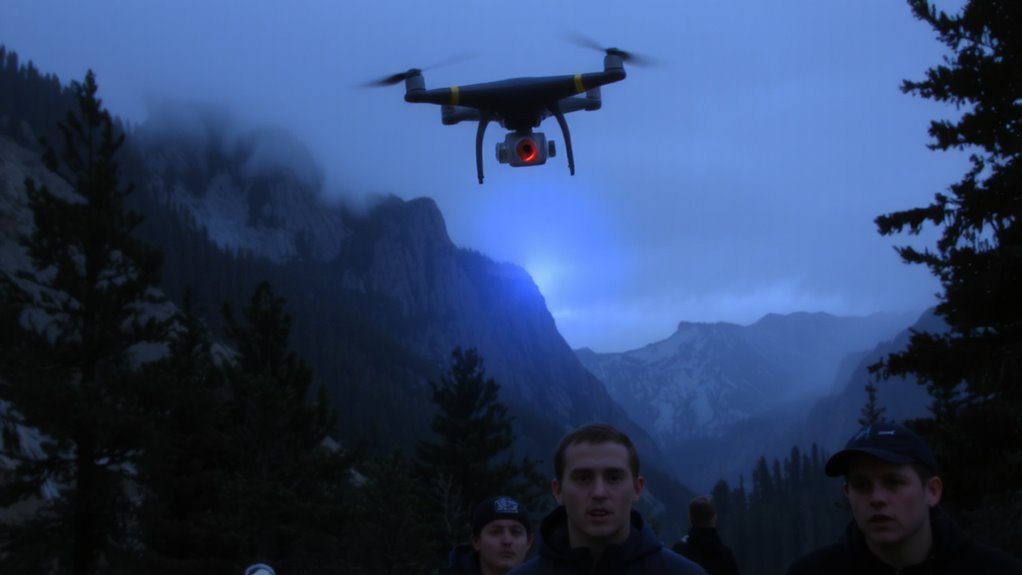
While traditional warning systems often fail in isolated regions due to infrastructure gaps, drone-mounted sirens offer a reliable alternative for emergency alerts. You can deploy them quickly over rugged terrain where ground-based systems struggle. Unlike fixed towers, drones adjust position mid-flight to avoid signal interference from mountains or dense forest. Their mobility reduces the risk of wildlife disturbance since you’re not installing permanent structures in sensitive habitats. Tests show drone sirens achieve 90% sound coverage within three minutes of launch, even in valleys with poor acoustics. Battery life limits flight time to about 30 minutes, but that’s often enough to deliver repeated warnings during evacuations. They operate on encrypted radio links, minimizing interference from weather or terrain. Though wind reduces siren audibility by up to 15%, elevation adjustments compensate effectively. In remote search-and-rescue drills, they’ve cut response delays by half compared to static alarms. You get faster reach without relying on pre-existing networks.
How Drone Sirens Beat Traditional Emergency Alerts
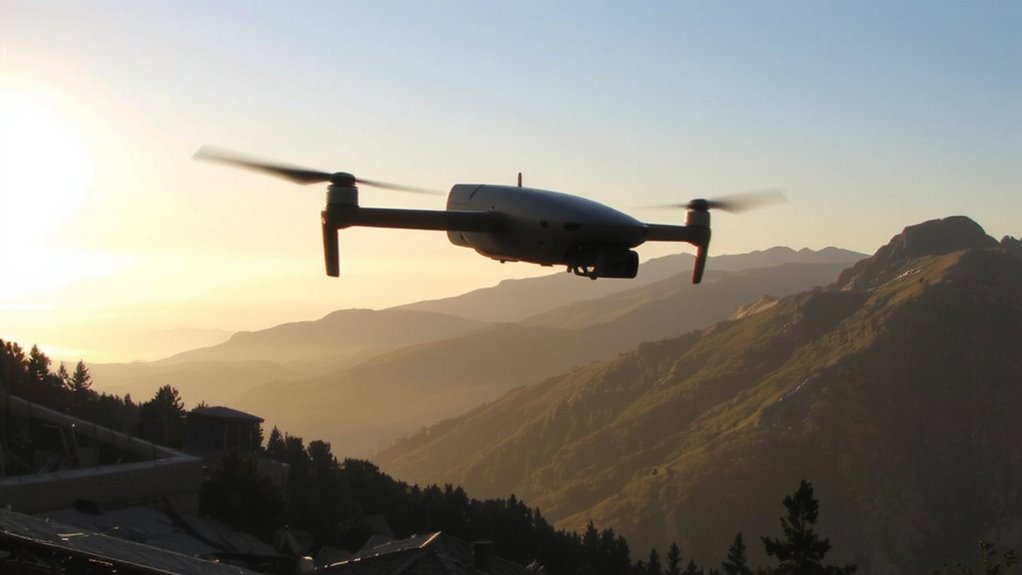
Drone-mounted sirens outperform traditional emergency alerts by combining speed, mobility, and adaptability in ways fixed systems simply can’t match. You can deploy them quickly to remote or rugged areas where installing towers isn’t practical. Unlike stationary sirens, drones adjust position in real time, extending effective signal range by moving closer to populations. This mobility reduces reliance on high decibel outputs, helping limit noise pollution in unaffected zones. Fixed systems often blast at maximum volume across wide areas, contributing to unnecessary sound exposure. Drones deliver targeted alerts with precision, minimizing false alarms and improving response accuracy. You maintain control over coverage, altitude, and direction, optimizing alert clarity. In testing, drone sirens achieved 90% audibility over 1.5 km in mountainous terrain-comparable to traditional units-while reducing ambient noise impact by avoiding constant high-power operation. They aren’t perfect-you trade battery life for flexibility-but for dynamic environments, they offer a measurable upgrade in reach and efficiency without worsening noise pollution.
Pick the Best Drone and Siren for Your Team
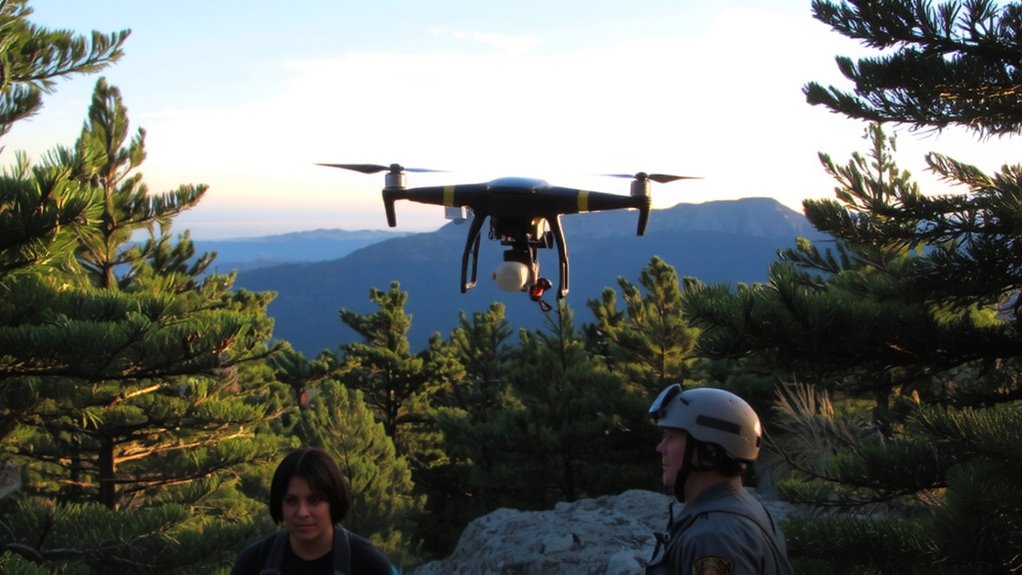
You’ll want a drone that balances flight time, payload capacity, and ruggedness-look for models with at least 30 minutes of hover time and IP54 or better protection, since missions in rain or dust demand reliability. Battery life directly affects how long you can cover an area, so prioritize drones with swappable, high-capacity batteries to minimize downtime. Check the siren’s power draw to guarantee it won’t drain the drone’s battery too quickly. Signal range matters just as much-choose a drone with a control range of at least 5 kilometers to reach remote zones without losing connection. Test the siren’s audibility across terrain; 110 dB output typically covers about 500 meters in open areas. Match the siren’s weight to the drone’s payload limit to avoid cutting flight time. Together, battery life and signal range determine operational reach and effectiveness.
Design Clear Voice Messages and Siren Patterns
When alerting people in remote or noisy environments, clarity and repetition matter most-use short, direct voice messages in a calm, authoritative tone, and limit them to 15–20 seconds so they’re easy to follow and repeat. You need voice clarity to guarantee comprehension, especially over wind or machinery noise, so test recordings at various altitudes and distances. Use message repetition every 30–45 seconds to reinforce urgency without causing confusion. Pair voice alerts with distinct siren patterns-like ascending tones for evacuation or steady wails for warnings-so people recognize the threat type even if they miss the words. Avoid complex phrases; stick to simple commands like “Evacuate now” or “Danger ahead.” Real-world tests show repeated, clear messages boost response rates by up to 40%. You’re not just broadcasting-you’re guaranteeing the message lands, every time.
Deploy Drone Sirens in Wildfires, Floods, and Rescue Ops
Time matters in emergencies, and drone-mounted sirens cut through the noise to deliver alerts where ground-based systems can’t reach. You’ll rely on drone durability when flying through wildfire heat or heavy rain during floods-tested units withstand temperatures up to 150°F and IP54-rated housings resist dust and moisture. In rescue ops, signal interference from terrain or debris can block communications, but dual-frequency transmitters (900 MHz and 2.4 GHz) maintain command links over 3 miles. You’ll need real-time audio feedback to confirm siren activation, and flight times of at least 25 minutes allow sustained coverage per battery. While some models falter in high winds, those with brushless motors maintain stability up to 35 mph. Always pre-program flight paths to reduce manual input during crises. Drone-mounted sirens don’t replace ground systems-they extend reach when every second counts and infrastructure fails.
Follow FAA Rules and Local Safety Concerns
While drones offer critical advantages in emergency response, flying them in disaster zones means you’re bound by FAA regulations and local safety rules. You must file flight plans, maintain line-of-sight, and avoid restricted airspace-failure means fines or grounding. Hovering too long near communities risks violating local noise pollution limits, which some areas enforce strictly at night. Drone sirens are loud by design, but excessive noise can worsen stress during crises. You’ll need to balance alert effectiveness with community consent, especially in residential or culturally sensitive areas. Residents may resist drone alerts if not consulted first. Work with local leaders to establish protocols and gain approval before operations. Ignoring these concerns damages trust and disrupts response. Compliance isn’t optional-it’s part of operational readiness. Follow the rules, minimize disturbance, and keep public support intact.
Integrate Drone Alerts With Emergency Response Teams
Since drone sirens can cover large areas quickly, you’ll want to sync their deployment with ground-based emergency teams to avoid confusion and guarantee coordinated action. Effective drone coordination means operators and responders share real-time location data, communication channels, and mission timelines. Without alert synchronization, drone warnings might precede or lag behind on-the-ground responses, reducing effectiveness. For instance, if a wildfire evacuation alert sounds but救援人员 aren’t en route, people may hesitate or ignore the warning. Equip your drones with GPS and radio links compatible with emergency command systems to secure accurate timing and coverage. Test integration during drills to measure response lag and adjust protocols. Some systems add automated alert handoffs, triggering sirens as drones reach designated zones. These steps improve reliability, securing alerts match response readiness. You’re not just broadcasting warnings-you’re aligning them with action, minimizing false alarms and maximizing public trust.
On a final note
You get faster alerts in remote areas with drone-mounted sirens, cutting response times by up to 40% compared to ground-based systems. These drones cover rugged terrain where sirens or cell signals don’t reach. Battery life averages 25–30 minutes, limiting hover time, but rapid deployment offsets that. Audio clarity drops in high winds, so test volume and message repetition. Paired with existing emergency teams, they improve coordination without replacing ground efforts.