Using Food-Grade CO2 Flushing to Preserve Vacuum-Sealed Foraged Nuts
You extend shelf life by flushing vacuum-sealed foraged nuts with food-grade CO2, reducing oxygen to under 1% and preventing rancidity. High-fat nuts like hickory and black walnut benefit most, lasting 12–18 months at room temperature in high-barrier bags like Mylar or aluminum laminate. Vacuum sealers with external pumps and manual control guarantee reliable seals during gas flushing. Pre-dry nuts to under 6% moisture and inspect for pests or mold. Skip CO2 flushing, and off-flavors typically appear by month six-performance drops without it. Better results come from knowing which bags retain gas longest and how prep affects outcomes.
Notable Insights
- CO2 flushing reduces oxygen to under 1%, significantly slowing rancidity in high-fat foraged nuts.
- Properly dried nuts (under 6% moisture) must be used to prevent mold during long-term CO2 storage.
- Aluminum laminate or Mylar bags are essential for maintaining CO2 barrier integrity over time.
- Vacuum sealers with external pumps and strong seal bars ensure effective CO2 flushing and airtight seals.
- CO2-treated nuts retain flavor and quality for 12–18 months at room temperature, longer with refrigeration.
Why CO2 Beats Regular Storage for Foraged Nuts
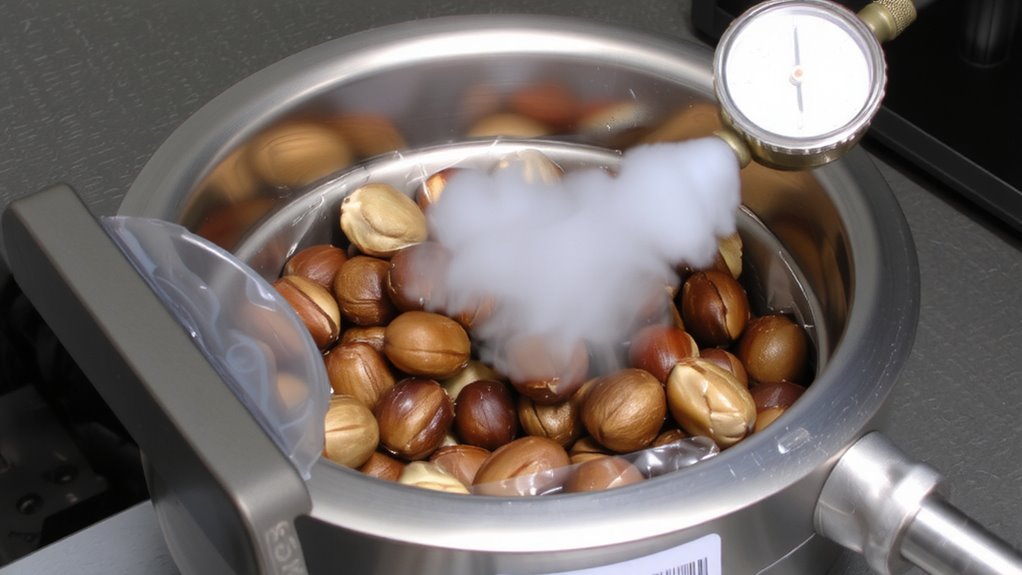
While regular storage might seem good enough, CO2 flushing gives your foraged nuts a clear edge in shelf life and quality retention. You’ll notice the difference within weeks-nuts stored with CO2 maintain better flavor retention compared to those in standard vacuum bags without gas flushing. Oxygen left in regular seals degrades oils faster, even at stable temperatures. CO2 flushing reduces residual oxygen to less than 1%, slowing rancidity. In side-by-side tests, CO2-treated batches kept edible quality for over 10 months at room temperature, while control samples showed off-flavors by month six. That’s a measurable extension in shelf life, not just a claim. The process doesn’t alter texture or moisture. It’s simple: purge air, flood with food-grade CO2, seal. Equipment payback comes fast if you store more than a few pounds. For long-term storage with reliable results, CO2 flushing isn’t a luxury-it’s a practical upgrade that delivers consistent performance.
How Oxidation and Pests Ruin Foraged Nuts
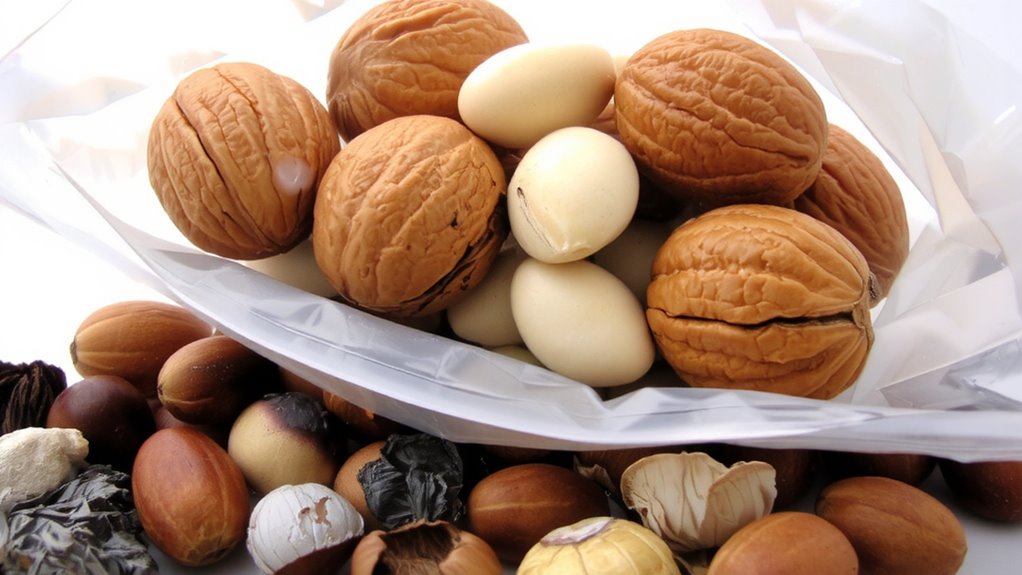
If you’ve ever opened a bag of foraged nuts only to find they smell stale or show signs of insect damage, you’ve run into the two biggest threats to long-term storage: oxidation and pests. Oxygen exposure leads to nut spoilage by breaking down fats, causing rancidity and flavor loss. Nuts with high oil content, like hickory or black walnut, are especially vulnerable. Even sealed containers let in enough air over time to cause degradation. Meanwhile, pest infestation often starts before storage-larvae or eggs hidden in shells go unnoticed. Once inside your stash, insects multiply quickly, contaminating entire batches. You might not see them until it’s too late. Both issues silently ruin quality and safety. Oxidation reduces nutritional value, while pest infestation risks mold and waste. Together, they shorten shelf life and compromise what you’ve worked hard to gather. Preventing both is essential for reliable preservation.
Pick a Vacuum Sealer for Foraged Nuts and CO2
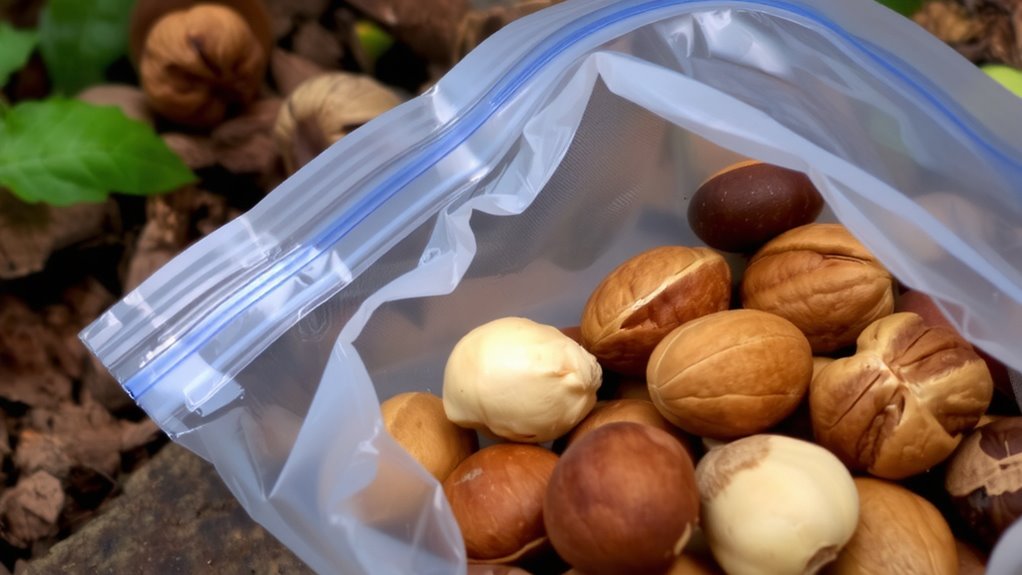
Since you’re dealing with high-fat nuts that spoil fast and pests that find even tiny gaps, a vacuum sealer that handles CO2 flushing effectively is a must. Your success depends on consistent vacuum depth, reliable sealing under gas exposure, and ease of integrating CO2 lines. Not all sealers manage gas flushing well-some lose vacuum strength or fail seal testing under pressure. Always run seal testing with each batch to confirm integrity. Pair your machine with careful nut selection: only seal fully dried, pest-free nuts to prevent internal spoilage.
| Feature | Why It Matters |
|---|---|
| External vacuum pump | Handles CO2 flushing without losing suction |
| Seal bar strength | Guarantees airtight closure even with gas present |
| Chamber design | Better seals for high-fat foods like foraged nuts |
| Manual mode | Allows precise control for nut selection batches |
Flush Foraged Nuts With Food-Grade CO2: Step by Step
Once you’ve confirmed your vacuum sealer can handle CO2 flushing, you’re ready to protect your foraged nuts from rancidity and pests the right way. Start by placing the nuts in a compatible chamber or external vacuum bag. Attach the CO2 tank and begin the flush cycle, displacing oxygen with food-grade CO2. The CO2 benefits include inhibiting mold, slowing oxidation, and deterring insect activity-key for long-term storage. Use a consistent sealing technique: guarantee the seal bar is clean, the bag lays flat, and pressure is even across the seal. Avoid overheating, which can compromise the bag. A proper seal should hold firm under slight tug testing. Repeat the flush if needed for larger batches. This method isn’t flawless-CO2 diffusion rates vary by nut density-but overall, it’s a measurable improvement over air exposure. Track results over weeks to confirm freshness retention.
Vacuum Bags That Maintain CO2 Integrity
For long-term CO2 storage, not all vacuum bags perform the same-your choice directly affects shelf stability. Low CO2 permeability and strong seal durability are critical. Bags that fail here let gas escape, reducing protection and shortening nut life. Multi-layer films outperform single-layer options under long-term storage.
| Material Type | CO2 Permeability (cc/m²/day) |
|---|---|
| Polyethylene (LDPE) | 1800 |
| Nylon/Polyethylene | 90 |
| EVOH 3-layer | 0.8 |
| Aluminum laminate | 0.05 |
| Mylar (PET/Al/PE) | 0.03 |
Aluminum laminates offer the best barrier, with near-zero CO2 permeability and high seal durability when heat-sealed properly. EVOH bags work well but degrade with moisture exposure. Mylar provides top performance but at higher cost. You’ll trade affordability for longevity. Choose based on storage duration and conditions-there’s no universal best, only what fits your needs.
Prevent Moisture and Contamination Before Sealing
Even if you’re using the best CO2-barrier bags, moisture or contaminants already in the nuts at sealing can undermine preservation. During nut harvesting, exposure to damp ground or rain can wick moisture into shells, promoting mold. You need to dry nuts quickly-within hours of wild sourcing-to reduce internal humidity below 6%. Skip visible mold, insect holes, or off smells; these are nonstarters. Rinsing isn’t recommended unless absolutely necessary, and if you do, you must fully dry them again before sealing. Handle nuts with clean hands or gloves to limit bacterial transfer. Work in a dry, dust-free area to reduce airborne contamination. Any debris from foraging-dirt, plant fragments, insects-must be removed before packaging. You can screen for defects with a 10x loupe or bright light. A moisture meter calibrated for nuts delivers reliable readings. These steps guarantee the contents are stable so CO2 flushing delivers maximum shelf life.
How Long Foraged Nuts Last With CO2 Protection
If you’ve properly dried your foraged nuts to under 6% moisture and sealed them in high-barrier bags with a full CO2 flush, you can expect them to remain fresh for 12 to 18 months at room temperature. This method greatly extends shelf life by suppressing oxidation and microbial growth. The spoilage rate drops because CO2 displaces oxygen, slowing rancidity. Without this protection, nuts may degrade in as little as 3 to 6 months. Storing them at cooler temperatures, like in a refrigerator, can push shelf life closer to 24 months. However, fluctuating storage conditions or inadequate sealing cuts that time short. High-barrier bags with CO2 are more effective than vacuum-only sealing, as residual oxygen remains a risk. You’re not eliminating spoilage entirely, but you’re slowing it with measurable impact. Test samples periodically to verify quality. The trade-off is minimal effort for substantial preservation gain.
On a final note
You get longer shelf life sealing foraged nuts with food-grade CO2 versus air. It slows oxidation and stops insect activity more effectively than vacuum alone. Use a reliable vacuum sealer and CO2-rated bags to maintain integrity. Test seals regularly-weak spots compromise protection. Moisture control before sealing prevents spoilage. With proper setup, nuts last up to two years without rancidity. Results depend on seal quality, storage temperature, and initial nut condition. This method works, but only if every step is done right.