How to Plan for Evacuation When You Have a Severe Mobility Restriction
You’ll need a plan that accounts for your wheelchair and medical gear when elevators fail or power dies. Line up at least two reliable helpers who can manage equipment and clear pathways. Secure access to a wheelchair-accessible van-test loading speed and route flexibility. Map multiple exit routes with ramps and wide doors, then practice every three months. Pack a 20-pound go-bag with 24 hours of battery power, meds, and compact mobility aids. Know where help comes from before you’re in crisis-more options exist if you act now.
Notable Insights
- Assess mobility needs and plan for stairs, uneven terrain, and elevator dependency during evacuation.
- Identify at least three reliable helpers with assigned roles for equipment, navigation, and communication.
- Secure two accessible transportation options, including paratransit and private modified vehicles.
- Map and practice multiple evacuation routes every three months to ensure they are obstacle-free and efficient.
- Prepare a 20-pound medical go-bag with power sources, medications, and portable mobility aids near your exit.
Identify Your Mobility Challenges in Emergencies
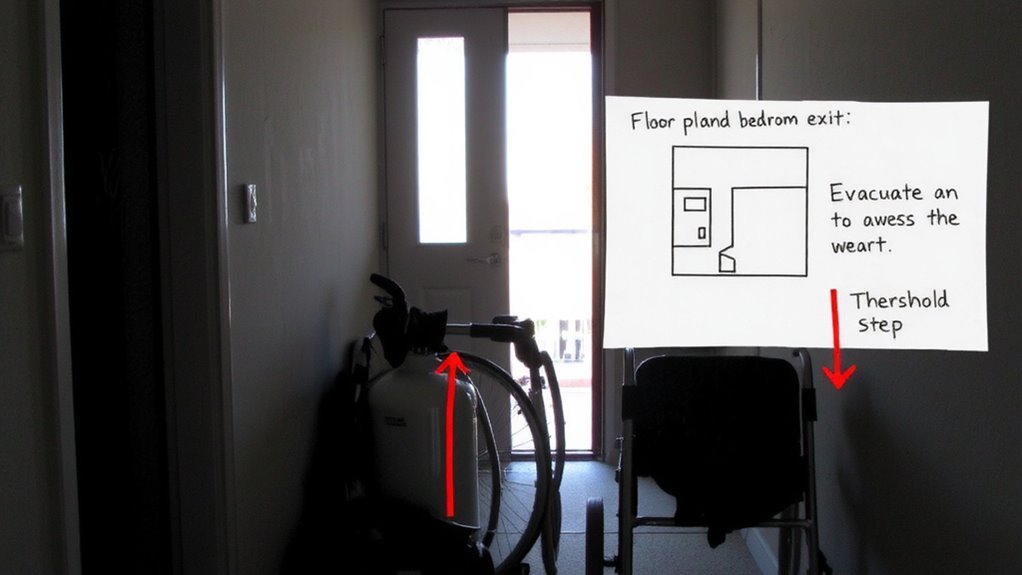
What if an emergency meant you couldn’t move as quickly or easily as others? You need to assess your mobility limits now, not during a crisis. If you have wheelchair dependency, stairs or uneven ground become immediate barriers. Most standard evacuation routes assume walking ability, which doesn’t help you. Medical equipment reliance-like oxygen machines, power wheelchairs, or ventilators-adds weight and complexity. These devices often require power, and backups may last only a few hours. Battery life, device weight, and portability determine your real-world evacuation capacity. You can’t carry them far, and elevators may fail. Evaluate how far you can travel with assistance, how long your backup power lasts, and which equipment is critical. Know the specs: weight, dimensions, battery runtime. Identify what slows you down. Be honest about what works and what doesn’t when speed matters.
Recruit Helpers for Your Emergency Evacuation Plan
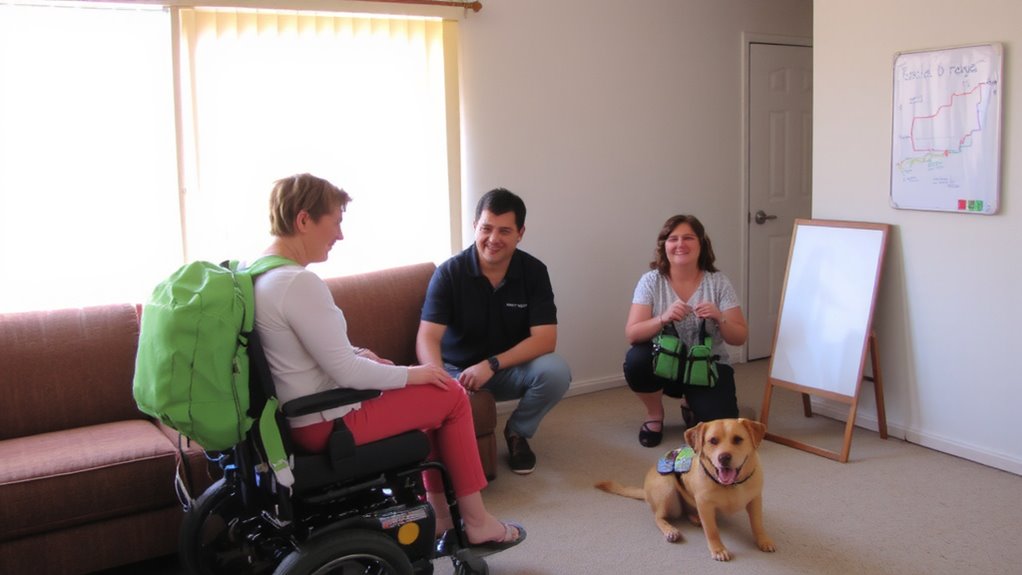
You’ve already mapped your mobility limits and know which equipment keeps you moving when seconds count. Now, recruit reliable helpers who can act fast during evacuation. Start by evaluating neighbors, friends, or family within a 10-minute reach-proximity matters when time is critical. Designate at least two primary helpers and one backup to reduce risk of unavailability. Coordinate with local organizations for volunteer coordination; many offer trained assistance during disasters. Clearly outline each person’s role: one manages mobility devices, another clears pathways, a third handles communication. Test the team in drills to identify gaps. Community support isn’t just backup-it’s a measurable force multiplier in evacuation speed and safety. A well-coordinated group reduces physical strain and increases success odds. Weak links lower overall effectiveness, so verify commitment and capability annually.
Arrange Accessible Evacuation Transportation Now
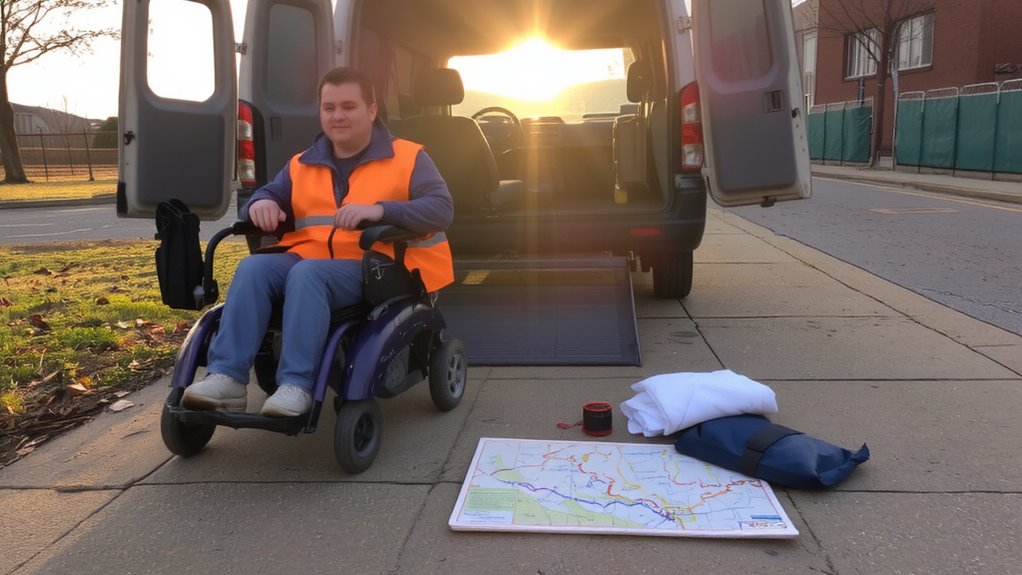
You can’t assume standard vehicles will work when you need to evacuate quickly with mobility restrictions. Accessible transit options like wheelchair-accessible vans or modified transport are essential-they accommodate mobility devices and guarantee timely departure. Research local providers now and confirm availability during emergencies, as wait times can exceed 30 minutes when demand spikes. Relying on one solution is risky, so create backup vehicle plans. Identify at least two accessible options: one official (such as a paratransit service) and one private (like a modified rental or community-supported van). Test each during non-emergencies to assess loading time, staff response, and route flexibility. Some vehicles support lifts but lack climate control, which matters in extreme weather. Weigh these trade-offs. Don’t wait-verify capacity, fuel status, and driver training today. Emergency responders can’t always assist, so your plan must work independently.
Map and Rehearse Your Evacuation Route
A clear route can mean the difference between a safe exit and dangerous delay. You need to map your evacuation path now, not during an emergency. Identify all accessible exits in your home and building, noting ramps, elevators, and wide doorways that accommodate your mobility device. Make certain pathways are free of clutter and flooring provides stable traction. Route familiarity reduces decision time under stress, so walk or roll through the path frequently. Conduct practice drills every three months to confirm the route works and update it if changes occur, like construction or equipment failure. Include caregivers in drills to coordinate timing and support. Time each rehearsal to track progress. If a section slows you, adjust for smoother movement. These drills uncover obstacles you might overlook. Consistent practice builds confidence and efficiency, making evacuation faster and safer when it counts.
Pack a Go-Bag for Mobility and Medical Needs
Every second counts when evacuating, so your go-bag must include mobility and medical essentials tailored to your specific needs. Pack your medical equipment in durable, labeled cases to prevent damage. Include a portable power source rated for your device’s battery life, ideally with at least 24 hours of runtime. Store your medication supply in a waterproof container with a clear inventory list showing dosages and expiration dates. Rotate medications every six months to maintain effectiveness. Choose compact, multi-use mobility aids if space is limited, and verify they fit through standard doorways and vehicle entries. Your bag should weigh no more than 20 pounds to guarantee transportability. Keep it near your exit route and check contents quarterly. This setup balances readiness with practicality, guaranteeing you maintain function during unexpected displacement.
Sign Up for Emergency Help Before You Need It
If you wait until disaster strikes to seek assistance, you’re already behind-sign up for emergency support programs in advance guarantees you’ll have access to resources when communication lines are down and roads are closed. Emergency registration with local authorities secures you’re on their radar during crises. Many jurisdictions offer voluntary emergency registration for people with mobility restrictions, linking you to transport, shelters, and response teams. Early enrollment increases your chances of timely help. Programs vary by location, so verify what’s available now, not later. Some require medical documentation or proof of disability. Others rely on self-certification. Either way, the process typically takes under 20 minutes online or by phone. Don’t assume help will find you-be proactive. Emergency registration isn’t a guarantee, but it improves response odds. Early enrollment gives you a measurable advantage when seconds count.
Tell Firefighters and EMTs About Your Needs Ahead of Time
You’ve already registered for emergency support, so now build on that prep by making sure first responders know exactly what you need before they arrive. Pre register with your local fire department or emergency medical services if your area offers it. This step lets you notify them about mobility devices, oxygen use, or evacuation challenges unique to your home layout. It’s not enough to assume they’ll figure it out-clearly communicate access points, preferred evacuation routes, and any required equipment. Coordinate a plan that includes family, neighbors, or caregivers who can assist during the first critical minutes. Real response times average 8–12 minutes, often longer in rural areas, so advance coordination fills the gap. Firefighters can’t search for details during a crisis. Providing accurate, specific info ahead of time improves response speed and effectiveness. You’re not asking for special treatment-you’re enabling a safer, more efficient operation when every second counts.
On a final note
You need a clear plan now, not during a crisis. Identify your mobility limits, arrange accessible transport, and assign reliable helpers. Map your exit route and practice it. Pack a go-bag with medications, power sources, and mobility aids. Register for emergency support and inform first responders of your needs. These steps work-they’re proven in real evacuations-and skipping any reduces your safety margin.