Start a Fire in Wet Wood With a Ferro Rod: Rainy-Day Method
Build a dry base with elevated logs or rocks to keep tinder off wet ground. Find dry tinder under overhangs, bark, or dense trees-birch bark or pine needles often work. Use a ferro rod instead of matches; it sparks reliably when wet and lasts thousands of strikes. Shield the spark with a tarp or body, strike fast and close to tinder. Once lit, protect the flame with a windbreak and add damp wood slowly. Small, dry tinder catches easier than wet bulk. You’ll see how each step increases success in the worst conditions.
Notable Insights
- Build an elevated base with dry logs or rocks to keep tinder off wet ground and improve airflow.
- Use a moisture barrier like a tarp or bark under the base to prevent ground moisture from soaking the tinder.
- Gather dry tinder from under overhangs, dense evergreens, or beneath fallen logs where it stays protected.
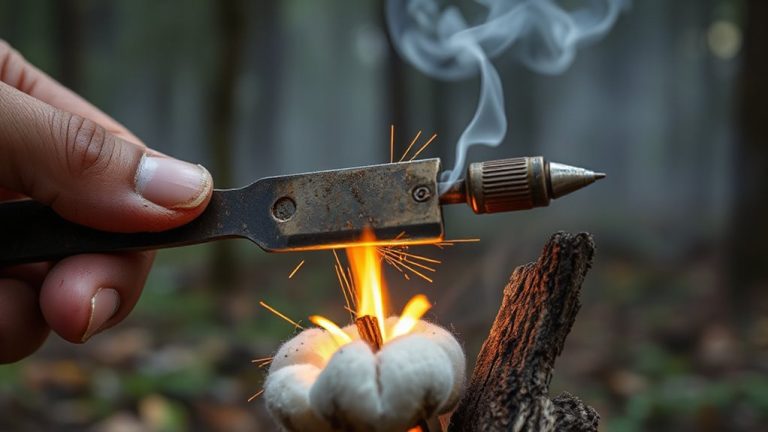
- Use a ferro rod with a metal scraper at a steep angle near fine, dry tinder for hot, effective sparks.
- Shield the fire with rocks, a tarp, or natural windbreaks and gradually add damp wood to maintain the flame.
Build a Dry Base in the Rain
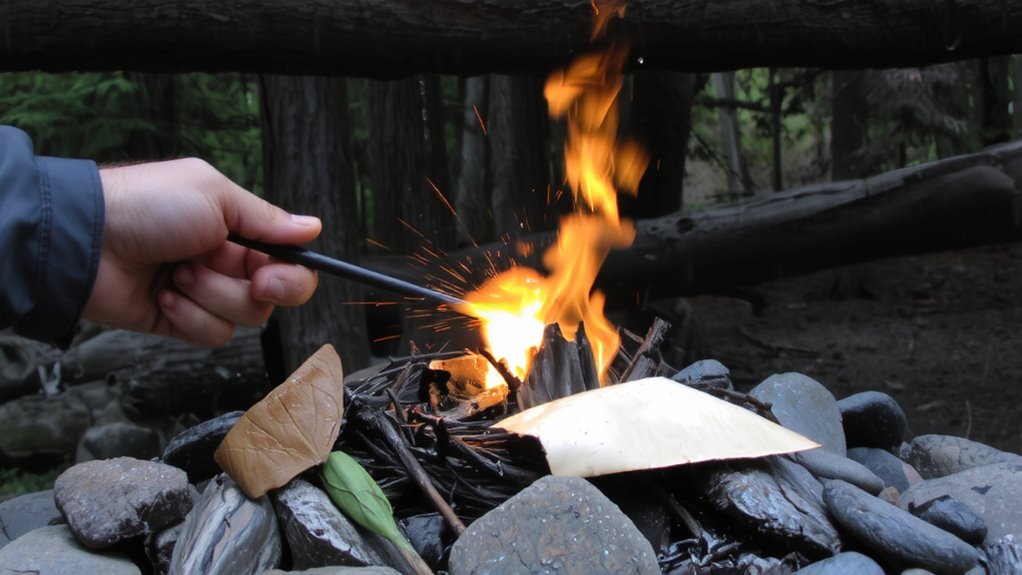
Even if it’s raining, you can still get a fire going by starting with a dry base. Use an elevated platform made of green logs or rocks to lift your tinder off the ground. This keeps your fire materials from direct contact with pooling water and reduces wick-up of moisture from the soil. Place a moisture barrier-like a piece of tarp, bark, or poncho-under your platform if the ground is saturated. The barrier won’t stop rain, but it prevents ground moisture from reaching your base. An elevated platform improves airflow and allows damp tinder to dry slightly before ignition. It also minimizes heat loss to wet surfaces. These small structural choices increase ignition success with a ferro rod, which produces hot, short-lived sparks. Without a dry base, even effective sparking fails. Build smart: elevation and barriers are low-effort, high-return steps in wet conditions. A reliable camping rain shelter can help protect your fire-making area from persistent rain.
Find Dry Tinder When Everything’s Soaked
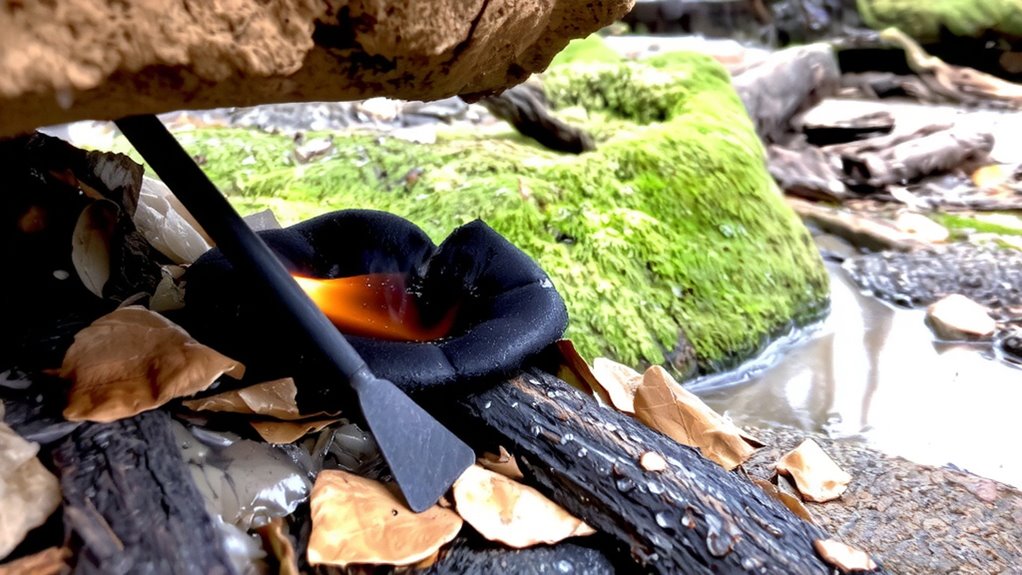
There’s almost always some dry tinder around, even in heavy rain, if you know where to look. Check under overhangs, inside dead standing trees, or beneath dense evergreen branches, where natural tinder stays shielded. Birch bark, dried grass, or pine needles tucked under a log may be dry enough to catch a spark. You’ll need only a small amount, so spend a few minutes searching even if everything seems soaked. Look inside a debris shelter or under root masses flipped by fallen trees-these spots trap dry material. Avoid bulky, damp clumps; fine, loose fibers work best. Carry a small bag of prepared natural tinder if possible, but in a pinch, what you find can suffice. Efficiency matters: use the driest bits you can locate, and protect them until ignition. Success depends on selection, not volume.
Use a Ferro Rod: Not Matches: in the Rain
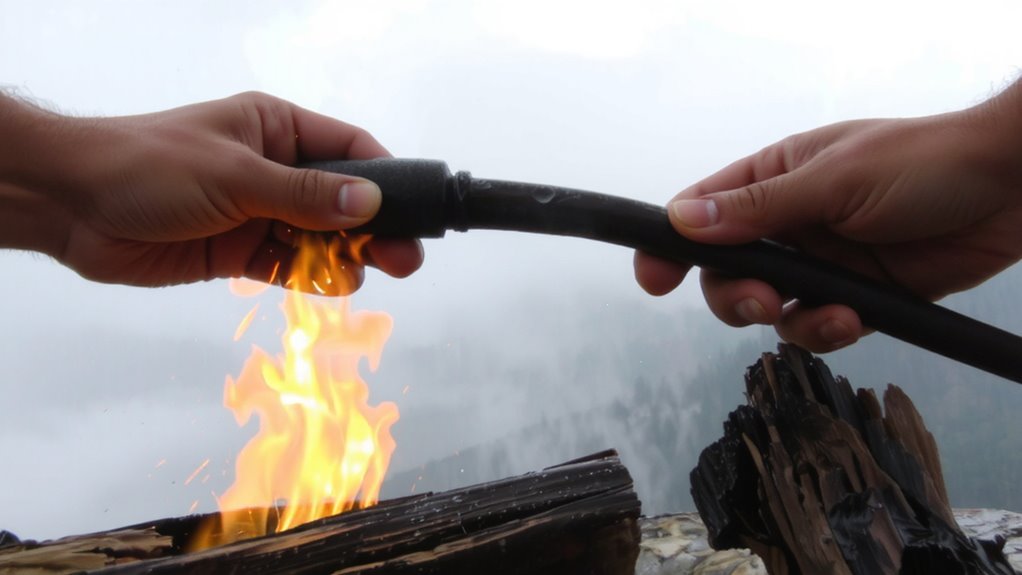
You’ve found dry tinder despite the wet conditions, and now you need a reliable ignition source-this is where a ferro rod outperforms matches in the rain. Matches fail when wet and are one-use only. A ferro rod works even soaked and lasts for thousands of strikes. Proper ferro rod maintenance guarantees long-term function-keep it dry when stored and wipe clean after use. Use the rod spark technique: scrape firmly with a metal striker at a low angle to produce hot, consistent sparks. This method delivers better results than flint and steel or lighters in damp environments.
| Ignition Source | Works Wet? | Avg. Lifespan |
|---|---|---|
| Matches | No | 1 use |
| Lighter | Sometimes | 1–2 weeks |
| Ferro Rod | Yes | 10,000+ uses |
Spark Your Ferro Rod in Wet Conditions
How do you get hot sparks when everything’s soaked? You protect your ferro rod and strike it correctly. Even in rain, a well-maintained ferro rod works if you’ve practiced proper ferro rod care-keep it dry when stored and wipe it before use. A wet striking surface slows spark production, so clear debris and moisture first. Use a metal scraper or your knife spine instead of a soft striker; it delivers better contact. Hold the rod at a steep angle, close to your tinder, and strike fast and hard. This ignition technique forces hot sparks downward, increasing contact with the material. Ferro rods produce sparks at 5,000°F, but only if struck with firm, confident strokes. Wet conditions demand precision, not force. Practice this ignition technique in dry settings first, so you’re accurate when soaked. Good ferro rod care and correct striking boost reliability when moisture’s the enemy.
Shield Your Flame From Wind and Rain
With wind and rain threatening to snuff out your nascent flame, shielding it becomes just as critical as creating it. Proper flame protection guarantees your initial tinder catches and sustains combustion. Use natural or portable barriers to block wind and deflect rain-this is basic fire shielding. Gloves, a knife sheath, or a folded tarp can work, but dedicated fire shields offer better durability and control.
| Method | Effectiveness (1-5) |
|---|---|
| Rocks arranged in a U | 4 |
| Commercial fire pan | 5 |
| Backpack as windbreak | 3 |
| Natural bank/ledge | 4 |
| Hand shielding (brief) | 2 |
Choose setups that allow airflow while blocking precipitation. A well-placed barrier improves flame protection without smothering the fire. In sustained rain, overhead cover is essential-pair it with fire shielding to maintain heat and continuity. Your success depends not just on spark, but sustained flame protection.
Add Wet Wood Without Killing the Fire
Now that your flame is shielded and holding strong, the next step is building it up without choking it out-especially when using damp wood. Start by adding the smallest damp sticks you can find-pencil thickness works best. Place them gently over the flames, allowing steam to escape rather than smothering the heat. This method supports flame retention by maintaining steady temperature rise. As the fire grows, gradually increase wood size, but stay below thumb diameter until the core burns hot. Wet wood saps heat, so spacing matters: leave air gaps for oxygen flow. Focus on ember preservation-never pile on fuel. Let each piece catch near the base where embers are hottest. If smoke thickens and flames shrink, you’ve added too much too soon. Back off and let heat rebuild. Proper layering lets damp wood dry just before ignition, keeping energy output stable. For added reliability, place a few homemade DIY fire starters beneath your tinder to ignite quickly even in damp conditions.
Keep Your Fire Alive in Heavy Rain and Wind
Even if rain soaks through your shelter and wind gusts threaten to snuff every spark, a well-built fire can endure if you protect the burn zone and manage airflow. Use rocks or a fire reflector to block wind and retain heat, boosting heat retention. Position logs tightly to minimize gaps, reducing rain penetration and aiding fire maintenance. Tilt fuelwood slightly to shed water while still allowing oxygen flow-closed systems drown flames, but overly open ones lose heat. Check ember beds often; a strong base sustains ignition despite wet conditions. Add fuel before flames weaken, using drier interior wood from split logs. Avoid overloading, which drops temperature and increases smoke. A balanced approach guarantees steady combustion. In heavy rain, a lean-to tarp above the fire helps, but leave gaps for venting. This setup survives hours of downpour with routine care. Success isn’t luck-it’s fire maintenance and heat retention done right.
On a final note
You can start a fire in rain with wet wood and a ferro rod if you use dry tinder and shield the spark. A ferro rod works when wet, unlike matches. Keep your tinder under your shirt or in a pocket to stay dry. Shield the initial flame with a tarp or body. Add wet wood slowly; it will dry above the flame. The fire stays alive with consistent feed and protection. Success depends on preparation, not gear quality.