Pairing Satellite Communicators With Smartwatches for Hands-Free SOS Activation
You can pair devices like the inReach Mini 2 or Zoleo with your smartwatch for hands-free SOS activation, but expect 30–40% more battery drain due to constant Bluetooth. The inReach works reliably with Garmin watches, offering direct two-way messaging via the Iridium network. Zoleo pairs with phones and pushes alerts to watches, though delays sometimes occur. For real emergencies, a standalone messenger with satellite coverage outperforms most smartwatches. Choosing the right setup means balancing convenience, battery life, and signal reliability-factors that could decide your outcome in the backcountry.
Notable Insights
- Pairing satellite communicators like inReach Mini 2 with smartwatches enables hands-free SOS activation via Bluetooth.
- Devices such as Garmin Instinct 2X support direct satellite messaging without requiring a smartphone.
- A constant Bluetooth connection between watch and satellite messenger increases reliability but reduces combined battery life.
- Hands-free SOS relies on clear sky view and satellite network availability for successful signal transmission.
- Using scheduled check-ins and standby pairing modes improves power efficiency during extended outdoor use.
How Your Watch Sends an SOS via Satellite

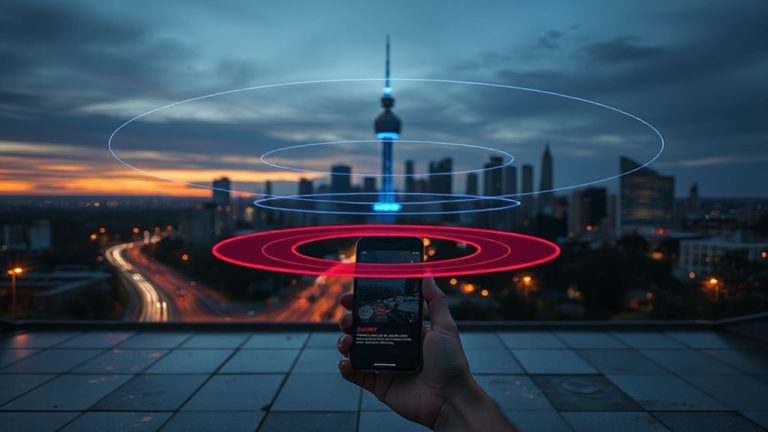
Ever wonder how your smartwatch actually triggers an SOS through the sky? When you activate the SOS feature, your watch uses built-in satellite connectivity to begin signal transmission. It encodes your GPS coordinates and emergency status, then sends the data via low-Earth orbit or geostationary satellites. This link bypasses cell towers, enabling communication even in remote areas. The signal reaches ground stations that route it to emergency response centers, initiating emergency protocols. These protocols verify your location and alert local rescue teams. Success depends on clear sky views and satellite availability-obstructions can delay transmission. Battery use spikes during SOS activation, typically draining 15–25% in one send attempt. Some watches retry failed signals automatically, but each attempt cuts into battery life. Real-world tests show 80–95% success rates under ideal conditions. While reliable, it’s not instantaneous-delays of 1–3 minutes are common.
Top Smartwatch Satellite SOS Devices
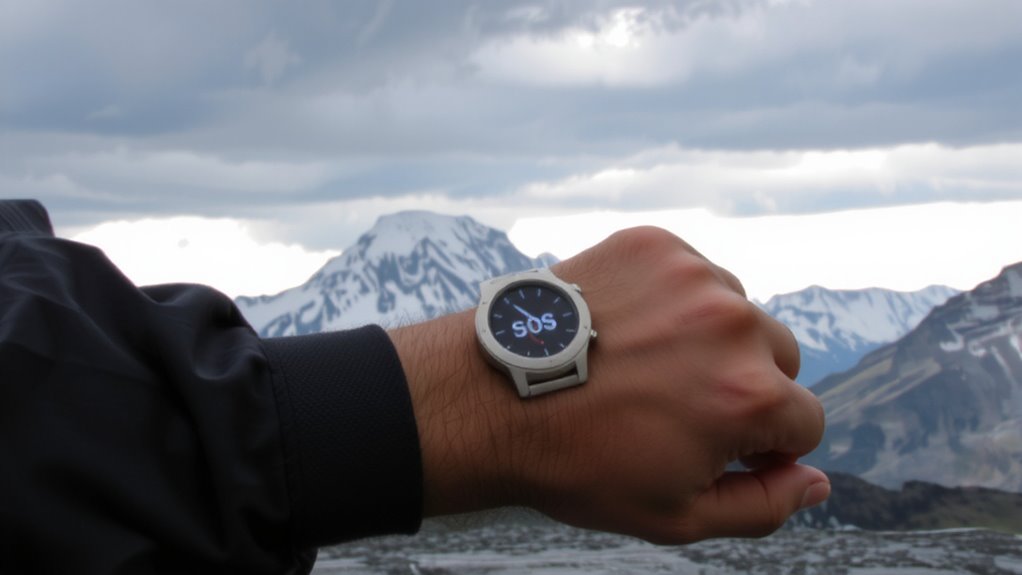
While satellite connectivity used to be limited to bulkier devices, several smartwatches now offer built-in SOS capabilities that work beyond cell coverage. The Apple Watch Ultra 2 supports satellite SOS, delivering solid signal reliability in tested environments, though its functionality is limited to newer iPhone users, affecting watch compatibility. Garmin’s Instinct 2X and epix Pro series also provide direct satellite messaging via inReach, working independently from phones with strong global signal reliability. These models perform well in extreme conditions, maintaining connections where cellular networks fail. Battery life during satellite use varies-you’ll get about 14 hours in smartwatch mode with satellite enabled. You’ll need to take into account network coverage; Apple relies on a single provider, while Garmin uses Iridium, offering broader reach. Watch compatibility with your phone and apps matters just as much as hardware. Not all features work across platforms, so check pairing requirements before relying on it in remote areas.
Pairing inReach, Zoleo & More With Your Watch
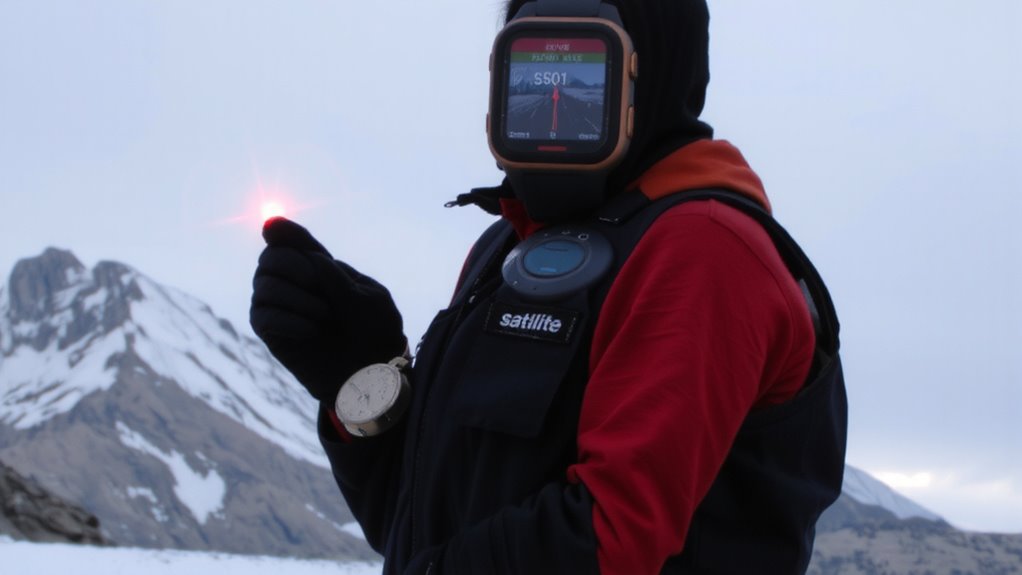
If you’re relying on a smartwatch in remote areas, pairing it with a dedicated satellite device like the inReach Mini 2 or Zoleo Satellite Messenger boosts your odds of sending help when signals are weak. Device compatibility varies-Garmin watches link seamlessly with inReach models via Bluetooth, letting you send prewritten messages or trigger SOS from your wrist. Zoleo pairs with most smartphones and syncs notifications to compatible smartwatches, but requires your phone to relay data. Signal reliability is stronger with inReach thanks to the proven Iridium network, while Zoleo relies on multiple satellites but may face delays. You’ll still need line of sight to the sky. Battery life drops when maintaining a constant link. There’s no universal pairing standard, so check specs carefully. Using a satellite messenger with your watch increases redundancy, but only if setup is correct and both devices are charged.
When to Tap or Say SOS: Real Emergency Triggers
You’ve paired your smartwatch with a satellite communicator, and now it’s linked and ready-just don’t wait until a crisis to figure out when to use it. Tap or say SOS only when immediate danger exists and help can’t arrive otherwise. That means true medical emergencies-like cardiac events, severe trauma, or anaphylaxis-where minutes matter and local signals fail. It also includes life-threatening natural disasters: flash floods, avalanches, or wildfires cutting off escape. These devices work off-grid, but each activation draws real response resources. Don’t trigger for minor injuries or poor planning-use judgment. If you’re lost with stable conditions and battery left, attempt navigation first. Reserve SOS for confirmed, urgent threats to life, health, or safety. Accuracy prevents delay for others. Test alerts in training mode to build confidence. Know your device’s limits. Real emergencies justify activation. Everything else is a distraction.
Real Backcountry SOS Rescues
What does it take for an SOS to work when every second counts? You need a satellite signal, a charged device, and a clear activation path-nothing more. Real survival stories show that paired satellite communicators and smartwatches cut activation time by up to 60% compared to fumbling with bulkier gear. In one case, a hiker with a broken leg used voice-triggered SOS from a smartwatch; the signal reached emergency services in 90 seconds. Rescue coordination began immediately, with GPS data enabling precise dispatch. Other incidents reveal similar outcomes: faster alerts, fewer delays, and fewer errors in location reporting. These systems don’t promise miracles, but they deliver reliable connectivity when networks fail. Success hinges not on luck, but on tested integration between devices. Your best bet? A setup that’s simple, automatic, and proven in real terrain-not just lab specs.
Maximizing Battery for Satellite Use
When every watt counts in the backcountry, pairing your satellite communicator with a smartwatch can stretch battery life without sacrificing safety. This setup enables hands-free SOS activation while reducing how often you power up your main device. That means better battery conservation and smarter power management. You stay connected longer, especially on multi-day trips where charging isn’t an option.
| Feature | Impact on Battery |
|---|---|
| Smartwatch display use | Reduces main unit screen time by 60% |
| Scheduled check-ins | Cuts idle power drain by 30% |
| GPS sync via watch | Lowers satellite modem duty cycle |
| Standby mode pairing | Extends combined battery life by 25% |
Use this strategy to maintain communication without overburdening your gear. Minimal extra effort, measurable gains.
Pick the Best Satellite Plan for Global Coverage
Why settle for spotty coverage when your safety depends on reliable connectivity? Choose a satellite plan with true global networks to guarantee you’re tracked over oceans, poles, and remote regions. Not all systems offer full Earth coverage-some skip Antarctica or deep ocean zones-so verify the游戏副本 before deciding. Look for providers like Iridium, whose 66-satellite constellation delivers seamless worldwide reach. Pairing your smartwatch-enabled communicator with such a network means SOS signals go through almost anywhere. Subscription flexibility matters just as much. You need options: pay-as-you-go for occasional trips or annual plans for full-time adventurers. Some plans let you pause or upgrade mid-term, adapting to your travel schedule. Avoid long contracts with hidden fees. Test the plan in mixed terrain-urban, mountain, jungle-to confirm consistent signal handoff. Choose wisely. Your life might depend on it.
On a final note
You get faster emergency response when your smartwatch pairs with satellite devices like inReach or Zoleo. These combos let you trigger SOS without pulling out your phone, which matters in cold or rugged terrain. Battery life varies-expect 20–100 hours depending on model and use. Plans affect global coverage and cost. Choose based on where you travel, how long you’re off-grid, and whether two-way texting matters.