How to Dehydrate Wild Mushrooms at Optimal Temperatures to Kill Spores
Identify mushrooms accurately before drying-never assume. Heat them to 160°F for 10–15 minutes to kill spores, using steam blanching or a dry roast. Then dehydrate at 95–115°F for 6–12 hours until crisp, rotating trays for even drying. Test dryness by snapping a piece; it should break cleanly, not bend. Store only when fully cooled and vacuum-sealed to prevent moisture buildup. Proper heat and drying guarantee safe, long-term storage-skip steps and you risk spoilage. The full process reveals how each step prevents contamination.
Notable Insights
- Accurately identify wild mushrooms before drying to avoid toxic look-alikes.
- Heat mushrooms to at least 160°F (71°C) for 10–15 minutes to kill spores.
- Use steam blanching or dry roasting to achieve spore-killing temperatures without overcooking.
- Dry mushrooms at 95–115°F in a dehydrator with good airflow until crisp and snapping cleanly.
- Ensure complete dryness before vacuum sealing and storing in a cool, dark place.
How to Prep Wild Mushrooms for Drying
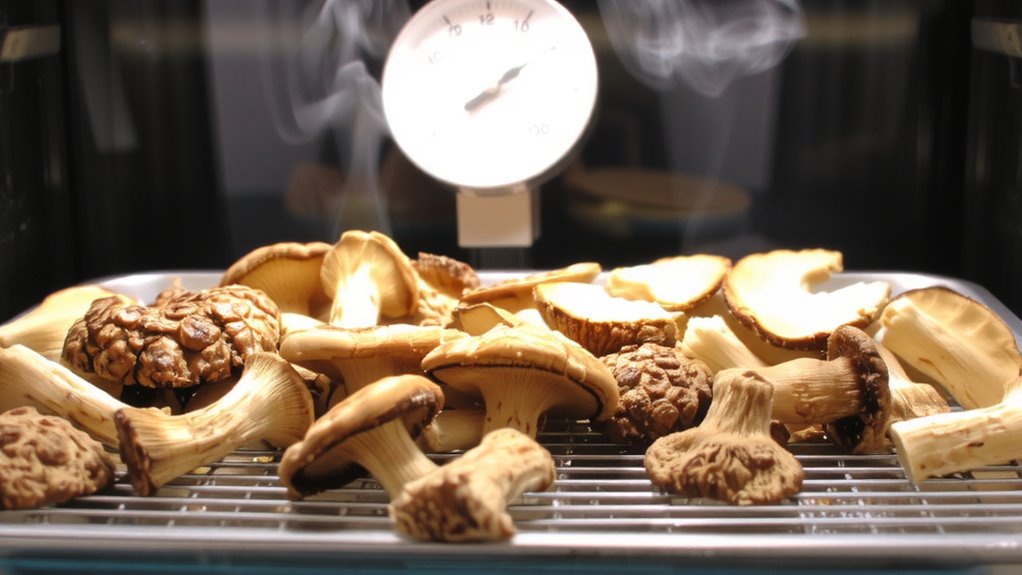
Time to get those wild mushrooms ready for drying-clean and prepped right makes all the difference. You need to start with accurate species identification; mistaking look-alikes can lead to serious health risks. Use reliable field guides or apps, but never rely solely on color or shape. Your foraging techniques matter-harvest mature specimens with intact caps and stems for proper ID. Gently brush off dirt with a soft brush or cloth; avoid rinsing unless absolutely necessary, as mushrooms absorb water easily. Slice each one evenly, about 1/4 to 1/2 inch thick, to guarantee uniform drying. Discard any insect-eaten or mushy parts. Proper prep reduces spoilage and preserves nutritional value. Good handling from harvest to drying improves shelf life and potency. Clean, consistent slices dry faster and rehydrate better when needed. For optimal results, use a dehydrator with adjustable temperature settings, such as those recommended for making jerky, to ensure consistent heat distribution and efficient moisture removal-best dehydrators for making jerky.
Set the Right Temperature to Kill Spores
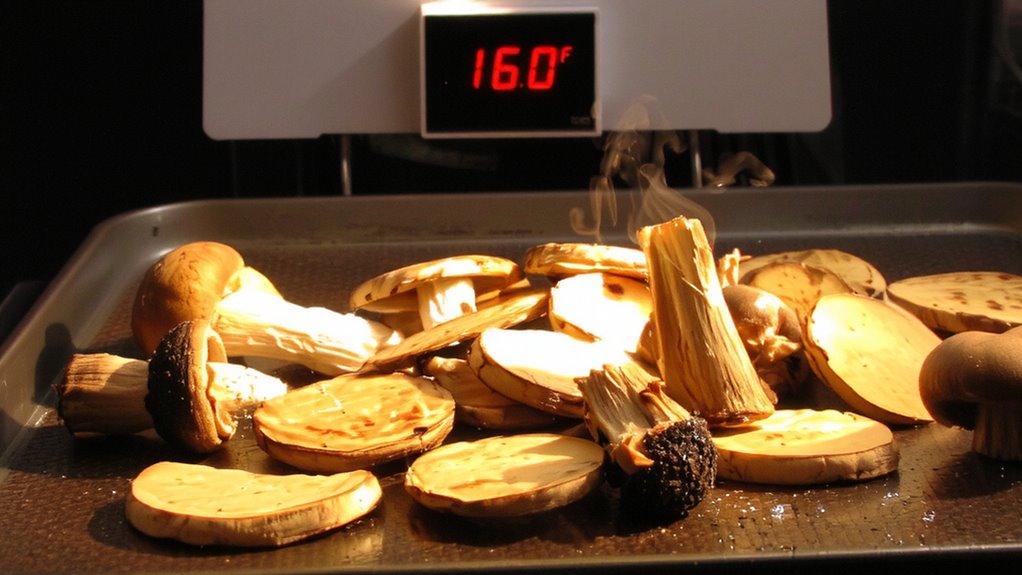
While ensuring your mushrooms are properly sliced and cleaned, you’ll want to heat them quickly to neutralize spores that could pose health risks or affect storage. To reduce spore viability, raise the internal temperature of the mushrooms to at least 160°F (71°C) for 10–15 minutes before dehydration. This brief heat exposure triggers thermal degradation in reproductive structures without cooking the flesh. Skipping this step risks preserving live spores, which may compromise long-term storage or introduce contaminants. You can use a steam blanch or dry roast in an oven, but monitor closely-excess heat alters texture and flavor. This method isn’t foolproof, but it markedly lowers biological activity. Once spores are deactivated, proceed to drying. Thermal degradation at this stage is necessary and intentional, not a defect. The goal is safety and stability, not freshness. Use a food thermometer to verify results. Precision matters.
Dry Mushrooms at 95–115°F: Step by Step
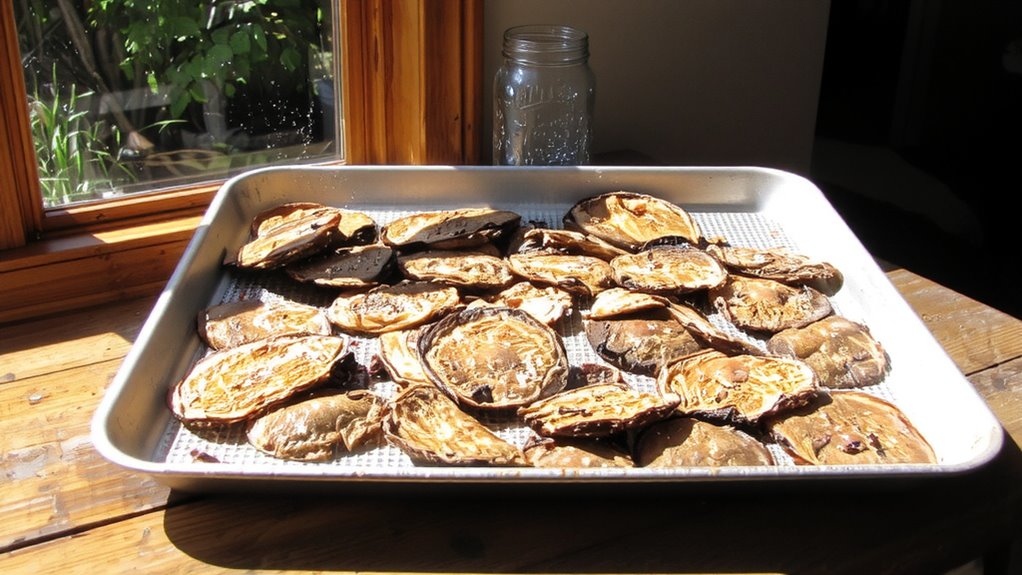
Once you’ve deactivated the spores, set your dehydrator to maintain a steady 95–115°F, since that range reliably removes moisture without cooking the mushrooms. Arrange the slices in a single layer on the trays, making sure they don’t overlap-this supports consistent air circulation and prevents damp spots. Good airflow is critical; models with rear-mounted fans perform more evenly than stackable units with weak airflow. Check the drying time every 4–6 hours; most mushrooms take 6–12 hours depending on thickness and moisture content. Thinner slices dry faster, but rotating trays halfway through improves uniformity. Don’t rush it-lower temps preserve more flavor and nutrients, though they extend drying time. Avoid overcrowding, as it traps humidity and risks spoilage. Your setup should maintain temperature stability and steady air circulation throughout. This method delivers reliable, thorough dehydration suitable for long-term storage.
Test for Crisp, Mold-Free Dryness
A properly dried mushroom should feel crisp and snap cleanly when bent, not rubbery or pliable-this level of dryness guarantees mold can’t develop during storage. Check several pieces from different parts of the batch; if any feel leathery or leave a moist impression when snapped, they still hold too much moisture content. Ideal drying reduces moisture to 10% or less, which maximizes shelf life and prevents spoilage. You can test this further by placing a few pieces in a sealed container-if condensation forms within hours, they need more time in the dehydrator. Don’t rush it; under-dried mushrooms degrade quickly, even in dark, cool storage. Over-drying slightly isn’t ideal but won’t harm safety, while under-drying risks mold and shortens shelf life. Consistent crispness across the batch means you’ve achieved the necessary dryness. That’s the standard for long-term viability-no guesswork, just reliable results.
Store Dehydrated Mushrooms Long-Term
Every single dried mushroom you’ve painstakingly dehydrated deserves proper storage to maintain its quality for months or even years. For long term storage, moisture and oxygen are your main enemies. Vacuum sealing eliminates air exposure, markedly slowing oxidation and preventing texture or flavor degradation. Place cooled mushrooms in clean, airtight containers or vacuum sealable bags-ensure no residual moisture remains to avoid condensation inside the seal. Vacuum sealing outperforms standard zipper bags or jars with loose lids in shelf life extension. Store sealed packages in a cool, dark place; sunlight and heat accelerate nutrient loss. Properly stored, vacuum-sealed mushrooms retain potency and structure for up to two years. Always label containers with the date to track viability. Check seals periodically. If a bag loses its vacuum, re-dry and repackage immediately. A reliable best food dehydrator for preppers ensures consistent results and optimal conditions for long-term storage success. This method delivers reliable results without gimmicks.
Why Heat Matters in Safe Mushroom Preservation
Because moisture and microbes are the primary causes of spoil
age, applying sufficient heat during dehydration isn’t optional-it’s essential for safe preservation. You’re not just removing water; you’re guaranteeing spore viability is eliminated through controlled thermal degradation. Insufficient heat leaves spores intact, risking regrowth during storage. Proper temperatures deactivate enzymes and microorganisms that compromise safety and shelf life.
| Temperature (°F) | Effect on Spore Viability |
|---|---|
| 100–110 | Minimal impact |
| 115–125 | Slows spore activity |
| 130–140 | Begins thermal degradation |
| 145–150 | Significant reduction |
| 155+ | Near-complete elimination |
You need at least 145°F for several hours to guarantee reliable results. Thermal degradation doesn’t happen instantly-time and consistent heat matter. Your method must balance drying speed with microbial safety. Skimping on heat compromises preservation, no matter how dry the mushrooms appear.
On a final note
You’ve dried the mushrooms at 95–115°F, which effectively kills spores and prevents mold. Proper dryness means they snap, not bend. This range balances moisture removal without cooking the fungi. Store them in airtight containers away from light and moisture. Lower temps take longer but preserve more compounds; higher temps speed drying but risk overheating. It’s a trade-off between time and quality. The method works-no spoiling, no waste, just reliable results.