Using Solar Panels for Charging Electronics During Extended Camping Trips
You need solar panels on extended trips to charge phones, GPS, and lights without grid power or heavy batteries. A 50–60 watt foldable panel weighs under 5 pounds, runs silently, and generates enough power in 4–6 hours to recharge a power bank daily. Look for IPX4 rating and 20% efficiency to handle rain and low light. Avoid shade and daisy-chaining. Use a power bank to store energy. Up next, you’ll see how setup and positioning make or break performance.
Notable Insights
- Use a 50–60 watt foldable solar panel with at least 20% efficiency for reliable power on multi-day trips.
- Pair the solar panel with a high-capacity power bank to store energy and charge devices off-grid.
- Position the panel at a 30°–45° angle and reposition it throughout the day to maximize sun exposure.
- Avoid shading and use elevated stands to maintain up to 50% higher charging efficiency in variable terrain.
- Choose panels with USB-C and QC 3.0 ports, and inspect cables regularly to prevent power loss.
Why Solar Panels Are Essential for Camping Trips
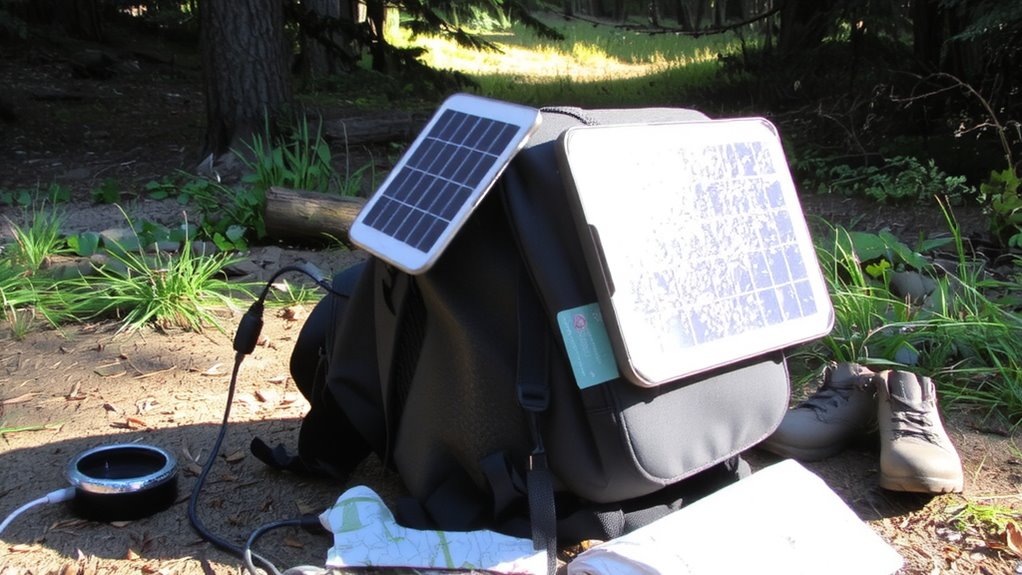
While you’re out in the wild, staying powered isn’t just convenient-it’s often necessary. Solar panels give you energy independence, letting you charge devices without relying on grid power or fuel-dependent generators. You won’t run out of juice mid-trip if you can harvest sunlight daily. Most portable units generate 10–100 watts, enough to power phones, GPS units, and LED lights after a few hours in direct sun. They’re lightweight-many weigh under 5 pounds-so they won’t burden your pack. Unlike gas generators, solar panels produce zero emissions, reducing your environmental impact. There’s no noise, fumes, or fuel to carry. Efficiency drops in clouds, but with proper planning, you’ll maintain critical power. Energy independence means you’re not tied to campsite outlets or car batteries. You’re free to roam farther and longer. For reliability, minimal maintenance, and silent operation, solar is a practical choice. It works passively, all day, with just proper sun exposure. For best results, choose one of the best backpacking solar panels based on wattage, weight, and durability.
How to Choose a Solar Panel for Camping Electronics
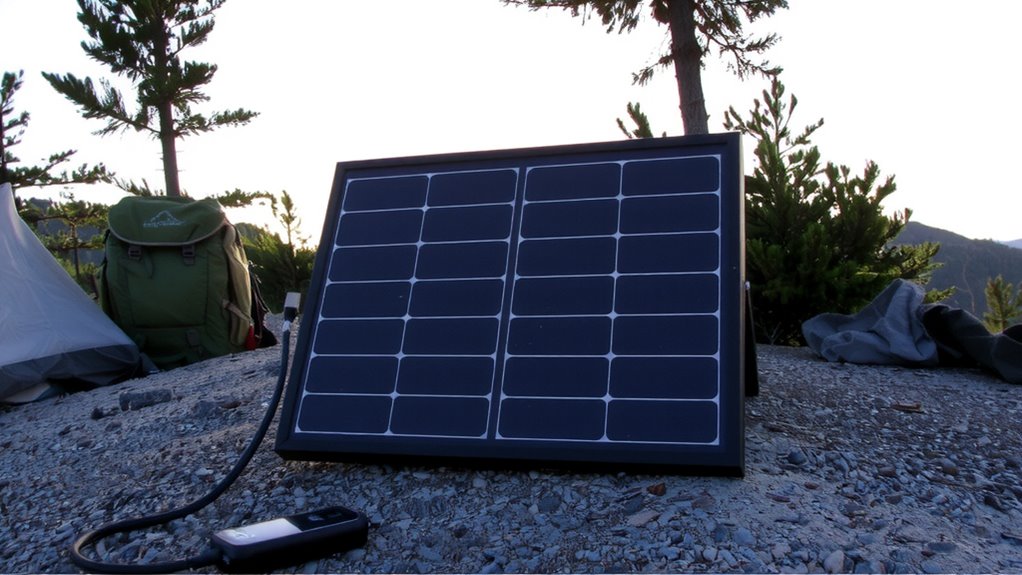
You need power on the trail, and solar panels give you a reliable way to keep your gear running without depending on outlets or heavy batteries. Look for solar efficiency ratings above 20%-higher efficiency means more power from less sunlight, which matters on cloudy days or in dense tree cover. Lighter, foldable panels are easier to carry but often sacrifice some efficiency. You’ll need to balance weight against output based on your trip length and device load. Panel orientation is critical: tilt the panel toward the sun and adjust it every few hours. A misaligned panel can lose over 30% of its potential charge. Fixed-angle setups work poorly unless you’re in open, sunny areas all day. Always match the panel’s output to your battery or device requirements. Don’t assume more watts mean better performance if solar efficiency and panel orientation aren’t optimized. For backpackers, the best solar panels for hiking combine portability with high efficiency to maximize charging in variable conditions.
Key Features of Reliable Portable Solar Panels
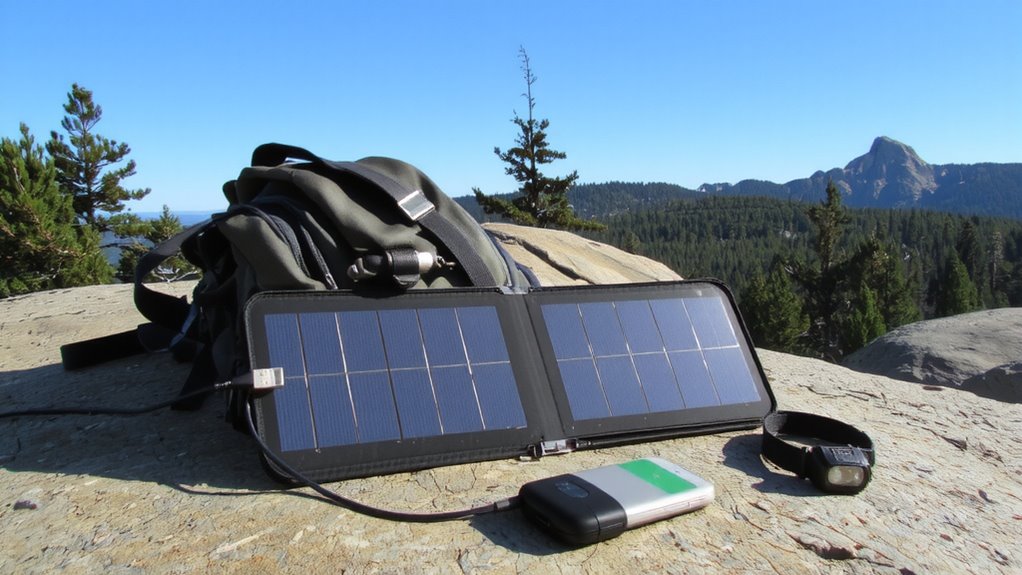
A dependable portable solar panel needs rugged construction-water-resistant materials, reinforced corners, and durable fabric backing-so it can handle dirt, rain, and rough handling in the backcountry. Water resistance guarantees function in wet conditions, while smart portability design balances weight and packability without sacrificing durability. Panels that fold or roll compactly fit easily in backpacks and deploy quickly. Avoid flimsy hinges or thin fabrics-they fail under stress. Top models on the market today offer reliable performance for charging essentials over multiple days off-grid, making solar battery chargers a smart investment for extended trips. Here’s what to compare:
| Feature | Why It Matters |
|---|---|
| Water resistance | Keeps working in rain or morning dew |
| Portability design | Fits in your pack; easy to carry miles |
| Solar conversion | Higher efficiency = faster charging |
Pick one with at least 20% conversion efficiency and verified IPX4 or better water resistance. Trade-offs exist: ultra-light models may lack durability. Choose based on your environment and power needs, not marketing.
Set Up Your Solar Panel for Maximum Sun Exposure
Just because a solar panel survives the trail doesn’t mean it’ll charge well-its position determines how much power you actually get. You need to optimize angle adjustment to match the sun’s position, typically between 30° and 45° in mid-latitudes during peak daylight. A tilt that’s too flat or too steep reduces efficiency by up to 30%. Placement timing matters just as much: set up the panel an hour after sunrise or before sunset when the sun is low, but reposition it at midday when the sun peaks. Avoid shading from trees or gear-even partial shade can cut output in half. Use a ground-clearing stand if camping on uneven terrain. Panels perform best when directly facing the sun and adjusted every few hours. Fixed setups lose 15–25% efficiency compared to active tracking. Real-world tests show consistent gains when using both angle adjustment and strategic placement timing.
How to Charge Camping Electronics Off-Grid
Why settle for dead batteries when the sun’s already doing the work? You can keep your devices running off-grid by pairing a reliable solar panel with a high-capacity power bank. This setup extends battery life and guarantees consistent charging speed, even on cloudy days. Look for panels with at least 60 watts output-they recharge a power bank in 4–6 hours of direct sun. USB-C and QC 3.0 ports improve charging speed for modern phones and cameras. Smaller devices like headlamps or GPS units drain less power, so they last longer between charges. Avoid charging directly from the panel unless you’re in full sun; inconsistent input slows charging speed and stresses battery life. Instead, store energy in the power bank first. Test your gear at home to know real-world performance. You’ll rely on efficiency, not luck, when off-grid.
Common Solar Charging Mistakes to Avoid
Skipping the instruction manual is the fastest way to waste sunlight. You might assume panel setup is intuitive, but ignoring manufacturer guidelines can lead to poor positioning, inefficient charging, or damage. Overheating risks increase when you run devices or power banks directly under peak sun without ventilation-lithium batteries degrade faster above 35°C. Leaving your panel out all day, especially in hot climates, compounds this risk. You also risk cable degradation if you use frayed or low-gauge wires; they lose efficiency and generate excess heat. Damaged insulation or corroded connectors reduce power transfer by up to 30%. Always inspect cables before deployment and replace worn ones. Don’t daisy-chain multiple devices beyond your panel’s rated output-overloading strains the system. Positioning matters: angle toward the sun and adjust throughout the day. Simple errors cost you power you can’t afford off-grid.
Compare Solar Panels: Weight, Power, and Durability
Most solar panels for camping weigh between 1 and 5 pounds, with power output ranging from 20 to 100 watts, so you’ll need to balance what you can carry against how much energy you actually need. Lighter models save pack space but often sacrifice power efficiency, meaning longer charge times. Panels around 50–60 watts offer a practical middle ground for charging phones, GPS units, and small batteries without adding excessive load. You’ll want high power efficiency to maximize output on cloudy days or in shaded areas. Look for rugged designs with solid weather resistance-rated for rain, UV exposure, and temperature swings. Flexible panels are lightweight but less durable; foldable ones with protective covers handle drops and dirt better. Real-world testing shows that even if a panel claims 100 watts, sustained output is usually lower due to environmental factors. Pick one that matches your trip length and device needs without overpromising.
On a final note
You’ll rely on solar when the grid’s gone, so pick a panel that balances weight, wattage, and durability. A 60–100W model charges phones and power banks in 3–5 hours under full sun. Lightweight fabrics save pack space but wear faster; rigid panels last longer but weigh more. Position at a 30–45° angle toward the sun, and use a USB regulator to avoid overloading devices. No system works at night or under trees-plan for backup.