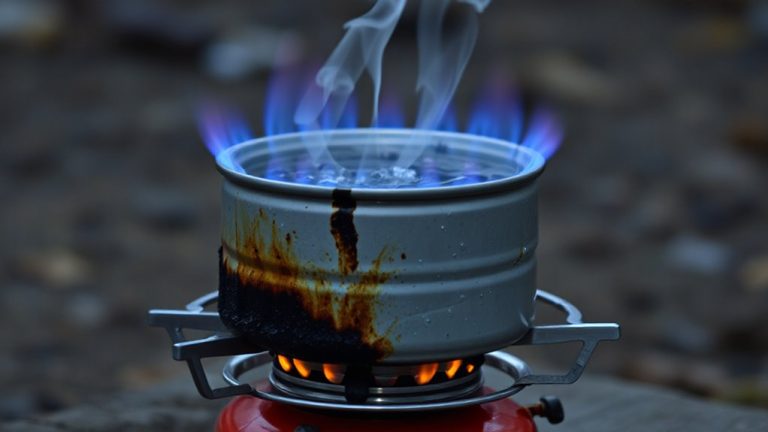
Filter Muddy Water With Sand, Charcoal & Cloth (No Tools)
You can filter muddy water using sand, charcoal, and cloth found in the wild. Layer them in a container-cloth at the bottom, then sand, charcoal on top-to trap debris and improve clarity. This removes silt and some chemicals but not bacteria or viruses. Always boil the filtered water for at least one minute to make it safe. Skipping this step risks illness. Clear water isn’t necessarily clean-what you don’t see can still harm you. There’s more to get right.
Notable Insights
- Use a hollowed log or cut plastic bottle as a container when no tools are available for building a filter.
- Layer materials with coarse gravel at the bottom, then sand, and crumbled charcoal on top for effective filtration.
- Place clean cloth at the top to trap large debris before water passes through the filter layers.
- Avoid black, oily sand and use only dry, untreated wood charcoal to prevent introducing contaminants.
- Always boil filtered water for at least one minute to kill bacteria and viruses, even if it looks clear.
Gather These Natural Filtering Materials
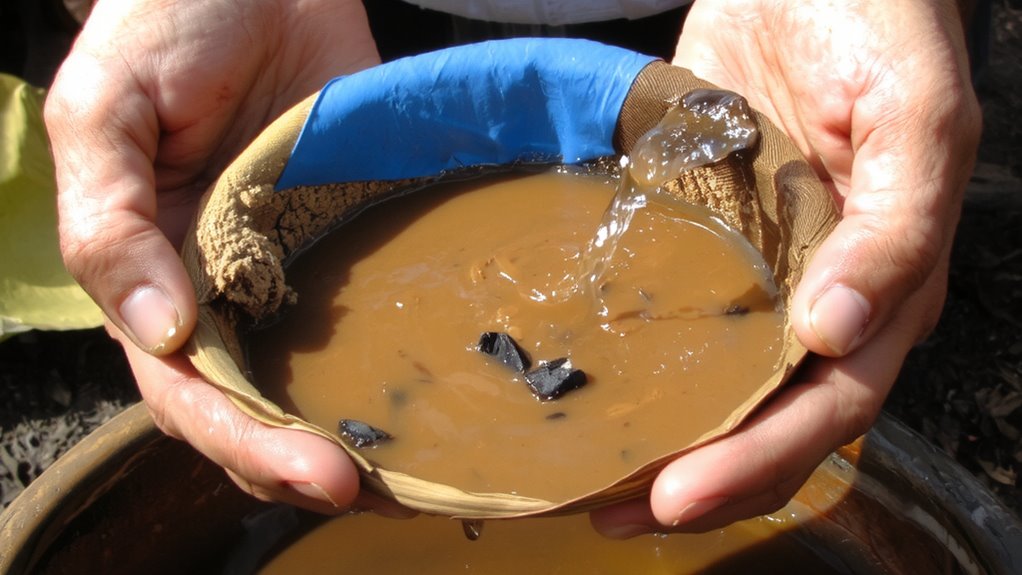
Start with what’s around you-dirt, sand, gravel, and charcoal aren’t high-tech, but they get the job done when you’re filtering muddy water. You’ll need clean cloth, too-something like a shirt or bandana works. Your material gathering starts simple: look near streams, rivers, or recently burned areas for charcoal. Sand and gravel are usually in riverbeds or banks. Pick coarse gravel first, then finer sand. Avoid black, oily sand-it’s likely contaminated. Charcoal should be dry, crumbly, and from untreated wood. Once collected, arrange layers in a container: gravel at the bottom, then sand, then charcoal on top. This filtration setup traps debris and absorbs some impurities. It won’t make water safe to drink on its own, but it clears visible muck. No tools? Use a plastic bottle cut in half or a hollowed-out log. Keep layers distinct-mixing reduces effectiveness.
How Sand and Charcoal Clean Water
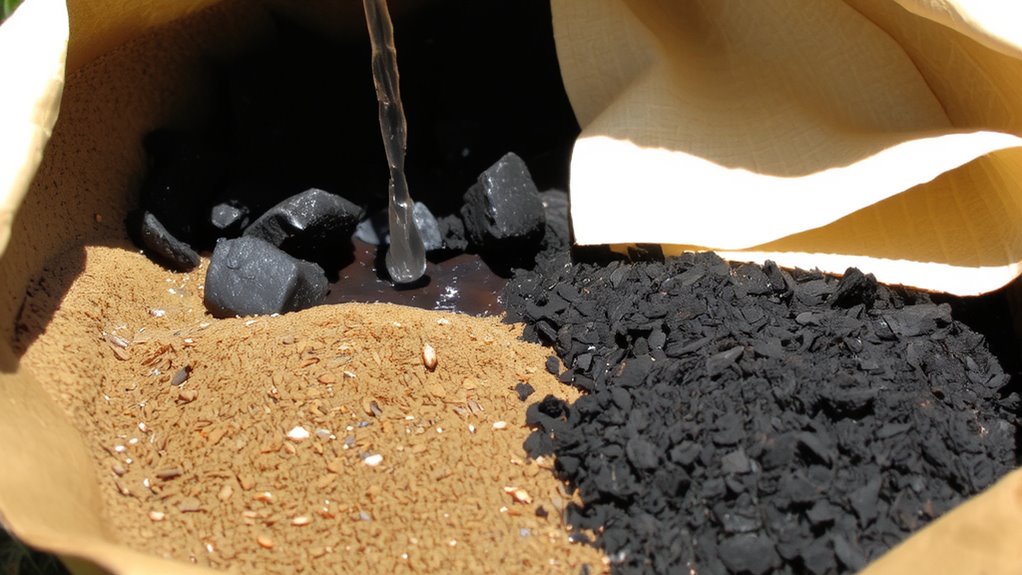
While sand and charcoal won’t kill pathogens, they do a solid job removing visible debris and some contaminants when you’re filtering water in the wild. Sand handles particle filtration by trapping silt, mud, and larger impurities as water seeps through. The finer the sand, the better it captures small particles, though it won’t stop bacteria or viruses. Charcoal, especially if it’s activated, works through the adsorption process, binding chemicals,异味, and some dissolved pollutants to its surface. It doesn’t remove everything, but it improves taste and reduces certain toxins. Used together, they offer a practical two-stage cleanup. You’ll still need to boil or treat the water afterward, but sand and charcoal cut down cloudiness and some hazards. It’s not perfect, but in a survival situation, the combo boosts your odds of safe hydration with minimal tools.
Build a Natural Water Filter in the Wild
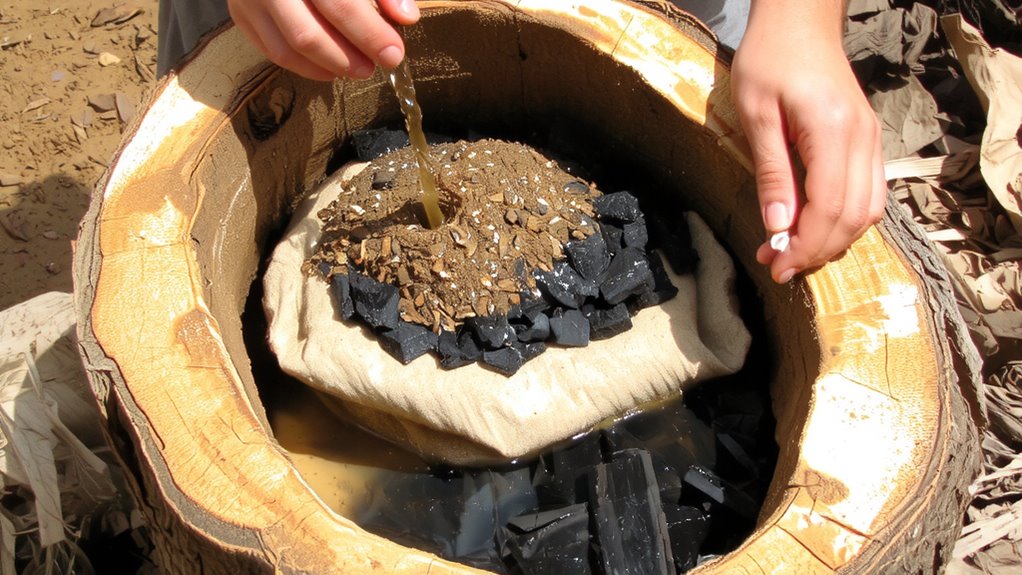
A functional water filter from what’s around you? Yes, if you use natural materials wisely. Start with water collection using a container or dug pit. Layer debris-free materials in this order: cloth, sand, charcoal, sand, and rock layers. Gravity pulls water through, trapping sediments. Effectiveness depends on layer thickness and material cleanliness.
| Layer | Purpose |
|---|---|
| Cloth | Filters large debris |
| Fine Sand | Removes silt, clay |
| Charcoal | Absorbs impurities |
| Coarse Sand | Prevents clogging |
| Rock Layers | Supports structure, aids flow |
Thicker sand and charcoal layers improve filtration. Uneven layers reduce flow and filtering. Use stable rocks to prevent shifting. This method clarifies water but doesn’t make it safe to drink. Performance varies with soil type and water turbidity. It’s a practical step in survival filtering-simple, tool-free, and functional when refined layering is applied correctly.
Boil or Treat Water After Filtering
That filtered water still isn’t safe to drink-boiling is the surest way to kill pathogens. You need to bring it to a rolling boil for at least one minute (three at higher elevations) to guarantee water purity. Filtering removes debris and some microbes, but it won’t eliminate bacteria, viruses, or protozoa. Chemical residues from pollution or upstream runoff also remain unaffected by sand, charcoal, or cloth filters. If boiling isn’t possible, use purification tablets or a reliable portable UV device, though these won’t remove chemical residues either. Boiling doesn’t change the water’s chemical makeup, but it delivers consistent microbial safety. No method is perfect-boiling won’t improve taste or remove sediment fully-but it’s the most effective step for pathogen control. For true water purity in the wild, never skip treatment after filtering. Your health depends on it.
Don’t Skip These Safety Steps
You’ve filtered the water and maybe even boiled it, but skipping the final safety steps puts you at risk. Confirming water purity isn’t optional-residual pathogens or chemicals can still linger. Test clarity and odor; if the water looks cloudy or smells odd, it’s not safe. Even if it looks clean, microorganisms invisible to the eye could cause serious health risks. Let the water cool completely before handling to avoid burns during final checks. Store it in a clean, covered container to prevent recontamination. Your filtering system may remove sediment and some microbes, but without verification, you’re gambling with your health. These steps don’t guarantee perfect results, but they reduce known health risks markedly. Skipping them assumes danger won’t find you-don’t make that mistake. Water purity matters because your survival depends on what you can’t see.
When to Trust Your Filter and When to Boil
How do you know when your filter’s enough and when it’s time to light the stove? Your sand, charcoal, and cloth filter removes debris and some chemical contaminants, improving clarity and taste. It also cuts down on certain waterborne pathogens by trapping larger microbes and absorbing impurities. But it won’t catch viruses or all bacteria. If the water source is downstream from livestock, human activity, or stagnant pools, pathogens are likely still present. Boiling is the only reliable way to destroy them. Trust your filter when the water looks clear and you’re in a low-risk area with minimal runoff. Still, if you’re unsure or the illness risk is high, boil it for one full minute. Filters help, but they’re not foolproof. Boiling adds a critical safety layer-especially when waterborne pathogens are a real threat. Don’t gamble with your health.
On a final note
You’ve filtered the water, but it’s not safe yet. Sand and charcoal remove debris and some contaminants, but they won’t kill bacteria or viruses. Always boil filtered water for at least one minute or use chemical treatment. This filter helps in survival situations, but it’s not foolproof. Rely on it to clear visible dirt, not to make water completely safe. Final treatment is non-negotiable.