Boiling Water in a Metal Can Using a Portable Stove
Use a stainless steel or titanium can rated for direct flame, at least 0.6 mm thick and free of linings or rust. Place your portable stove on a flat, stable surface and center the can over a steady blue flame. Boil water for one minute to guarantee safety. Avoid dented or thin-walled cans, and never heat sealed ones. If smoke appears, shut off the stove and move the can with tongs. You’ll learn what to watch for in real-world conditions.
Notable Insights
- Use unlined stainless steel or titanium cans rated for direct flame to avoid toxin release.
- Place the portable stove on a flat, stable surface to ensure even heating and prevent tipping.
- Center the metal can over a steady blue flame for efficient boiling and minimal soot.
- Boil water for at least one minute to ensure pathogens are destroyed, especially at altitude.
- Never heat sealed cans-always open them first to prevent pressure buildup and potential bursting.
Why Boil Water in a Metal Can?
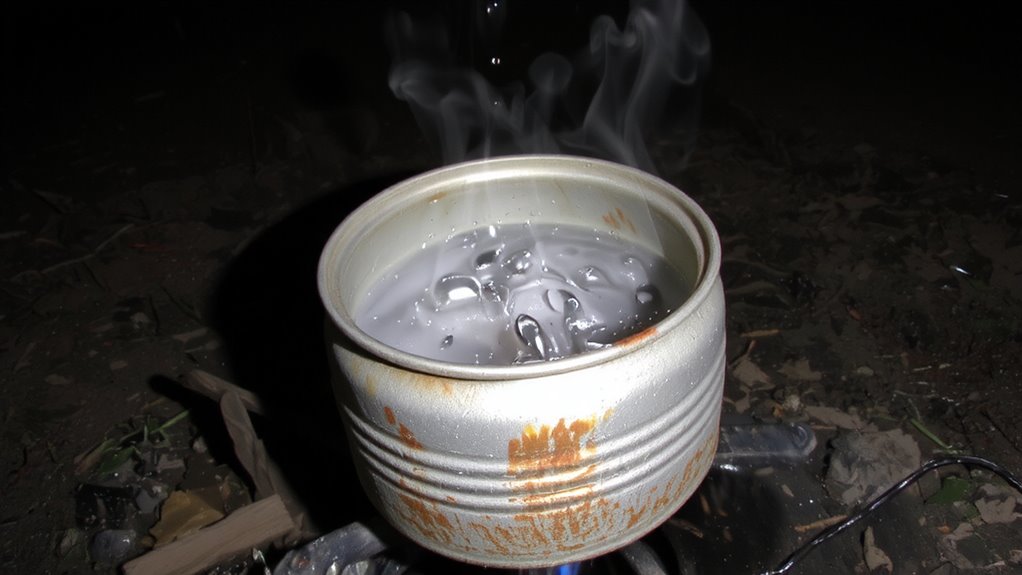
Boiling water in a metal can comes down to practicality and durability when you’re in the backcountry. You need something that won’t crack under heat or fail after one use, and metal cans deliver. Unlike plastic or glass, they withstand direct flame from a portable stove without deforming. Historical methods often relied on metal for this reason-think pioneers using tin pots over open fires. It’s a proven solution. Alternative containers might seem lightweight or eco-friendly, but they often can’t match metal’s heat tolerance or longevity. Metal’s thermal conductivity guarantees faster boiling, saving fuel. Sure, it adds some weight, but you’re trading ounces for reliability. Dented? It still works. Dropped? Likely intact. You’re not just carrying a container-you’re carrying redundancy, resilience, and a track record tested by time and terrain. When clean water’s critical, metal’s performance outweighs minor drawbacks.
Choose the Right Metal Can for Safety
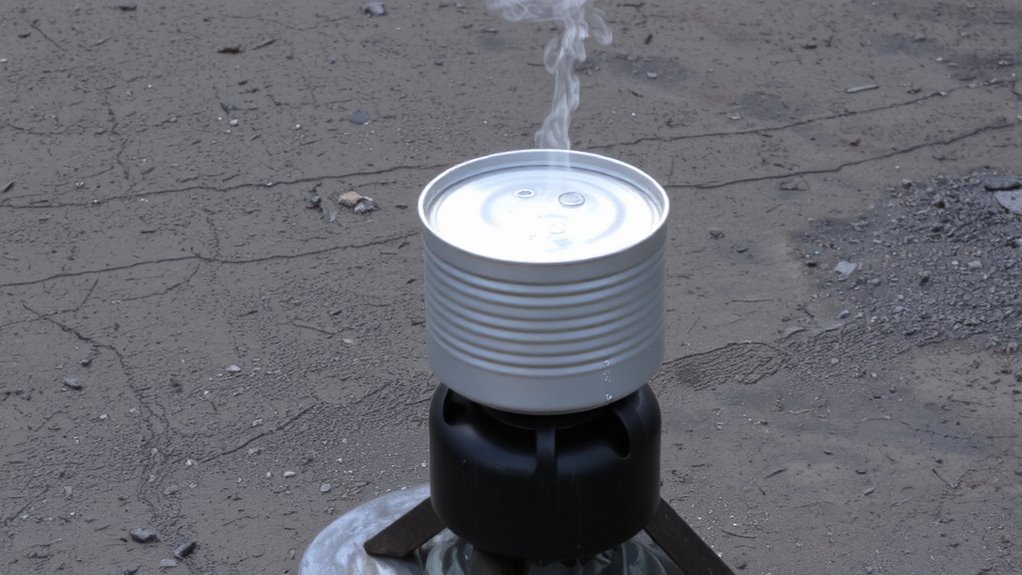
A good metal can keeps you safe when boiling water over a portable stove, and your best bet is an unlined stainless steel or titanium container rated for direct flame. Avoid cans with linings-they can release toxins when heated. Material thickness matters: too thin, and the can warps or burns through; too thick, and it’s unnecessarily heavy. Check for rust presence-any sign of corrosion weakens the structure and contaminates your water. Use only cans designed for cooking, not repurposed food cans, which often fail under direct flame.
| Risk Level | Material Thickness | Rust Presence |
|---|---|---|
| High | <0.3 mm | Visible |
| Medium | 0.3–0.5 mm | Surface spots |
| Low | >0.5 mm | None |
| Critical | <0.2 mm | Any |
| Safe | ≥0.6 mm | None |
Set Up Your Stove Right
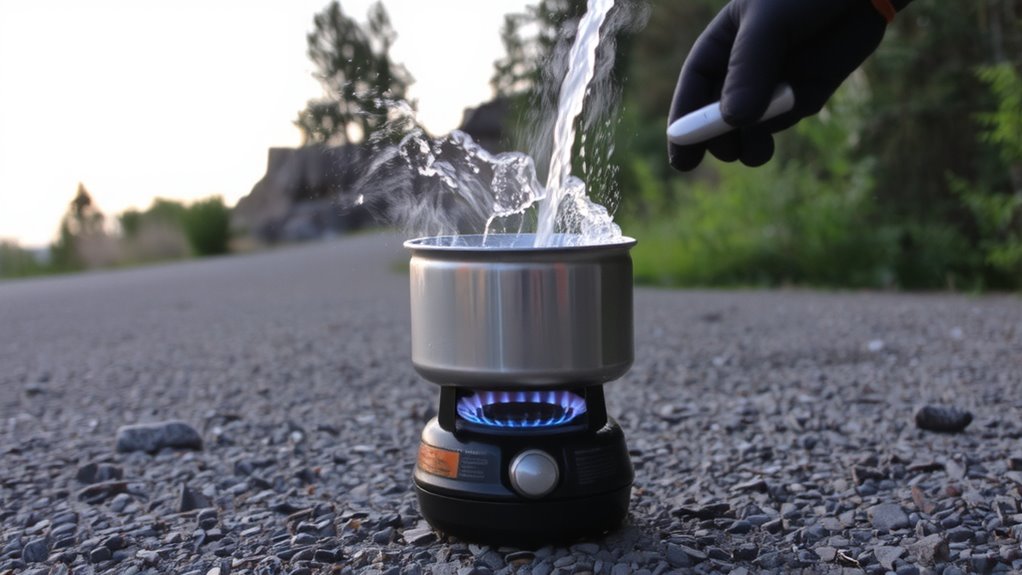
Even if you’ve got the right stove, a poor setup can waste fuel and extend boiling time, so position your stove on a flat, stable surface to guarantee even heat distribution and minimize tipping risk. Stove stability isn’t just about safety-it directly affects how fast your water boils. An unstable base wobbles the can, increasing spill chances and reducing thermal efficiency. Always check the surface before igniting; uneven ground or loose gravel causes imbalance. Your fuel type also matters. Isobutane burns cleanly and performs well in mild temps, but struggles in cold. Liquid fuels like white gas work across wider conditions but need more maintenance. Adjust setup based on fuel type-some require preheating or specific canister angles. Keep connections tight and the stove level. A few seconds spent leveling the unit saves fuel, cuts boil time, and guarantees reliable performance when it counts. For optimal versatility in extreme conditions, consider a multi-fuel camp stove that accommodates various fuel types with minimal adjustments.
Boil Water Safely Over Flame
Now that your stove’s set up stable and level, you’re ready to light it and bring water to a boil. Use steady flame control to avoid soot buildup, which can affect water purity. A clean, blue flame is ideal-too high and you risk overheating; too low and boiling takes longer, increasing exposure time to contaminants. Keep the can centered over the flame for even heating. For optimal performance, choose a stove with high fuel efficiency to minimize weight and maximize burn time on the trail.
| Condition | Flame Appearance | Result |
|---|---|---|
| Ideal | Blue, steady | Fast boil, no soot |
| Too High | Yellow, flickering | Soot, wasted fuel |
| Too Low | Small, weak | Slow heat, poor purity |
Maintain consistent flame control to guarantee reliable water purity. Boiling for at least one minute kills pathogens, but proper heat management is essential for safety and efficiency.
Skip These Metal Can Boiling Hazards
While metal cans seem convenient for boiling water, some types pose serious risks that could compromise both safety and efficiency. You shouldn’t use cans with seams or thin walls-they’re prone to metal fatigue and can split under heat. Avoid sealed cans; any trapped air leads to pressure buildup, increasing the chance of bursting. Even a small dent from prior use can weaken the structure, making failure more likely. Aluminum cans may heat quickly but lack durability over repeated use. Steel cans are stronger but heavier. Never use a can not designed for open-flame exposure. If the base isn’t flat, heat distribution becomes uneven, accelerating weak points. Stick to thick-walled, open-top containers made for camping-these resist cracking and handle thermal stress better. Simple design reduces failure risk. Your safety depends on choosing the right can, not just what’s handy.
If Your Can Starts Smoking, Do This
If you see smoke rising from your can while heating water, turn off the stove immediately-smoke often signals residue burning off, like oils or cleaning chemicals, which can contaminate water and create hazardous fumes. Move the can away from the heat source using tongs to avoid burns. Let it cool naturally; don’t use water as a cooling method unless necessary, since sudden temperature changes may warp thin metal. If you must cool it fast, apply minimal water in short bursts. Guarantee strong ventilation control by stepping upwind or relocating to an open area-smoke inhalation risks increase in enclosed spaces. Inspect the can after cooling; if it smells strongly chemical or shows scorch marks, discard it. Reusing compromised cans affects safety and water quality. Prevention includes thorough washing before first use and dry heating new cans briefly to burn off factory residues safely.
What You Can Do With Campfire-Boiled Water
Why stop at just boiling water when you’ve got a fire going? You can use that hot water for practical camp tasks like tea brewing or preparing instant meals. These require no extra fuel and deliver reliable results. Below is a quick comparison of common uses:
| Use Case | Time Required | Notes |
|---|---|---|
| Tea brewing | 3–5 min | Steep leaves 4+ min for full flavor |
| Instant soup | 2–3 min | Stir well to prevent clumping |
| Instant noodles | 3 min | Add water just off boil |
| Oatmeal prep | 2 min | Let sit covered for better texture |
Tea brewing works best with a covered container to retain heat. Instant meals depend on correct water temperature-rolling boil guarantees full rehydration. Each method saves fuel and cleanup time. Water boiled over fire performs the same as stove-boiled. No performance difference is observed. For backpackers, using an ultralight camp stove can significantly reduce pack weight while maintaining efficient heat output.
On a final note
You can boil water in a metal can safely if you use a sturdy, uncoated steel can and position it securely over a steady flame. Avoid cans with plastic linings or painted surfaces-they release toxins when heated. Keep the stove on stable ground and never leave the can unattended. If smoking occurs, remove it immediately. This method works in emergencies, but always inspect the can for damage first. It’s reliable, but not for long-term use.