How to Plan for Evacuation When You Have a Service Animal With a Vest and ID
Pack a 72-hour go-bag with water-resistant food, meds, collapsible bowl, and trauma dressing; label everything with your info. Confirm shelters are ADA-compliant-don’t assume pet-friendly means access. Your service animal has legal entry rights; staff can’t ask for details, only confirmation of service status. Train for loud noises, blackouts, and crowded exits using non-verbal cues and timed drills. Test gear and responses monthly. A vest and ID aren’t enough-proof and preparation get you through the door. Next steps guarantee nothing’s left to chance.
Notable Insights
- Pack a go-bag with three-day supplies of food, meds, collapsible bowl, and first-aid items in waterproof containers.
- Confirm that emergency shelters are ADA-compliant and explicitly allow service animals before evacuation.
- Conduct regular evacuation drills with your service animal to practice exits, commands, and stress-response under timed conditions.
- Carry physical and digital backups of vaccination records, ID, and service certification in a labeled, waterproof pouch.
- Use non-verbal signals and pre-programmed alerts to maintain communication with your service animal during chaotic evacuations.
Pack a Go-Bag for Your Service Animal
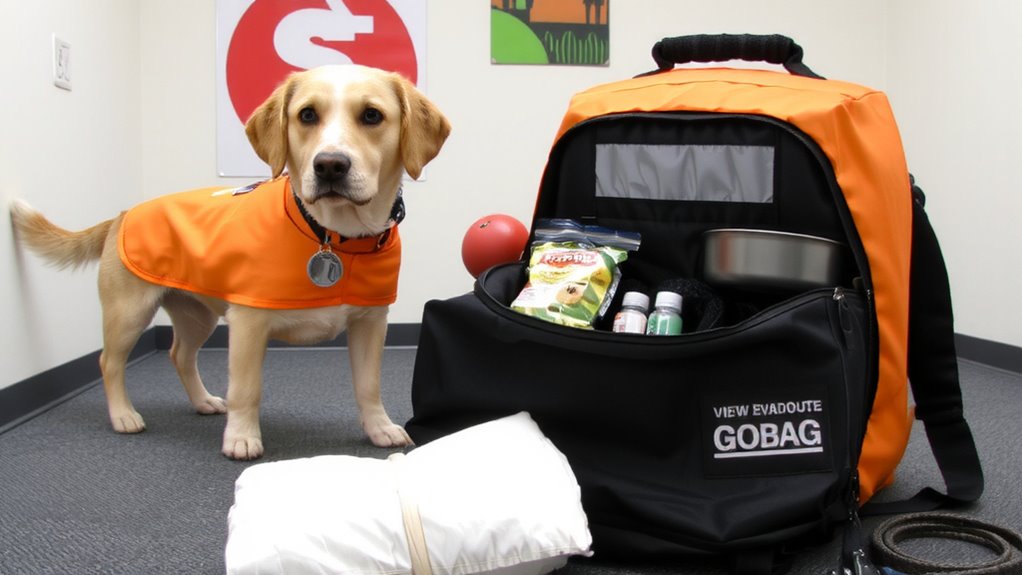
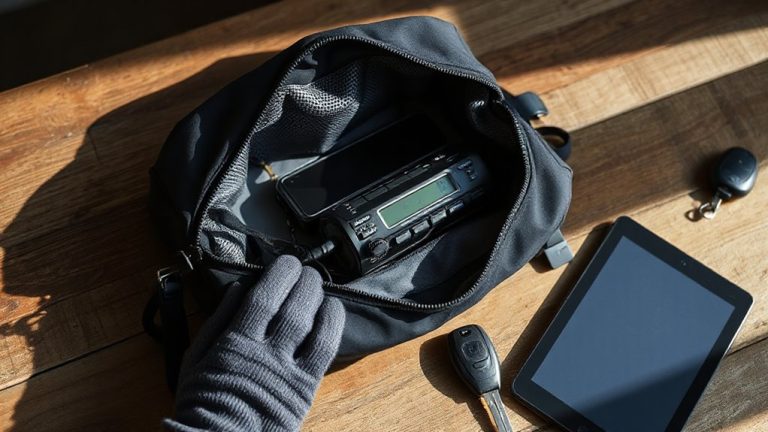
A solid go-bag for your service animal needs to be reliable, compact, and ready at a moment’s notice. You’ll need emergency supplies like a three-day supply of food, collapsible bowl, medications, and a first-aid kit-all sealed in durable, water-resistant packaging. Every item must fit in a lightweight pack that won’t hinder your animal’s movement. Include copies of identification documents: vaccination records, service animal certification, and your contact info, all in a waterproof pouch. Digital backups on a USB drive are smart, but physical copies are essential if power’s out. Label everything with your name and phone number. Choose a bag with external attachment points for leashes or vests, and test it during drills to guarantee comfort and access. A well-packed go-bag cuts chaos when seconds count, keeping both of you safer. Consider including a Best Military First Aid Kits–level trauma dressing in case of severe injury during evacuation.
Understand Your ADA Rights in Emergencies
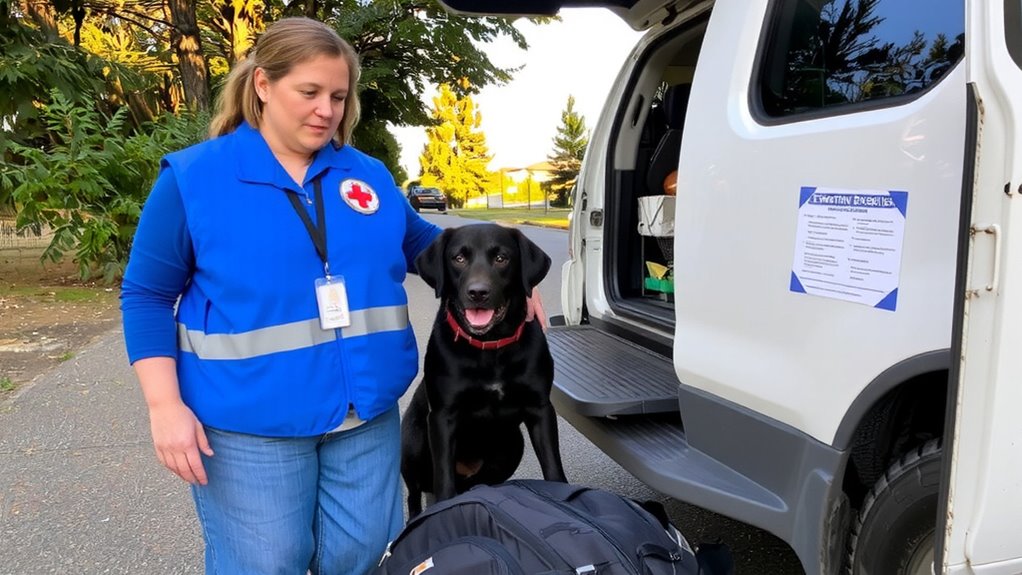
When disaster strikes, you’re entitled to keep your service animal with you in shelters and emergency housing-thanks to the ADA-but not every facility enforces this rule consistently. Knowing your emergency rights guarantees service access without delays. You don’t need to disclose your disability, only confirm your animal is a service animal. Staff can’t impose quarantine, fees, or restrict movement if your animal is under control.
| Right | Applies To | Limitation |
|---|---|---|
| Shelter entry with service animal | All public shelters | Not private residences |
| Equal access during evacuation | Transportation, housing | Animal must be trained |
| No segregation in facilities | Service access | Not emotional support animals |
| Exemption from pet fees | Emergency rights | Verification allowed |
| Denial appeal process | Local emergency plans | Requires documentation |
Train Your Service Dog for Crisis Situations
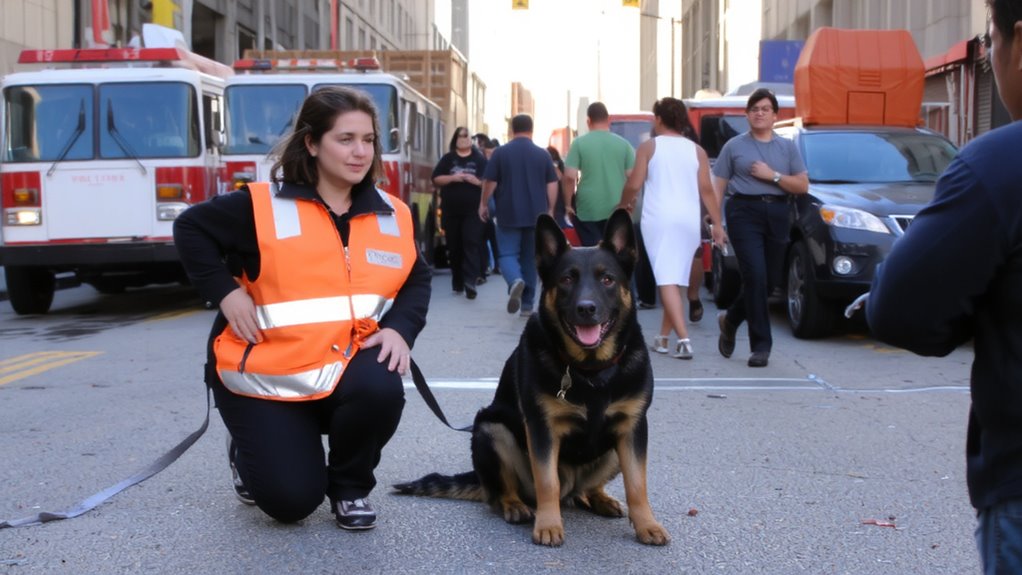
Your service dog must perform reliably in chaos, not just calm environments, so training for crisis situations is essential. Start with behavioral conditioning that exposes your dog to loud noises, crowds, and sudden movements in controlled settings. Gradually increase intensity to build focus amid distractions. Practice commands like “stay,” “come,” and “find exit” in unfamiliar locations during emergency preparedness drills. Use real-world scenarios-fire alarms, blackouts, or simulated evacuations-to test responsiveness. Consistent repetition improves reliability. Track progress weekly; note response time and accuracy. A well-conditioned dog maintains task performance even under stress. Don’t skip routine refresher training-skills degrade without practice. Equipment matters: guarantee the vest fits securely and ID is visible. Behavioral conditioning isn’t optional-it’s a core part of emergency preparedness. A dog trained for crisis helps you stay mobile and safe when seconds count.
Find ADA-Compliant Emergency Shelters
Where will you go when the evacuation order comes and you can’t bring your service dog to just any shelter? You need an ADA-compliant emergency shelter that meets your access needs. These shelters must allow your service animal, no exceptions. Start by checking local emergency management websites-they list facilities with confirmed shelter availability for people with service animals. Call ahead to verify policies; some shelters claim compliance but lack space or staff training. Prioritize shelters that have handled service animals before, as they’re more likely to accommodate you without delays. Don’t assume pet-friendly equals ADA-compliant-many aren’t. Map at least three options along evacuation routes. Confirm each one’s ability to support your access needs during past emergencies. Shelter availability fluctuates during crises, so real-time updates matter. Rely on official sources, not rumors. Planning now avoids risk later.
Plan How You’ll Communicate Under Stress
You’ve mapped out ADA-compliant shelters, but knowing where to go means nothing if you can’t communicate your needs under pressure. During emergencies, stress impairs speech and recall, so relying on words alone is risky. Instead, establish clear communication signals with your service animal beforehand-simple cues like a paw tap or vest tug can convey urgency when verbal commands fail. These signals are especially critical if your animal provides emotional support during disorientation or panic. Pre-programmed alerts, such as a vibrating collar or audible command button, offer reliable backup. Test these methods in noisy, crowded simulations to verify function. Written cards stating your needs and your animal’s status help when speech isn’t possible. Keep them accessible on your person or vest. Clear, practiced signals reduce delays and miscommunication, ensuring both you and your service animal respond effectively when seconds count.
Practice Evacuation Drills Together
Even though you’ve mapped shelters and set communication signals, none of it matters if you and your service animal haven’t practiced moving together under real-world conditions. Fire safety requires fast, coordinated exits, and stress can disrupt even well-trained routines. Regular evacuation drills build muscle memory for both of you. Simulate power outages using emergency lighting to test visibility and navigation. Time your drills-under five minutes from alert to exit is a practical goal. Include stairwells, crowded halls, and outdoor paths. Confirm your animal remains focused despite distractions. Check that their vest and ID stay secure during movement. Practice in different buildings to assess adaptability. These drills reveal gaps in preparation, like delayed response or equipment failure. Adjust your plan based on performance. Consistent practice guarantees reliability when conditions are unpredictable. Real-world effectiveness matters more than theoretical plans-test it under pressure.
On a final note
You need to know your service animal’s limits and gear reliability under stress. A well-stocked go-bag, clear ID, and up-to-date training improve outcomes. Not all shelters accept service animals, so confirm access ahead of time. Practice evacuations regularly-real conditions expose gaps no drill can. Your dog’s vest and ID must meet ADA standards, but they don’t guarantee entry. Be ready to explain rights calmly. Preparedness beats assumption every time.