Evaluating the Role of Amateur Radio in Supplementing Public Alert Systems
When power fails and cell networks go down, your phone can’t send alerts-but ham radio still works. It runs on batteries or solar power, uses no grid infrastructure, and reaches hundreds of miles via ionospheric bounce. During Hurricane Maria and California wildfires, hams relayed survivor locations and coordinated evacuations when 911 systems were out. They integrate with emergency responders using shared frequencies and repeaters. You can get licensed for under $150 and join local nets that activate when disaster hits. Continue to see how communities are building resilient alert systems with these proven backups.
Notable Insights
- Amateur radio operates independently of power grids and cellular networks, ensuring communication during infrastructure failures.
- It enables long-distance signal transmission via the ionosphere, especially with low-band frequencies during emergencies.
- Ham radio has proven effective in disasters, such as coordinating evacuations during Hurricane Maria and California wildfires.
- It integrates with official emergency response through dedicated repeater channels and joint interoperability drills.
- Local ham radio nets provide resilient, real-time coordination for shelters, responders, and supply delivery when other systems fail.
Why Public Alert Systems Fail in Crises
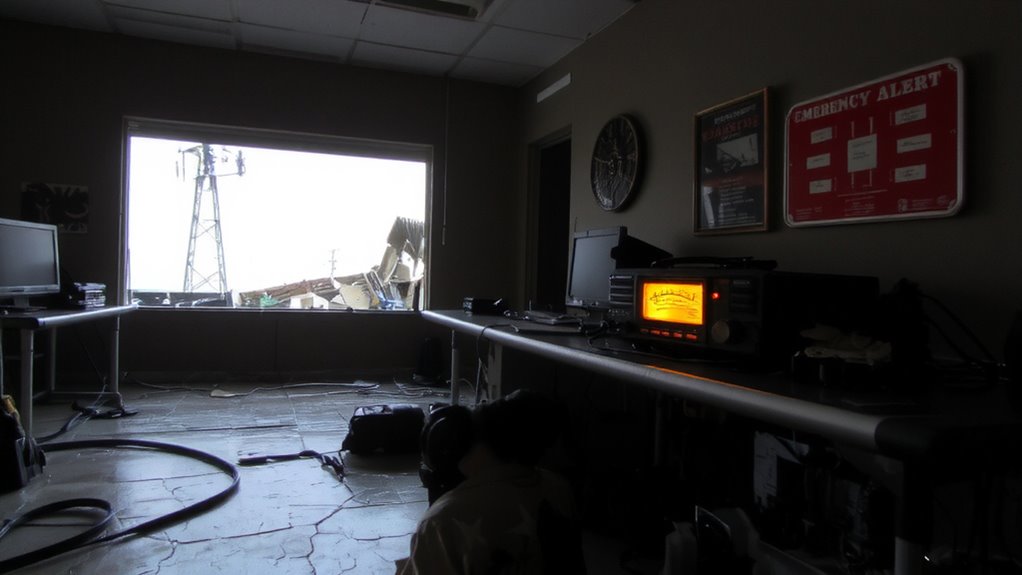
When the power goes down and cell towers go dark, you can’t rely on apps or text alerts to warn you-most public alert systems depend on infrastructure that fails under stress. Power outages knock out transmission hubs, backup systems, and network servers, leaving even well-designed alert platforms inert. During storms or blackouts, signal interference from damaged equipment or overloaded frequencies disrupts what little communication remains. You might have a working phone, but without tower connectivity or stable power, it’s just a heavy paperweight. These systems assume stable grids and clear signals, but crises rarely follow assumptions. Cell networks congest instantly during emergencies, and emergency broadcasts often fail due to reliance on centralized sources. Even IPAWS alerts struggle when local infrastructure lacks power. You’re left without timely updates. Real resilience means planning for failure points-because when power outages and signal interference strike, standard alert methods won’t hold up.
How Ham Radio Works When Others Go Silent
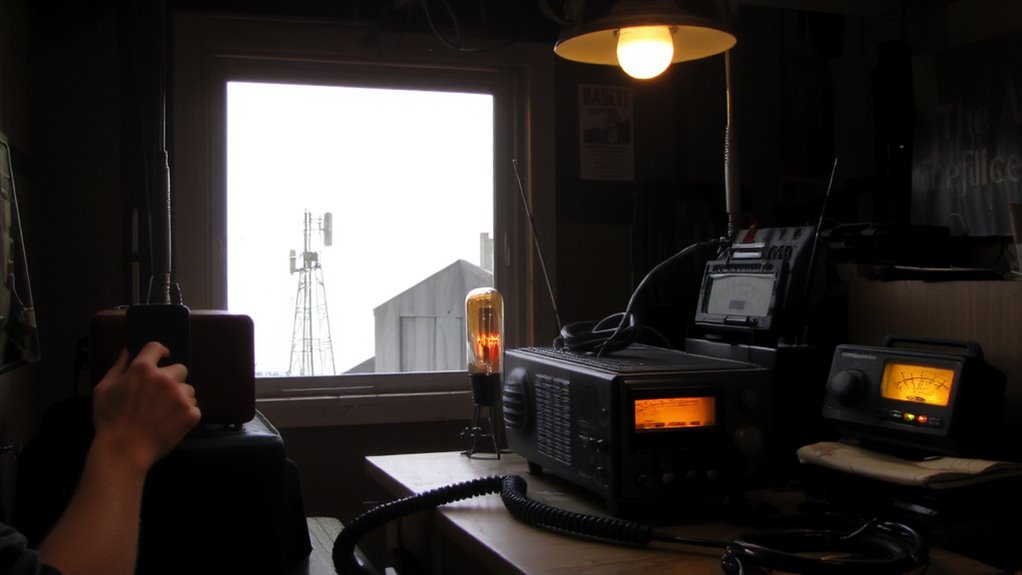
How do you stay informed when every digital channel goes quiet? You switch to ham radio. Unlike cell towers or internet-based systems, it doesn’t rely on infrastructure that fails under stress. Instead, you use signal propagation to bounce messages off the ionosphere, reaching hundreds or even thousands of miles. You pick low-band frequencies that travel farther during disruptions. When interference hits, you adjust-frequency hopping lets you shift channels quickly to avoid noise or congestion. You don’t wait for permission. You transmit directly, point to point, or through repeater networks that other hams keep live with portable power. Your gear runs on batteries, solar, or hand cranks. There’s no login, no server, no downtime. You get basic but reliable communication when it matters most. Ham radio doesn’t promise speed or clarity. It promises function-tested, proven, and independent. For those looking to get started, exploring the best HAM radio kits can provide a solid foundation for reliable off-grid communication.
Real Emergencies Where Ham Radio Saved Lives
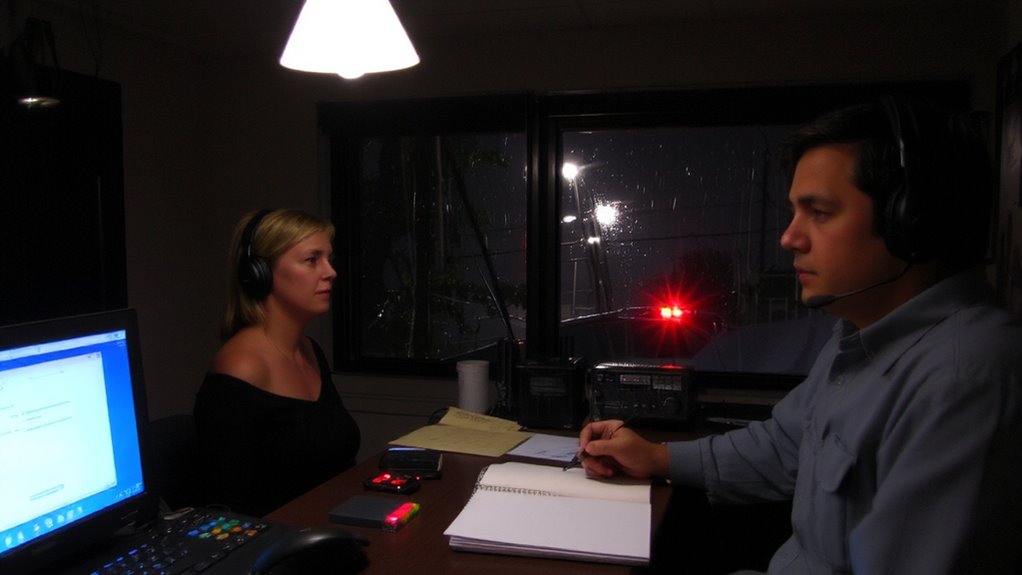
Though cell networks crumpled and emergency sirens fell silent, amateur radio operators still got through-because you don’t rely on towers or power grids when seconds count. During Hurricane Maria, you coordinated search parties in Puerto Rico when no other communication worked, relaying coordinates of stranded survivors within hours. In the 2018 California wildfires, you linked isolated disaster shelters to emergency responders, enabling evacuation of over 500 people despite internet outages. When floods cut off communication in Iowa in 2008, you maintained contact between shelters and staging areas, ensuring supplies reached affected families in under 12 hours. Your gear runs on batteries, solar, or hand cranks, so it keeps working when everything else fails. You don’t need infrastructure, just a working radio and a license. Performance is measured in lives reached, not signal strength. In real emergencies, you provide what cell networks can’t-reliable, immediate communication when it matters most.
Linking Ham Radio to Official Emergency Response
Because emergency response depends on verified communication, you’re more effective when integrated with official systems-so many public safety agencies now build ham radio into their continuity plans. You help maintain situational awareness when standard channels fail, using signal boosting to extend the range of emergency messages across fractured networks. With frequency sharing, you coordinate with first responders without causing interference, ensuring critical traffic gets through. Your equipment isn’t as fast as commercial systems, but it’s dependable when infrastructure collapses. You operate on standardized protocols during joint drills, which improves interoperability during real events. Some agencies assign hams dedicated repeater channels for relay support, especially in rural zones where cell coverage is spotty. You don’t replace official comms, but you fill critical gaps-especially when power, broadband, or cellular links go down. Your value isn’t in technology alone, but in disciplined, low-cost redundancy that’s been tested under real pressure. Reliable performance during disasters is often ensured by using the best two-way radios.
How to Get Licensed and Start Communicating
You’ve seen how ham radio supports emergency networks when normal systems fail, working alongside first responders to keep information flowing. Now it’s time to get licensed and start communicating. The licensing process is straightforward: study for the FCC’s Technician exam using free online resources, then schedule a test session with a local volunteer examiner. Once passed, you’ll receive your call sign in weeks. Equipment costs vary but don’t need to break the bank.
| Feature | Typical Entry-Level Cost |
|---|---|
| Handheld Radio | $100–$150 |
| Mobile Radio | $200–$300 |
| Basic Home Station | $400+ |
A simple handheld lets you join repeaters now. Add antennas and power later. You’re not buying a gadget-you’re joining a network. Start small, pass the test, and transmit.
Why Local Ham Nets Are a Cost-Effective Lifeline
While most emergency communication systems depend on infrastructure that can fail during disasters, local ham radio nets keep working because they’re decentralized and self-powered. You don’t need cell towers or internet-just radios, batteries, and trained operators. This makes them a reliable tool when everything else goes down. Local nets boost community resilience by maintaining contact between neighborhoods, shelters, and emergency responders. They’re especially useful in rural or underserved areas where backup systems are limited. Volunteer coordination happens in real time, with hams relaying damage reports, medical needs, and supply requests. Nets operate on low power, often using portable gear that’s easy to deploy. There’s no subscription cost, and equipment can last decades with minimal maintenance. While they don’t replace official systems, they fill critical gaps. You get proven performance during hurricanes, wildfires, and blackouts-without high overhead or complex logistics. A popular choice for such portable, low-power operations is the Best QRP Radios.
How Cities Can Integrate Hams Into Emergency Plans
When emergencies disrupt standard communication networks, cities can’t afford to ignore the readily available pool of licensed ham radio operators who’ve already trained for exactly that scenario. You can integrate them by establishing formal agreements with local ham clubs to guarantee clear roles during crises. Effective community coordination means designating communication relay points, assigning operators to emergency operation centers, and including hams in city-wide drills. Volunteer recruitment should target licensed operators with proven experience, not just interest. You’ll need to verify their equipment capabilities and signal range under field conditions. Assign duties based on skill and gear-some excel at message logging, others at long-range HF transmission. Regular training with first responders ensures compatibility. This integration doesn’t replace infrastructure-it’s a low-cost, high-reliability backup that performs when digital systems fail.
On a final note
You can rely on ham radio when cell towers fail and power’s out. It works during hurricanes, quakes, and wildfires, linking responders when other systems crash. Licensing takes weeks, not months, and costs little. Equipment runs on batteries or solar. Cities that integrate ham nets cut communication gaps. It’s not flashy, but it’s proven. For under $200, you get a direct line that often outlasts everything else. That’s worth having.