How to Implement a Water Storage Strategy for Mobile Desert Survival Units
You need 1 gallon of water per person per day, plus 20% more for heat and delays-a 4-person team on a 5-day mission needs at least 24 gallons. Use rotomolded HDPE containers; they resist UV damage and reduce algae by 15% over 30 days. Store water low and centered in your vehicle to maintain balance-20 gallons adds 166 pounds. Insulate with reflective wrap to cut heat gain by up to 20°F. Check containers weekly for leaks and contamination, rotate stock using oldest water first, and position supplies for quick access in emergencies-you’ll find better ways to manage reserves just ahead.
Notable Insights
- Calculate daily water needs per person, then scale by team size and mission length, adding a 20% buffer for heat and delays.
- Use rotomolded HDPE or XLPE containers with UV-stabilized seals to resist heat, cracks, and algae growth.
- Distribute water weight evenly within the vehicle’s wheelbase, avoiding overhangs to maintain stability and mobility.
- Insulate or reflectively wrap containers to reduce water temperature and prevent contamination from heat-driven microbial growth.
- Inspect containers weekly, rotate stock using oldest water first, and store in labeled, accessible, shaded locations for safety and traceability.
Calculate Your Team’s Water Needs
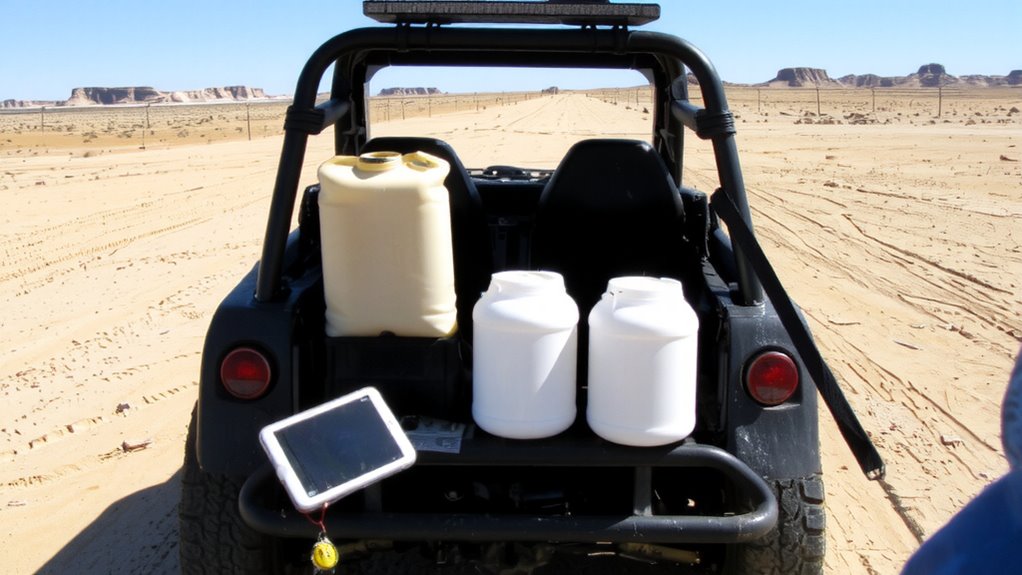
You’ll need about a gallon of water per person per day as a baseline, and that’s non-negotiable in desert conditions-less if you’re sedentary, more if you’re active or it’s above 90°F. Multiply that by your team size and mission duration to establish total requirement. Always add a 20% buffer for unexpected delays or heat spikes. Hydration tracking starts with marking consumption times and volumes; use log sheets or simple apps if power allows. Ration planning means dividing total supply into daily allotments, then sealing portions to prevent overuse. For a four-person team on a five-day mission, that’s 24 gallons minimum, not 20. Weigh the water-8.3 pounds per gallon-and assess load capacity early. Miscalculation risks dehydration; overestimation burdens mobility. Balance is measurable, not guesswork. Record intake and adjust based on output, activity, and temperature. Ration planning fails without discipline, and hydration tracking without consistency is useless. Both are required. Consider using durable water storage tanks for home that can be adapted for mobile use to ensure reliable access to clean water.
Choose Water Storage Containers for Desert Heat
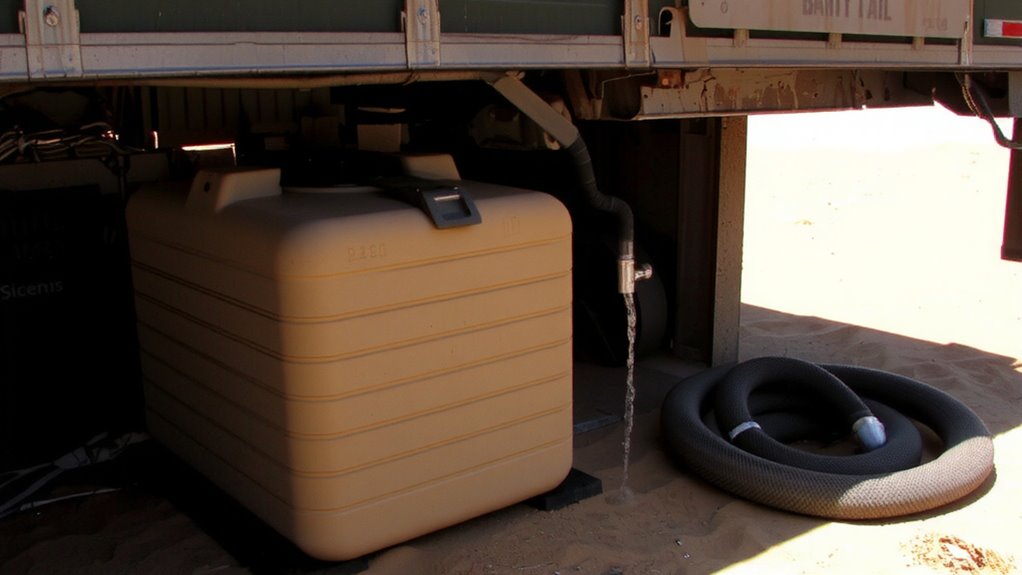
Heat tolerance matters most when selecting water storage containers for desert conditions. You need materials that won’t degrade or leach chemicals when temperatures exceed 110°F. Opt for high-density polyethylene (HDPE) or cross-linked polyethylene (XLPE)-both offer strong material durability and resist UV damage over time. Avoid thin plastics; they warp and crack under prolonged heat exposure. Container insulation helps maintain water quality by reducing temperature swings inside the reservoir. Rotomolded containers with double walls provide basic insulation and resist impact better than single-wall alternatives. Stainless steel is another option, though it’s heavier and costlier. Make sure seals and caps are UV-stabilized and airtight to prevent contamination and evaporation. Always confirm manufacturer specs for heat ratings-don’t assume. In real-world testing, insulated HDPE tanks showed 15% less algae growth over a 30-day desert deployment. For optimal long-term performance, choose top-rated water storage containers that are specifically designed for extreme environmental conditions.
Store Water Without Overloading Your Vehicle
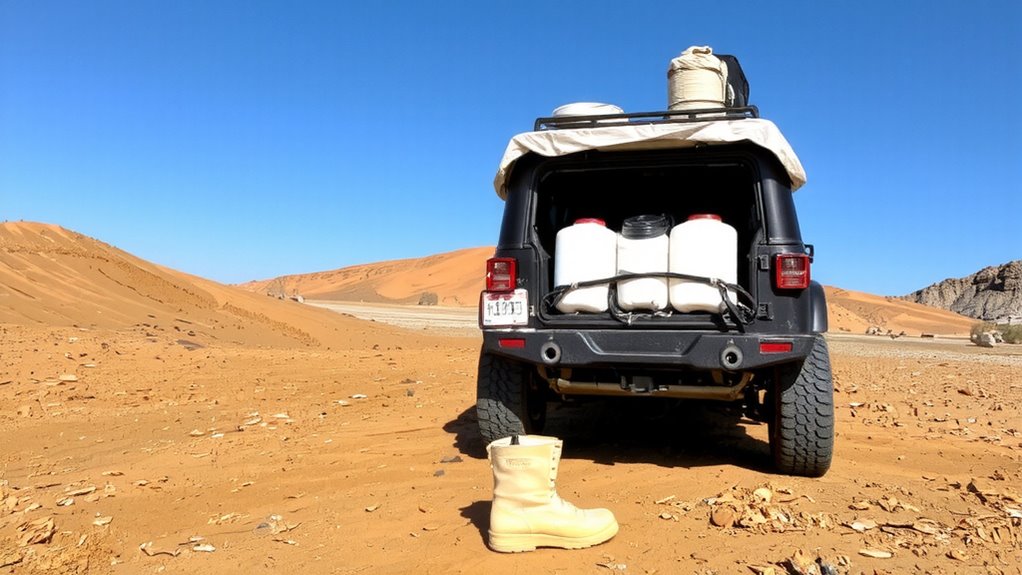
While maximizing water storage is critical, overloading your vehicle compromises fuel efficiency, handling, and reliability-especially on unpaved desert routes. Every gallon of water weighs about 8.3 pounds, so 20 gallons add over 160 pounds-enough to shift your vehicle balance and increase tire wear. Focus on distributing water weight evenly: place larger containers low and centered, avoiding roof racks or rear overhangs that raise the center of gravity. Use modular, stackable tanks that fit within the wheelbase, like 5-gallon jugs or 14-gallon polyethylene bins. They’re durable, easy to reposition, and don’t restrict cargo space. Prioritize essential gear alongside water-exceeding Gross Vehicle Weight Rating (GVWR) voids warranties and risks frame damage. Real-world testing shows even 10% overloading reduces fuel range by 15% on sand. You need enough water, but not at the cost of control. Plan for 1–2 gallons per person per day, then calculate storage to stay within safe limits.
Keep Water Cool and Clean in Extreme Heat
If you’ve ever opened a water jug after hours in the sun and found it tasting like melted plastic, you know keeping supplies cool isn’t just about comfort-it’s about water quality. High heat speeds chemical leaching from containers and encourages microbial growth, so effective cooling techniques and contamination prevention are essential. Insulated jugs maintain safe temps longer but add weight. Evaporative cooling works in dry air but fails in humidity. Shade alone isn’t enough-it delays heating by only 2–3 hours. Consider using high-quality fuel jugs designed for extreme conditions, as their durable, UV-resistant materials can offer insights into selecting more robust water storage solutions.
| Method | Cooling Effectiveness (°F drop) | Maintenance Need |
|---|---|---|
| Reflective wrap | 15–20 | Low |
| Insulated bag | 20–25 | Medium |
| Evaporative cloth | 10–15 | High |
Use BPA-free, UV-resistant containers and seal tightly to limit contamination. White or silver containers absorb less heat than dark ones. Rotate storage position to minimize sun exposure.
Inspect and Rotate Water Supplies Weekly
You should inspect and rotate your water supplies weekly to maintain freshness and prevent contamination. Check each container for cracks, leaks, or algae growth, especially after exposure to extreme heat. Use water testing strips to verify pH and chlorine levels, ensuring the water remains safe to drink. Replace any compromised batches immediately. Rotate by using the oldest stored water first and refilling containers with fresh, treated water. This practice limits stagnation and extends overall supply viability. Apply clear container labeling with fill dates and test results to track quality and usage schedules. Labeling helps identify which units need inspection or replacement without guesswork. Plastic jugs and bladders have varying shelf lives, so match rotation frequency to material durability. Weekly checks take little time but greatly reduce risk. Consistent water testing and container labeling are low-cost steps that improve reliability in remote, high-stress environments.
Distribute Water for Fast Emergency Access
Where would you go for water if supplies were suddenly compromised? Plan now by establishing reliable water distribution zones for emergency access. Storing all water in one location risks total loss. Instead, distribute water across multiple secure points on your unit. This method guarantees you won’t go dry if one container fails. Use durable, sealable containers rated for long-term use, and mark each with fill and inspection dates. Mount them in accessible but protected spots-doors, cabins, and utility compartments work well.
| Location | Liters Stored |
|---|---|
| Front Cab | 10 |
| Rear Compartment | 15 |
| Side Pod | 5 |
| Crew Station | 10 |
This layout supports fast emergency access while balancing weight. Redundancy improves reliability in extreme conditions.
Use Water-Saving Tactics to Extend Your Supply
Every liter counts when water is scarce, so conserve it with purpose. You’ll stretch your supply further by adopting proven water-saving tactics that prioritize efficiency and discipline. Ration enforcement guarantees each team member uses only what’s allocated, preventing premature shortages. Use measured containers and log daily intake to maintain accountability. Pair this with water recycling-capture and filter greywater from cooking or washing for non-potable uses like equipment cleaning or dust suppression. Portable filtration units weighing under 3 lbs can process up to 500 liters per day, making them practical for mobile units. Limit showers and opt for no-rinse hygiene products to cut demand. Reused water isn’t drinkable unless fully purified, so label containers clearly. These steps reduce reliance on resupply, extend operational range, and improve resilience. Simple habits, combined with smart systems, deliver measurable savings where every drop matters.
On a final note
You need 1 gallon of water per person per day-plan for seven days. Use FDA-approved, UV-resistant containers; avoid metal, which heats. Mount storage low in the vehicle for stability and shade. Rotate supplies weekly; discard if cloudy or warm for over 24 hours. Use drip filters and purifier tablets for safety. Insulate with reflective wraps to keep water under 75°F. Distribute 1-quart portions in accessible zones. Cut usage by 30% with strict rationing and moisture-retaining gear.