Creating a Raised Bed Shelter Above Flood-Prone Riverbanks
Build your raised bed at least 12 inches above the predicted flood depth, using cedar or composite lumber to resist rot. Install a gravel base and perforated drain pipes sloped to pop-up emitters for fast water exit. Anchor with rebar every 2 feet and terrace slopes over 10% to prevent washout. Grow flood-tolerant perennials like switchgrass and mint. Choose materials and design that balance durability and cost-smart choices here set what survives when waters rise.
Notable Insights
- Elevate raised beds at least 12 inches above predicted flood depth, ideally 18–24 inches for reliable protection.
- Use rot-resistant materials like cedar, redwood, or composite lumber to withstand frequent moisture exposure.
- Install gravel base and perforated drain pipes sloped toward outlets for rapid drainage during floods.
- Anchor beds securely with rebar or auger stakes every 2 feet to prevent displacement on riverbanks.
- Plant flood-tolerant perennials and herbs with moderate roots to enhance stability and resilience.
How High Should Your Raised Bed Be to Avoid Floods?
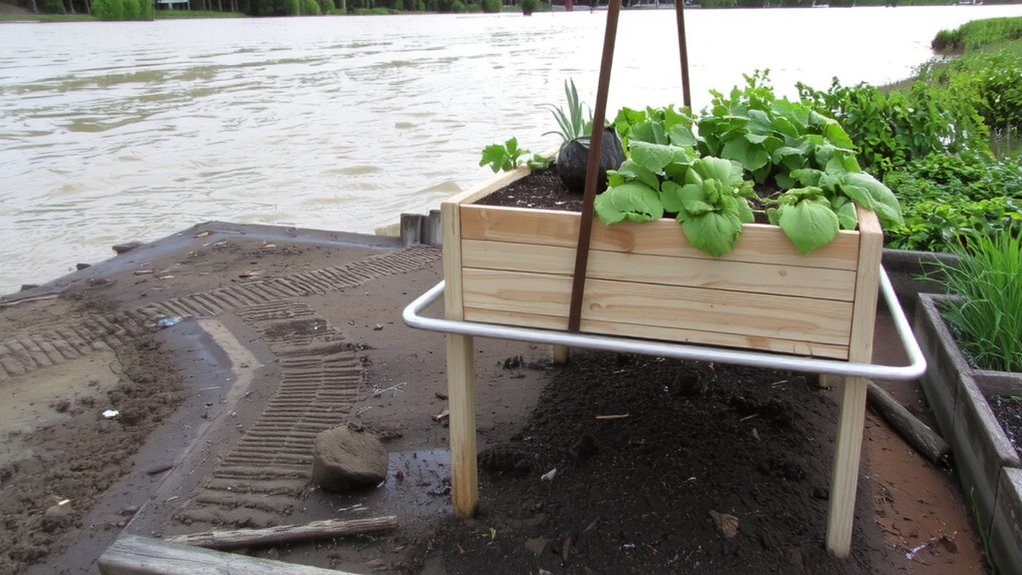
How high should your raised bed actually be to stay safe from floods? At least 12 inches above the predicted flood depth, but ideally 18–24 inches for reliable protection. You’ll need accurate local flood records to assess maximum water levels, as underestimating puts your bed at risk. Elevation planning isn’t optional-it’s essential. Raising the bed just a few inches above the last known flood may save materials, but it sacrifices long-term safety. In high-risk zones, base your height on a 100-year flood depth plus a 6-inch safety margin. This isn’t overkill; it accounts for climate variability. Build lower, and you’re gambling with root zones and soil integrity. Use surveyed land grades to align your frame with natural drainage. Proper elevation planning reduces washout, waterlogging, and structural failure. It’s not just about height-it’s about calculated defense.
Use Rot-Resistant Materials for Flood-Prone Raised Beds
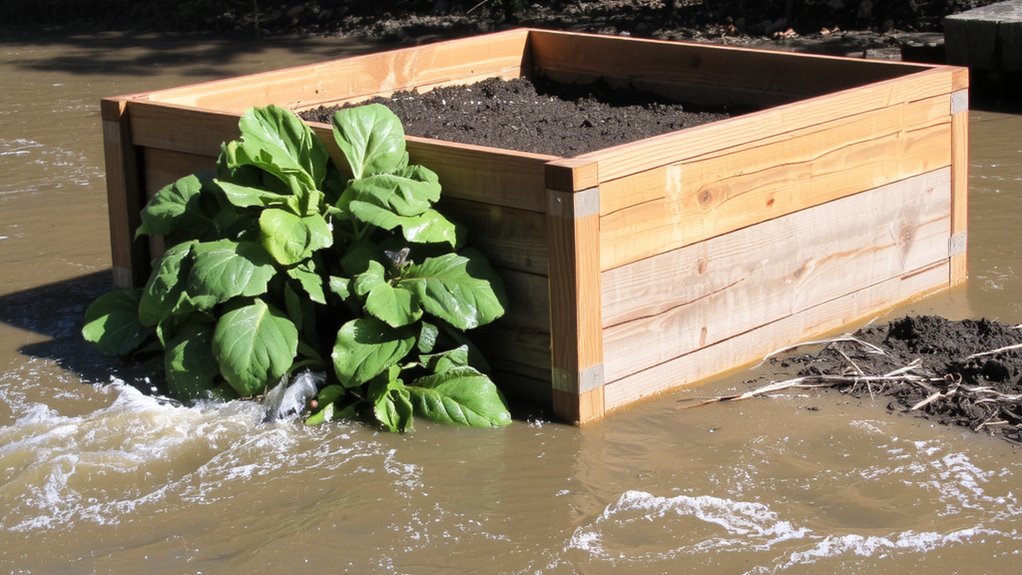
You’ve accounted for elevation, but even the best-placed raised bed will fail if the materials can’t handle prolonged moisture. Wood selection directly impacts material longevity in wet conditions. Cedar and redwood resist rot naturally, lasting 10–15 years with minimal degradation. Avoid untreated pine-it may save money now but will warp and decay within 3–5 years when exposed to flood-prone soil. If you prefer timber, opt for ACQ-treated lumber; it withstands moisture well, though it’s more expensive. For longer service life, consider composite boards or recycled plastic lumber-they don’t rot, resist insects, and endure repeated wet-dry cycles. Metal beds with powder-coated finishes work too, but check for rust resistance. Each material has trade-offs: cost, weight, and installation ease. Prioritize performance where water contact is frequent. Match your choice to your site’s flood frequency and expected bed lifespan.
Build a Drainage System That Survives Heavy Rain
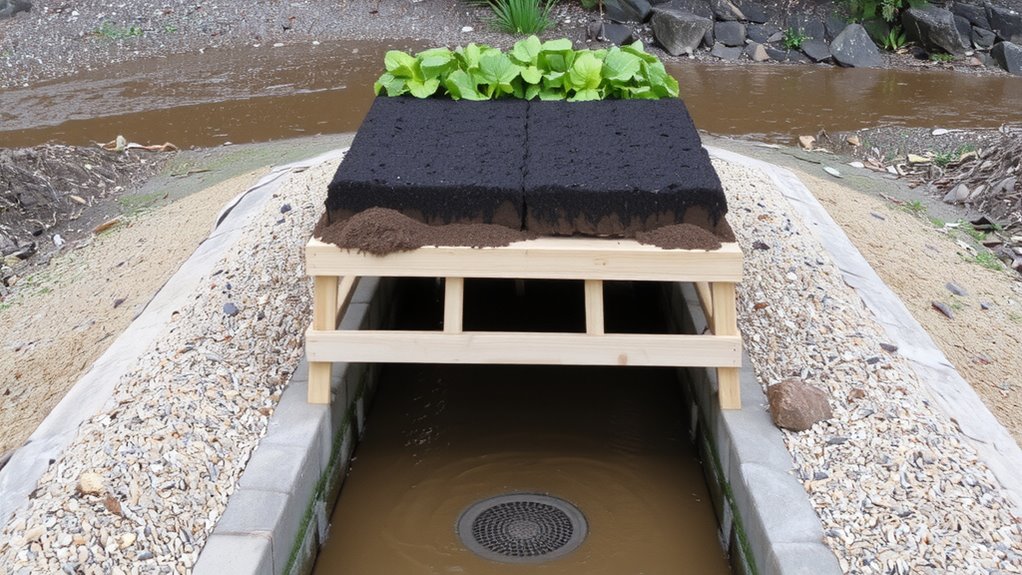
Even with a raised bed made from rot-resistant materials, heavy rain can still lead to waterlogging if the drainage system isn’t built to handle sustained downpours. You need a floodproof design that moves water fast. Start with a 1-inch layer of ¾-inch gravel at the base-it won’t clog and allows rapid outflow. Embed perforated 4-inch drain pipes at the bed’s lowest point, sloping them toward outlets. Use pop-up emitters to prevent debris blockage. For overflow management, install secondary exits higher on the frame, directing excess into gravel trenches or dry wells. These backups activate only when primary drains slow, which testing shows happens after 3+ inches of rain in one hour. PVC holds up better than corrugated plastic under constant moisture. Combine slope, redundancy, and tested materials to keep roots dry and structure intact during storms.
Secure Raised Beds on Eroding Riverbanks
While riverbanks offer rich soil and ample sunlight, their unstable slopes demand a raised bed design that resists shifting and collapse during seasonal erosion. You’ll need bed anchoring to keep structures in place-use rebar stakes or auger anchors driven at least 18 inches into the ground, spaced every 2 feet along the frame. Screws alone won’t hold; they shear under pressure. For slopes over 10%, apply slope terracing: build leveled, stepped platforms to distribute weight and reduce runoff speed. Each terrace should be 2 to 4 feet deep, with retaining edges secured by timber or stone. This method cuts erosion risk by up to 60% compared to single-tier beds on inclines. Without terracing, even anchored beds shift during heavy rains. Combine both techniques-bed anchoring and slope terracing-for stability. Test placement after heavy rain; visible movement means reinforcement is needed.
Grow These Flood-Tolerant Plants in Raised Beds
Flood-prone riverbank beds demand plants that survive saturation, not just occasional wet feet. Your plant selection must prioritize species proven to endure prolonged water exposure without rotting. Opt for perennials like switchgrass, cardinal flower, and joe-pye weed-these tolerate flooded conditions and establish reliably in raised beds. Root depth matters: shallow-rooted plants risk displacement, while deeper-rooted varieties anchor better and access oxygen during flood pulses. Avoid deep-rooted trees that destabilize structures; instead, choose herbs like mint or bee balm with moderate root depth and high flood resilience. Test performance over two flood seasons-many survive the first inundation but fail in recurring events. Stick to local natives where possible-they’re adapted to your water cycles. Plant selection isn’t about preference but survival under pressure. You’re building for persistence, not looks. Choose accordingly.
Why Raised Bed Gardens Outlive Flooded Soil
When floodwaters rise, your raised bed garden stays operational because it lifts the root zone above saturated soil, giving plants access to oxygen and reducing drowning risk. You get better soil aeration and reliable root protection compared to ground-level plots. Soggy soil kills roots fast, but raised beds prevent prolonged submersion.
| Factor | Ground Soil | Raised Bed |
|---|---|---|
| Soil Aeration | Poor during floods | Consistently good |
| Root Protection | Minimal | High |
| Water Exposure | Full saturation | Controlled drainage |
You’ll see fewer crop losses because the elevated design limits contact with floodwater. There’s no magic here-just smarter positioning. Raised beds don’t stop floods, but they keep roots high and dry. That small lift is often the difference between survival and total washout. You’re not fighting nature; you’re adjusting the playing field.
Keep Soil Nutrient-Rich in Elevated Garden Beds
One key advantage of raised bed gardens is they let you control soil quality from the start-you’re not stuck rebuilding depleted ground soil. To keep nutrients high, use compost integration each season; mix in 2–3 inches of well-rotted compost to maintain organic matter and improve structure. This boosts microbial activity and water retention without synthetic inputs. Pair this with crop rotation-don’t plant the same family in the same spot yearly. Rotate legumes, root crops, and greens across beds to prevent nutrient depletion and reduce pest buildup. A simple three-bed rotation works: one for heavy feeders (like tomatoes), one for light feeders (like carrots), and one for soil enrichers (like beans). Raised beds lose fewer nutrients to leaching than in-ground plots, but annual replenishment is still required. Test soil every 12 months to monitor pH and nutrient levels. These steps guarantee long-term fertility with minimal inputs.
On a final note
You need at least 12 inches of height to keep roots above floodwaters, but 18 inches adds safety in fast-rising zones. Use cedar or composite lumber-it lasts 10+ years in wet soil. A gravel base and perforated pipe drain prevent waterlogging. Anchor beds with rebar stakes to resist shifting. Raised beds outperform ground planting by elevating soil and improving drainage, especially with flood-tolerant species like okra and swamp milkweed.