Igniting Tinder With a Fire Piston in Humid Jungle Environments
You can ignite tinder with a fire piston in humid jungles because it uses compressed air, not flame or sparks, reaching 500°F in under a second-effective even in 90% humidity. Use char cloth or dry palm fibers for best results; they catch easier when damp. Just make certain the O-ring seals tight and the piston moves smoothly. A failed strike usually means wet tinder or air leaks, not a faulty piston. With proper prep, it works when lighters fail. There’s more to getting it right on the first try.
Notable Insights
- Fire pistons generate ignition heat through air compression, making them effective even in high humidity where sparks fail.
- Use char cloth made from 100% cotton, properly charred and fitted snugly in the piston tip for reliable ignition.
- Achieve ignition by fully compressing the piston in under one second to reach 400–500°F at the tip.
- Choose tinders like dead palm fibers, cedar inner bark, or char cloth, which resist moisture and ignite easily in damp conditions.
- Prevent failures by sealing O-rings properly, avoiding oil-based lubes, and storing the piston in a dry, sealed container with silica.
How a Fire Piston Beats Humidity in the Jungle
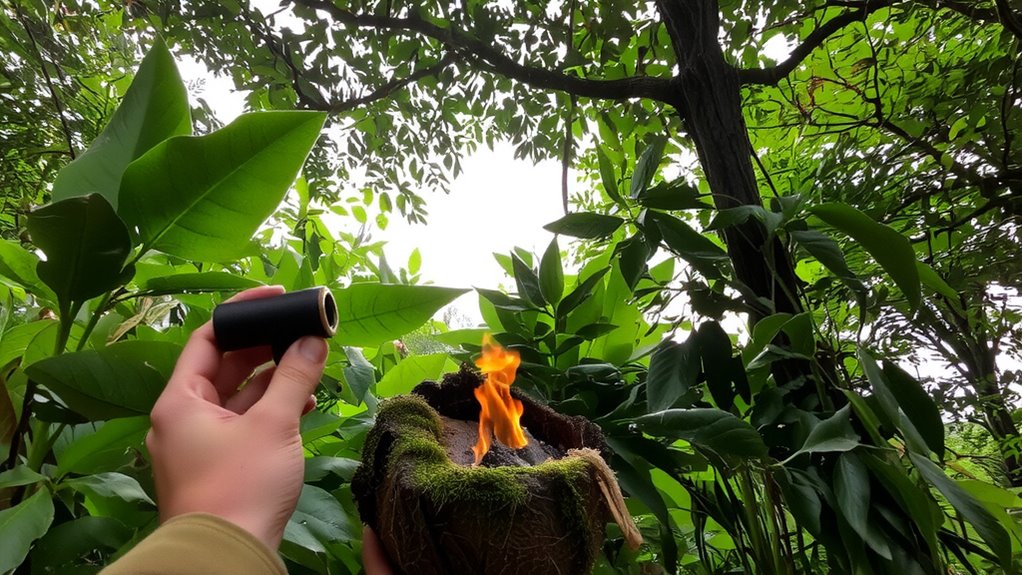
Even though high humidity can make starting a fire with traditional methods nearly impossible, a fire piston works by compressing air so rapidly that it reaches ignition temperatures-around 480°F (250°C)-igniting dry tinder even in damp jungle conditions. You rely on compressed air to generate heat through sudden pressure, not open flame or sparks, so moisture in the air won’t interfere. This method delivers consistent ignition efficiency, especially when you use properly prepared tinder like char cloth or amadou. Unlike lighters or matches, which fail when wet, the fire piston’s mechanical design has no moving parts to degrade. It’s compact, durable, and works in heavy rain or fog. Ignition efficiency remains high as long as the piston seal is intact and the stroke is fast. With practice, you can achieve ignition in under five seconds. While it requires preparation and skill, it outperforms many tools in wet environments where reliability matters most. Top models are designed for maximum fire piston efficiency in extreme conditions.
Step-by-Step: Ignite Char Cloth With a Fire Piston
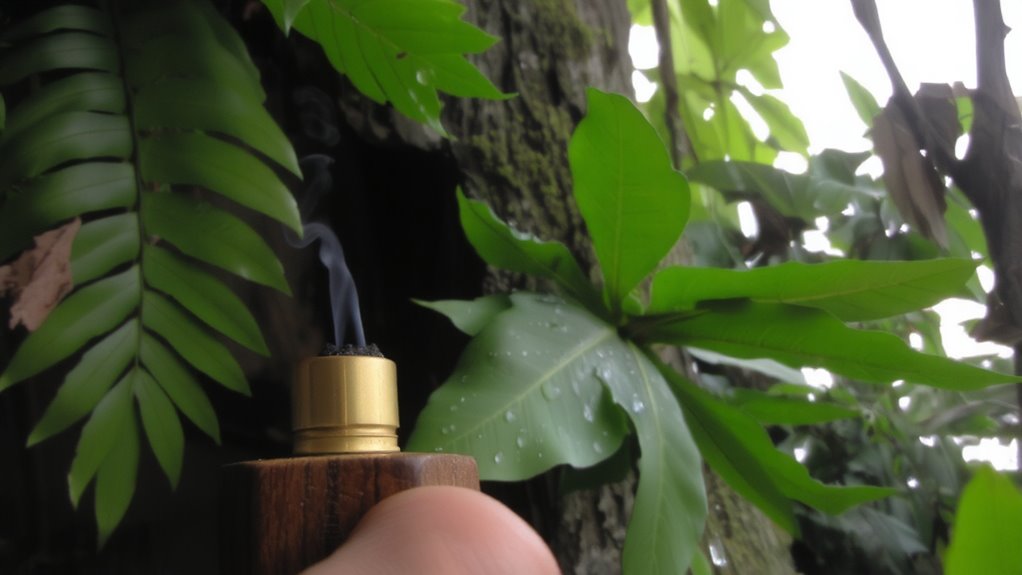
You’ve seen how a fire piston overcomes humidity with compressed air ignition, making it reliable where matches and lighters fail. Now, focus on igniting char cloth. Start with proper char cloth preparation: use 100% cotton, charred slowly in a sealed container until black but not ashed. Cut it to fit snugly in the piston’s tip. Place the cloth in the chamber, guaranteeing no gaps. Apply firm, steady pressure to the plunger-piston compression timing is critical. You need full compression in under one second to generate 400–500°F at the tip. If the cloth only smolders, you’re too slow or the seal is weak. A successful strike yields a glowing coal within the cloth. Transfer it immediately to dry tinder. Test shows a well-maintained piston works in 9 of 10 attempts under 90% humidity. Skill matters, but correct technique and preparation guarantee consistency.
What Tinder Works When the Jungle Is Soggy?
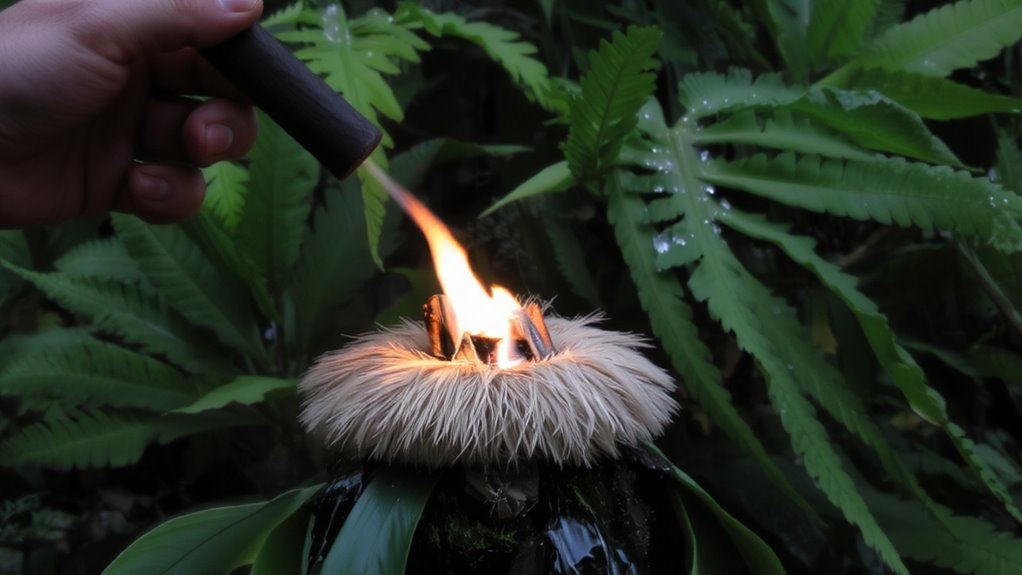
When the jungle’s moisture won’t let up, even the driest-looking tinder can fail if it’s not actually water-resistant at the fiber level, so choosing right matters more than prep. You need materials that endure dampness and still catch with minimal ignition energy. Moss drying works only if you’ve got hours-most jungle moss holds water like a sponge. Instead, focus on inner bark fibers exposed through bark scraping, especially from standing dead trees. These stay dry beneath the surface and ignite easier under high compression sparks.
| Tinder Type | Success in Humidity |
|---|---|
| Dead palm fibers | High |
| Cedar inner bark | High |
| Birch bark curls | Moderate |
| Surface moss | Low |
| Char cloth | Very High |
Char cloth remains your best bet, but pair it with scraped dry bark for sustainment. Don’t waste time on moss drying unless completely sheltered-efficiency wins. Making your own DIY fire starters can significantly improve reliability when commercial options fail in wet conditions.
Why Your Fire Piston Failed (And How to Fix It)
A fire piston can fail in humid jungles not because the tool is faulty, but because the tinder inside can’t ignite under sudden compression. Moisture weakens ignition, but that’s not the only cause. Material defects, like hairline cracks or uneven bore walls, disrupt air compression, reducing heat. A piston with poor o-rings or uneven fit leads to improper sealing, letting air escape before pressure peaks. You’ll see weak sparks or no glow at all. To fix it, inspect the cylinder and driver for visible flaws. Test sealing by pushing down with your thumb over the end-if air leaks, the o-ring needs replacing. Use a pressure test: submerge the piston underwater and compress it; bubbles mean leaks. Replace or repair parts with durable, heat-resistant materials. A well-maintained piston should reach 400–500°F on compression-enough to ignite dry tinder instantly.
Keep Your Fire Piston Working in Humid Heat
Even if your fire piston is well-made, sustained use in humid heat demands consistent maintenance to prevent performance drops. Proper lubrication is critical-use a silicone-based grease sparingly on the piston shaft to reduce friction without attracting moisture or debris. Oil-based lubes can degrade rubber components over time, especially in high heat. You’ll need to inspect the O ring every few uses; humidity accelerates swelling and brittleness, which compromises the seal. Replace cracked or deformed O rings immediately-most models use standard sizes available in survival kits. Avoid leaving the piston disassembled in damp conditions; condensed moisture inside the cylinder hampers compression. Store it in a sealed bag with a silica packet to control humidity. Cleaning with a dry cloth after use removes salt and grime from sweat or rain. Performance drops are usually tied to neglect, not design. With routine O ring maintenance and proper lubrication, your fire piston remains reliable even in muggy environments.
On a final note
You can rely on a fire piston in humid jungles if you prep correctly. It ignites char cloth at 400°F in under a second, bypassing damp tinder. But it demands proper o-rings and lubrication-test it monthly. Cheaper models fail when compression leaks. Pair it with paraffin-coated tinder for consistency. It’s smaller than ferro rods, but less forgiving. No fire piston works on wet wood. Use it with dry storage. Performance hinges on maintenance, not luck.